
The Panama Canal turned 112 on Saturday, and in all that time crossing it has meant exactly one thing. Your ship sails into a lock, gets lifted over the spine of the isthmus, and floats back down the far side. Over the top. Always over the top.
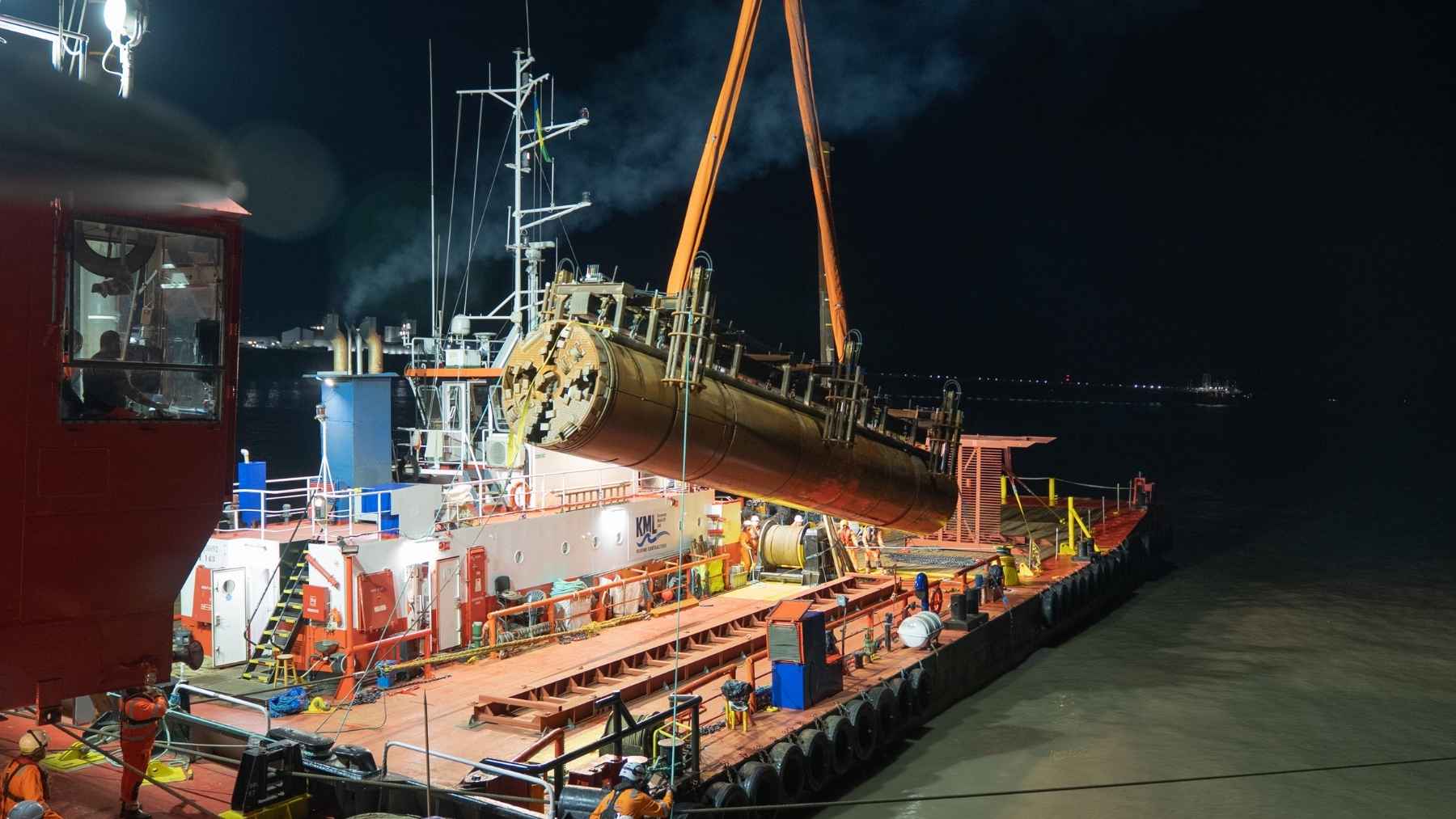
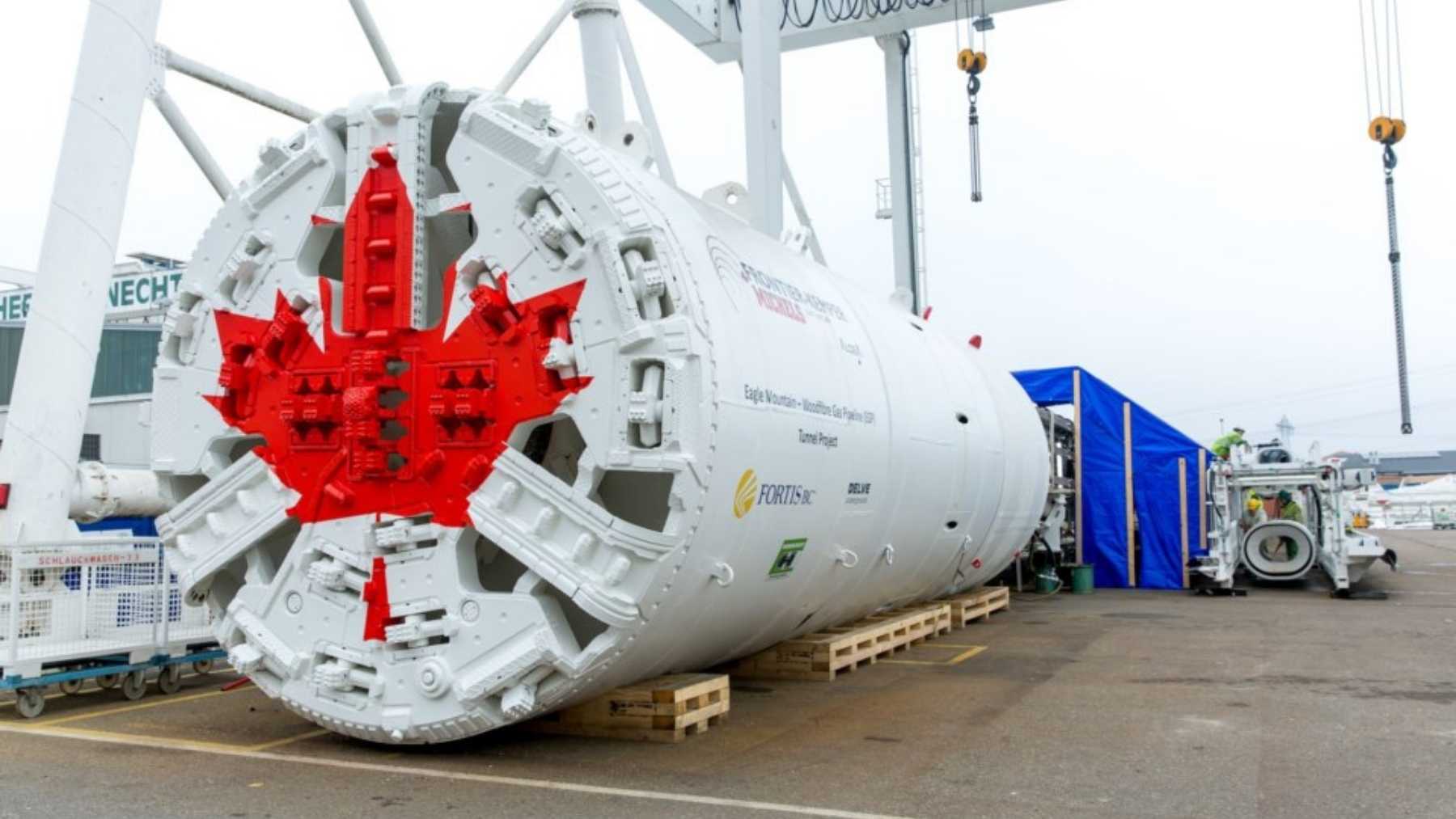
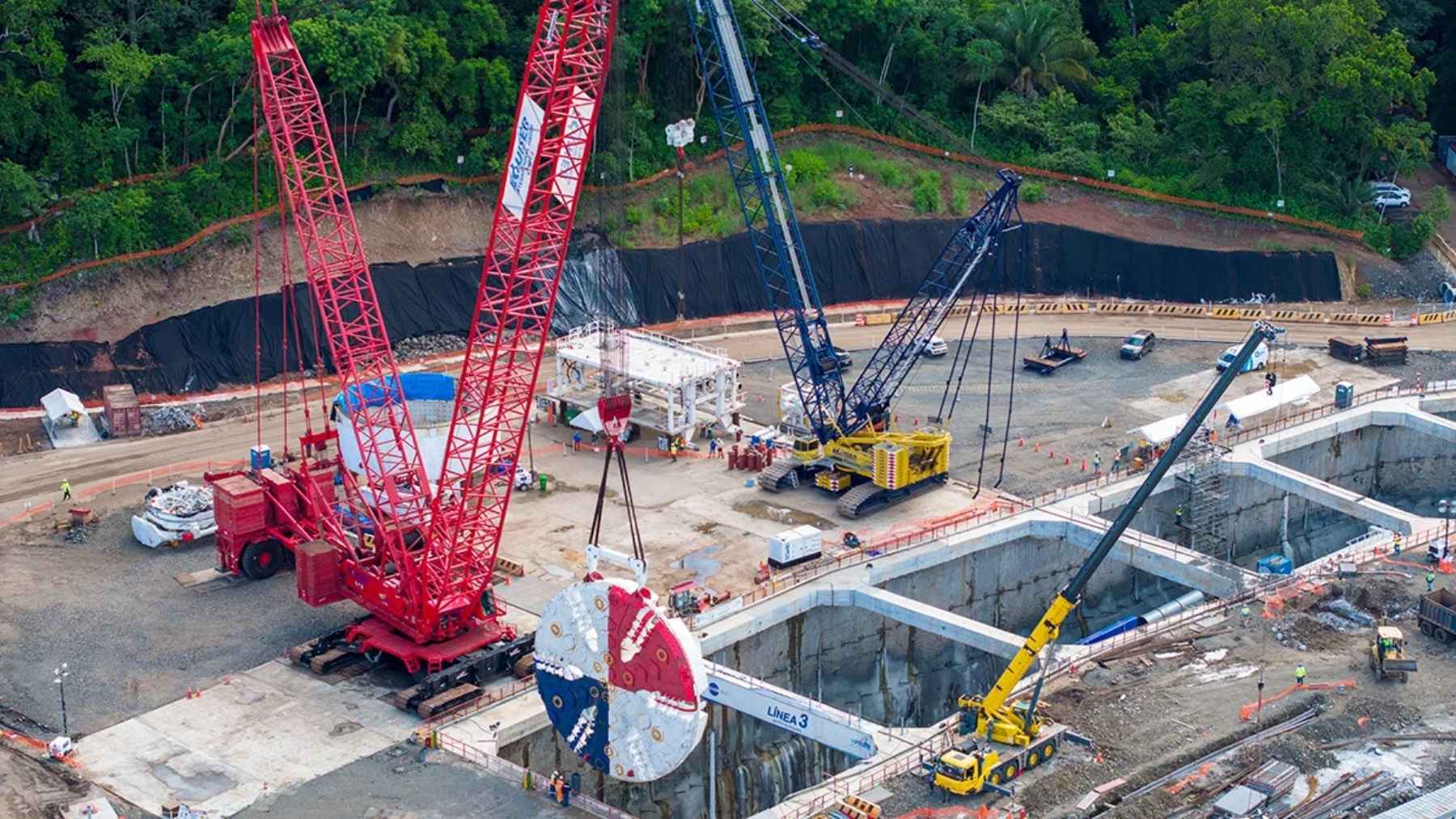
The first machine ever to tunnel beneath the canal’s navigation channel skipped the elevator entirely. She is a German Herrenknecht Mixshield, a bit over 44 feet across the face, built in Schwanau, shipped across the Atlantic in pieces, and named Panama, which is either a genuine tribute to the country or proof the naming committee clocked out early.
On February 2 she broke through into the future Balboa metro station after 17 months of continuous digging, 1.9 miles of finished tunnel, and a long stretch of grinding 213 feet down while loaded container ships slid by overhead. Herrenknecht confirmed the crossing ten days later and called her the largest TBM of her kind in Latin America.
Six months on, the job is nearly out of road. After a three-month overhaul at Balboa, the machine is boring the final stretch to Albrook station, where the tunnel ends, the cutterhead comes off, and a very good question begins: what do you do with her afterward?
This tunnel exists because a bridge was late
Metro Line 3 is Panama’s first monorail, about 15.5 miles (25 km) tying the fast-growing suburbs of Panamá Oeste to the capital. The problem it solves is blunt. Herrenknecht’s project brief puts roughly 150,000 people funneling across a bridge every morning and evening, on a trip that can eat several hours each way in traffic.
The original plan involved no tunnel at all. Line 3 was supposed to ride across the canal on the deck of a fourth road bridge, and when that bridge fell behind schedule, the government redrew the crossing in 2021 as a bored tunnel instead, Infobae reports. That decision pushed the project’s estimated cost from around $2.8 billion to more than $4.4 billion once the tunnel and its ventilation, drainage and monitoring systems were folded in.
It makes for a strange pairing of problems. Up on the surface, the canal is so short of fresh water that Panama is building a $1.6 billion lake just to keep ships floating through it. Sixty-five meters down, the same canal is simply a roof: something to get under carefully, once, and never think about again.
Seven bar is the number that designed her
A Mixshield is what Herrenknecht builds for ground that refuses to commit to being one thing. Pressurized bentonite slurry holds the tunnel face up while the cutting wheel turns through whatever the isthmus serves next, and under this alignment the menu is long: sandstone, siltstone, tuff, mudstone and pyroclastic rock, then basalts and andesites, per the company’s own data sheet. Panama City sits on old volcanic real estate, and the boring log reads like it. It is the same machine family Herrenknecht recently threaded under the Elbe at roughly a third of this width.
The headline dimensions are oversized because the tunnel is. The 13,460 mm cutting wheel, a shade over 44 feet, was sized so both directions of the monorail fit through a single tube. Turning it takes 5,600 kW, about 7,500 horsepower, producing 26,616 kNm of torque. Call it 19.6 million lb-ft, which stops being a vehicle number and becomes a geology number.
The figure that actually shaped the design is smaller: 7. With the deepest stretch sitting around 200 feet below sea level, Herrenknecht engineered the machine to hold back up to 7 bar of groundwater pressure at the face. That is a little over 100 psi, roughly three times what your car tires carry, pressing on every seal around the clock. More than 4,500 sensors watch her do it, streaming live data to the crews in Panama and back to Germany.
The teeth come out through the back
Cutting tools wear out, and on most big slurry machines replacing them is a dive operation. A chamber gets pressurized, trained workers go in front of the cutterhead under compressed air, and everything runs on hyperbaric protocols with the medical support to match. The higher the pressure, the slower, costlier and riskier those interventions become.
So Herrenknecht flipped the door. On this machine the cutting wheel is accessible from behind: crews swap the tools from the rear, at normal atmospheric pressure, without anyone ever standing on the slurry side of the steel. The company says the arrangement makes the work safer and faster, and given what waits on the other side of that bulkhead, you can see their point.
If you want the counterfactual, the Chesapeake already ran the experiment. When a buried ship’s anchor chewed up a Herrenknecht borer under the bay in Virginia, crews had to replace 389 cutting tools by hand at the face, behind bulkheads and air locks, and the stoppage cost that project 241 days. The Panama machine was built so that story never gets a sequel.
Seventeen months with ships over her crown
President José Raúl Mulino pressed the start button himself at the Farfán launch shaft on September 18, 2024. The contract left no room for drama: at no point could the boring compromise the operational safety of the canal above, one of the most heavily used waterways on Earth.
From Farfán on the west bank, the route dives, bottoms out around 213 feet down beneath the navigation channel, and climbs toward the Balboa shaft on the city side. About 100 people ran the machine in three shifts, around the clock, most of them Panamanian. Their best month came in October 2025: 150 rings, roughly 984 feet of finished tunnel. Herrenknecht also notes the critical crossing under the canal went off without any problematic incidents, which for a first attempt in volcanic ground is not a small line on the resume.
On February 2, with Mulino watching from the Balboa shaft, the cutterhead chewed through a 1.2-meter concrete headwall and broke into open air, thrusting off the rings she had already placed because there was nothing left ahead to grip, according to the Metro’s director of engineering and projects, Carlos Cedeño. “I congratulate all of you who made this challenging expedition under the canal possible,” the president told the crew.
The scoreboard at Balboa: 1.9 miles bored, 1,560 concrete rings set at 6.6 feet of advance apiece, and more than 800,000 cubic meters of spoil hauled out, over a million cubic yards. Metro de Panamá’s own comparison is 320 Olympic swimming pools, which is the kind of unit that finally makes a number like that land.
The last stretch ends at Albrook, and then nobody knows
The machine then sat at Balboa for about three months of scheduled surgery. Visual inspections first, then mechanical checks of the main components, then the electrical systems, standard practice before asking a hard-used cutterhead for one more push.
That push is underway. By late June the Metro put the remaining distance at about 500 meters of the 2.8-mile drive, with the overall project at 77%, La Prensa reported after a site visit where monorail trains were already running test laps on the elevated section. Days later, Panamanian broadcaster ECO TV put the underground works at 88% complete. Cedeño expected the excavation to wrap within weeks, ending beside Albrook station, where Line 3 ties into the existing Line 1.
Albrook is the end of the line for the tunnel and for her. The machine gets dismantled there, and per the Metro’s project team, the options for what happens to her afterward are still being analyzed. She bored the first tunnel under the Panama Canal, and with the finish in sight, her own future is the one item on the project still marked pending.
A finished bore is not a finished metro, either. Behind the machine, crews are fitting the tube out with evacuation galleries, running beams for the monorail and the auxiliary systems that turn concrete into transit, and officials are holding to 2028 for trains through it. Megaproject dates have a habit of drifting, and this one has drifted before, so treat that year as a target rather than a promise.
The canal itself never noticed any of this. Ships kept climbing the locks for 17 straight months while the biggest first in Panamanian engineering happened directly beneath their keels, which was the entire specification, and it held. The 150,000 people stuck on the bridge every day are the ones who will notice, sometime in 2028, when for the first time in 114 years the way across the Panama Canal runs underneath it.