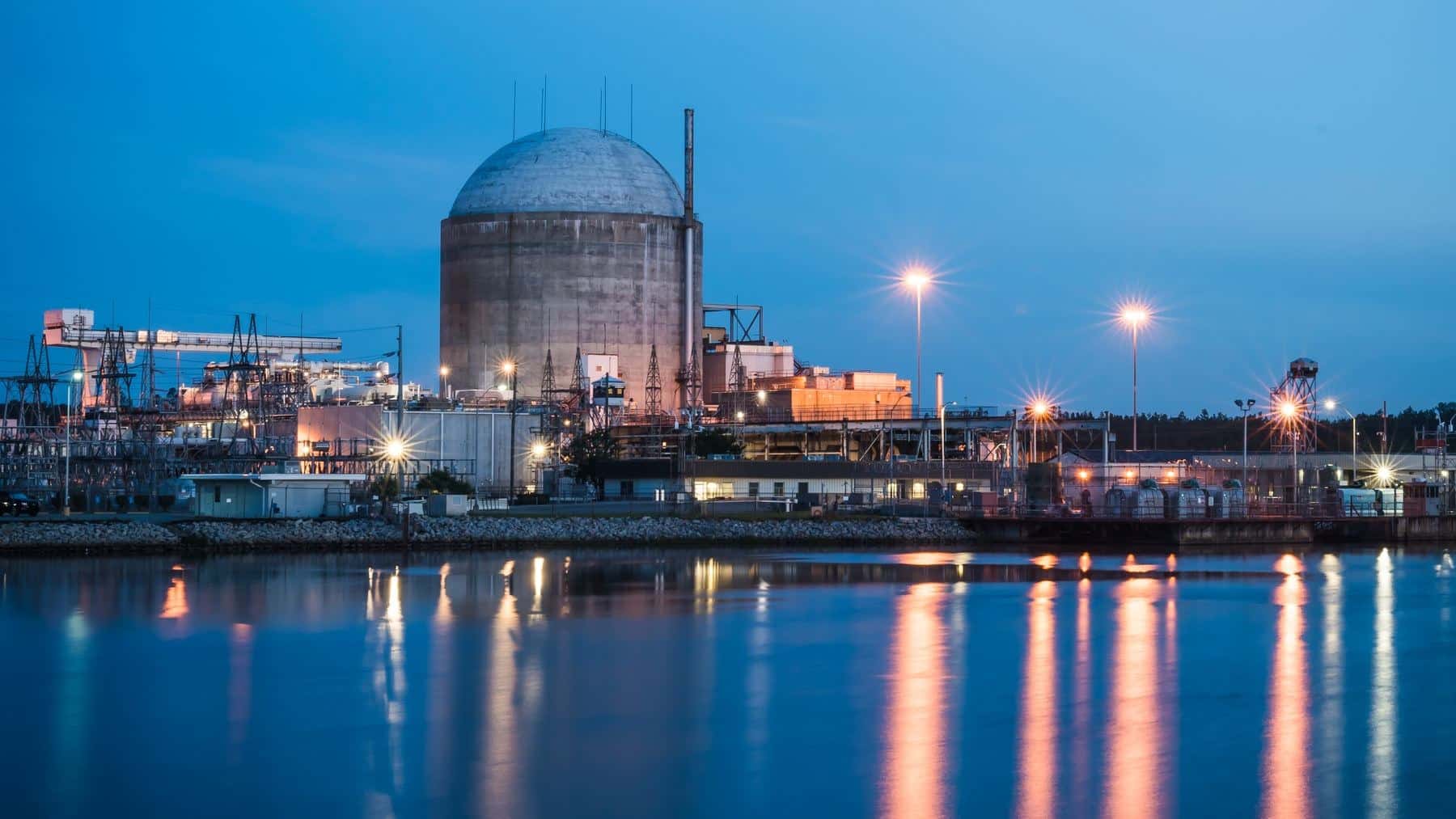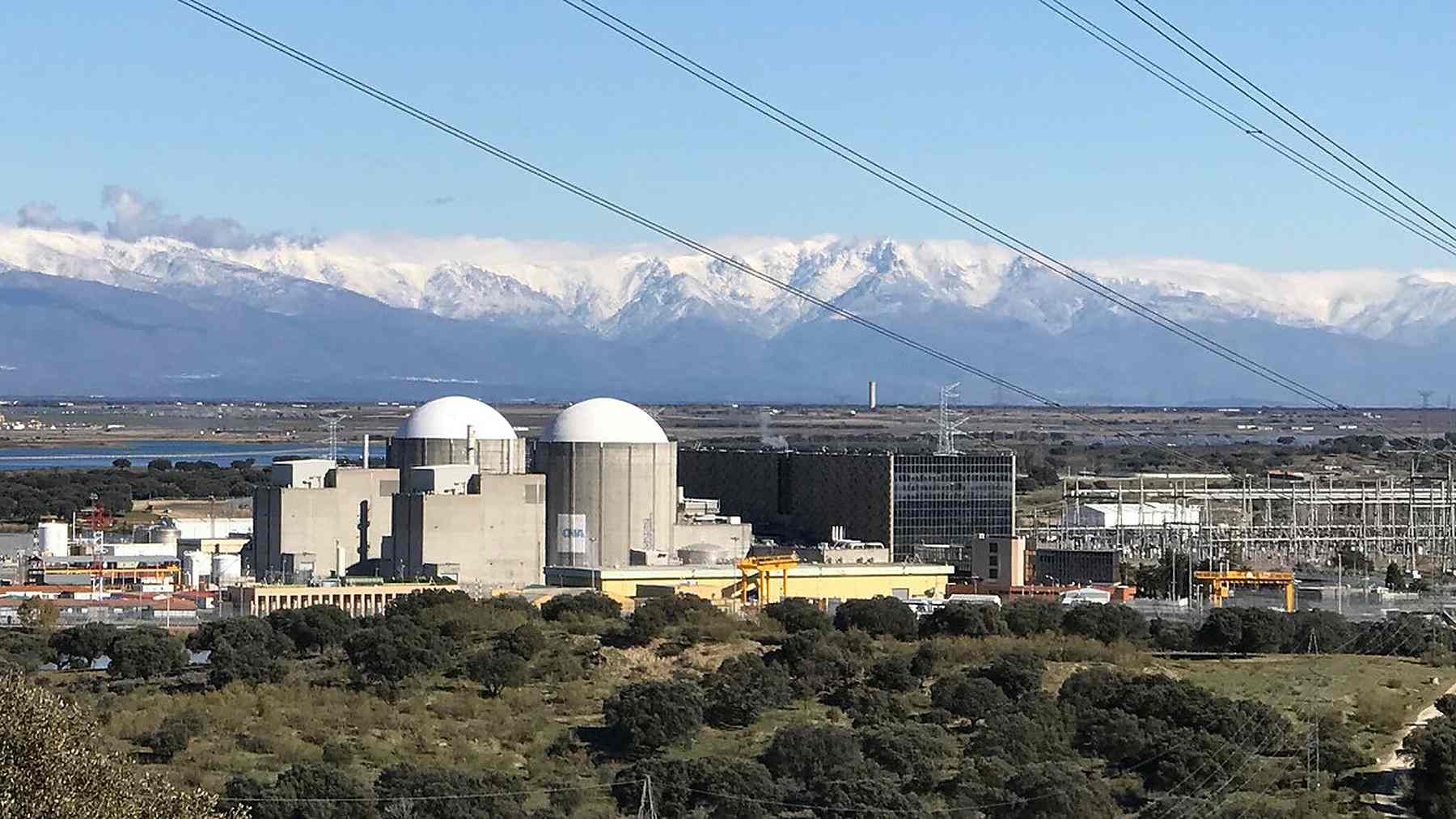

Spain has spent a good chunk of the last few years arguing about whether to close the Almaraz nuclear plant. The old phase-out schedule had both of its reactors shutting down for good before the end of the decade, the utilities that own it asked for more time, and in August the government gave them until June 8, 2030. So you’d think the next bit of news out of Almaraz would be a pretty boring one.
It wasn’t, quite. On Thursday, Nov. 5, Almaraz Unit I shut itself down while it was running at full power, and a little over 1,000 megawatts dropped off the Spanish grid in one go. Unit II, which sits right beside it, kept running at 100%.
Spain’s nuclear regulator, the Consejo de Seguridad Nuclear (CSN), says the reactor tripped because the main turbine tripped, and the turbine tripped because a protection on the generator fired. The CSN traces the whole thing back to an electrical protection on the unit’s main transformer, and it’s still investigating why that protection acted.
The CSN says the safety systems did what they were designed to do and the unit is in a safe shutdown state. It rated the event a 0 on the international scale it uses for nuclear events, and the plant says there was no impact on workers, the public or the environment.
So why would a problem on a transformer stop a nuclear reactor?
A transformer is the plant’s on-ramp to the grid
Almaraz I’s generator doesn’t push its power straight onto the long-distance lines. It feeds a main transformer first, which steps the voltage up so the electricity can head out through the plant’s 400-kilovolt switchyard. Basically, it’s the on-ramp between the turbine hall and the rest of Spain.
A transformer that size is wrapped in protective relays, which work a bit like tripwires. If one of them decides something’s wrong, it isolates the transformer, and the generator suddenly has nowhere to send its power. A turbine-generator spinning with no load can’t just keep going, so the turbine gets tripped too.
Then you’ve got the reactor. Both Almaraz units are pressurized water reactors built on Westinghouse technology, so if you’ve ever toured a nuclear plant in the US, the basic design would look pretty familiar. Each one turns 2,947 megawatts of heat from a core of 157 fuel assemblies into roughly 1,000 megawatts of electricity, according to the operator, Centrales Nucleares Almaraz-Trillo (CNAT). When the turbine stops taking steam at that kind of power, the plant can’t get rid of the heat fast enough, so the protection system drops the control rods and stops the chain reaction. The core still puts out leftover heat for days afterward, and the cooling systems have to carry that away. That’s what “automatic shutdown” means in the CSN’s note.
We went through that part in more detail when a 590-megawatt reactor on Lake Michigan shut itself down after its main generator locked out, and the Almaraz sequence sounds pretty similar.
I can’t tell you what time Unit I actually tripped. The plant’s statement was already on the EFE news wire by about 6 p.m. in Madrid (noon ET), and the CSN posted its note at 7:28 p.m. local time, but neither one gives the moment the turbine stopped. I also haven’t found a public notice saying Unit I is back on the grid. On Nov. 5, the plant said its technical team was running the checks it needed “to proceed with its startup,” and that’s about as far as anyone’s gone on record.
Unit I has been here before
About 17 months earlier, Unit I went through almost the same sequence. According to the CSN’s event form, an overpressure relay on one phase of the main transformer fired, which set off a protection on the main generator, which tripped the turbine and then the reactor. That one got a 0 as well.
An overpressure relay (American utilities usually call it a sudden pressure relay) sits on the transformer’s oil tank and watches for a sharp jump in pressure. That’s the kind of spike an electrical arc inside the tank would cause, so the relay’s there to shut things down before a small problem turns into a much bigger one.
A little over six years ago, Unit I tripped again, that time at 51% power while it was ramping back up after a refueling outage. The CSN’s annual summary traced that one to a differential protection on one of the main transformer’s three phases. A differential relay compares the current going into a transformer with the current coming out. If the two don’t match, it assumes the difference is leaking somewhere it shouldn’t and pulls the plug.
At least three trips traced back to Unit I’s main transformer protections in a little over six years is frankly a more interesting number than the megawatts, if you ask me. Admittedly, a relay firing is the system doing its job, and a relay that trips when nothing’s really wrong is an expensive annoyance rather than a safety problem. But we don’t know which of those this was yet, and the CSN hasn’t said whether the November trip has anything to do with the earlier two. I’d like to see what the root cause analysis turns up once it’s done.
Unit I has had a fairly eventful year in general. On May 8, while it was starting back up after its 31st refueling, a safety valve on the main steam line from steam generator No. 2 opened at about 1,114 psi, which the CSN said was below the valve’s opening set point. That was a completely different system, steam rather than electrical, and it also got a 0.
Almaraz wasn’t supposed to be running this long
Under the old schedule, Unit I was due to shut down for good on Nov. 1, 2027, with Unit II following on Oct. 31, 2028. CNAT asked the government in late October of last year to let both units run until June 8, 2030. The CSN signed off on July 16, and the energy ministry’s order granting the renewal ran in Spain’s official gazette, the Boletin Oficial del Estado, on Aug. 14.
That works out to about 31 extra months for Unit I and 19 for Unit II.
Which makes for a slightly awkward timeline. When Unit I came back from refueling in May, CNAT said the fuel cycle it was starting would be the unit’s last if the government stuck to the old calendar. Three months later, the government didn’t. It’s safe to assume nobody at CNAT wanted a full-power trip less than three months after winning that extension, but as reactor shutdowns go, this is pretty much the least dramatic version you can get.
As for the megawatts, CNAT’s annual report lists Unit I at 1,049 megawatts gross and 1,011 net, and Unit II at 1,044 gross. Iberdrola, which owns a little over half the plant, says the two units covered about 7% of Spain’s electricity demand last year. At 1,049 megawatts, Unit I is a bit smaller than the 1,152-megawatt Waterford 3 reactor on the Mississippi that tripped the night before its refueling outage.
So is a 0 actually a good score?
Pretty much, yes. The International Nuclear and Radiological Event Scale runs from 0 to 7, and it’s meant to let regulators (and you and me) rank an event quickly. Levels 1 through 3 are incidents, 4 through 7 are accidents, and 7 is where Chernobyl and Fukushima sit. A 0 means there’s no safety significance to the event.
It’s a bit of a blunt tool, admittedly. A 0 covers everything from a valve opening a little early to a reactor dropping off the grid at full power. Still, it’s the rating you want.
Unit II was still running at 100% when the plant put out its statement on Nov. 5, and both Almaraz units now have a license to keep going until June 8, 2030, which is a lot more runway than either of them had a year ago.