
If you’ve ever driven past a big landfill, you’ve probably noticed the pipes. They poke out of the dirt in rows, and they’re there because buried trash rots and makes gas, mostly methane and carbon dioxide, which has to be pulled out before it finds its own way up.
On November 24, the Los Angeles County Board of Supervisors voted unanimously to declare a local emergency at Chiquita Canyon Landfill in Castaic, California, over a hole that was being drilled for one of those pipes. The EPA, meanwhile, has told the landfill it can’t sink any new vertical well past 100 feet until the agency approves or modifies a plan to prevent another release like the one on November 16.
If you’re wondering what was actually in the ash that came out, so are the people who live next to it. Nobody can say yet. The California Department of Toxic Substances Control (DTSC) has collected samples, and the Los Angeles Times reports the results are due back on December 3.
So what happened on November 16?
At about 4 p.m. that Monday, workers were drilling a new gas collection well when they hit a pocket of pressurized gas roughly 150 feet down, according to the county fire department and the landfill’s owner. Capt. Aaron Katon of the fire department told the Los Angeles Daily News the hole was about 3 feet wide.
The gas shot back up the borehole and carried a lot with it. The LA Times describes a 500-foot fountain of dark ash, gases and vaporized leachate. The EPA says it kept going for about seven hours, until crews sealed the hole with soil at around 11 p.m. Six landfill workers were taken to a hospital with minor injuries, the LA Times reported that night.
If you’ve never had a reason to think about landfill plumbing, and I’d guess most of us haven’t, here’s the short version. A gas collection well is basically a perforated pipe sunk deep into the trash, with a vacuum pulling the gas out so it can be burned off or treated instead of drifting into the neighborhood. Leachate is the liquid that seeps down through all that garbage, a mix of rainwater and whatever the trash was holding, and it picks up chemicals on the way.
At Chiquita Canyon, some of that leachate came out of the hole as vapor, according to the EPA. Some ash and a little liquid also landed on the landfill’s cover, and the agency expected that cleanup to wrap up within two weeks.
Trapped gas letting go all at once isn’t a problem unique to landfills, either. We’ve covered a Hanford tank that used to burp hydrogen every few months, though that’s a very different kind of waste with a very different fix.
The drill may have gone past the known hot zone
I keep coming back to where that hole was.
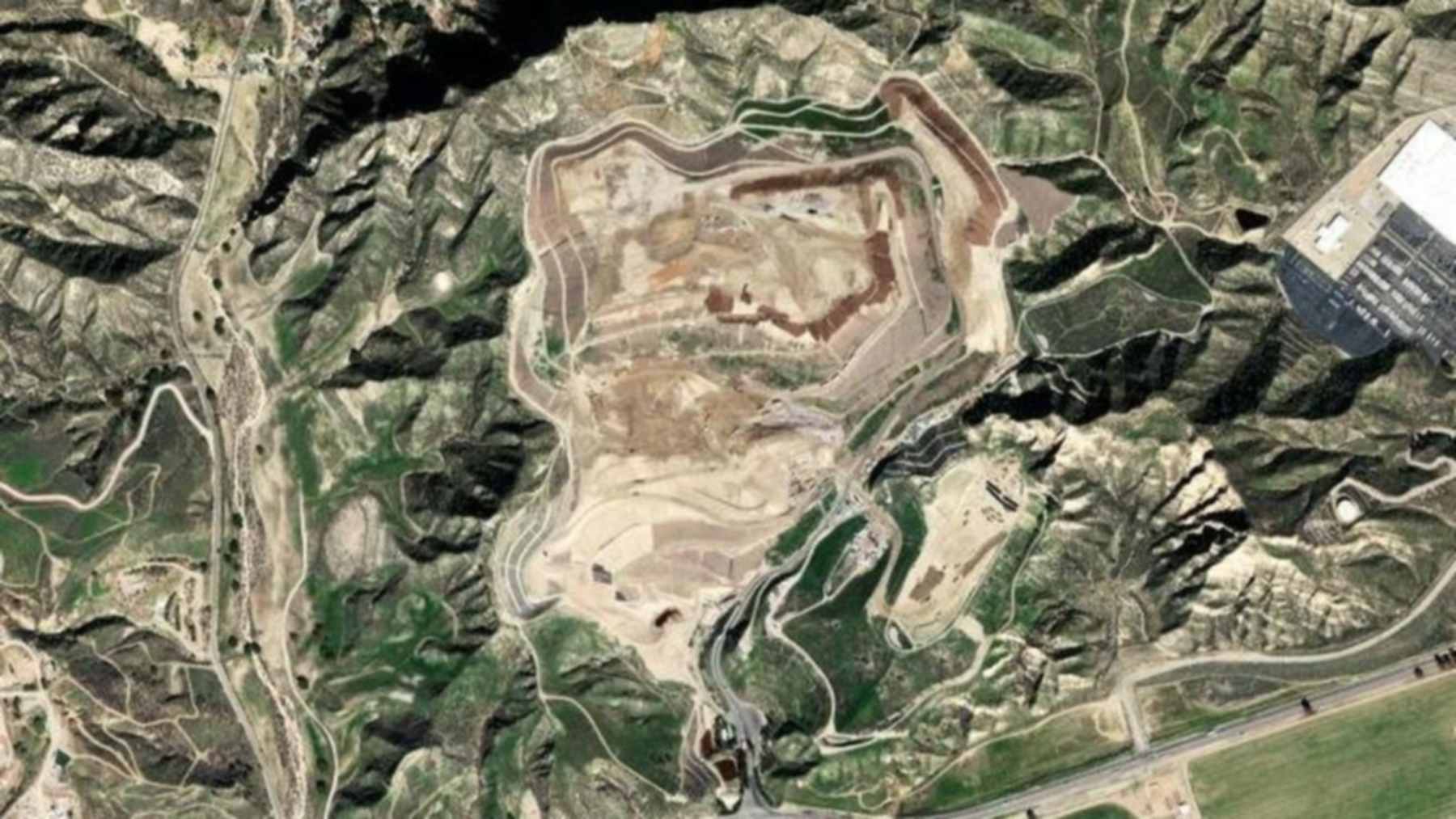
Chiquita Canyon’s had a problem deep inside it for about four and a half years. The EPA calls it a subsurface elevated temperature event, and the LA Times calls it a smoldering chemical reaction. Either way, the buried trash in part of the site is running much hotter than rotting garbage normally does. The EPA says the cause still isn’t known, and that the reaction now covers roughly 30 to 35 acres in the northwest part of the 639-acre landfill.
According to the LA Times, the drilling was happening in a section that was believed to be outside that reaction. When the drill got down there, it found smoldering garbage. The EPA’s summary, for its part, places the pressurized pocket in the reaction area. Put those two accounts side by side and it looks a lot like the hot zone had spread past where it was thought to end.
So why drill into a landfill that’s already running this hot? It’s a bit of a catch-22, frankly. Gas wells are a big part of how you keep a reaction like this in check, and you can’t put one in without drilling into the trash. The landfill said this well was meant to help deal with the elevated temperatures, and that it stopped work right after the release.
The EPA’s response seems pretty clearly built around that depth problem. Under its order, the landfill had three days to report on the incident and any ongoing threats, and it has to hand over a mitigation plan that the EPA can approve or change. Until that happens, no new vertical well goes deeper than 100 feet. Given the pocket was sitting at about 150 feet, that’s a fairly logical place to draw the line.
So what was in the air?
This is where I’d go slow, because there are three different kinds of information out there, and they aren’t all measuring the same thing.
First, there’s what the gas down there is made of. On its Chiquita Canyon page, the EPA says the gas coming off the reaction area includes hydrogen, methane, carbon monoxide and carbon dioxide, plus odorous or toxic air pollutants. The LA Times reports the agency said the November 16 release included methane, hydrogen and toxic air pollutants.
Then there are the monitors. The EPA says monitors in the community, around the landfill’s edge and on the site itself didn’t record anything over a short-term exposure limit. Monitors in the Val Verde and Castaic neighborhoods did pick up trace amounts of ethanol, acetone and other flammable liquids, according to the LA Times, but nothing above state or federal short-term standards. The paper also notes that some of the landfill’s leachate has shown high levels of benzene in past tests and has been handled as hazardous waste.
And there’s a catch with monitors that’s easy to miss. County Fire Chief Anthony Marrone told the board that early department statements about readings of zero were incorrect, and that a reading that detects nothing doesn’t mean nothing is in the air. Basically, a monitor that doesn’t pick something up is telling you the level was below what it’s able to measure, at that spot, at that moment. That’s useful information, but it’s not quite the same as an all-clear.
Which leaves the gaps, and there are a few. I couldn’t find a figure anywhere for how much gas came out of the hole, or for how hot the trash was where the drill hit it. We also don’t know yet what’s in the ash, and that’s what the December 3 results are supposed to tell us.
Residents say the ash landed on their cars and homes
People living nearby say the release coated their cars and houses in black ash, the LA Times reports. On the night of November 16, the county’s Department of Public Health directed the landfill’s operator to offer relocation to affected residents, and said the strong odors could cause nausea, dizziness, headaches and eye, nose or throat irritation.
Public Health director Barbara Ferrer told the board her staff had visited 1,400 households in nearby communities and spoken with about 500 residents. Preliminary surveys found that roughly 90% of the households surveyed noticed odors after the release. Four hotels are housing people who left their homes.
So was anyone actually told to leave? That’s a bit more complicated. That afternoon, the city of Santa Clarita put out evacuation advisories for several zones around the landfill, telling residents to be prepared to go if instructed, and calling it “a warning, not an evacuation order.” Those advisories were lifted the same night, and they were never upgraded to orders. At the board meeting, Leslie Luke, deputy director of the county’s Office of Emergency Management, said conditions were never judged serious enough for orders to evacuate, evacuation warnings or shelter-in-place notices, and Ferrer said the health officer determined the situation didn’t call for evacuation orders.
Dozens of families left on their own anyway, according to the LA Times.
The reaction is still going
Chiquita Canyon, LLC, a subsidiary of Waste Connections, runs the site, according to the EPA. The landfill hasn’t taken in any new trash since the start of last year, and Ferrer described it as permanently closed. Closed doesn’t mean quiet, though. The reaction underneath has kept producing heat, gas and liquid, and the EPA says weekly leachate production climbed from about 150,000 gallons to more than 1 million gallons in less than two years.
The emergency declaration is meant to pull more county resources into dealing with that reaction. Local, state and federal agencies also formed a rapid response team on November 18, according to the EPA. Nobody has put a date on when the reaction will be under control, and I wouldn’t expect anyone to.
So the next real answer is due on December 3, when the DTSC expects its ash results back. Until the EPA signs off on Chiquita Canyon’s mitigation plan, no new well on the site goes deeper than 100 feet.