
Big transit projects aren’t exactly famous for beating their own deadlines. You’ve probably driven past a subway or light rail job that seemed to be “almost done” for years, and plenty of cities have a few of those.
So when a tunnel boring machine under downtown Toronto showed up at a station about a week before the province said it would, I figured it was worth checking back in.
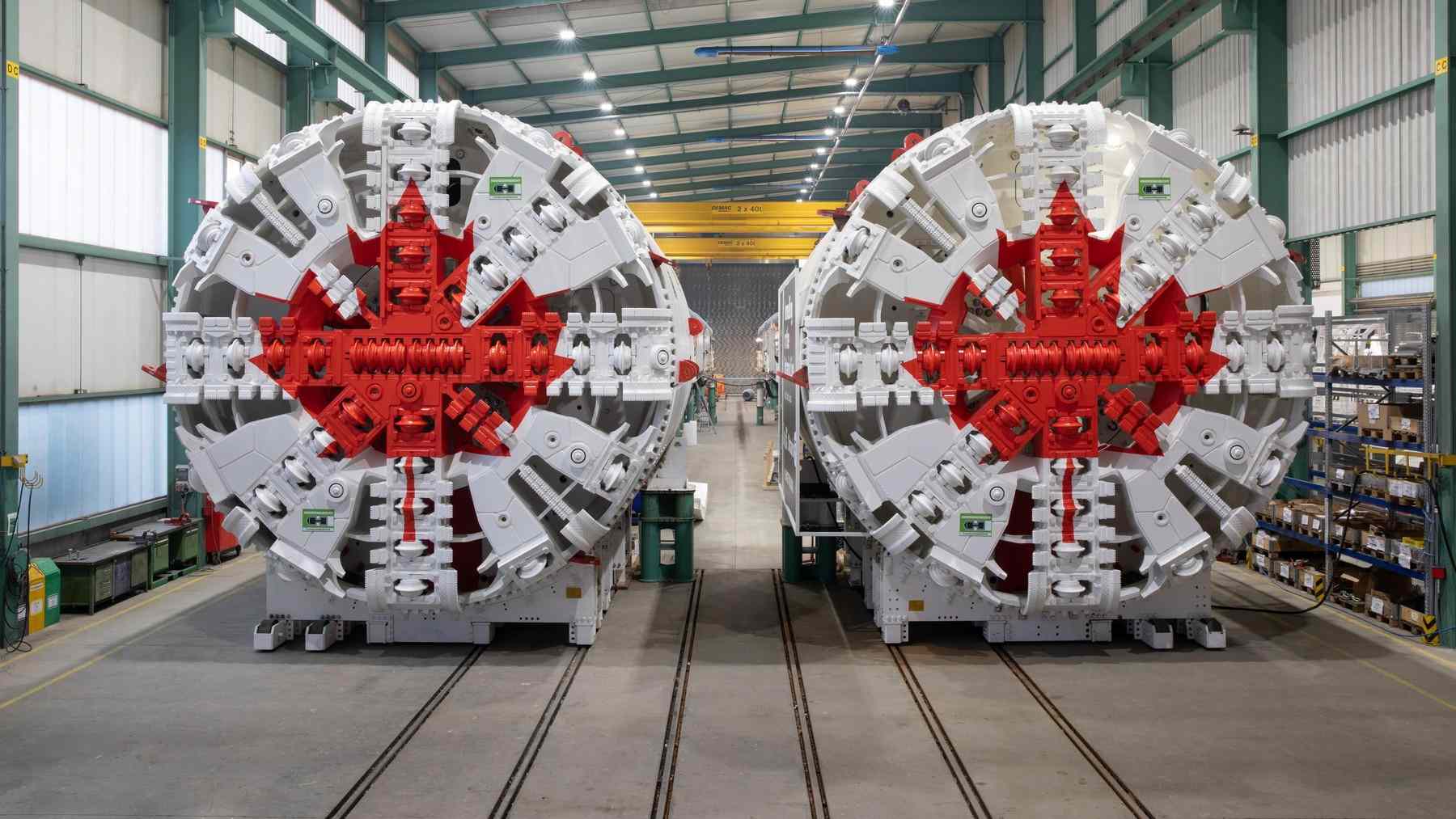
The machine is called Corkie. It’s the second of two machines digging the downtown tunnels for the Ontario Line, Toronto’s new subway line, and on November 24 it punched into the cavern being turned into King West Station, at King Street West and Bathurst Street. Metrolinx, the provincial agency building the line, announced the breakthrough on November 27.
Corkie isn’t alone down there. Its twin, Libby, broke into the same cavern on November 6, and we covered Libby’s arrival a few weeks ago. At the time, the Ontario government said Corkie would reach King West in December. It got there 18 days after Libby, with almost a week of November still to go.
So how did the second machine catch up?
Corkie’s drive to King West was about 4,265 feet, according to Metrolinx. That’s the same distance Libby covered, and no other run on the downtown section is longer.
If you’re wondering why there are two machines in the first place, it’s because the downtown section doesn’t use one big tube with trains running both ways. It uses two smaller tunnels side by side, one for each direction, and each machine digs its own. Libby is cutting the eastbound tunnel and Corkie is cutting the westbound one, but both of them are moving east.
What I find more interesting is the calendar. Libby set off from its launch shaft near Exhibition Station in April. Corkie didn’t start with it. In late June, Metrolinx said the second machine would begin tunneling “this summer,” and by mid-July it was describing both machines as digging.
Which means Corkie covered the same 4,265 feet in something like two months less than its twin. I can’t give you an exact figure, because Metrolinx hasn’t published Corkie’s launch date, and it hasn’t said why the second machine was quicker.
My best guess is a pretty boring one. The first machine on a job usually gets stuck with the awkward stuff, like learning how the ground behaves and getting crews, conveyors and deliveries of concrete segments into a rhythm. Whatever comes second gets to ride on all of that. But that’s my guess, not something Metrolinx has said.
It also helps that these things basically never clock out. Metrolinx says tunneling on the line runs around the clock, with the weekends used for maintenance.
So why stop at a station at all?
Both machines are now parked in the King West cavern for maintenance, and Chinatown Station, at Queen and Spadina, is next. If you’ve never seen one of these things up close, the pause might seem a bit odd.
Why not just keep digging?
Well, a tunnel boring machine is basically a factory that moves. The front end is a spinning cutterhead covered in cutting tools that grind through the rock, and right behind it the machine puts curved concrete segments together into rings that become the tunnel wall. Those tools wear down as they chew through bedrock roughly 130 feet below the street. Changing them in the middle of a tunnel means working in a very cramped space. A station cavern gives crews room to get around the machine instead of squeezing in behind it.
King West had that room ready and waiting. The province said back in April that excavation at the station site was already complete, so both machines broke into a space that had been dug out from the surface. Metrolinx hasn’t said exactly what the checks on Libby and Corkie involve. On most tunnel jobs, though, this is when worn tools get swapped out and the whole machine gets looked over before it’s moved across the station and pointed at the far wall.
Each one is about 22.5 feet across, according to Herrenknecht, the German company that built them. If you stood one on its end, it’d be roughly as tall as a two-story house. So two of them parked in the same room is a pretty big deal for whoever has to work around them.
One thing Metrolinx didn’t include this time was a ring count. Libby lined its first stretch with roughly 780 concrete rings, but the November 27 announcement doesn’t give a number for Corkie, so I’m not going to make one up.
There’s still most of a tunnel left to dig
King West was the first station either machine has reached, which explains why Metrolinx made a fuss over both arrivals. But it’s still early in the trip.
Each machine’s full journey is about 3.7 miles, from the launch shaft near Exhibition Station to the Don Yard tunnel portal, just west of the Don River, according to Metrolinx’s April announcement. So if you’re doing the arithmetic at home, 4,265 feet is only a little over a fifth of the way. That leaves each machine with almost 3 miles to go.
Along the way, they’ll break into five more station caverns: Chinatown, Osgoode, Queen, Moss Park and Distillery District. Metrolinx hasn’t said when it expects either machine to reach Chinatown, and after Corkie beat its December forecast, I wouldn’t read too much into a forecast month anyway.
The names are a nod to the start and end of the route, too. A Toronto transit fan named Jason Paris won a public naming contest with Libby, for Liberty Village, where the downtown tunnels begin, and Corkie, for Corktown, where they end. We looked at both machines back in July, when they’d barely started.
Metrolinx announced Corkie’s arrival on November 27, and once the maintenance checks at King West are done, both machines are due to head east to Chinatown Station, at Queen Street West and Spadina Avenue.