
The federal government is supposed to buy American. It is the default setting on nearly everything it purchases, and when an agency genuinely cannot find a domestic option, it has to file a public waiver saying so.
NOAA filed one of those last summer to buy a single underwater drone that weighs 15.6 pounds.
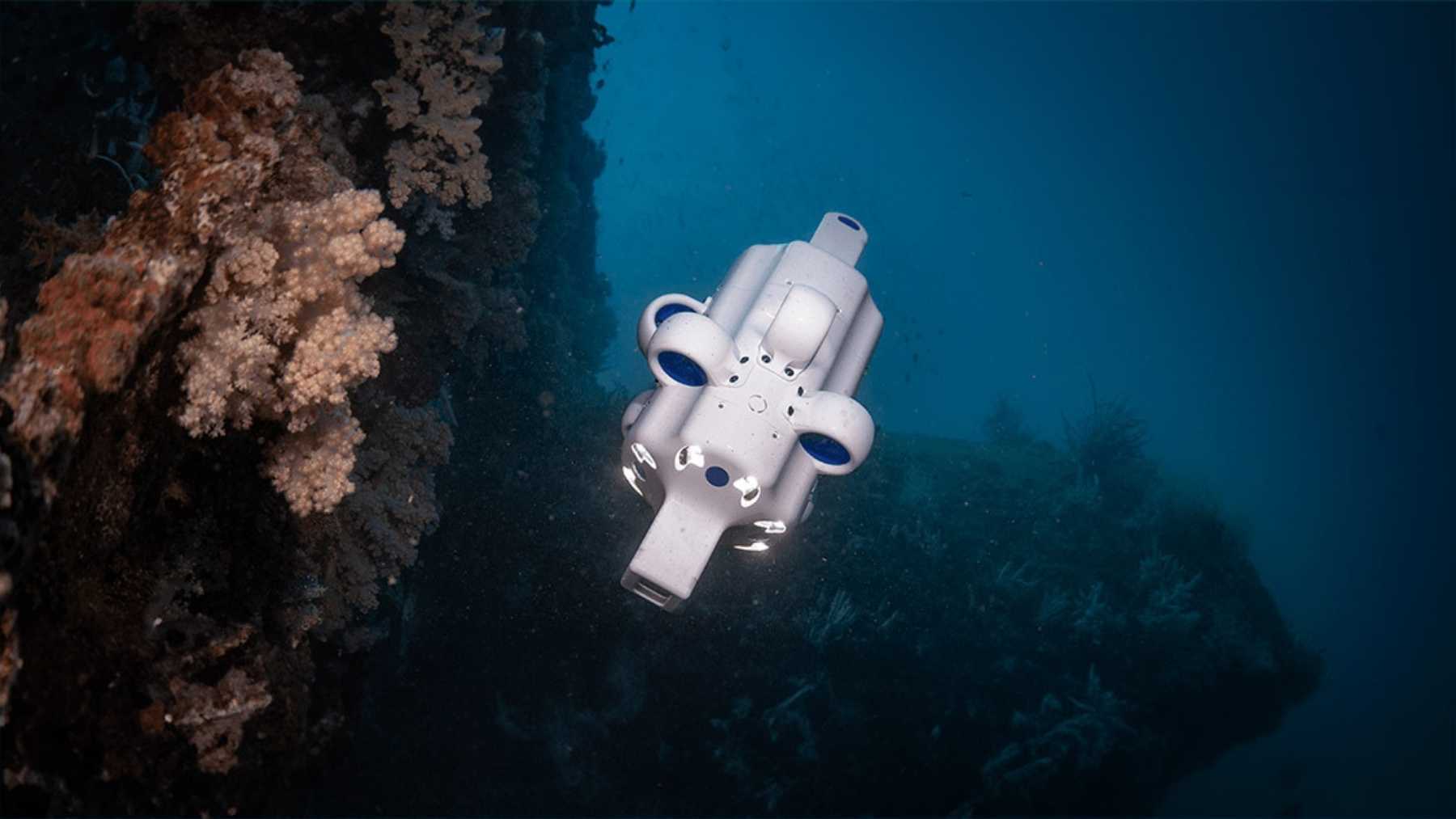
The machine is called Hydrus. It is built in Perth by an Australian outfit called Advanced Navigation, and NOAA’s National Centers for Coastal Ocean Science wanted exactly one for seabed imagery work.
Then, in its own annual roundup, NOAA said what the thing actually did in the water. That part is more interesting than the paperwork.
The government had to certify that nobody here makes one
The nonavailability waiver is public, and it is exactly as dry as you would expect.
NOAA’s contracting side had to state on the record that the drone is Australian-built, and that no American manufacturer offers anything equivalent in quantities the agency could reasonably buy. Delivery was expected August 1, 2025. The filing notes the hardware was “needed for immediate field work”.
One unit. One waiver. For a robot you can carry to the dock under one arm.
Waivers like this get filed constantly for obscure lab gear, so this is not a scandal. It is a data point. In a category the United States is pouring money into, the small hovering survey drone that a fisheries scientist can actually use is currently an import.
NOAA put a number on it in its own annual report
NOAA’s Office of Marine and Aviation Operations publishes a top-ten list of what its uncrewed systems office got done each year. Sitting in the 2025 list, between a wave glider effort around Hawaii and 7,000 nautical miles of DriX seafloor mapping, is a line about the National Coral Reef Monitoring Program.
The program flew Hydrus units, operated by an industry partner, and roughly doubled how many benthic survey runs it could finish in a day compared with a diver doing the same job.
A federal agency putting a performance multiple on a commercial robot inside its own accomplishments report is not the same thing as a vendor case study. Nobody writes marketing copy into a NOAA annual list.
Benthic surveys are the unglamorous backbone of reef science. Somebody swims a measured line, photographs the bottom in overlapping frames, and the images get stitched into something a scientist can count corals off.
It is slow, it eats dive tables, and every hour of it is an hour a human spends underwater. Doubling that throughput without adding a second diver is the entire pitch.
NOAA’s Pacific Islands Fisheries Science Center, which has been working with the drone since at least 2024, described it in about the most American way available: toaster oven-sized.
Everything that normally needs a boat is packed into 20 inches
Hydrus is 20.5 inches long, 10.4 inches wide and 9.3 inches tall. The hull is a sealed polymer block with no external connectors, which means no plugs to flood and nothing to unscrew before a dive.
Inside that envelope Advanced Navigation lists a Doppler velocity log, an ultra-short baseline transponder, an inertial navigation system, forward-facing sonar, an acoustic modem, an optical modem, and a 4K camera shooting 60 frames per second under 5,000 lumens of lighting.
The sensor list is the actual engineering story. Underwater there is no GPS, so an autonomous vehicle has to know where it is by dead reckoning off the seabed, and normally that stack lives in a hull big enough to need a crane.
The thrusters are hubless, which sounds like a marketing word until you have watched a conventional impeller eat a length of rope. Charging is wireless over standard Qi and works with the vehicle wet, so nobody opens the hull between dives.
There is also an e-ink screen on the body, which is a small thing that tells you a lot. Someone on that design team assumed a tired field tech would need to read vehicle status on a rocking boat in bright sun without waking anything up.
The two hours is the catch, and it is a real one
Endurance is two hours. Range is 1.5 kilometers, roughly nine-tenths of a mile. Top speed is 1.5 knots for both transit and survey, which is a slow walking pace.
Those three numbers together define the job. This is a point-inspection and small-area survey tool, and it is not a substitute for anything that has to stay out overnight.
The contrast with the rest of the field is stark. Cellula Robotics ran its hydrogen-powered Envoy submerged for 385 hours on a single fuel cell. Helsing’s SG-1 Fathom glider is built to sit on the seabed for three months listening for submarines.
Hydrus does two hours and comes back for a charge. It buys its size by giving up everything else.
Worth flagging one more thing for anyone comparing old coverage to the current sheet. When Hydrus launched in 2022, write-ups based on company briefings, including IEEE Spectrum, described a 3,000-meter depth rating, a 9-kilometer range and up to three hours of battery. The spec sheet Advanced Navigation publishes today lists 300 meters, 1.5 kilometers and two hours.
Products get more modest between launch slide and shipping crate. The current sheet is the one NOAA bought against, and it is the one worth quoting.
This is not the drone the Navy is buying by the hundred
It is easy to file every small underwater robot in the same drawer, and that is a mistake here.
The uncrewed vehicle the Navy is actually acquiring in volume is Lionfish, a 10-foot tube two sailors lift off a dock, built around HII’s REMUS 300 and pointed at mine countermeasures. Different mission, different money, different physics.
Hydrus is a science and inspection instrument that happens to be dual-use. Advanced Navigation markets it into defense as well, but the documented American users so far are fisheries scientists and coastal ocean researchers, not fleet operators.
NOAA’s Southeast Fisheries Science Center and the National Centers for Coastal Ocean Science have both worked with it, and the Southwest Fisheries Science Center in La Jolla signed a facility use agreement letting the company test the vehicles in its indoor tank.
Which is a fairly ordinary way for a foreign robot to end up on the federal books. It shows up on a research project, it does not break, and eventually somebody writes a purchase order and discovers there is no domestic equivalent to write it against.
Where this leaves the Buy American math
Advanced Navigation is not a garage operation. It closed a US$110 million Series C in March 2026 led by Airtree Ventures, with Quadrant and Australia’s National Reconstruction Fund Corporation in the round, and it builds the vehicle at its own subsea robotics facility in Western Australia.
That is a company with the balance sheet to keep shipping, and a home government with an explicit interest in it staying Australian-built.
The company’s own claim is that Hydrus cuts survey costs by up to 75 percent against divers and ROVs. Treat that as a vendor figure. NOAA’s near-doubling of daily survey runs is the number an outside party actually put its name to, and it is narrower and more useful.
If you want the honest read on the American side of this, it is not that the drone is remarkable. It is that a federal agency needing a 15.6-pound hovering survey vehicle in 2025 had to go through a waiver to get one, and nothing in the 2026 procurement record suggests that changed. Somebody in the United States is going to notice that gap is worth a business, and when they do, the waiver stops being routine and starts being a sales pitch.