
You have seen the London Eye. It turns up in establishing shots whenever a film needs you to know a scene is set in London, and it has been rotating over the Thames since 2000.
The practice that designed it, Marks Barfield Architects, has spent the past few years working on something with no view from the top at all. It is a power station. It would sit in the Bristol Channel, and the wall around it would run about 14 miles.
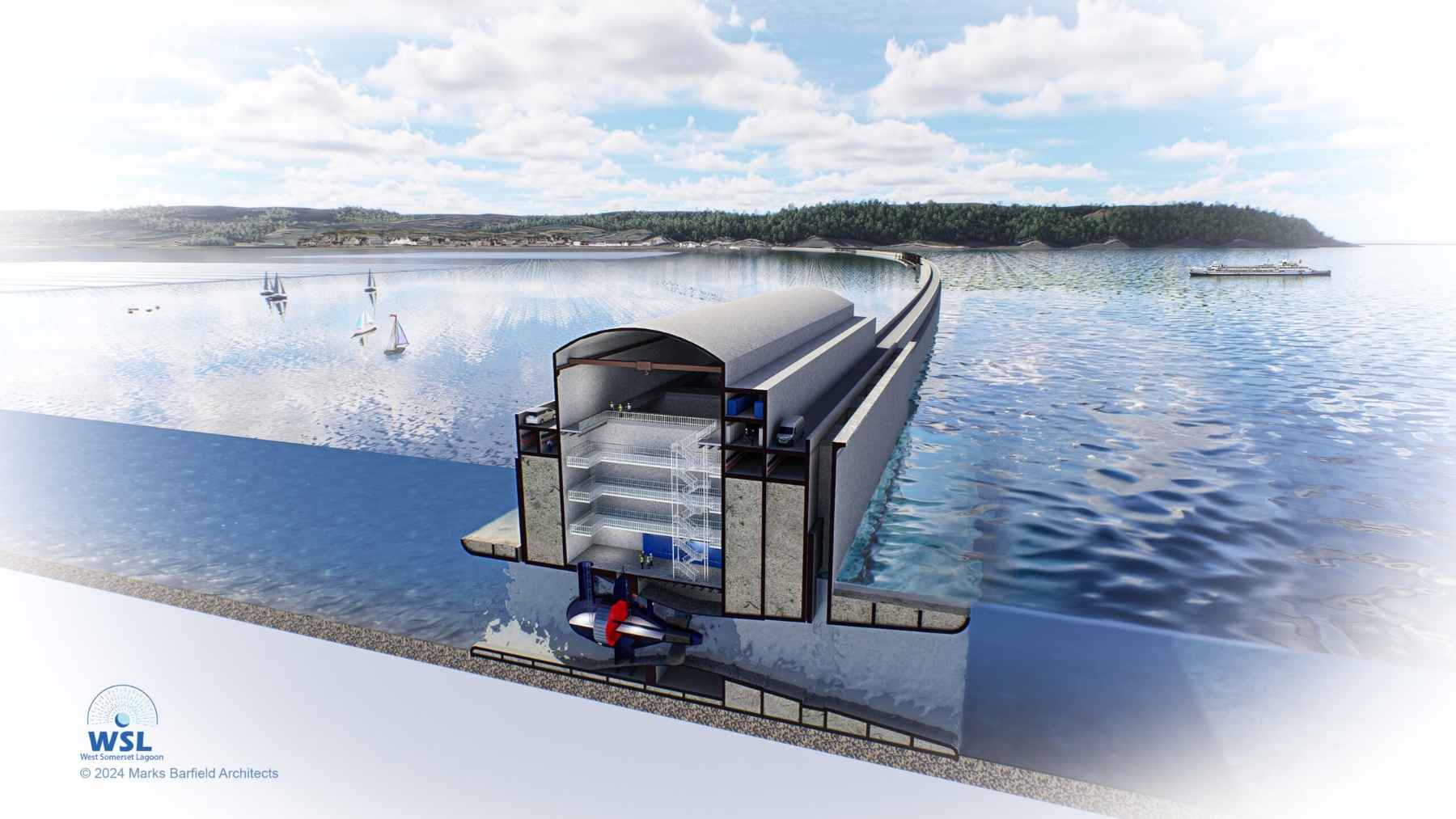
The project is called the West Somerset Lagoon. It would be a semicircle of concrete pushed out from the Somerset coast between the harbor towns of Minehead and Watchet, with 125 turbines rated at 20 megawatts apiece sitting inside the wall.
That comes to 2,500 MW installed, or roughly three quarters of what the nuclear station going up about 15 miles east along the same coast will produce.
On June 29 the developer published the results of its first public consultation, which is the first hard measurement anyone outside the project has had of what the people living there actually think. Around 63% backed it moving to the next stage. Then they started talking about the roads.
The wall is 206 concrete boxes, floated out and sunk
The thing that makes this buildable, if it is ever built, is that almost none of it would be built at sea.
West Somerset Lagoon’s own engineering description has the enclosure formed from 206 caissons, which are cellular boxes with reinforced concrete walls and a base. They would be cast in existing port facilities around the Severn Estuary and the Bristol Channel, towed out, positioned, then sunk onto the seabed by filling them with water, sand and gravel.
The technique comes from offshore oil and gas and from harbor construction, and the reason for it is weather. Every week a caisson spends being poured in a dock is a week it is not exposed to a channel that can go unworkable for days at a time.
The turbines and sluice gates would live inside those boxes. The layout calls for 125 bulb turbines of 7.2 meters (23.6 feet) diameter in five groups of 25, plus 160 sluiceways with vertical lift gates in eight groups.
They would be spread around the perimeter rather than bunched at one point. Cardiff University research students modelled that choice, and the spacing is meant to stop silt piling up inside and to give fish a less concentrated flow to deal with.
Bulb turbines are the same family running at La Rance in Brittany, where 24 of them have been turning since 1966. The Somerset design changes two things: variable speed, and three blades instead of four.
The developer says both improve the odds for any fish that goes through. There would also be an acoustic deterrent fitted to the turbines to talk them out of trying.
There are three different 14s in this story
Nearly every writeup of this project contains the number 14, and they are not all the same 14.
The developer describes a semicircular lagoon 14 kilometers in diameter, which is 8.7 miles straight across the open mouth. The Guardian and most of the British press went with a 14-mile arc, which is the wall itself. And the developer separately promises protection against sea level rise for 14 kilometers of coastline.
All three are correct. Run the geometry on a semicircle 8.7 miles wide and the curve works out at about 13.7 miles, which rounds to the headline figure everybody used.
The shape is not decorative. A semicircle encloses the most water behind the shortest possible run of wall, and since the wall is the expensive part, that ratio is the entire economic argument for the design. In this case it puts roughly 30 square miles of sea inside the enclosure.
Four bursts a day, and the nameplate hides most of the story
Tidal range works by holding water back. The tide fills the lagoon, the gates close, a difference in level builds between the inside and the open sea, and the turbines run until that difference is gone. It happens on the flood and on the ebb, which gives four generating periods in every 24 hours.
Between those periods the output is zero.
The developer’s own numbers make the point better than any critic could. Multiply 2,500 MW by the hours in a year and you get 21.9 TWh. The stated annual figure is 6.5 TWh.
So the lagoon would spend roughly 70% of the year producing little or nothing. West Somerset Lagoon puts that 6.5 TWh at about 2% of current UK electricity demand, or two million homes at Ofgem’s median usage.
What tidal range has instead of volume is a calendar. Wind forecasts get worse the further out you look. Tide tables for 2050 already exist and they will be right, which is a different proposition from the underwater-propeller approach that Wales is scaling up at Morlais, where the machines harvest the speed of the water rather than its height.
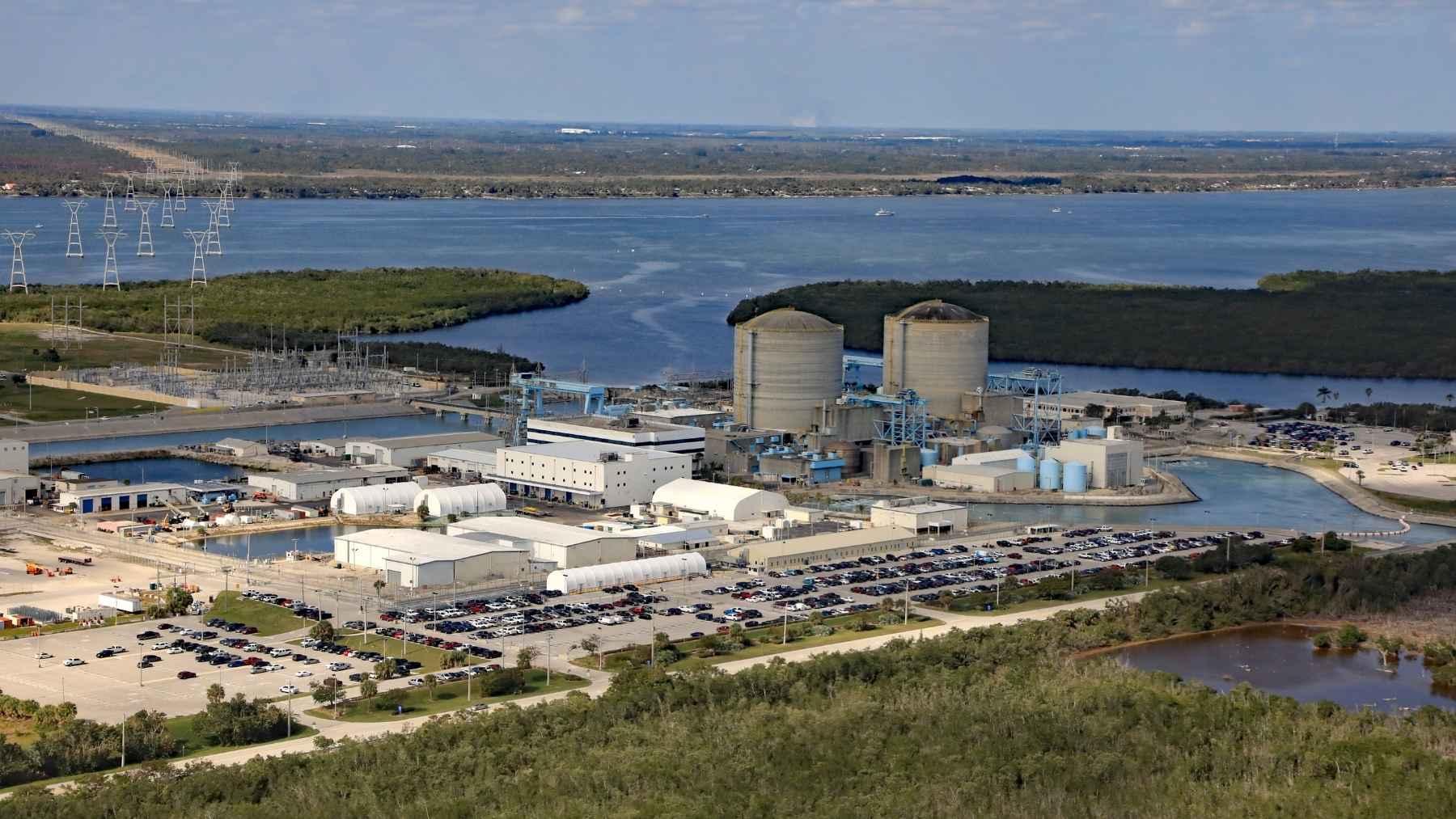
The comparison down the coast is instructive. Hinkley Point C is 3.2 GW, was originally meant to be running in 2025, and EDF confirmed in February that its first reactor will not come online before 2030, at a cost now put at £35 billion in 2015 prices.
The lagoon would plug into the same socket. The cost estimate lists a grid connection to the National Grid at Shurton, which is the 400 kV substation National Grid built inside the Hinkley Point C site specifically to get the nuclear plant’s output onto the network.
The locals said yes, then said the A39
The consultation ran from January 16 to April 2 and drew 625 responses, which for a scheme of this scale is a modest sample and the developer does not claim otherwise.
Of those, 63.1% rated their support for the project moving to its next stage of development at four or five out of five. A firm 29.6% put it at one or two. Some 578 respondents, 92% of the total, named at least one community benefit, with clean energy and coastal protection at the top and job creation close behind.
The opposition was almost entirely about traffic. 44% were concerned or very concerned about construction traffic, and it clustered exactly where you would expect: about 35% of Minehead’s 235 respondents and 24% of Watchet’s 103 landed in the most-opposed group.
The specific complaints are the kind you only get from people who live somewhere. The A39 between Bridgwater and Minehead has been slow for years. The B3191 between Watchet and Blue Anchor is closed because the cliff is coming down. And several respondents pointed out that the road network already jams on Butlin’s changeover days at the Minehead resort.
The survey question itself noted that all the large components would arrive by sea, direct to the offshore site. The concern stuck anyway. The most common fixes suggested were improvements to the A39 and a direct rail link between Minehead and Taunton.
Aidan Clegg, chief executive of West Somerset Lagoon Limited, called it “early days” and said the company will work with Somerset Council on the traffic question. Rachel Gilmour, the MP for Tiverton and Minehead, described the process as ongoing and said nothing would happen without continuous consultation.
The men proposing it were studying the Severn Barrage in 1982
This is the part where the project stops reading like an architecture render and starts reading like unfinished business.
Chris Binnie, founder chairman of West Somerset Lagoon Ltd, sat on the management board of the Severn Tidal Power Group studies between 1982 and 1984, then chaired the UK government’s independent engineering and technical expert panel on Severn tidal power from 2007 to 2010. He is a fellow of the Royal Academy of Engineering, and he lives in West Somerset.
David Kerr, who leads the engineering, ran the civil engineering studies for that same Severn Tidal Power Group in the 1980s, caisson design and installation included, on what was then an 8 GW barrage concept. He spent 25 years at contractor Sir Robert McAlpine, eight of them as chief design engineer.
Roger Falconer, emeritus professor at Cardiff University, handles the energy and hydrodynamic modelling. Julia Barfield, managing director of Marks Barfield and co-creator of the London Eye and the Brighton i360, covers architecture and masterplanning. Clegg, the chief executive, is a former investment banker with 22 years at firms including UBS and BNP Paribas.
So the same engineers who spent the Thatcher years trying to dam the Severn are back with a semicircle instead. The barrage kept dying on environmental objections and cost. A lagoon that encloses no major river, sits outside the protected conservation areas and stays clear of the shipping channels to Bristol and Cardiff is the answer they eventually arrived at.
Nothing has been consented, and that is the actual obstacle
Britain’s last serious run at this was Swansea Bay, a 320 MW lagoon in Wales. It won development consent in 2015. In June 2018 the Welsh Government offered £200 million, and later that same month the UK government withdrew support on value-for-money grounds.
The mood has shifted since without the paperwork moving much. The Severn Estuary Commission concluded in March 2025 that tidal range in the estuary is feasible, ruled out a full barrage for now, and recommended a commercially viable lagoon as a demonstration project financed on a regulated asset base model.
NESO, the body that runs Britain’s grid, published its Strategic Case for Tidal Range in October 2025. It found up to 8 GW could be absorbed with less than 0.2% impact on system operation, and estimated wholesale prices around £120 million a year lower between 2037 and 2060.
The tidal industry called the modelling flawed and asked for it to be rerun.
The document that would put tidal range on the national map, the first Strategic Spatial Energy Plan, has slipped. NESO now says the draft plan goes out to public consultation in early 2027.
Meanwhile the scheme sits on the Planning Inspectorate’s register as nationally significant infrastructure project EN010074. Its recorded status has been “Pre Application” since the entry was created in September 2023. Permits are not construction anyway, as a six-turbine French tidal project with every consent signed and a missing tariff decree keeps demonstrating.
The developer’s own programme allows four years for environmental studies and a development consent order, one year for tenders and financial close, five years to build the enclosure and one more to reach full output.
That is 11 years from a starting gun that has not fired. Construction cost is put at £10.5 billion in 2023 prices, with New Civil Engineer reporting £10.9 billion.
Which makes the cycle path the most revealing detail in the whole thing. Marks Barfield’s design puts a walking and cycling route along the top of the wall, and the developer talks about it connecting out along the lagoon during the summer months.
Nobody puts a bike route on a machine they expect people to ignore. It is a bet that West Somerset will decide it wants this thing sitting off its beaches for the next 120 years, and on the evidence of 625 questionnaires it might, provided somebody does something about the A39 first.