
Every federal nuclear approval reads the same way in a headline. A permit to pour concrete, a license to run a plant for forty years, and a signed agreement about which rulebook applies all get flattened into the same word. Deep Fission got the third kind on Thursday.
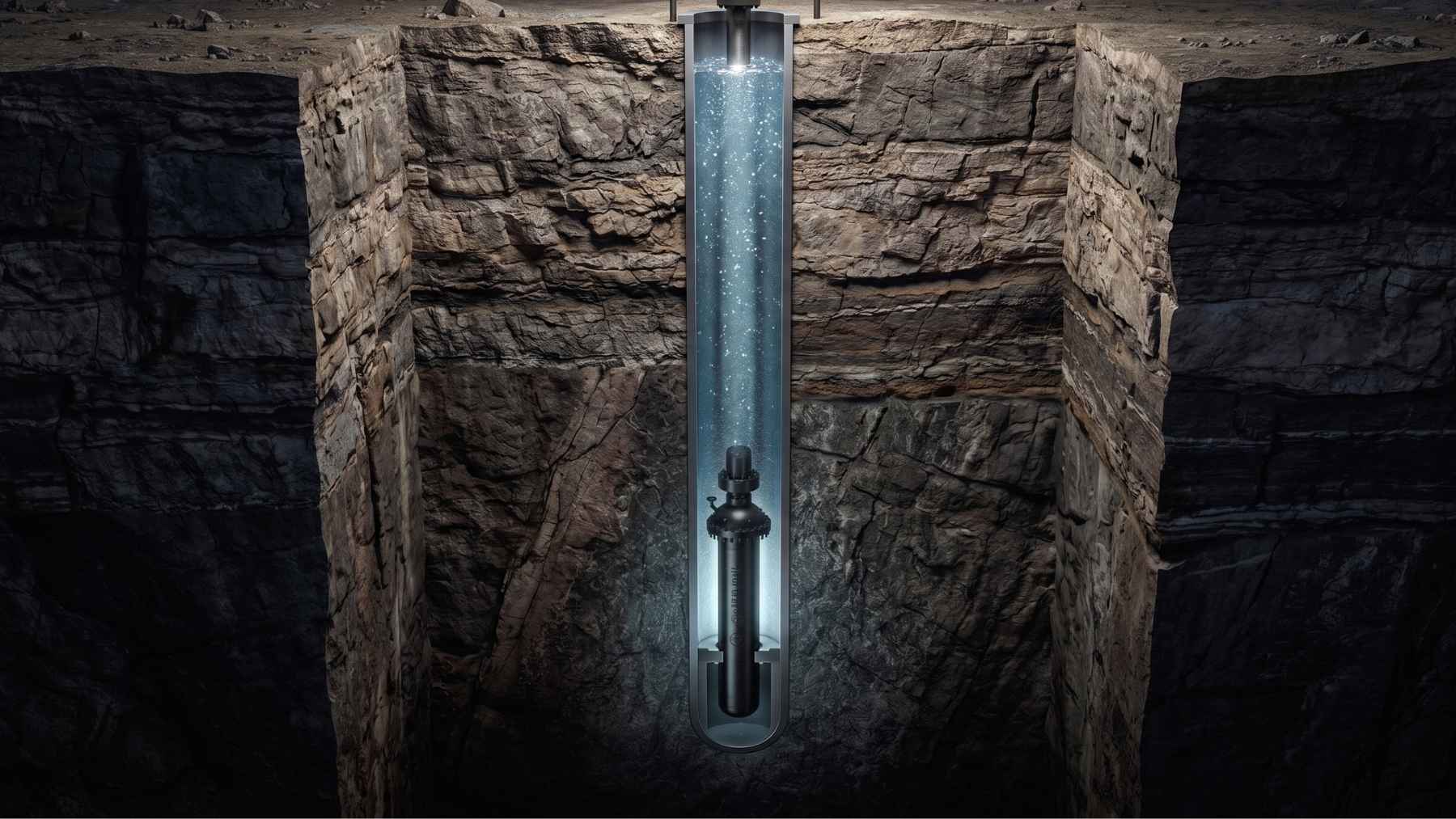
The Department of Energy approved the company’s Nuclear Safety Design Agreement for its Gravity reactor, the 15-megawatt pressurized water machine it wants to hang at the bottom of a mile-deep borehole outside Parsons, Kansas. Liz Muller, co-founder and CEO, called it “a major step forward for Deep Fission” in the announcement.
She isn’t wrong. It is also the first of four gates on the DOE authorization ladder, and what it approves is not the reactor. It is the plan for proving the reactor is safe.
We laid out the engineering case for the mile-deep design in June and where the hardware actually stood at the end of July. This is the regulatory piece, and it is the first one carrying a federal signature.
DOE approved the argument, not the machine
The Nuclear Safety Design Agreement has a real definition, and it is worth reading before deciding what Thursday meant. It lives in DOE-STD-1271-2025, the Authorization Pathway for Nuclear Facilities, published in August 2025 so DOE could authorize reactors through its own process rather than the Nuclear Regulatory Commission’s licensing route.
The NSDA is where the company and DOE agree on the design requirements, the method that will be used to analyze hazards and accidents, the format the later safety documents take, and which industry codes and standards apply. It also pins down the key safety decisions in the design and how the two sides will talk to each other as it evolves.
None of that is the safety case. It is the agreement on how the safety case gets written and graded. DOE gives its review team 45 days from accepting one of these documents to approve it or send back significant comments.
Which is not nothing. Every argument about methodology settled at this stage is an argument that doesn’t detonate a schedule two years later, and schedule is the entire reason this program exists.
Three more sign-offs stand between the paperwork and the uranium
Gate two is the Preliminary Documented Safety Analysis, which DOE expects at around the halfway point of the design. Gate three is the final Documented Safety Analysis and the technical safety requirements that come with it, written against the reactor as actually built rather than as drawn.
Gate four is a readiness review followed by startup approval, and for a new reactor the standard puts that signature with the Secretary of Energy personally. The same document is blunt about fuel: nuclear material above a Hazard Category 3 level cannot enter the facility until the readiness review is finished and that approval is in hand.
There is one piece of genuine speed buried in there. For nuclear facilities funded by private money, DOE’s standard says construction can start at the earliest point the law permits, which is a very different posture from waiting on a construction permit.
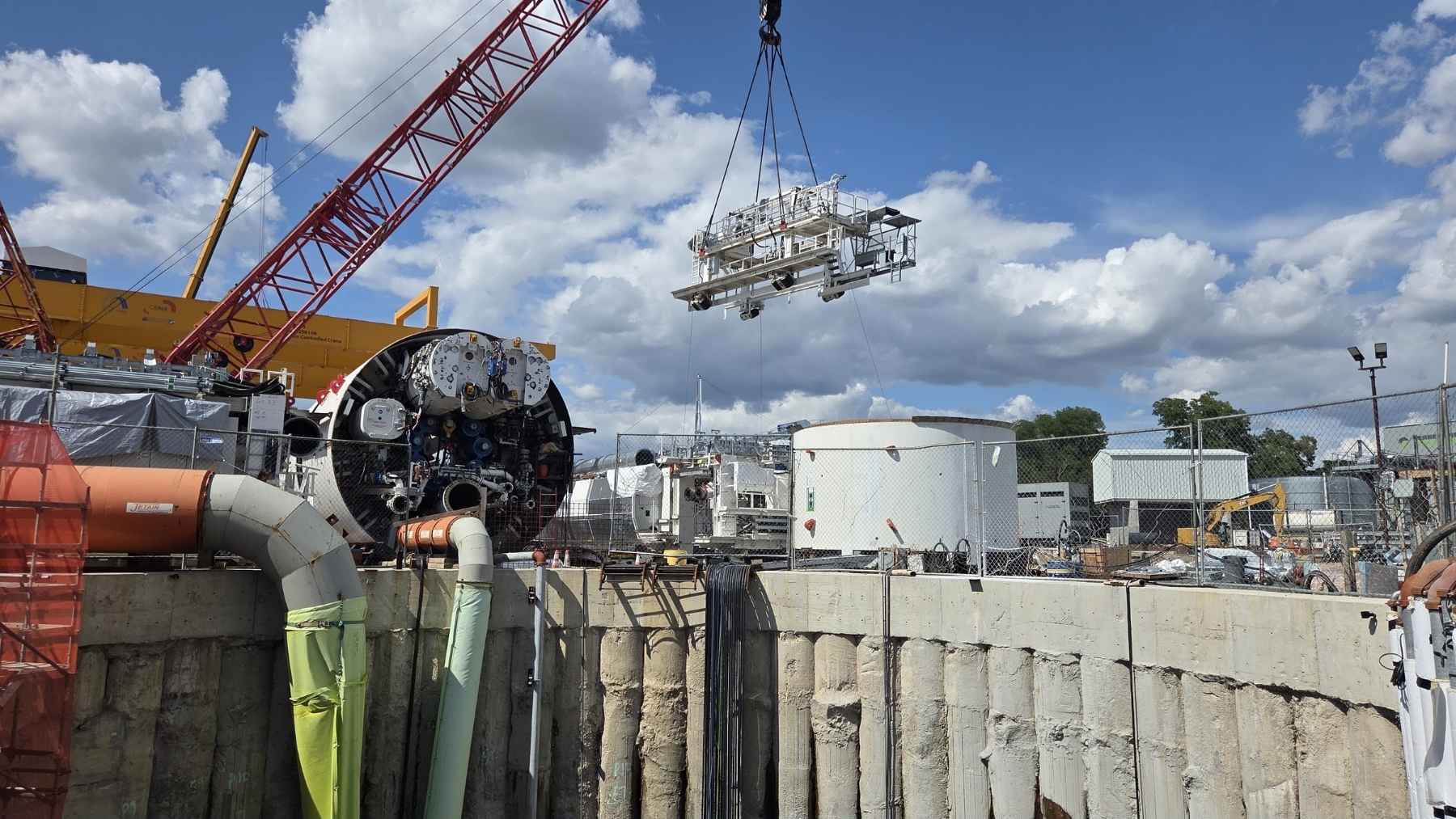
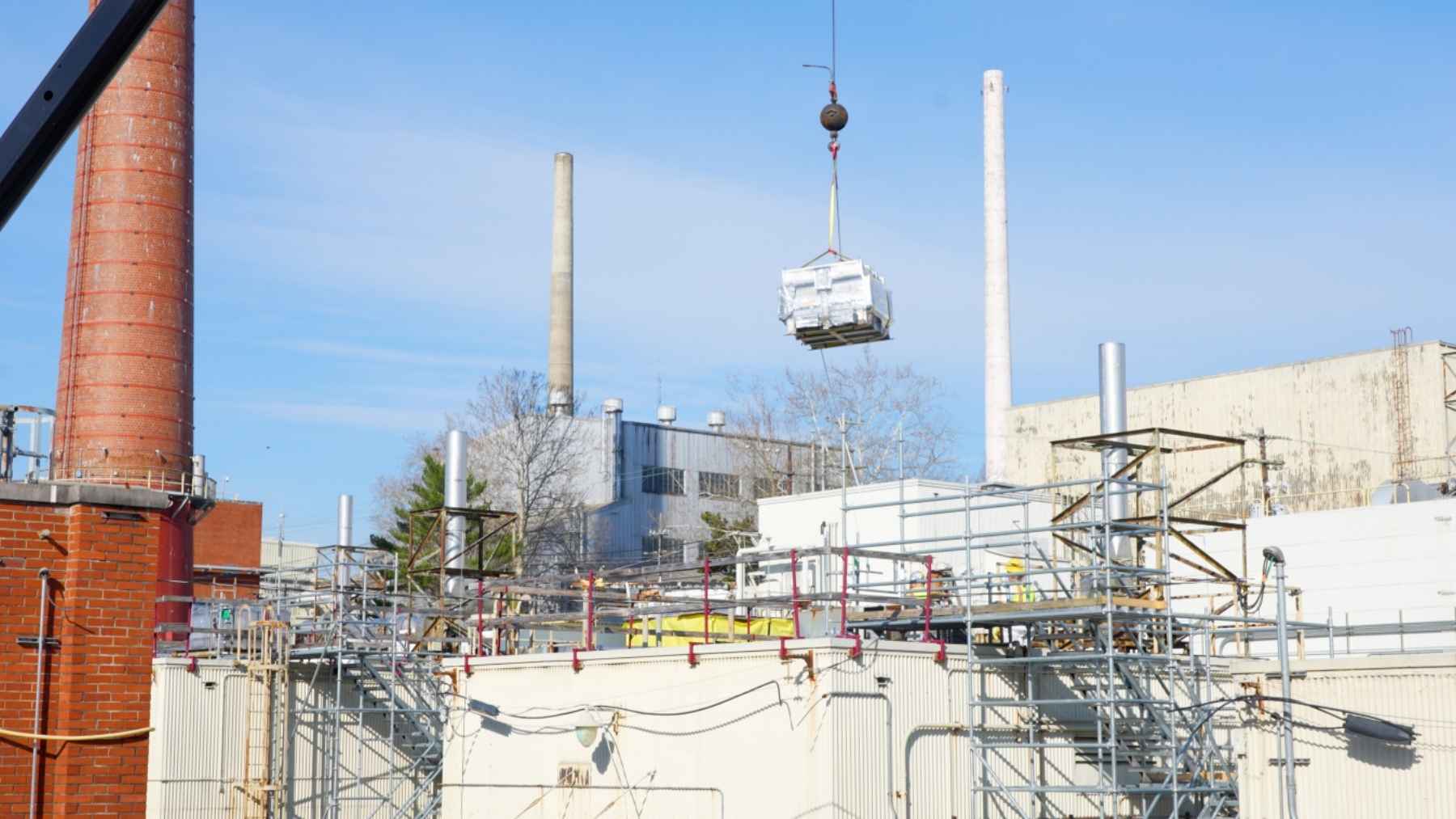
Deep Fission has room to use it. The Parsons site has one finished data-acquisition well, eight inches across and 6,000 feet deep, and the prototype reactor canister has been sitting there since July 7.
The large-diameter borehole that canister is supposed to go down is still working through permitting with the Kansas Department of Health and Environment. No hole, no rehearsal.
Five reactors in this program went critical this summer, and none of them was this one
Executive Order 14301 set the target for the DOE Reactor Pilot Program: at least three reactors reaching criticality under DOE authorization, at sites outside the national laboratories, by July 4, 2026. That target was met, and then some.
Antares Nuclear’s Mark-0 got there first in early June. Valar Atomics’ Ward 250 followed, Deployable Energy’s Unity went critical on July 1, and Aalo Atomics made the deadline in the early hours of Independence Day.
Oklo’s Groves isotope test reactor near Lockhart, Texas, became the fifth on August 5. World Nuclear News reported both milestones on the same day Deep Fission got its paperwork.
Deep Fission has stopped playing that particular game and said so in writing. The Parsons reactor, the company says, is not built to go critical once for the cameras and stop. The intent is for the demonstration unit to become a fully NRC-licensed machine that sells power after testing.
That is a defensible position and a slower one. The reactors that beat it to criticality are small test machines built to prove a design works, not to bill anybody for electricity. A 15-megawatt pressurized water reactor feeding a grid is a heavier lift, which is why the first grid-scale SMR in the Western world is a Canadian build that only recently set a 953-tonne basemat at the bottom of a 35-meter shaft.
DOE wrote itself an environmental off-ramp back in February
The route Deep Fission is on goes around the NRC, and in February it got materially shorter. DOE published a categorical exclusion for advanced nuclear reactors, effective February 2, covering authorization, siting, construction, operation and decommissioning.
A categorical exclusion means no environmental assessment and no environmental impact statement, provided DOE finds two things. One, that the project’s fission product inventory, fuel, reactor design and operating plans keep the risk of offsite consequences low enough. Two, that its waste and spent fuel can be managed under existing rules. DOE makes that call project by project.
Parsons noticed. Paul Gunter of Beyond Nuclear, a group that opposes the project, told The Wall Street Journal in late July that exempting Deep Fission from a peer-reviewed environmental impact statement over high-level waste under the town is unacceptable. The same reporting found a town of 9,600 split between residents who want the jobs and residents who never voted for an experiment under their houses.
Selling the power is a separate problem. Whatever DOE authorizes, commercial operation still needs an NRC license, and the company has pointed at the first half of 2027 for that application.
The market did this arithmetic weeks ago
Deep Fission priced its IPO at $16 a share on June 18, the bottom of a reduced range. Shares rose on Thursday’s announcement and closed Friday at $8.99, putting the company’s market value near $530 million. It reported a second-quarter loss of $0.56 a share on August 3.
Analysts are friendlier than the tape. Benchmark, Canaccord and Seaport Research have all opened coverage with buy ratings and targets between $18 and $25 since the IPO quiet period lapsed on July 28.
The gap between those two numbers is the whole story of borehole nuclear right now. The physics is not in dispute. A mile of water really does supply roughly the 160 atmospheres a pressurized water reactor wants, and billions of tons of rock really do shield better than a dome.
What nobody has demonstrated is the rest of it: drill the hole, lower the machine, run it, and haul it back up for inspection at a price that beats building the dome.
The next milestone in Kansas is a hole, not a signature
What matters next at Parsons is a wider borehole with the prototype canister at the bottom of it, running the full installation sequence with no fissile material anywhere near the site. That test is what turns the NSDA from an agreement into evidence.
It also needs a state permit before it needs another federal one. DOE and Deep Fission have now agreed on how the exam will be graded. Nobody has sat it yet.
 williamsabey DRIVER1 month ago