
Everybody knows the dog. Any footage of a minefield being cleared has a Belgian Malinois in it somewhere, nose down, handler on a long lead, both of them moving at roughly the speed of a slow walk. It works, and it has worked for decades.
It is also expensive, slow, and heavy enough to be a liability on the wrong kind of mine.
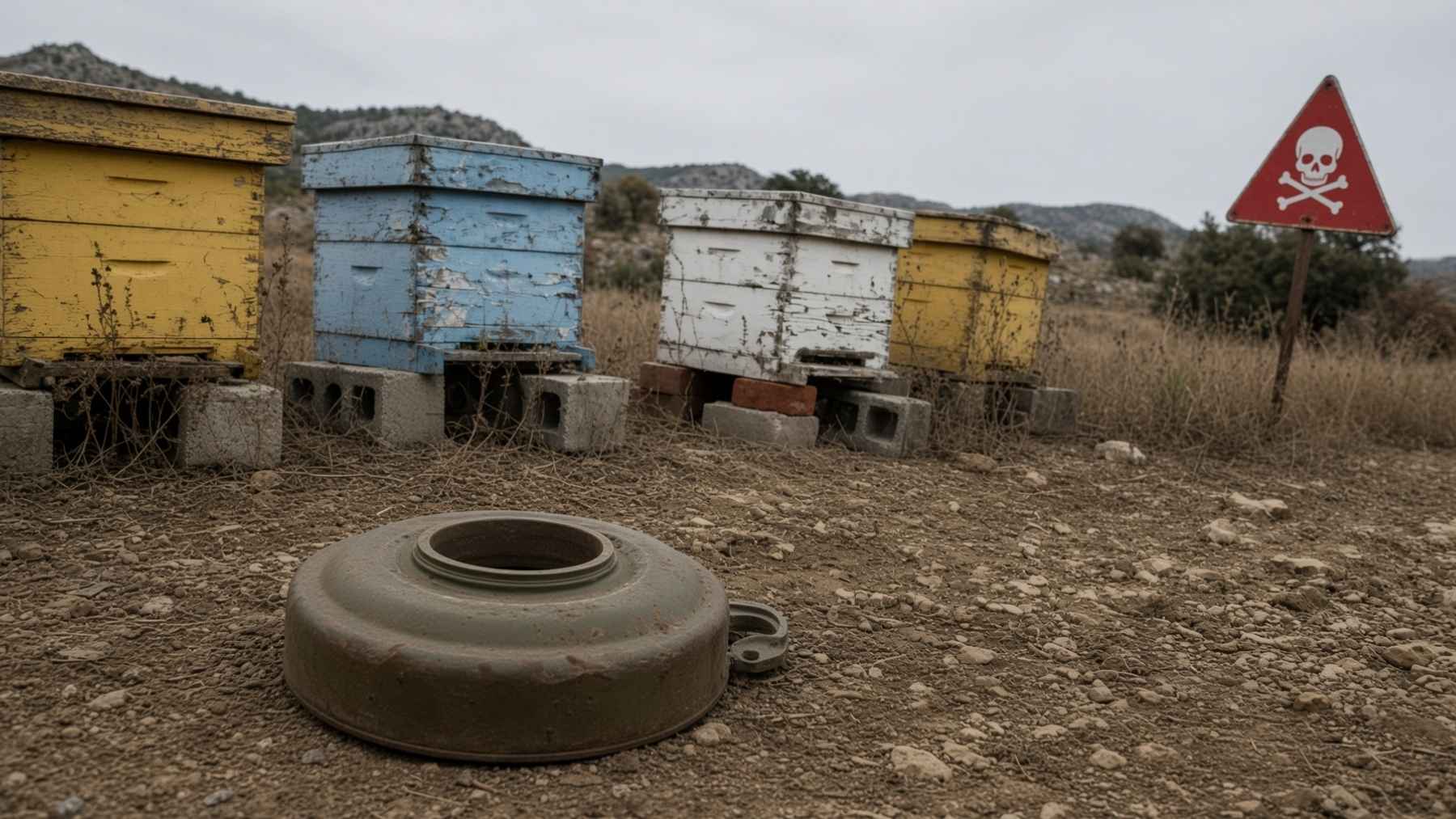
So a group of physicists, beekeepers and computer vision engineers spent years in Croatia testing something far cheaper. They parked beehives at the edge of live test minefields, taught the colonies to associate the smell of TNT with sugar, and let the bees do what bees already do all day. The readout was a strip of fabric at the hive entrance and a camera drone overhead.
The timing on all of this has gotten a lot more interesting. Croatia declared itself free of mine danger on March 9, 2026, three decades after the war that contaminated it. Almost everywhere else, the money to do the same job is evaporating.
Croatia finished. Everyone else just lost the budget
Deminers pulled more than 107,000 landmines and 470,000 pieces of unexploded ordnance out of the ground. The International Campaign to Ban Landmines counts 1,967 mine and ordnance casualties in the country since 1991. In 2024 the count was zero.
That makes Croatia the 32nd state party worldwide to finish its clearance obligation, and the tenth in Europe. Deputy Prime Minister Davor Božinović credited “decades of steady political will, national ownership and partnership with operators”, which is a diplomatic way of saying somebody paid for it for thirty years without flinching.
Hardly anyone else is in that position. The Associated Press reported on August 18 that demining groups across Southeast Asia are folding as donors redirect money toward Ukraine, Gaza and Sudan. Global humanitarian demining funding ran to $4.3 billion between 2020 and 2024, and Ukraine alone took a third of the 2024 total. Cambodia still has 1,749 square kilometers of uncleared land, about 675 square miles.
Washington has been inconsistent. Secretary of State Marco Rubio told the ASEAN Post-Ministerial Conference in Manila on July 22 that the US is committing “nearly $130 million in assistance to ASEAN countries for demining”. That followed a stretch in which US war-legacy funding for Vietnam fell to $56.5 million from $197 million the year before, per congressional documents cited by the AP.
The casualties keep climbing anyway. The Monitor’s preliminary tally, released on June 16, 2026, puts more than 5,000 people killed or injured by mines and explosive remnants in 2025 across the 40 countries reviewed. Over 90% of them were civilians.
The expensive part is not digging up the mine
Here is what does not make it into the footage. Pulling a mine out of the dirt is the last and smallest step. The part that eats the budget is figuring out which ground has mines in it at all.
Suspected areas start out enormous and mostly empty. Croatia’s first estimate covered around 13,000 square kilometers, and teams spent years shrinking it. Every square meter ruled out cheaply is one nobody has to crawl across on their knees. Manual clearance is measured in meters per day, and it stops when it rains.
That survey problem is the one honeybees are good at. A colony sends foragers out over several square kilometers every day, for free, powered by sugar. They are already flying the grid.
The sugar is doing the work, not the bee
The mechanism is classical conditioning, the trick that made Pavlov famous. Put TNT next to a feeder of sugar solution, repeat it enough times, and the colony starts treating the smell of explosive as a signal that food is nearby.
The Croatian field program ran under NATO’s Science for Peace and Security programme as project SPS 985355, “Biological Method (Bees) for Explosive Detection”. It pulled together the universities of Zadar, Zagreb and Banja Luka with the Organic Semiconductor Centre at St Andrews in Scotland. The bees were Carniolan honeybees borrowed from local beekeepers.
The published protocol, in Science of the Total Environment, kept colonies in a training tent for four to five days, shuffling the feeders daily to confirm the bees were tracking the odor and not the location. Hives then went out to the test minefield, entrances facing the ground in question, 30 to 50 meters back.
For scale, APOPO’s mine detection rats, the other famous lightweight animal in this business, take around nine months to train.
The real sensor is a strip of fabric at the front door
Bees are covered in branched hairs that carry an electrostatic charge, which is how pollen sticks to them. Trace explosive particles stick the same way. A bee that has been crawling on contaminated soil comes home wearing the evidence.
So the team put an adsorbent strip at the hive entrance. Every returning forager scrapes past it and leaves a little of whatever she picked up. Collect the strip, heat it to drive off what it caught, and read the vapor with a fluorescent polymer film developed at St Andrews.
The film glows under light until nitroaromatic explosive molecules land on it, at which point the glow dims. Less light means more TNT. A companion study in Chemosphere clocked quenching efficiencies of up to 38% from a mined site.
It also found no false alarms from bee pheromones, from the anti-varroa pesticide Amitraz, or from the air around a clean apiary. That second result matters more than the headline number. A survey tool that screams every time somebody treats a hive for mites is a nuisance generator, not a survey tool.
The strip tells you the area is dirty. It does not tell you where. So the team flew camera drones over the sites and ran the footage through computer vision software that spots individual bees in flight and plots how long they linger over each patch of ground. Build that into a density map and the hot spots line up with the buried mines.
The main proving ground was Benkovac, on the Croatian coast: 10,000 square meters split into 47 lanes and gridded into one meter squares, with 1,000 landmines buried at assorted depths so equipment can be tested against a known answer key.
A bee cannot set off what it lands on
This is the part that sells the idea. The PMA-1 antipersonnel mine, one of the Yugoslav-made types scattered across the Balkans, needs roughly 3 kilograms of pressure to fire and sits 3 to 5 centimeters under the surface, according to Bosnia and Herzegovina’s own filing to the Mine Ban Treaty. Call it six and a half pounds.
A honeybee weighs about a tenth of a gram. She can land on the pressure plate, walk around on it, and leave, and the mine will never know she was there.
Dogs and rats get used precisely because they weigh less than a person, but a dog is still a mammal with a real body weight, and some antipersonnel mines are sensitive enough to make that a live question. Bees are not in that conversation. It is the one specification where the insect wins by four orders of magnitude and nobody can argue.
The honest limits, because there are several
Bees quit. The colony learns the odor fast, then learns just as fast that TNT never actually pays out, and within about three days the foragers go find real flowers. Ross Gillanders, the St Andrews physicist behind the sensing films, has put the training itself at roughly two days and the reconditioning at a recurring chore. The protocol builds repeat conditioning in for that reason.
Bees also do not fly in bad weather, do not fly at night, do not fly in winter, and cannot be told where to go. The bee decides. You get a probability map, not a pin on a mine.
And the idea has been shot down before by people with budgets. Los Alamos ran the Stealthy Insect Sensor Project through the mid 2000s on about $1.5 million of DARPA money and got restrained bees to reliably stick their tongues out at TNT, C4 and TATP. DARPA’s 2006 verdict was that bees were not reliable enough for military tactical use, and that it saw no clear path to making them so.
Which is a fair call for a soldier clearing a route under fire, and a different question entirely from a humanitarian crew trying to rule out 400 hectares before winter. Nobody is proposing a bee tells you it is safe to walk. The bee tells you where to point the metal detector.
Why anyone is looking at this again now
Five European countries left the Mine Ban Treaty between December 2025 and February 2026: Estonia, Latvia and Lithuania first, then Finland, then Poland, all citing Russia. Croatia spent thirty years getting mines out of its soil, and its neighbors are now weighing putting them back into theirs. Bosnia and Herzegovina and Serbia are still contaminated from the same war.
A review published in Apidologie on April 7, 2026 walks through where the field stands, from the handheld VASOR detector that holds three dozen restrained bees to LIDAR tracking as an alternative to camera drones.
The gear we usually cover runs the other direction. The US Navy hunts sea mines with a 2,000-pound autonomous drone stuffed with synthetic aperture sonar, which is the right tool when the minefield is underwater in the Strait of Hormuz. It is not the right tool for 400 hectares of Balkan scrub, because the sonar alone costs more than a decade of beekeeping.
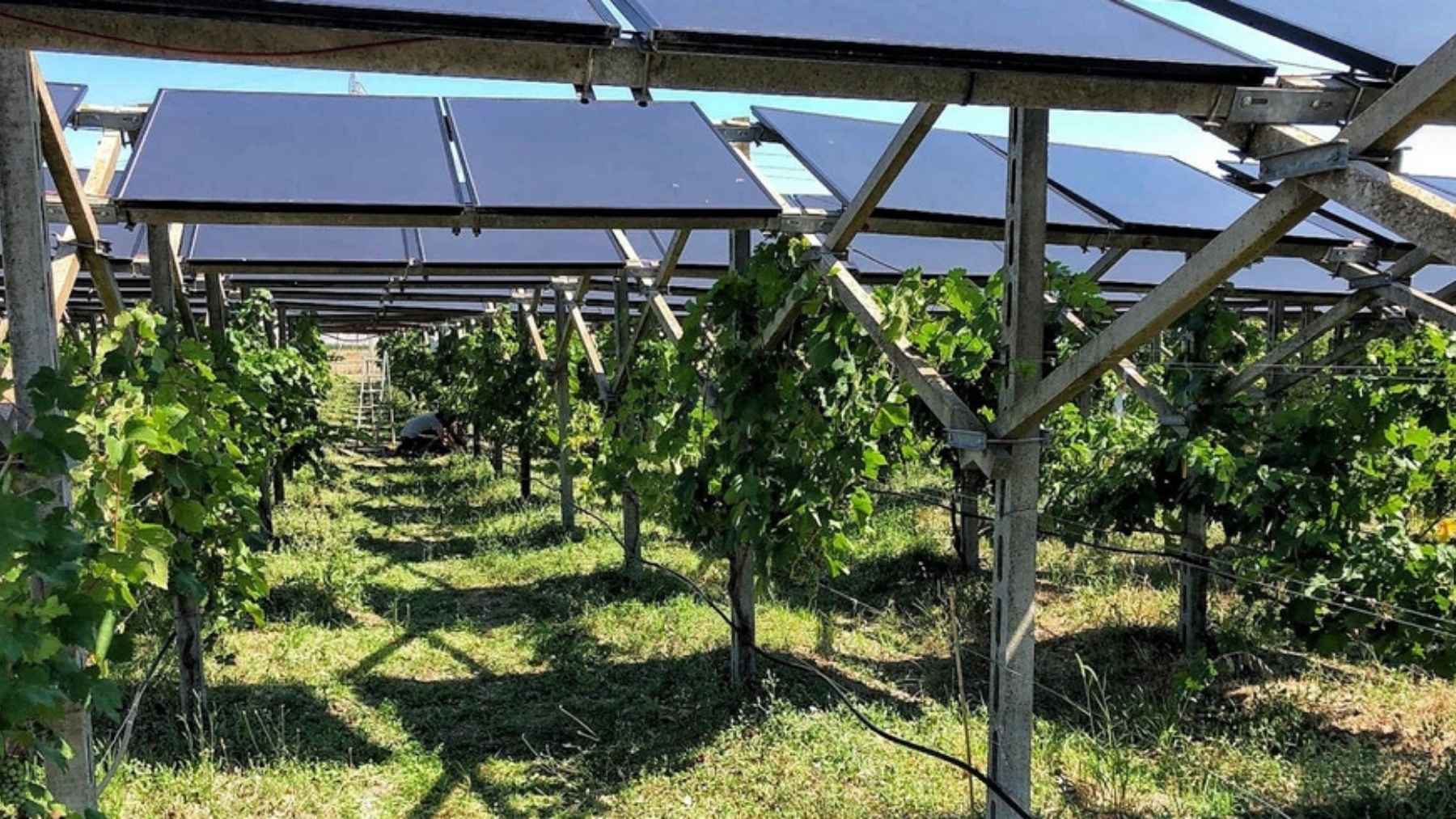
Bees keep turning up in odd places anyway. Federal researchers clocked native populations climbing twentyfold under utility-scale solar arrays planted with wildflowers, which nobody planned for either.
The Croatian minefields are gone. The hives that surveyed them are still hives, and the fabric strip still costs less than a tank of gas. If the donor money keeps drying up the way the AP is describing, somebody is going to dust this off and try it somewhere with a lot more mines and a lot less budget.