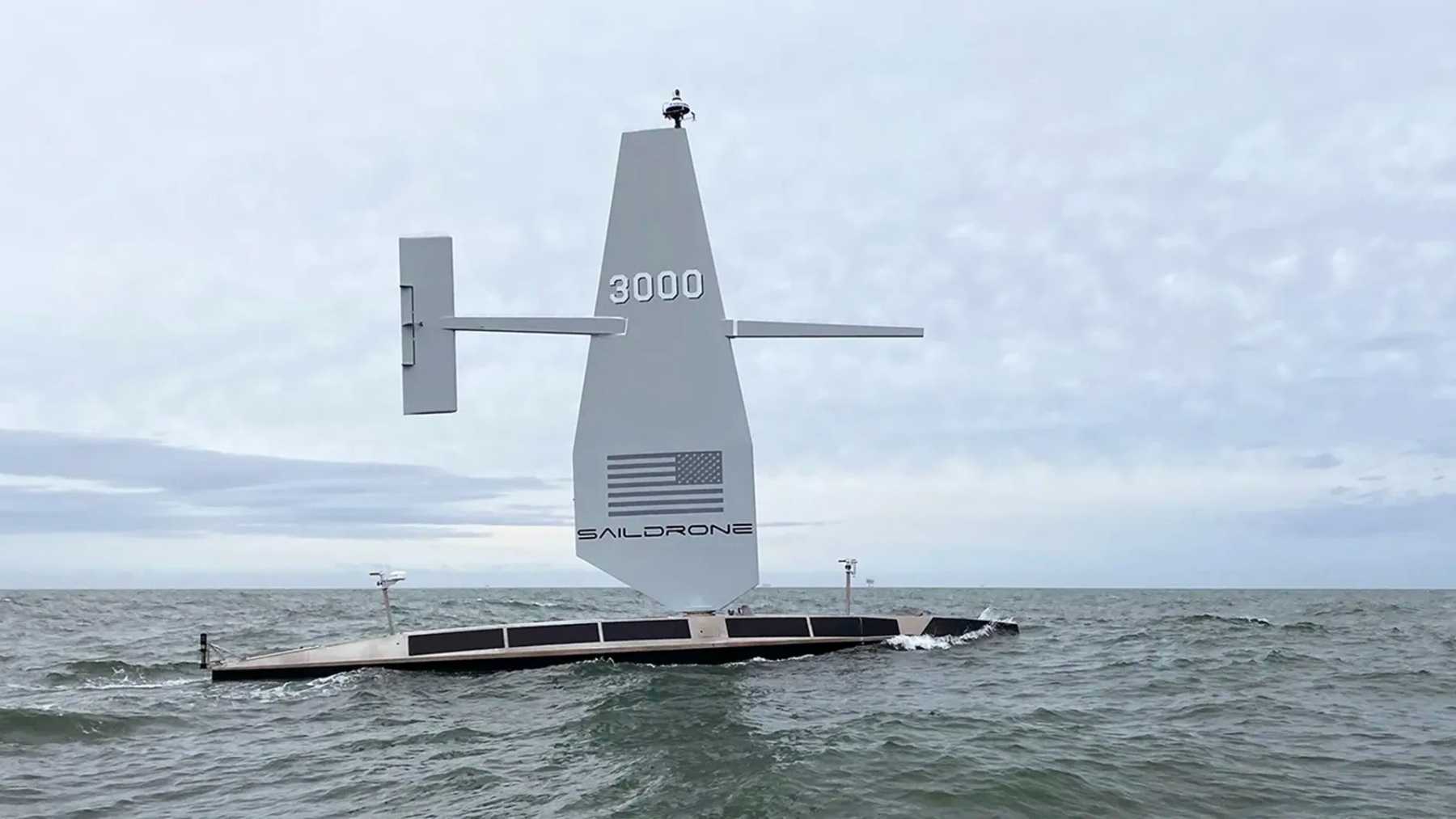

For most of 2026, a story about a robot on the seabed has meant a story about defense. Navies have been seeding the ocean floor with sub-hunting gliders, sabotage-spotting survey drones, and container-shipped robot submarines, mostly because the cables that carry the internet keep getting cut and nobody wants to put a crew down there to watch them. By that standard, a remotely operated vehicle creeping along the bottom of the Skagerrak off Norway barely rates a headline.
Except this one wasn’t hunting anything. It was bringing up dinner plates.
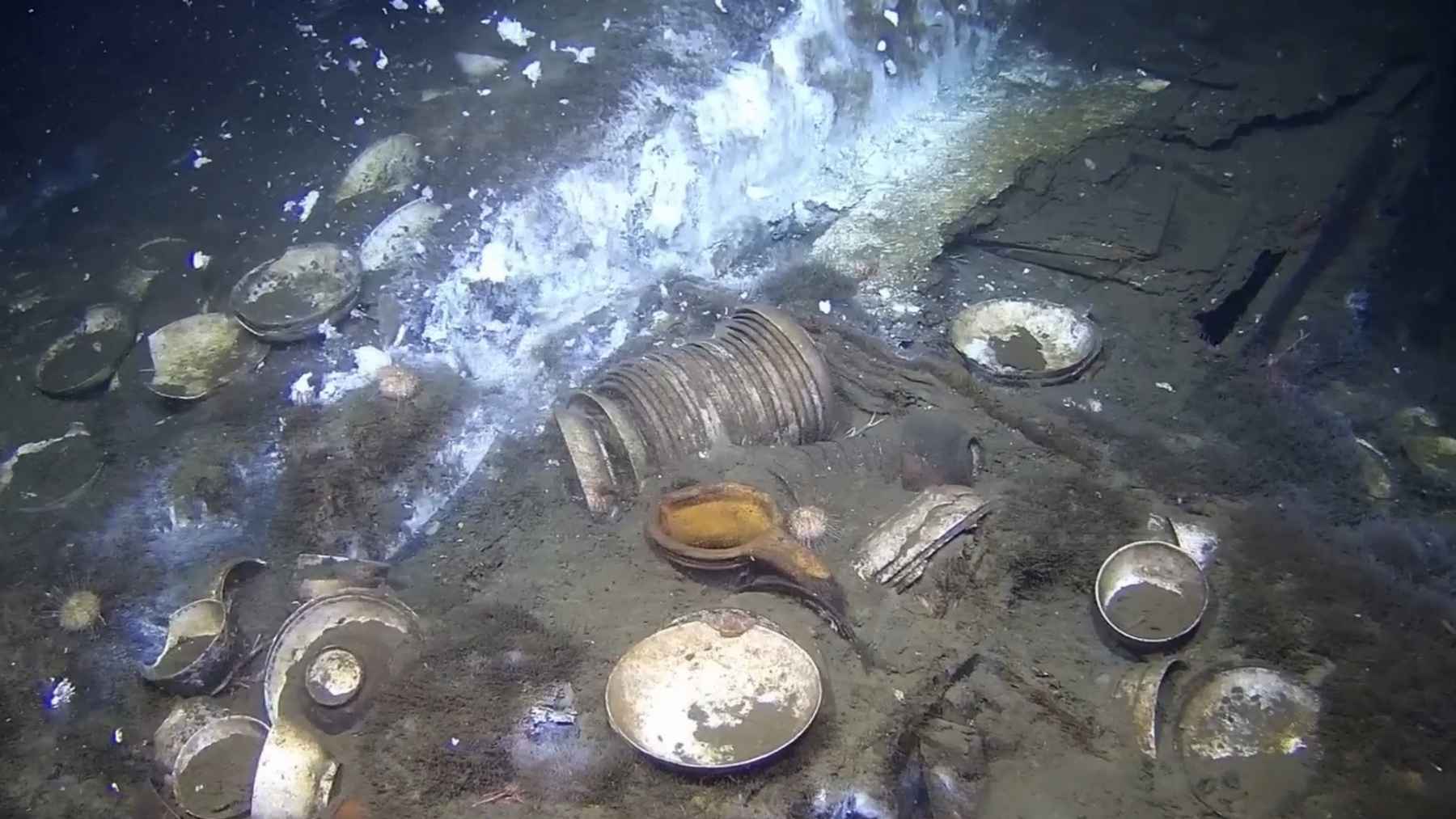
At 600 meters down, roughly 2,000 feet, a robot on a kilometer-long cable has been recovering Chinese porcelain from an 18th-century sailing ship that sank around 1750 and then sat there, more or less untouched, for about 250 years. The Norwegian Maritime Museum is calling it the Porcelain Wreck, and says it holds the best-preserved cargo of its kind ever found in Northern Europe. The plates were still stacked in neat piles on the seafloor. According to the people who brought them up, they look like they were bought last week.
A watchmaker found it on a survey run
Espen Saastad is not an archaeologist. He designs and repairs watches at his shop in Porsgrunn, in southeastern Norway, and runs a small ROV and survey business on the side. That is what he was doing in September last year when his camera caught something on the floor of the Skagerrak that he knew right away was not ordinary, according to Science Norway. He called the authorities rather than helping himself to souvenirs, and he is now part of the team working the site. The Norwegian government went out of its way to thank him for it, which tells you how rarely that sequence actually plays out.
What he had found sat at 600 meters in the strait between Norway and Denmark, inside Norwegian waters. The museum will not say exactly where. The coordinates are being withheld to protect the site and, the Directorate notes, for safety reasons, because 600 meters of open ocean is no place for amateur treasure hunters to go poking around.
The robot did the delicate part
Here is where the precision matters. We have spent a lot of 2026 on autonomous seabed machines, drones built to disappear for weeks, find their own way around, and decide mid-mission whether to keep watching a cable or go chase a submarine. This is not one of those. The machine working the Porcelain Wreck is a remotely operated vehicle, an ROV, tethered to the research ship by a one-kilometer cable and flown by archaeologists in a control room on deck. There is a human hand on every move it makes.
That hand has to be steady. The ROV carries a robotic arm, camera systems, and a set of suction cups built to order in France over the winter, according to Science Norway, specifically to lift fragile porcelain off the bottom without cracking it. Around Easter, the robot went down to film the wreck, and the footage was turned into a detailed 3D model of the ship and its cargo through photogrammetry. In May, the team spent several days on the actual recovery and brought up roughly 40 objects.
The whole operation lives and dies by the weather. Even small waves topside can shut the work down, which is a strange thing to picture when the robot itself is a kilometer straight down in the cold and the dark, completely indifferent to the chop. If the suction trick rings a bell, it is the same basic idea as the Canadian hydrogen drone that clamps onto the seabed with a suction anchor to sit and watch a single cable for days. Same physics, very different errand.
What’s stacked in the hold
The porcelain is the headline, and there is a lot of it. Most is the classic blue-and-white Chinese export ware, but the team has also identified Batavia ware, with a brown-glazed exterior over a blue-and-white interior, plus some pieces that may be Blanc de Chine, the white porcelain made in Dehua on China’s southeast coast, per Smithsonian Magazine. One cup base appears to carry the faint trace of a monogram, the sort of detail that can eventually point back to an owner.
The porcelain is only part of the haul, and that is what has the archaeologists genuinely excited. The hold also gave up chandelier fragments, thought to be German or English work, along with goblets, glass bottles, barrels of grain, textiles, and rows of sealed crates nobody has fully opened. One looks like it holds textiles. Another is packed with organic material that could be tea, herbs, or medicines.
Sven Ahrens of the Norwegian Maritime Museum told Science Norway the site is “something of a dream wreck,” and the reason is not only the quality, it is the variety. Most 18th-century wrecks found off Norway were carrying one thing: timber, iron, or fish. This one was hauling a little of everything, which is precisely what makes it valuable to historians.
Grain samples have gone off for DNA analysis. Rice straw packed in around the ceramics points to China or Indonesia as the source of the porcelain, though the ship itself almost certainly never sailed that far to collect it.
Nobody knows whose ship this was
For all that cargo, the ship is still a question mark. From its shape, the archaeologists believe it was a round-sterned galiot, a two-masted merchant vessel common across Northern Europe, somewhere around 72 feet (22 meters) long. It is sitting almost perfectly upright on its keel, which suggests it went down fast and dropped straight to the bottom. Two anchors sit at the bow and a cast iron stove survives in the galley. The rudder is missing, and there are no cannons anywhere, which marks it as a working trader rather than anything built to fight.
The best lead so far is a single brick. It came from the ship’s galley and carries the stamp of the Lübecker Ratsziegelei, a brickworks in Lübeck, Germany, that operated from the 15th century until 1772. A brick can travel, so it does not prove the ship was German, but it is a thread worth pulling. Where the vessel sailed from, and where it was bound, are both still blank.
There is a more elegant piece of detective work running in parallel. In the 1700s, every merchant ship squeezing through the narrow water between Helsingør and Helsingborg had to pay Denmark a toll known as the Sound Dues. Those records survived and have since been digitized, so a maritime historian is now working through centuries-old customs paperwork, hoping to match a date and a manifest to the wreck on the floor of the Skagerrak. The leading theory is that the ship took on its porcelain not in China but at a European auction port, somewhere like Gothenburg, Copenhagen, or Amsterdam, where East India goods changed hands.
Norway is paying to leave most of it down there
About 40 objects are up. Thousands are still down there, and leaving them is deliberate. The Norwegian Directorate for Cultural Heritage put NOK 2.9 million, around $300,000, into a preliminary investigation whose results were published on June 1, well ahead of any decision about a full excavation at 600 meters, which would be a milestone in its own right. Frode Kvalø, the maritime archaeologist at the Norwegian Maritime Museum leading the project, says no archaeological investigation in Northern Europe has ever been carried out at that depth in open water.
The wreck is automatically protected under Norway’s Cultural Heritage Act, so it is not going anywhere. Hanna Geiran, who heads the Directorate, said in the announcement that she “had to pinch myself when I realised the scale of the find.” The long game is a permanent exhibition at the Norwegian Maritime Museum in Oslo. A small selection of what has already come up has been on public display at the museum, with that first viewing window running through June 21, before the pieces move into conservation and analysis.
The crates nobody has opened yet
For a beat that is mostly about what machines can find, break, or detect in the dark, this is a rare one about what a machine can carefully carry back up. And in a sense the robot has done the easy part. It is the sealed crates that will keep people up at night. “There are still unopened crates, and they may contain surprises,” Kvalø told Smithsonian Magazine. Somewhere at the bottom of the Skagerrak is a box that has not been opened since the last person to handle it was alive. The robot knows exactly where it is sitting. It just has not reached for it yet.