
Nuclear power and deadlines have never gotten along. Reactors show up years late so reliably that the industry treats schedule slips like weather, something you plan around rather than prevent.
So when the Department of Energy stamped July 4, 2026 on a batch of experimental reactors, the real question was never whether every project would hit the date. It was what each company would say when Independence Day arrived and the fuel wasn’t loaded.
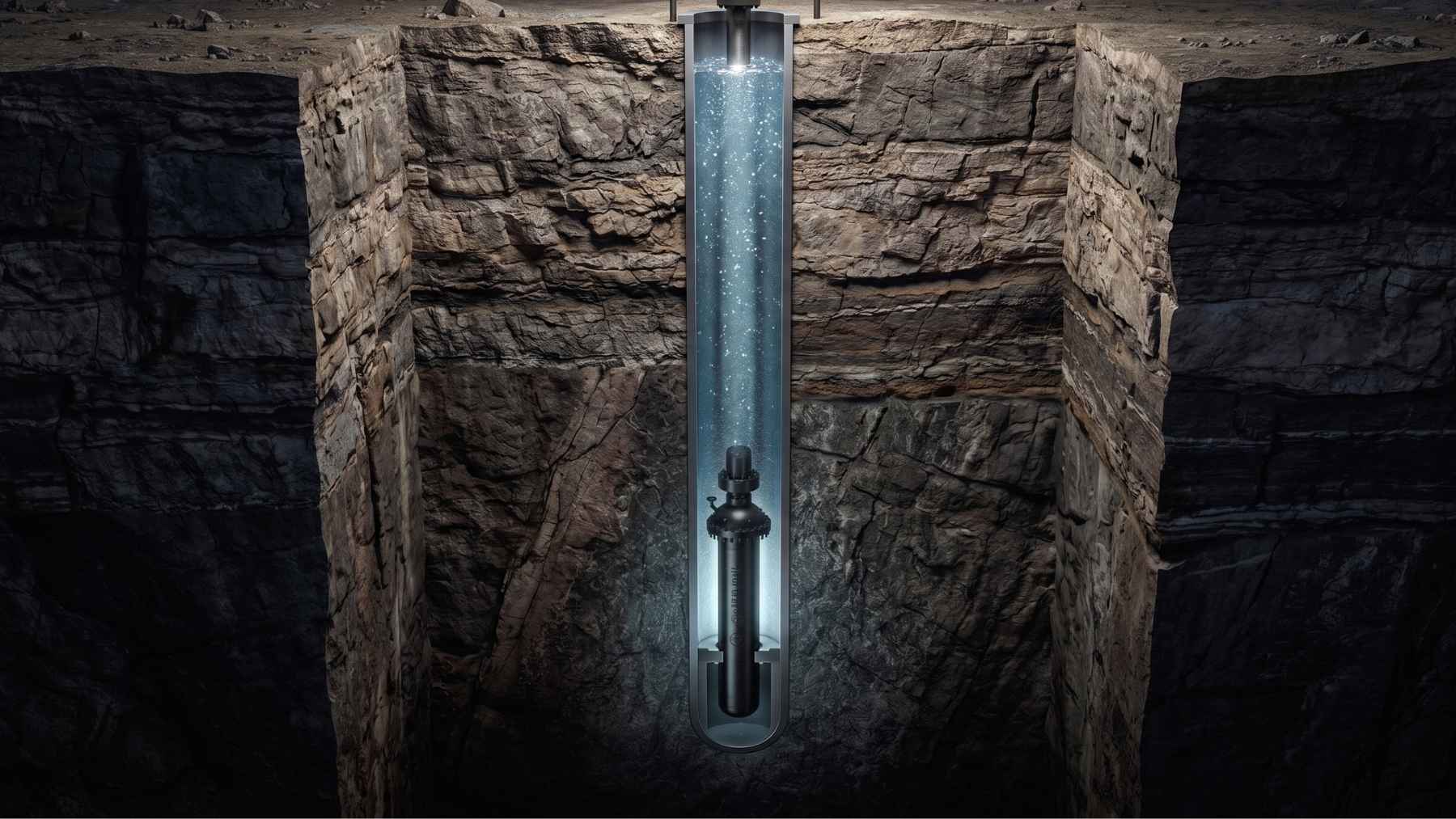
Deep Fission, the Berkeley startup trying to run a pressurized water reactor at the bottom of a mile-deep borehole in Parsons, Kansas, now has its answer on record. The July 4 target is officially gone, the prototype hardware rolled onto the site three days later anyway, and the nuclear part of this project is now a 2027 story.
We took apart the full engineering case for the mile-deep reactor back in June. This is what has happened since, and it is a more interesting update than “startup misses deadline” usually gets to be.
The missed deadline was criticality, not paperwork
The thing that was due on Independence Day was criticality, the moment a reactor sustains its own chain reaction for the first time. The DOE’s Reactor Pilot Program, created by a May 2025 executive order, set that as the finish line and tied it to the country’s 250th birthday.
Deep Fission is one of eleven advanced nuclear projects selected for the program, according to the Kansas News Service. In December, fresh off a December 9 groundbreaking ceremony in Parsons, the company’s stated plan was criticality by July 4, pending regulatory approval.
Its CEO was hedging in public well before the shovels came out. “Trying to hit the 4 July 2026 target is going to be extremely challenging,” Liz Muller told IEEE Spectrum in November, while insisting the pilot reactor itself would still get built.
July came. The reactor did not. And the framing has now moved on entirely. “Criticality isn’t the proof point for us,” Muller said in a statement to the Kansas News Service published on July 23. The metrics she points to instead are drilling to depth at commercial scale and safely integrating nuclear components underground.
Call it moving the goalposts if you want. It is also the first time the company’s public schedule has matched what is physically in the ground in Kansas, and the outlet’s own July 23 report concluded the project remains on course, just measured against a different set of goals.
The reactor’s stunt double arrived on July 7
Three days after the deadline passed, Deep Fission announced its prototype reactor canister had arrived at the Great Plains Industrial Park site, fresh from fabrication and hydrostatic testing at the factory. That same evening the company rang the Nasdaq closing bell to celebrate. Missing a federal deadline on a Saturday and ringing a bell in Manhattan the following Tuesday is a very 2026 sequence of events.
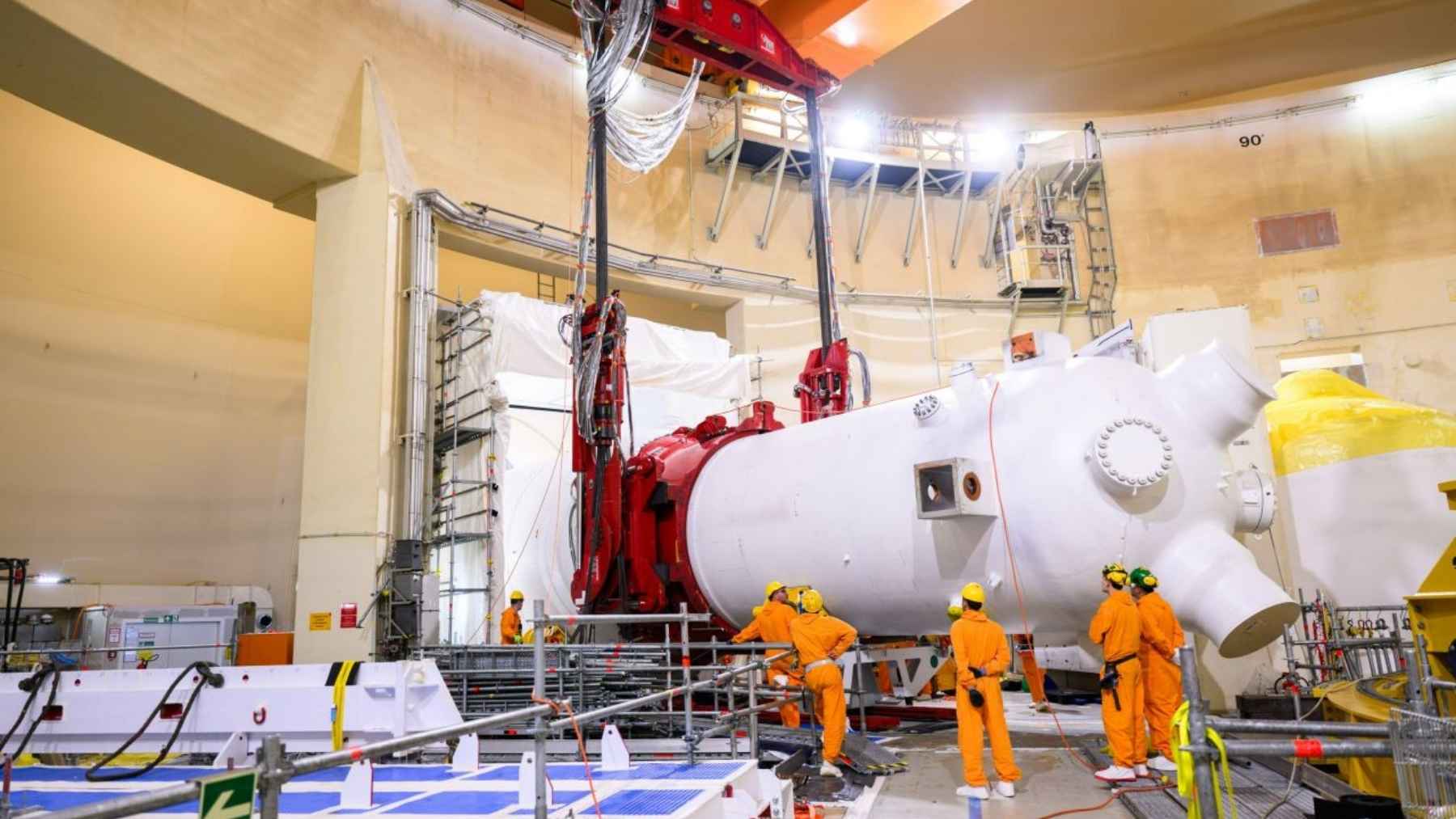
The canister is the centerpiece of the Proof-of-Concept Well program, a nearly full-scale rehearsal built entirely on commercial-grade, non-nuclear components. The plan is to drill a larger-diameter borehole, lower the prototype in, connect it to the surface infrastructure, and run the complete installation workflow before any uranium comes anywhere near the site.
Mark Pérès, the company’s chief nuclear officer, called the delivery “a clear step forward in moving from design to deployed infrastructure.” Behind the ceremony there is proven ground too. The site already has one finished data-acquisition well, eight inches across and roughly 6,000 feet deep, which confirmed the geology, and permitting for the bigger non-nuclear borehole is moving through the Kansas Department of Health and Environment.
Design work on the primary heat exchanger and a full-scale nuclear demonstration borehole is running in parallel, per the company. Canada, for comparison, is pouring its way toward the first grid-scale SMR in the Western world at Darlington, where a 953-tonne basemat already sits at the bottom of a 35-meter shaft. Above-ground nuclear has a head start. The bet in Kansas is that holes eventually beat buildings on cost.
Uranium is now a 2027 problem
Kansas News Service reporting spells out the sequence. Nuclear work is not intended for the Parsons site until 2027, and before any of it starts, Deep Fission has to complete the proof-of-concept program and obtain DOE authorization.
The regulatory track beyond the pilot runs on a similar clock. The company has pointed to the first half of 2027 for its commercial license application to the Nuclear Regulatory Commission, assuming the technology and the financing hold up. Day & Zimmermann, the Pennsylvania nuclear construction firm, is handling pre-construction planning and the above-ground build.
The financing clause is not decorative. The stock went public at $16 in June, and by the time the canister rolled up, Investing.com had the shares near a 52-week low of $7.66. Wall Street, unlike the DOE, does not do symbolic deadlines.
The 18.5 gigawatts are patient, and they are not signed
The reason a slower schedule has not emptied the order book sits on the demand side. On June 24, the company announced letters of intent covering up to 18.5 gigawatts of potential generation, spread across data centers, co-developers, industrial parks, and strategic partners.
That number has been climbing fast: 12.5 gigawatts last October, 18.5 by late June. The biggest single name in the stack is still the 2-gigawatt arrangement with Endeavour for its Edged data centers, announced in January 2025, with the first reactors penciled in for 2029.
None of it is binding. The agreements require no financing, no construction, no exclusivity, and either side can walk away without penalty. What they measure is appetite, and the appetite is real: AI data centers need firm power soon, and a 15-megawatt reactor per borehole that can theoretically stack to 1.5 gigawatts on a single site is exactly the shape of product they want to exist.
The neighbors are on the record now
The other change since June is that Parsons has opinions on file. Marjorie Reynolds of the Prairie Dog Alliance, a local group, told the Kansas News Service she wants to know how oil and gas drilling rules translate to an experimental nuclear borehole, and what protection exists for an elementary school 1.7 miles from the site and homes less than a mile out.
John Young, an environmental consultant in the coal mining industry and part of the civic group Leading Kansas, has his own concerns and still backs the project on climate grounds. Labette County Commissioner Vince Schibi, whose district includes the industrial park, says he is pleased with the company’s transparency so far.
Deep Fission’s response has been to hire someone to live in Parsons full time, launch a community advisory group, and keep inviting critics like Reynolds to the meetings. Nobody has tested how that holds up once uranium is actually scheduled for delivery.
So here is where the mile-deep reactor stands on July 30: more physical progress than a month ago, less mythology. The July 4 date did what symbolic dates do. The hardware that matters, a canister that passed its pressure tests and a hole that proved the geology, is on site or in the ground.
The next milestone worth circling is not a press release. It is a larger borehole with that prototype at the bottom of it, running installation drills with zero fissile material involved. If Deep Fission pulls that off and the DOE signs off on what comes after, 2027 stops being a delay and starts being a schedule. At that point, the bell-ringing takes care of itself.