
We’ve written about Deep Fission’s hole in Kansas four times since July, which is a lot of ink for a startup whose reactor doesn’t exist yet. The pitch, if you’re just joining us: lower a small nuclear reactor down a borehole about a mile deep and let the rock and the water above it handle the containment work a concrete dome normally does. But the company’s latest test didn’t happen anywhere near Kansas. It happened in Fort Myers, Florida, and we only found out this week who was running the rig.
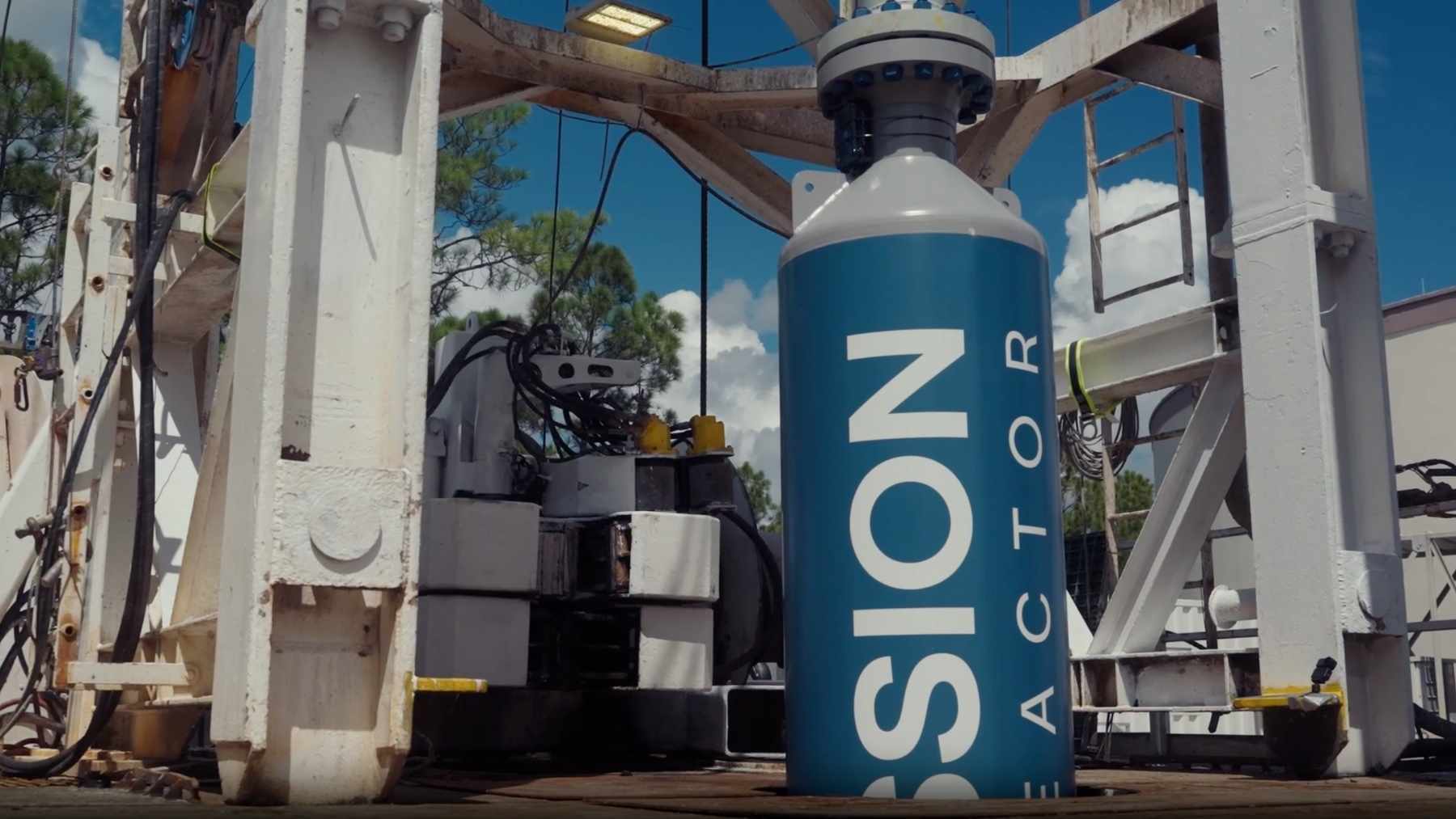
On Thursday, September 3, a commercial drilling crew lowered the company’s prototype reactor canister, a 20-foot steel can with no nuclear fuel inside, 100 feet down a 34-inch borehole, lined it up, and winched it back out. Deep Fission announced the test on September 10 without saying where the hole was. The follow-up announcement on September 21 filled in the rest: the site was Fort Myers, and the rig belonged to Youngquist Brothers, a Florida drilling contractor the startup is now formally collaborating with.
That up-and-down move sounds modest, and at 100 feet it kind of is. But it’s also the exact move this whole concept depends on. A borehole reactor doesn’t get craned into place and forgotten. It has to ride rigging down a mile, come back up for refueling, and go down again, and a canister you can’t fish back out is just very expensive buried steel.
So why is a Kansas reactor company drilling in Florida?
Because that’s where the driller lives.
Youngquist Brothers has been sinking large-diameter wells out of Fort Myers since 1971. The bread and butter is Class 1 deep injection wells, the wide, deep shafts Florida wastewater plants use to send treated water thousands of feet down, well below the aquifers people drink from. It’s about as unglamorous as drilling gets, and the company’s own recruiting ads go out of their way to say it’s not in oil and gas. It also happens to be pretty much the exact skill set a borehole reactor needs: very wide holes, very deep, with heavy loads riding down them on rigging. The collaboration announcement credits Youngquist with decades of large-diameter holes going deeper than 8,000 feet. “Large-diameter drilling to these depths is a method we’ve refined since 1971,” CEO Harvey Youngquist said in the release.
You may be wondering why the test didn’t just happen in the hole Deep Fission already has in Kansas. As far as I can tell, neither company has said. The larger proof-of-concept borehole in Parsons was still working through state permitting when we covered it in August, and Youngquist’s yard, rigs, and crews all sit in Fort Myers. My guess is it’s simpler to truck an empty can to the rig than a drilling company to Kansas, but that’s a guess.
Deep Fission’s side of the pitch is that none of this required inventing anything. Liz Muller, the company’s CEO and co-founder, said the demonstration used “a rig and rigging that is commercially available in the field today,” and the September 10 release states flatly that none of the gear needed to be invented or rebuilt for nuclear duty. I find that framing pretty smart, frankly. The nuclear industry’s cost problem is largely a bespoke-everything problem, and hiring the people who already drill Florida’s sewage wells is a more credible answer to it than a rendering of a futuristic rig.
One thing did shift between the two announcements, though. September 10 leaned hard on the gear being ordinary. September 21 describes the same demonstration running on proprietary Youngquist drilling technology and equipment. Both can be true at once, since a contractor’s in-house rig is still commercial equipment, but it’s a bit of a change in emphasis, and neither release says exactly what was holding the canister.
The hole is only 4 inches wider than the can
The canister measures 30 inches across, and it went down a 34-inch hole. That’s 2 inches of daylight per side on a 20-foot load hanging from rigging. If you’ve ever backed a trailer into a tight garage, you’ve got a rough feel for the job, except this garage is vertical and you can’t see into it. Doing it at 100 feet and doing it at a mile aren’t the same task, but the geometry doesn’t get any friendlier on the way down, so you’d rather learn the handling somewhere shallow.
I’d also point out, gently, that 100 feet is less than 2 percent of the trip the real canister has to make. Deep Fission says as much itself, and the new release calls the demonstration distinct from the full-depth drilling work the collaboration is meant to cover. This was a rehearsal of the handling. The descent comes later.
The real hole is still in Kansas
The reactor itself is headed for Parsons, Kansas, where Deep Fission is working through the Department of Energy’s Reactor Pilot Program and has already published the DOE-approved safety file for the mile-deep design. We’ve been through the Kansas plan and that safety analysis before, so I won’t rerun them here. The short version: a pressurized water reactor on standard low-enriched uranium fuel, with a mile of water and rock standing in for the containment building.
The two companies say they’ll keep testing drilling and borehole construction methods together as Deep Fission pushes toward commercial deployment, which the company still says could come as early as 2027. The collaboration went public on September 21, 18 days after a 20-foot can went 100 feet down a Florida hole and came back up.