
If you’ve ever wrestled a couch down a narrow basement staircase, you know the thought that hits about halfway: this thing’s never coming back up. Sydney’s got a much bigger version of that problem right now, and it’s decided to live with it. The front ends of the two largest tunnel boring machines the Southern Hemisphere has ever put to work are going to stay under the city’s North Shore for good.
The New South Wales government confirmed on November 3 that the two chambers built to catch those machines are fully dug out under Waverton, on the north side of Sydney Harbour. That’s where each machine’s cutterhead and shield will get cut free, slid off to one side and closed up in the rock. Meanwhile the first machine, Patyegarang, was due to get halfway across the harbor this week.
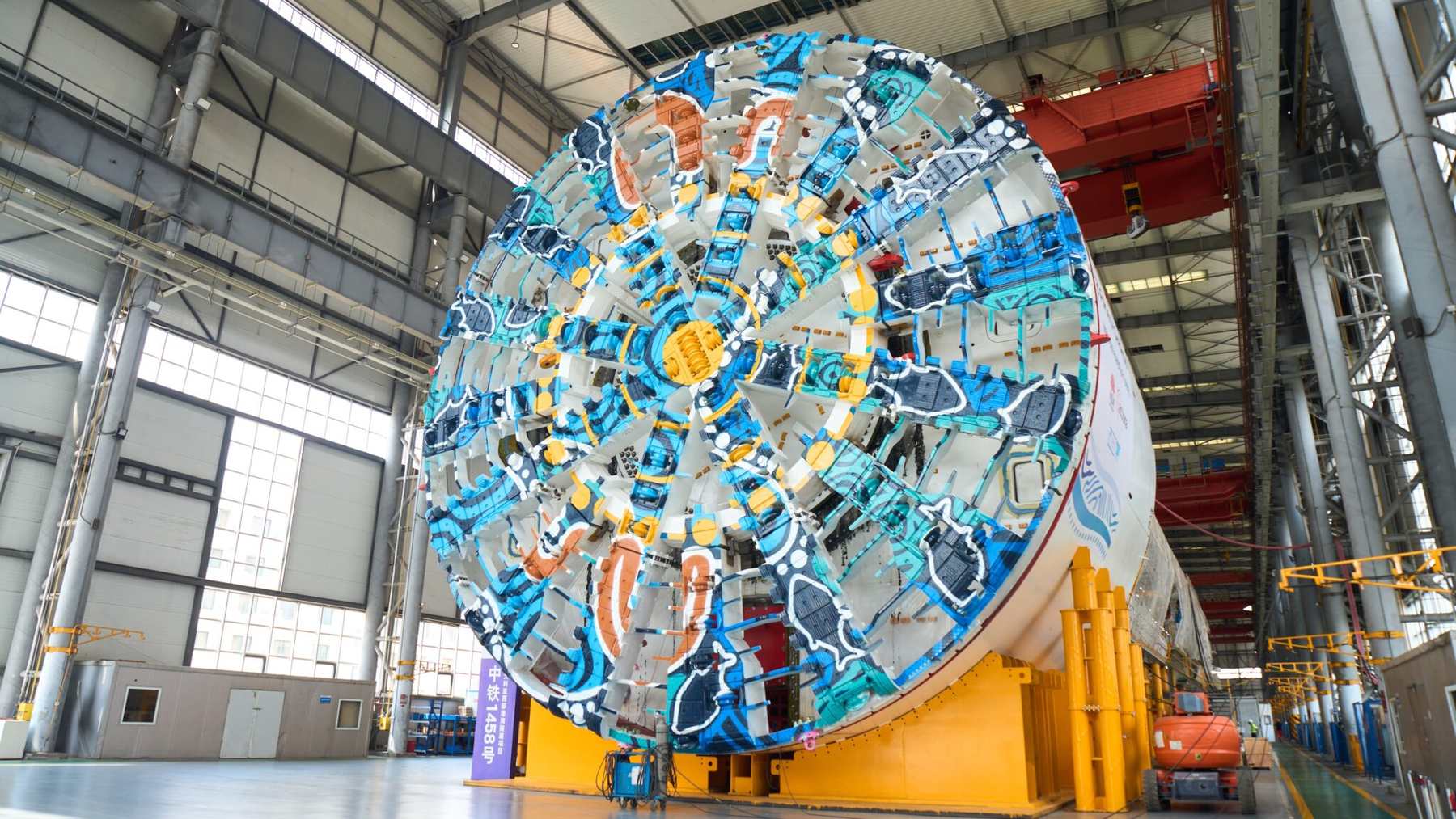
If you don’t spend your weekends reading tunneling journals, here’s the short version. The cutterhead is the giant spinning disc at the front that chews through the ground. The shield is the steel tube right behind it, which holds everything up while the crew builds the tunnel’s concrete lining.
So how big is this thing?
Pretty big. Each machine is 51.5 feet across, and the state’s put the whole rig at 449 feet long with its trailing gear. Weight’s a little messier. Transport for NSW’s fact sheet says 4,350 to 4,400 metric tons, which works out to roughly 4,800 of the tons we use in the US.
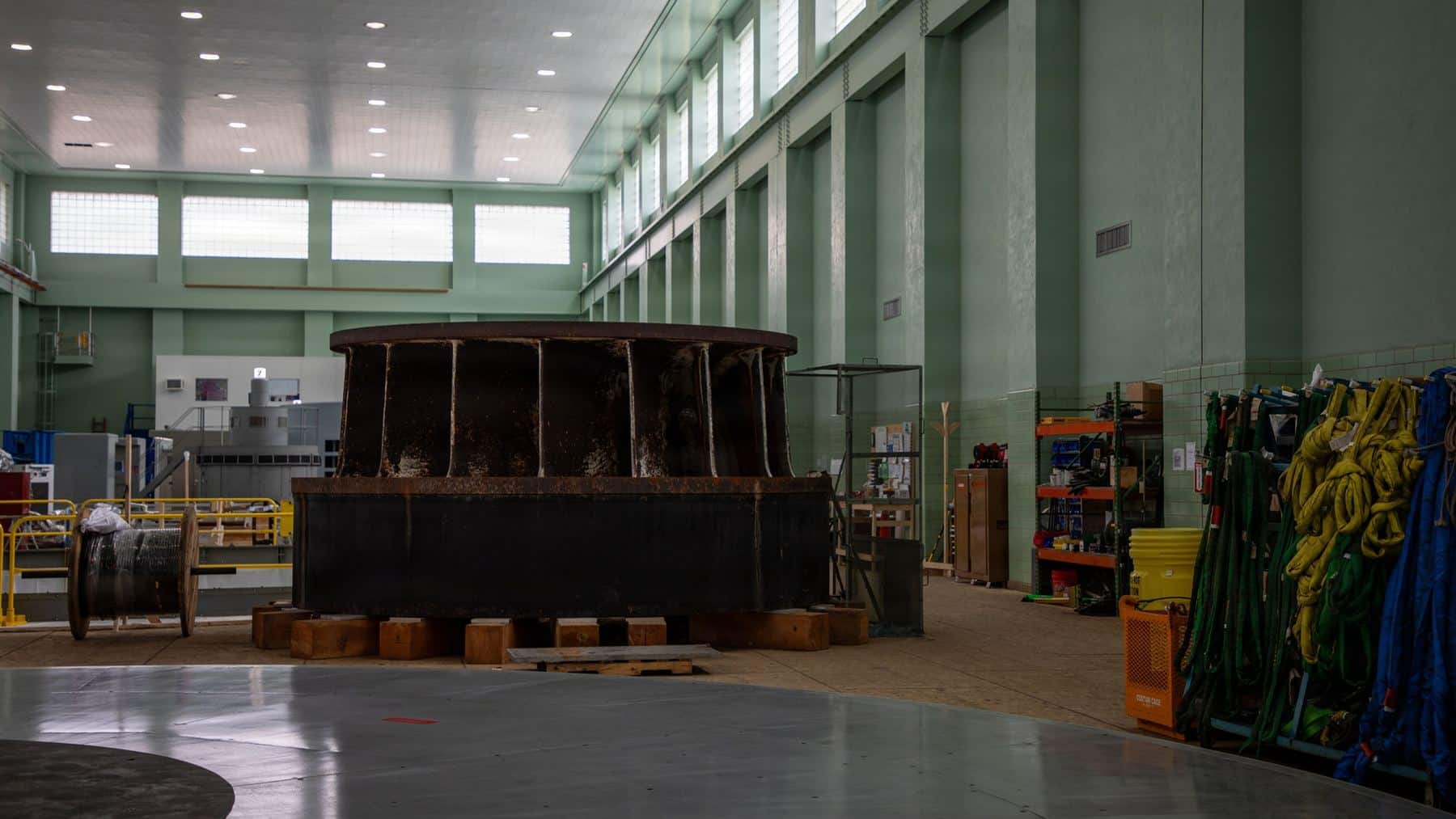
Transport for NSW puts the cutterhead alone at 509 tons, just over a million pounds. The Tunnelling Journal lists 97 disc cutters on it and 20 electric motors turning it, with almost 35.4 million lb-ft of torque between them.
We’ve already covered how these machines got built in a cavern under a suburban cricket field, so I won’t go through that again. The other end of the trip is the new part.
The chambers at Waverton run up to 75 feet high, 115 feet wide and 112 feet long. Crews cut them with roadheaders, which are basically huge excavators with a spinning grinder on the end of the arm. I’d look at the width first. You don’t need a 115-foot room for a 51.5-foot machine unless you’re planning to shove something sideways, and that’s exactly what’s going to happen.
So why not just pull them out?
Transport for NSW’s own answer is blunt. The fact sheet says the cutterhead and shield “cannot be salvaged,” so they’re staying in the chambers below Balls Head Road. It doesn’t really say why, and I couldn’t find a published explanation that goes much further.
Here’s my best guess, and it starts with how these machines work. A boring machine builds its concrete lining inside its own shield as it goes, so the finished tunnel behind it ends up narrower than the hole it cut. Which means it can’t reverse out, for the same reason you can’t pull a cork back up the neck of a bottle once you’ve pushed it into the wine.
Usually crews take the machine apart at the far end and lift it out. Sydney Metro West did that recently, cutting each of its last two machines into roughly 16 pieces and hoisting them up an 89-foot shaft. Those machines weighed about 1,200 tons each, though, against roughly 4,800 for these. And the Western Harbour Tunnel plan was designed to avoid a construction site on the surface at Waverton in the first place. You could probably chop up the whole front end and haul it out through 1.7 miles of tunnel. I’d guess nobody was eager to volunteer for that job.
Burying a machine has been done before
It’s still unusual, and the Tunnelling Journal calls it exactly that. Transport for NSW’s Simon Cooper told The Sydney Morning Herald that burying cutterheads isn’t common, though it’s been done under the English Channel. His description of the job: “It’s like a game of chess.”
The Channel claim checks out. Robbins, which built five of the machines on that project, says the French machines got dismantled while the British ones were steered out of the way and left in the ground. An association of the people who built the tunnel says the British machine in the service tunnel veered off to the right, and the two in the rail tunnels dove under their French counterparts, all between late 1990 and mid-1991. Then concrete went in around them.
Australia’s done it too. Back in 2011, Tunnels & Tunnelling reported that Brisbane lowered two 41-foot machines into pits and encased them in about 3,270 cubic yards of concrete in 24 hours. A project spokesman said that kept groundwater away from the steel, which ruled out contamination.
Honestly, Sydney’s version seems like a pretty sensible trade to me. You lose some very expensive steel, and you skip a giant hole in a North Shore suburb.
There are still a few things we don’t know. I haven’t seen the state say what’s going to seal the steel in, or how much of that 4,800 tons stays behind. Both cutterheads also carry commissioned artwork honoring the Aboriginal women the machines are named after, and I can’t find anything on what happens to it. And NSW didn’t give an exact date for when the chambers were finished, although the Herald says that was about six months ago.
How’s the dig going so far?
Patyegarang started on June 12. Tunnels & Tunnelling has it on target for about 2,560 feet of its roughly 5,120-foot drive this week, while Barangaroo, which was digging by mid-August, has done about a third of its own.
I ran that first number against the calendar, and it comes out to about 18 feet a day, compared with the 36 feet a day in the fact sheet. I wouldn’t read too much into that. The start of a drive tends to be the slowest stretch, and the Herald reports Patyegarang also stopped to swap out about 100 disc cutters. The state still says the machines break through next year.
The harder part may still be coming, though. Most of this drive runs through Hawkesbury Sandstone, the rock Sydney’s largely built on. But there’s a stretch of about 590 feet, according to the Tunnelling Journal (the Herald says about 650), that crosses a buried valley full of old river sediment.
That’s called a paleovalley, which is basically an old river valley that filled up with mud and sand over time. Transport for NSW says this one came from an ancient version of the Parramatta River. It’s a problem because the machine can end up with hard rock across part of its face and loose, wet sediment across the rest.
That’s where the slurry comes in. These machines push a pressurized liquid against the ground in front of them to keep it from collapsing, and they’re designed to handle up to about 87 psi. That’s around two and a half times the 35 psi in a typical car tire. The Herald says Barangaroo should reach that stretch around March, and Patyegarang’s ahead of it, so it should get there sooner.
Everything else gets pulled apart
Only the front of each machine gets the permanent spot. An earlier Transport for NSW fact sheet says every other component gets taken apart for reuse or recycling. It also puts the burial chambers along the outside edges of the main tunnels, so if that hasn’t changed and you ever take this tunnel, you’ll presumably pass two buried cutterheads at highway speed and never know it.
Drivers are the reason for all of this, of course. Acciona’s building this stage under an A$4.24 billion contract, and the state projects the finished tunnel will take 17% of traffic off the Sydney Harbour Bridge, 20% off the Sydney Harbour Tunnel and 35% off the Western Distributor. I’d treat any traffic forecast with a little skepticism, but those are the state’s numbers.
NSW Roads Minister Jenny Aitchison said on November 3 that it’s “hard to comprehend the scale of what our crews are building.” The Herald reports the first breakthrough is due in early 2027, with the second months later, and the state still has the Western Harbour Tunnel opening to traffic in 2028.