
Everybody more or less knows where America’s lithium comes from, and the short version is: not America. The country imports more than half of what it uses, runs exactly one full-scale lithium mine, and watches most of the world’s refining happen in China. So if you went hunting for a domestic fix, you’d point at the lithium clays of the Nevada desert or the salty brines under Arkansas. You probably wouldn’t point at the Appalachians, the worn-down coal-country mountains in the east that most people file under banjos and abandoned mines. The U.S. Geological Survey just did exactly that, and it put a startling number on it: an estimated 2.3 million metric tons of economically recoverable lithium oxide in pegmatite rock running from the Carolinas up to Maine, enough, by the agency’s own math, to cover 328 years of U.S. lithium imports at last year’s pace.
That is a real deal for a country trying to claw back a supply chain it largely handed to Beijing. It is also a resource estimate, not a mine, and the gap between those two things is where this whole story lives.
A Resource Estimate Is Not a Mine
Start with what the figure is and isn’t. The 2.3 million metric tons covers lithium that USGS scientists judge to be both undiscovered and economically recoverable across the region, laid out in a peer-reviewed paper in Natural Resources Research. Roughly 1.43 million metric tons sit in the southern Appalachians, concentrated in the Carolinas, and about 900,000 metric tons sit up north, mostly under rural western Maine and New Hampshire. None of that lithium has been drilled, permitted, or pulled out of the ground. It’s a modeled estimate of what’s likely down there, not an inventory of what’s been confirmed.
And it’s modeled with the kind of hedging geologists are paid to do. The headline numbers sit at a 50 percent confidence level, which is the statistical coin flip in the middle of a wide range. In the northern Appalachians alone, the USGS puts 90 percent confidence on at least 90,000 metric tons while giving a 10 percent shot at as much as 7.4 million. So the real message isn’t a single tidy total. It’s that there is very probably a lot of lithium under the oldest mountains in the eastern U.S., and the agency wants it on the record while Washington pushes to rebuild domestic mineral supply. USGS Director Ned Mamula said the research shows the Appalachians “contain enough lithium to help meet the nation’s growing needs.”
Where the number gets fun is in the equivalences, and these come from the USGS itself, not from a hype cycle. The agency reckons 2.3 million metric tons of lithium oxide would be enough for batteries in 130 million electric vehicles, or 1.6 million grid-scale storage batteries, or 500 billion cellphones, which it cheerfully points out works out to 60 phones for every human on Earth. There’s also a line about 180 billion laptops, a roughly thousand-year supply at 2025 rates. Every one of those describes the same buried, unproven resource, so treat them as a sense of scale, not a shipping manifest.
Pangea Left the Lithium Behind
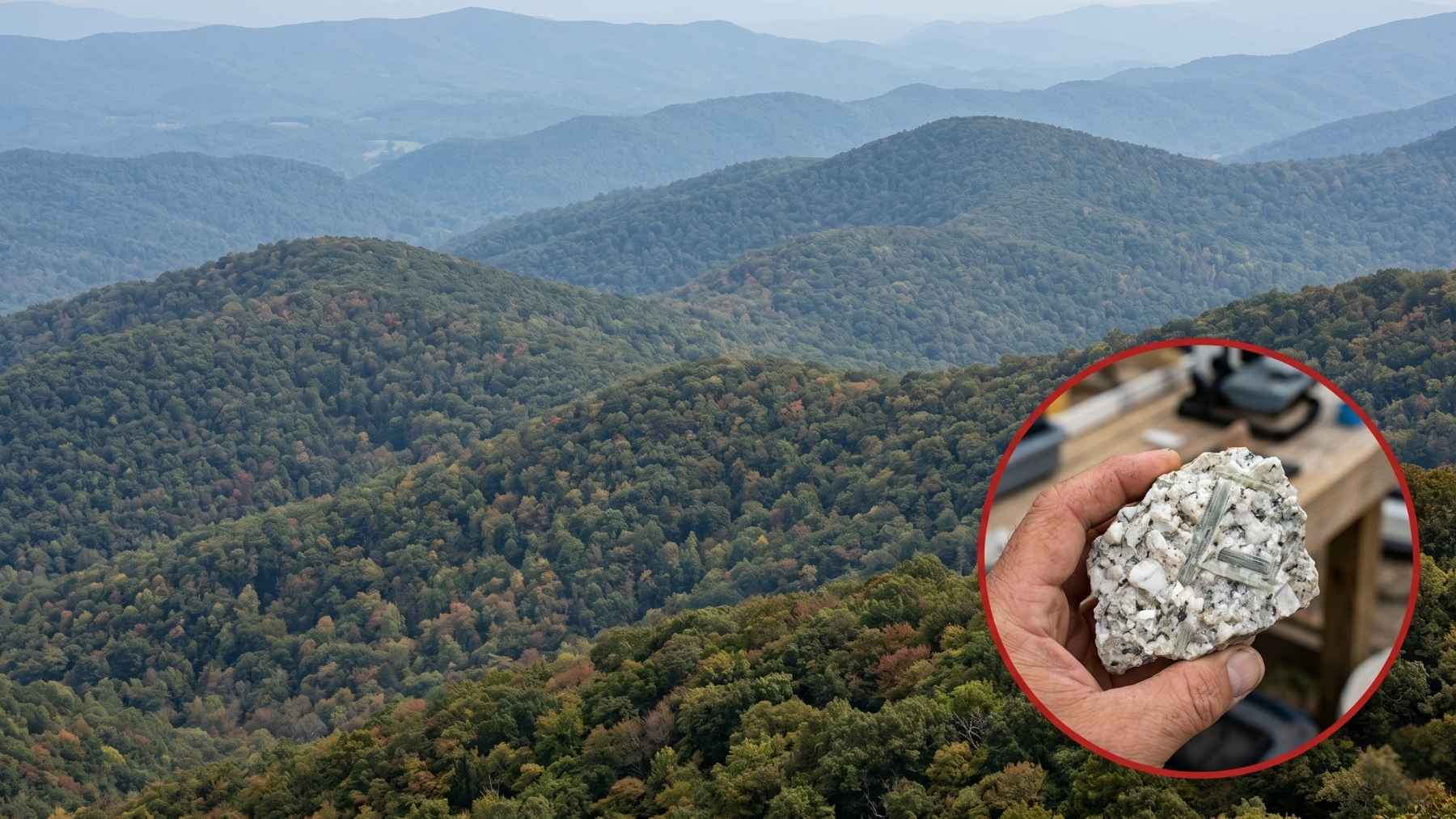
The reason any of this is in Appalachia at all is a story that predates the Atlantic Ocean. The lithium lives in pegmatites, coarse-grained rocks that look a lot like granite, and they formed more than 250 million years ago when the slow-motion collision of Africa, Europe, and North America welded the supercontinent Pangea together. Building a mountain range melted deep crustal rock, and some of that magma came out lithium-rich. When Pangea later tore apart, it left matching pegmatite belts on both sides of the ocean, which is why you find the same kind of rock in Ireland and Portugal that you find in North Carolina.
This isn’t a brand-new idea so much as a brand-new map. The Kings Mountain area of North Carolina was the site of the first large-scale lithium pegmatite mining in the United States, back when the country was the world’s dominant producer decades ago. What changed is the rigor: USGS teams combined geologic maps, tectonic history, geochemical sampling, and geophysical surveys, then ran simulations against a global pegmatite dataset to estimate how much is likely there. “Lithium has historically been produced from pegmatites, including in the Carolinas,” Joshua Rosera, the geologist who led the southern assessment, told Newsweek.
Mining the Rock Was Never the Hard Part
What the “America’s lithium problem is solved” headlines skate past is simpler than the discovery itself. Finding lithium, and even mining it, was never the real bottleneck. Refining it is. China produces a modest slice of the world’s mined lithium but runs around two-thirds of the planet’s lithium refining, the chemical step that turns raw ore into the battery-grade lithium hydroxide and carbonate that actually go into cells. The U.S. imports more than half of its lithium and, as of last year, operated a single full-scale mine. Pulling rock out of the Carolinas doesn’t change much if the only place to economically process it sits on the other side of the Pacific.
Hard rock makes that worse. Appalachian pegmatite is spodumene country, and the standard way to get lithium out of spodumene is to roast it at over 1,000 degrees Celsius and then leach it with aggressive chemistry, which is expensive, energy-hungry, and wasteful next to pumping it out of brine. That economics is a big reason the rock sat there. It may not sit much longer. A team at MIT recently published a process in Science that dissolves spodumene with a low-temperature reagent, recovers the solvent for reuse so waste approaches zero, and lands at roughly half the cost of conventional hard-rock extraction. They’ve spun it out into a startup called Rock Zero. As MIT’s Camden Hunt put it, “most hard rock refining is done in China,” which is exactly the dependency a cheaper domestic route is built to dent.
The First Appalachian Mine Just Cleared Its Last Federal Hurdle
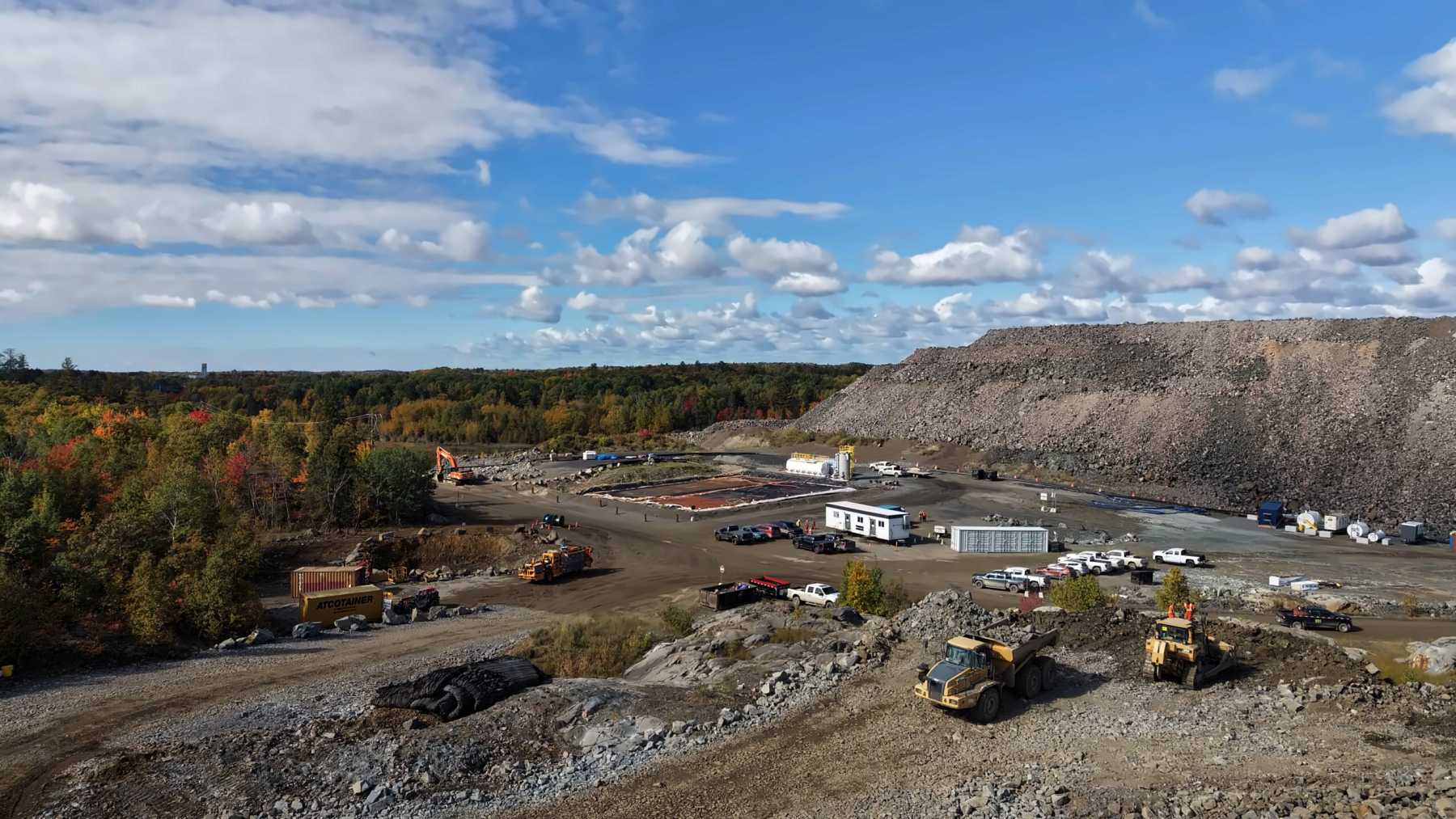
The estimate didn’t land in a vacuum. Weeks after the USGS announcement, Albemarle’s Kings Mountain project in North Carolina cleared its final federal permit, the most concrete movement at any Appalachian site. The company had already pumped the water out of the old mine pit by March, and it runs a nearby conversion facility that turns out around 5,000 metric tons of lithium compounds a year along with a research center, which puts it closer to actual production than anywhere else in the region. A second North Carolina project, Piedmont Lithium in Gaston County, has a supply agreement with Tesla but sits earlier in the pipeline and has run into local opposition and state permitting reviews.
All of this is happening because the buyers are desperate. Battery-grade lithium hydroxide is the bottleneck that Tesla, Ford, GM, and every other U.S. automaker is racing to lock down, and right now the country leans on that single Silver Peak mine for full-scale domestic output. That’s why Tesla built a $1 billion lithium refinery in Robstown, Texas, the first spodumene-to-hydroxide plant of its kind in North America. It’s why GM sank hundreds of millions into the Thacker Pass mine in Nevada to lock up two decades of supply. And it’s why a cheaper way to crack hard rock, like the MIT process now being commercialized, matters more than a buried-treasure headline suggests. A federal push under a March 2025 executive order to speed mining permits and lean on tools like the Defense Production Act has only sharpened the urgency.
So What Does “328 Years” Actually Buy You
The lithium is real, and it’s been under those hills since before the Atlantic existed. What the USGS handed the country is a very good map and a very large maybe, not a delivery date. The rock still has to be dug, the permits still have to clear, and the spodumene still has to be cracked and refined into something a battery can use. That last step, refining, is the one China still owns, and no geologic survey changes it on its own. “Three centuries of imports under the Appalachians” is a great line. Turning it into a single ton of American battery-grade lithium is the actual job, and Kings Mountain is only the first site to reach the starting line.