
All this tariff stuff has been sort of confusing. First, President Donald Trump imposed hefty tariffs on vehicles and other imports. This cost automakers billions in 2025. Then, the Supreme Court struck down a big chunk of them, though the car tariffs ran on separate legal authority and survived, and the administration found other ways to keep the rest going well into 2026. Meanwhile, U.S. companies have been suing the government for some of the money back. And those companies are getting sued by customers who want their money back too.
Keeping up? Because now, President Donald Trump has a new idea.
For some reason, Trump has been targeting Canada for a while. Recently, he asked Apple to change Lake Ontario’s name to “Lake America” on its maps, and Google already went ahead and did it. Eh, whatever. Now, Trump wants 50% tariffs on Canadian car imports. This comes after Trump accused Canada of “ripping off” American farmers in one of his Truth Social ramblings on Monday. The post said Canada “will be treated like a State no longer.” BUT THEY’RE NOT ONE, SO THERE.
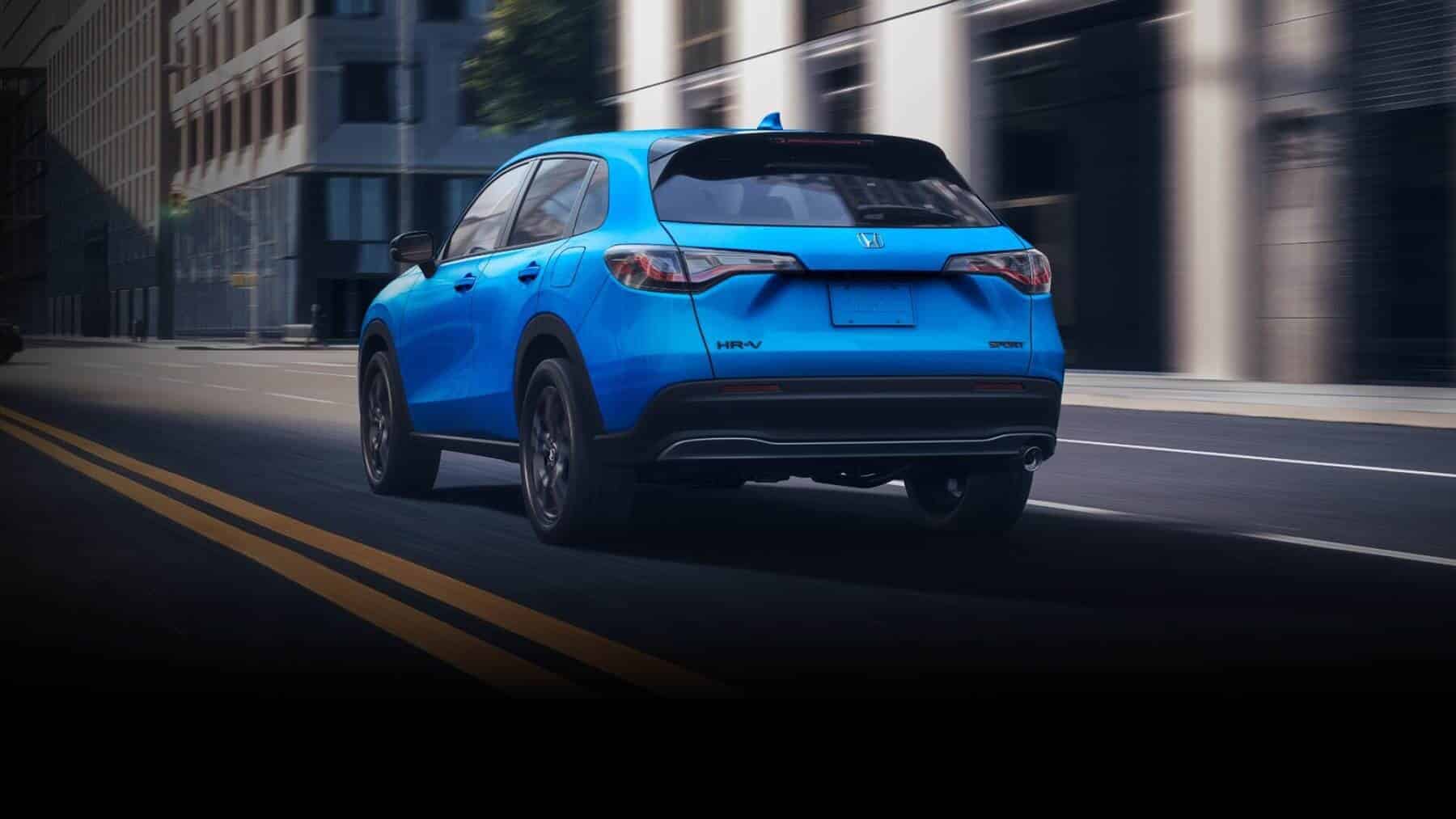
The thing is, this new tariff proposal largely impacts Toyota and Honda, two Japanese automakers.
Honda and Toyota could be hit with 50% tariffs
According to Automotive News, Toyota and Honda account for more than three-quarters of all the cars made in Canada. Even more alarming, Canadian-built cars account for about 25% of Honda’s sales in the United States and 17% of Toyota’s.
The 50% tariffs would go into effect on January 1st, 2027. If this happens, Toyota and Honda would have to consider shutting down some of their production lines in Canada. This could “destroy” the Canadian auto industry, some experts have warned. And it wouldn’t be good for the Japanese automakers either.
Toyota has been attempting to focus on U.S. production. Remember that whole confusing thing Trump said where he met with a dead guy? I don’t know what that’s about, but the one truth in that strange recounting is that Toyota is hoping to invest up to $10 billion into its U.S. operations over the next five years. This includes $3.6 billion into its San Antonio plant in Texas, which is where most Tacoma production will go once it moves from the Baja California plant in Mexico.
Honda is already suffering after last year’s tariffs and these new ones would possibly bring big trouble. Still, Honda doesn’t want to build another plant in the United States after Trump chose not to extend the USMCA trade pact between the U.S., Canada, and Mexico.
It’s unclear what would happen next.
Per usual.
What could replace Honda and Toyota?
It’s very unlikely that Honda and Toyota would leave the U.S. market, which is one of their biggest. But if their vehicle lineups disappeared in 2027, American consumers in the market for reliable vehicles would have options.
Instead of Toyota Corolla: Mazda3
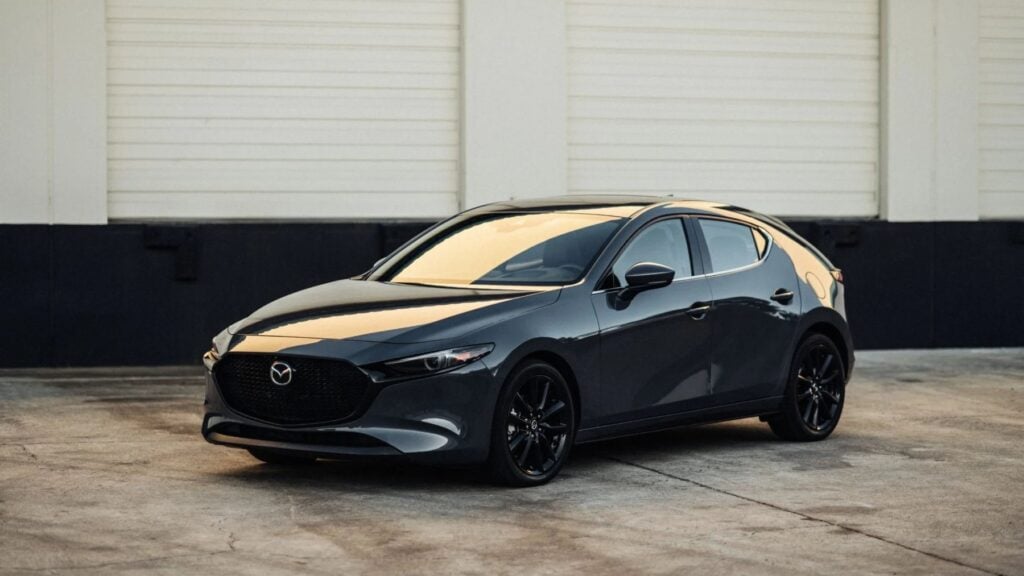
It starts a bit above the Corolla, around $24,550 versus the Corolla’s roughly $23,125, but you get more for the extra cash. The base engine makes 186 horsepower to the Corolla’s 169, there’s an available turbo model with real punch, and you can still get the hatchback with a manual transmission if you want three pedals, something Toyota dropped from the Corolla sedan lineup entirely. It also comes in sedan or hatchback body styles just like the Corolla, so the shape matchup is close too.
Where the Corolla claws back ground is fuel economy and interior tech breadth. Toyota’s 2.0-liter is rated around 35 mpg combined against the Mazda3’s roughly 30, and Toyota Safety Sense comes generously equipped across trims. But the Mazda3 consistently gets praised for having a noticeably nicer cabin than its price suggests, soft-touch materials and a more grown-up dash layout that punches above the compact class. If you want the Corolla’s reputation for bulletproof reliability but crave something that actually feels good to drive and sit in, the Mazda3 would be the closest thing left on the market.
Instead of Honda CR-V: Hyundai Tucson
The Hyundai Tucson is the obvious pick. It starts cheaper than the CR-V, around $31,050 versus roughly $32,370, and it undercuts Honda even further once you compare trim for trim since the Tucson’s mid-level trims come loaded with tech that costs extra on the CR-V. Both make similar horsepower in their base gas engines, 187 for the Tucson versus 190 for the CR-V, but the Tucson pairs its 2.5-liter with a proper 8-speed automatic instead of the droning CVT Honda uses, which makes a real difference in how it feels under hard acceleration.
Where the Tucson really separates itself is the warranty. Hyundai backs it with a 5-year, 60,000-mile bumper-to-bumper plan and a 10-year, 100,000-mile powertrain warranty, absolutely trouncing Honda’s 3-year, 36,000-mile basic and 5-year, 60,000-mile powertrain coverage. The Tucson also comes standard with a 12.3-inch touchscreen across the lineup, so you’re not stuck with a cramped display on lower trims like you can be elsewhere.
The CR-V still wins on a couple of fronts worth mentioning. Cargo space edges out the Tucson slightly, 39.3 cubic feet to 38.7 with the seats up, and Honda resale values remain some of the strongest in the business, which matters if you plan to trade in down the road. But if you want more standard tech, a longer warranty, and a lower price walking in the door, the Tucson is the Hyundai to cross-shop against the CR-V.
Instead of Toyota Tacoma: Ford Ranger
The Ford Ranger is the natural pick here. Pricing lands close, with the Ranger starting somewhere around $33,000 to $35,000 depending on the trim, right in Tacoma territory. Where the Ranger pulls ahead is available power and towing. The 2.7-liter EcoBoost V6 makes 315 horsepower and 400 lb-ft of torque on XLT and Lariat trims without needing a specialty performance package, and it tows up to 7,500 pounds versus the Tacoma’s 6,500. If you tow trailers, boats, or livestock regularly, that gap actually matters. If it’s just sitting in your driveway? Eh.
The Tacoma answers back with its i-FORCE MAX hybrid option, which the Ranger simply does not offer. That hybrid system delivers a hefty 465 lb-ft of torque and better low-end grunt for climbing grades or merging without flooring it, plus Toyota still offers a manual transmission for the enthusiasts who want three pedals in a truck. The Tacoma also leans into off-road specialty trims like the TRD Pro, while Ford counters at the extreme end with the Ranger Raptor and its 405-horsepower V6 and long-travel Fox suspension, which is genuinely built for high-speed desert running rather than technical rock crawling.
So it comes down to what you actually do with the truck. Want raw towing muscle and a more comfort-focused daily driver, go Ranger. Want hybrid efficiency, proven resale value, and off-road specialization, the Tacoma still holds the edge. Either way, cross-shopping the Ranger against the Tacoma is one of the most even fights in the midsize truck class right now.
Instead of Toyota RAV4: Kia Sportage
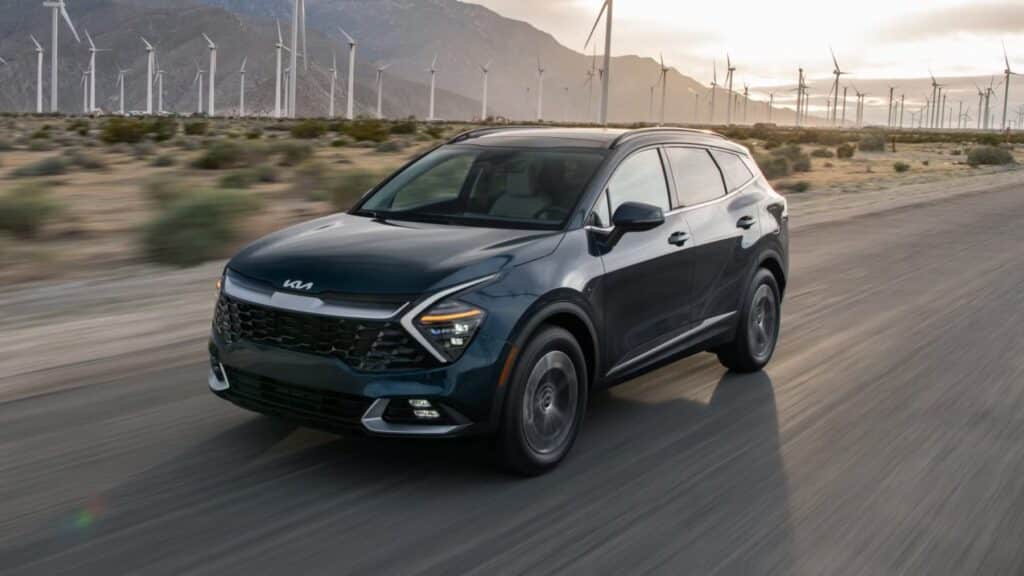
The Kia Sportage undercuts the RAV4 by around $3,000 to $5,000 depending on trim, starting near $28,790 versus roughly $31,900 to $33,495 for a comparably equipped RAV4. Since the RAV4 dropped its gas-only option and went fully electrified for 2026, that price gap actually widens once you’re shopping in the same ballpark of trim level. The Sportage still offers a plain 2.5-liter gas engine for buyers who don’t want to pay hybrid pricing, plus hybrid and plug-in hybrid variants for those who do.
Interior space and tech lean Kia’s way too. Second-row legroom on the Sportage beats the RAV4 by a noticeable margin, and the top trims get a curved dual-panel display stretching 24 inches across, along with a blind-spot camera feed piped into the gauge cluster, a feature the RAV4 doesn’t offer at all. Kia also backs the Sportage with its 10-year, 100,000-mile powertrain warranty, nearly double the coverage Toyota provides.
The RAV4 answers with more horsepower in its hybrid trims and Toyota’s long-standing reputation for retained value, which still matters at trade-in time. But if you’re looking at day-one value, cabin tech, and warranty peace of mind, the Sportage gives you more SUV for less money against the RAV4.
Instead of Honda Civic Type R: Volkswagen Golf R or Hyundai Elantra N
Alright, hmmm, the Volkswagen Golf R is the pick if you want something that actually fights the Type R on power and pedigree. It beats the Type R’s 315 horsepower with 328 of its own and, unlike the front-wheel-drive Honda, sends it through all-wheel drive, which means real launches off the line and grip that doesn’t evaporate the second you get greedy with the throttle. It carries a heavier price tag and a slightly less playful, more grown-up character on a back road, but it’s the only car on this list that can trade blows with the Type R spec for spec.
The Hyundai Elantra N is the value play. It costs over $10,000 less than the Type R while still delivering a genuinely engaging front-wheel-drive chassis, a manual or dual-clutch transmission choice, and Hyundai’s excellent 10-year, 100,000-mile powertrain warranty stacked against Honda’s comparatively short 5-year coverage. You give up about 40 horsepower and some outright polish, and reviewers have noted the interior doesn’t feel quite as dialed in under hard use, but on public roads most drivers won’t miss what’s left on the table.
So the honest answer depends on your priority. Chase outright performance and all-wheel drive grip, the Golf R is your car. Chase the best bang for your buck with a genuinely fun chassis underneath, the Elantra N wins that argument easily. Sorta proves that the Civic Type R is one of a kind, combining both.