
Buying a submarine is one of the slowest, most expensive things a country can do. Germany is in the middle of a multibillion-euro program for new crewed U212CD boats (about €4.7 billion for the latest tranche), and the first of those is still years out. So it’s worth paying attention to the other submarine the German Navy quietly took delivery of back in February, one that’s nearly 36 feet long, weighs five and a half tons, was built in Israel, and has nobody inside it.
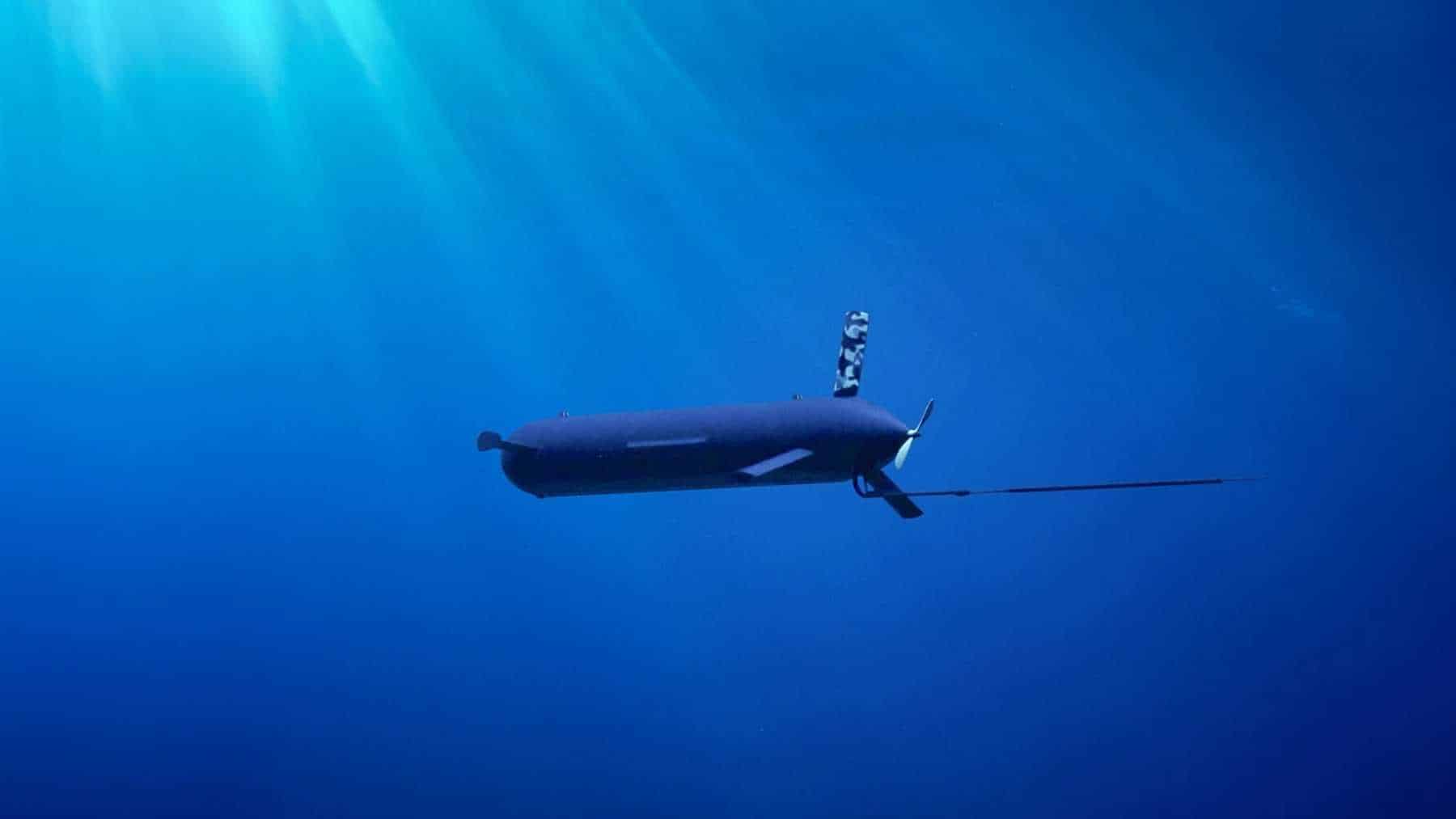
The vehicle is called BlueWhale, and Israel Aerospace Industries handed it over to the German Navy on February 25 at the Eckernförde naval base on the Baltic coast, according to Naval News. It’s a large autonomous underwater vehicle, or AUV, and it’s the first unmanned submarine an Israeli defense company has ever delivered to a foreign navy, as Defense News reported. The job it’s built for is the one navies least want to send a crew to do: loitering for weeks in contested water, listening for other submarines, and combing the seabed for mines.
That seabed is the whole reason Germany wanted it. And the Navy isn’t stopping at one. The plan is to field a fleet of these by 2035, which tells you this is the start of something rather than a one-off science experiment.
It does most of a submarine’s job with nobody aboard
The pitch from IAI is blunt: BlueWhale can handle a large chunk of what a crewed submarine does on an intelligence run, for weeks at a stretch, without anyone on board. It runs on a high-efficiency lithium-ion battery pack and fully electric propulsion, cruises at 2 to 3 knots to stay quiet, and can push to 7 knots when it needs to reposition. Depending on the mission and how hard it’s working the sensors, it stays out somewhere between 10 and 30 days. Call it two to four weeks underwater before anyone has to bring it home.
The dimensions are deliberately small. At 10.9 meters long and just 1.12 meters across, the whole thing fits inside a standard 40-foot shipping container, which means you can put one on a truck, a plane, or a cargo ship and have it on the other side of the world without much fuss. It dives to 300 meters, and IAI has said that at 7 knots over ten days it has the range to cover more than 1,600 nautical miles. For a robot that weighs about as much as a delivery truck (roughly 11,000 pounds), that’s a lot of ocean.
None of this makes it a replacement for a crewed boat, and nobody involved is claiming it is. A BlueWhale carries no torpedoes, no sailors, and nothing like the endurance of a nuclear plant. What it does is take the dull, dangerous, weeks-long sensor patrols off the crewed fleet’s plate and run them for a fraction of the risk.
A retractable mast does the looking, a towed sonar does the listening
BlueWhale carries two very different sensor systems for two very different jobs, and they don’t run at the same time.
Above the surface, the work happens through a telescopic mast, the kind you’d recognize from a conventional submarine’s periscope, except this one folds its sensitive gear into a patented sealed container when it isn’t in use. Raised, the mast carries an AESA radar, day-and-night electro-optical and infrared cameras, a signals-intelligence package, and a satellite antenna that beams what it collects back to a command post in real time. So the vehicle can sit just under the surface, pop the mast up to scan for ships and electronic emissions, send the take home, and drop back down before much of anything notices it was there.
Below the surface, it switches to sound. Germany’s configuration was fitted by Atlas Elektronik, the TKMS subsidiary, with a low-frequency towed array sonar (a long acoustic sensor it drags behind itself) derived from the company’s ACTAS family and tuned for the exact depths and frequencies submarines use to stay hidden. There’s also a flank sonar running along the hull and a synthetic-aperture sonar for combing the bottom, which is the part that finds mines. All of it feeds a computer running inside the pressure hull, so the BlueWhale sorts through its own data and decides what’s worth flagging before it ever phones home.
That last detail matters more than it sounds. A sensor platform that processes its own take and only surfaces to report is a lot harder to catch than one that has to keep calling back for instructions.
The Baltic seabed is the reason any of this exists
Germany didn’t buy a crewless submarine-hunter because the technology happened to be sitting there. It bought one because the floor of the Baltic Sea has turned into a slow-motion crime scene, and watching it with crewed ships is both expensive and slow.
For about two and a half years, cables and pipelines on that seabed have been going dark with unnerving regularity. At least 11 subsea communications cables and energy lines in the region have been damaged since October 2023, several in incidents investigators have treated as suspected sabotage, often involving ships dragging anchors across the bottom. The Balticconnector gas pipeline was torn open in 2023. The EstLink 2 power link went down in December 2024. On the last day of 2025, Finnish authorities boarded a cargo ship over a telecom cable between Helsinki and Estonia. No court has issued a final ruling in any of these cases, and the operators involved have generally denied wrongdoing, but the pattern was enough for NATO to stand up a permanent seabed patrol, Baltic Sentry, in January 2025.
This is the environment a BlueWhale is built for. The same low-frequency sonar that hunts submarines also maps the seabed, and the synthetic-aperture sonar that finds mines can just as easily keep an eye on the cables and pipelines somebody keeps damaging. The German Navy has described the vehicle’s purpose as reconnaissance and the detection of hybrid threats at sea, which is the polite term for exactly this. It’s also far from the only robot working that bottom. The U.S. Navy ran its own crewless drones across the same seabed off Latvia during this month’s BALTOPS 2026 exercise, and Russia’s main submarine design bureau is building a seabed drone of its own, officially for science.
Germany wants a fleet of these, not a showpiece
One BlueWhale is a capability demonstration. A fleet is a strategy, and a fleet is what Germany is after.
The delivery falls under a modernization plan the Navy calls Kurs Marine 2035+, and trade reporting puts the target at a dozen or more large autonomous underwater vehicles by 2035. The idea isn’t to retire crewed submarines but to network the robots alongside them. Germany is buying that batch of new crewed U212CD boats, and the plan is for AUVs like BlueWhale to operate as nodes in the same command-and-control picture as those boats and the surface fleet, covering the stretches that aren’t worth risking a crewed hull on. It’s not the only crewless seabed bet Berlin is making either: German defense-tech firm Helsing has built a much smaller seabed-listening glider that the UK just ordered a whole program around.
Boaz Levy, IAI’s president and CEO, framed the handover in Naval News as proof of “the degree of mutual trust between Israel and Germany,” which is the kind of line you’d expect at a ribbon-cutting but happens to be backed by a real track record. Germany has bought Israel’s Arrow 3 missile defense system and Heron drones in recent years, and TKMS has built submarines for the Israeli Navy for decades. Michael Ozegowski of TKMS Atlas Elektronik kept it plainer, saying in the companies’ joint statement that the program “significantly strengthens Germany’s defense capabilities.” Nobody disclosed how much Germany is paying or exactly how many vehicles the full deal covers, which is its own kind of answer.
Israel is already shopping it around
Germany was first, but it probably won’t be last. At the DEFEA defense show in Athens in May 2025, IAI signed a memorandum of understanding with Hellenic Aerospace Industry to offer BlueWhale to the Greek Navy for evaluation. That’s an early-stage agreement, not a signed sale, and Greece’s warm, busy littoral waters are a very different acoustic problem than the cold Baltic. But the logic travels. Any navy that wants persistent eyes and ears in contested water without putting a crew in harm’s way is a potential customer, and there are more of those every year.
Whether crewless submarines turn out to be the bargain they look like on paper depends on how this first batch holds up once it’s doing the work week after week, in weather, with real submarines trying not to be found. Germany has put its money on the idea that a five-and-a-half-ton robot can quietly cover the seabed that keeps making headlines, and that it can do it cheaply enough to buy a dozen of them. The Baltic will be the place that settles whether that bet pays off.