
Geothermal has a geography problem in the American imagination. Say the word and most people picture Iceland, the country that once drilled into a magma chamber by accident and liked the results enough to plan a return trip. Volcanic superheat is supposed to be something that happens under glaciers, an ocean away.
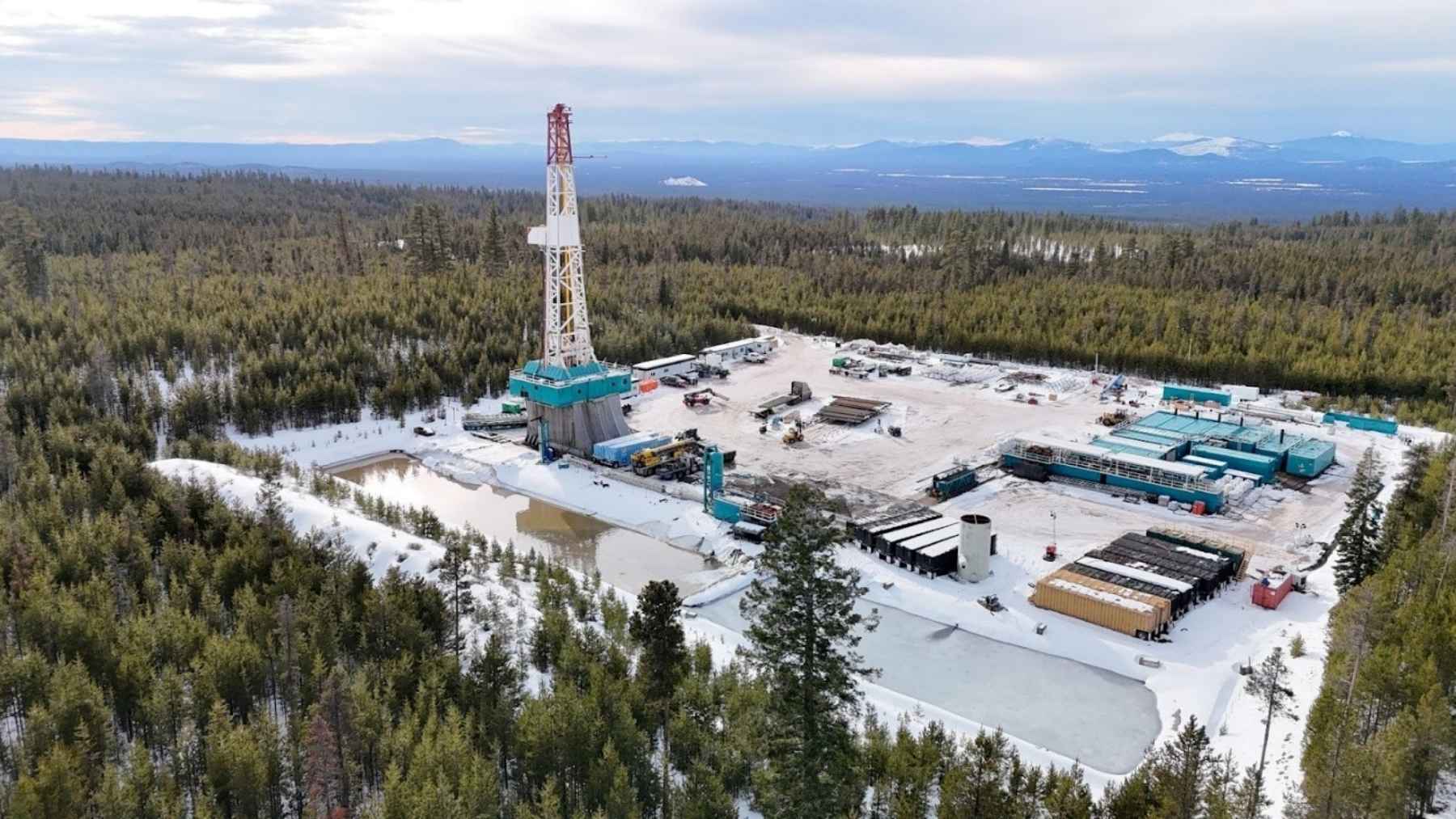
Except the hottest enhanced geothermal system ever built is not in Iceland. It sits on the western flank of Newberry volcano, about 25 miles south of Bend, Oregon, where a Texas-based company called Mazama Energy connected two wells through rock at 629 degrees Fahrenheit, 331 Celsius, at the bottom of the hole. No engineered geothermal reservoir anywhere has run hotter.
Mazama announced the record in late October 2025, with backing from Khosla Ventures and Gates Frontier plus a demonstration grant from the Department of Energy. Since then the company has laid out what comes next: three more wells scheduled at Newberry before the end of 2026, aimed at rock above 400 degrees Celsius. That threshold changes the entire economics of geothermal, and it happens to sit inside a volcano the U.S. Geological Survey classifies as active and very high threat. More on that in a minute.
Two wells, six feet of tolerance, and a world record
The system itself is simple to describe. Mazama re-entered a legacy well already sitting on the site, rebuilt its structure, and stimulated it to serve as the injector, the well that pushes water down. Then the crew drilled a brand-new producer: 10,200 feet of deviated hole that landed within six feet of its planned trajectory, lined up with the injector under the flank.
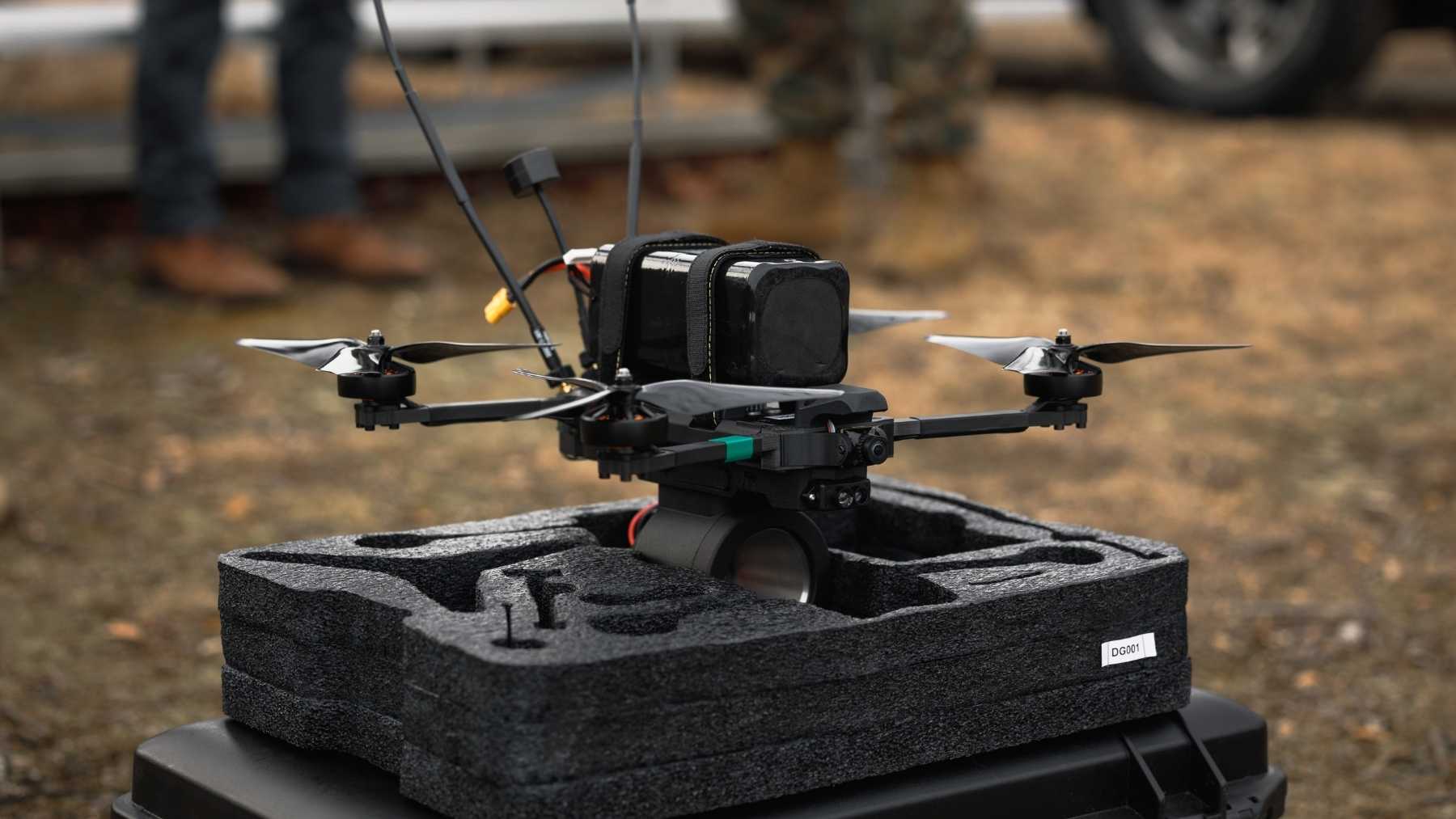
Water goes down one well, picks up heat from the fractured rock between them, and comes back up the other. Circulation tests confirmed the two wells talk to each other through the reservoir Mazama cracked open with Thermal Lattice, its patented stimulation process built on conventional hydraulic fracturing. The crew also ran crosslinked fracturing fluids, sliding sleeves, chemical and nano tracers, and fiber-optic lines that map fractures in real time.
The drilling numbers are the part oil and gas people will read twice. Peak penetration hit 100 feet per hour through granite, basalt, and granodiorite, with a 76 feet-per-hour average and bit runs up to 2,760 feet through volcanic formations. Zero downhole failures of motors or measurement tools, per the company, at temperatures that normally cook oilfield electronics.
John McLennan, reservoir management lead at Utah FORGE, the Department of Energy’s geothermal field laboratory, framed the result as the fulfillment of a vision nearly fifty years old, going back to the enhanced geothermal experiments Los Alamos National Laboratory started at Fenton Hill, New Mexico. Engineers have been chasing a full-scale engineered geothermal reservoir since the mid-1970s. This is the hottest one anyone has managed to build.
The record is not the number Mazama actually wants
The awkward part about 331 degrees Celsius is that it sets a world record and still falls short of the number the company is really after. Water turns supercritical at 374 degrees Celsius, 705 Fahrenheit, under high pressure, entering a state that is neither liquid nor steam and carries far more energy per pound. Past that line, water stops being water, and the same hole in the ground delivers a multiple of the power.
Mazama puts numbers on the prize. The company says harnessing what it calls SuperHot Rock, above 400 degrees Celsius, would let it extract up to 10 times more power density, use 75 percent less water, and drill 80 percent fewer wells than current geothermal approaches, with a cost target under 5 cents per kilowatt-hour. That last figure is the one that puts geothermal in the same sentence as natural gas.
Newberry is one of the rare places in the country where that heat sits shallow. Site data shows wells reaching 320 degrees Celsius at only 3,000 meters, roughly 9,800 feet, with temperatures above 400 degrees available at less than 5,000 meters down. Most crust makes you drill several times deeper for the same heat, which is exactly why the industry keeps circling this particular volcano.
Demand is doing the rest. Sriram Vasantharajan, Mazama’s CEO, tied the Newberry pilot directly to “what the next generation of AI and cloud infrastructure requires.” The Bulletin in Bend reported the project could help answer Oregon’s carbon-free power questions, with the potential to feed large energy consumers, data centers included.
Three more wells are on the schedule before January
The 2026 campaign is where this stops being a science story. According to company spokesperson Pete Lumley, the plan runs in sequence: an observation well starting in the second quarter, an injection well in the third, and a production well in the fourth, with permitting moving in parallel. The injector and producer go in as a horizontal pair, and if the configuration performs, it could generate roughly 15 to 20 megawatts of net power.
The observation well has a name, Project Athena, and a job: sit in the ground and stream downhole data that shapes the deeper, hotter wells behind it. Mazama’s own project pages describe the 2026 phase as sustained field operations across multiple seasons, the staging step between last year’s pilot and a first commercial pilot of 15-plus megawatts, on a site the company pegs at more than 5 gigawatts of potential.
A drilling experiment rides along with it: field validation of drilling with supercritical carbon dioxide. Pumping sCO2 down the string cools the tools at the bottom of the hole enough for standard directional equipment to survive in rock that would normally fry it. If that works at Newberry, horizontal wells in superhot rock get cheaper and more repeatable, which is the entire business model.
For scale, 15 to 20 megawatts will not run a hyperscale data center campus. That was never the point of a pilot. The point is proving the multiplier, so the 200-megawatt development behind it inherits the math.
The volcano is active, monitored, and getting crowded
About the ground all of this sits on. Newberry is the largest volcano in the Cascades arc, covering an area the size of Rhode Island, and the U.S. Geological Survey lists it among the nation’s very-high-threat volcanoes. It last erupted about 1,300 years ago, and its hot springs, young lava flows, and background seismicity are the reasons USGS describes it as an active volcano rather than an extinct one.
Monitoring here is not theoretical. A seismic network has watched Newberry since 2012, run by the Cascades Volcano Observatory and the Pacific Northwest Seismic Network, and it picked up minor seismic activity from Mazama’s site work in late 2024. USGS said at the time it expected no change to the volcano’s activity or hazard picture from the project. Earlier geothermal campaigns in 2012 and 2014 produced hundreds of small quakes, all magnitude 2.5 or under, so the seismologists have practice telling engineering noise from volcano noise.
Mazama also has company on the mountain. Quaise Energy, the MIT spinout melting holes through granite with a millimeter-wave beam, broke ground nearby on its own superhot project, Project Obsidian, and closed a $134 million Series B in July 2026 to keep it moving. Add Fervo pulling megawatts out of hot Utah rock, and next-generation American geothermal suddenly has three serious pins on the map.
Newberry has hosted geothermal pilots for decades and, so far, zero commercial power plants. What those decades did produce was a fully permitted, thoroughly mapped site, which is why a company could show up, rebuild a well somebody else drilled, bore one new hole beside it, and set a world record. The three wells scheduled behind that record are chasing rock more than 120 degrees Fahrenheit hotter, and the observation well leading the way already has its name on the door.















I won't be going to Oregon period,