
Big road tunnels get dug in pairs. Two bores, one for each direction, and usually two machines working a few meters apart so both tubes finish at roughly the same time.
Melbourne is down to one.
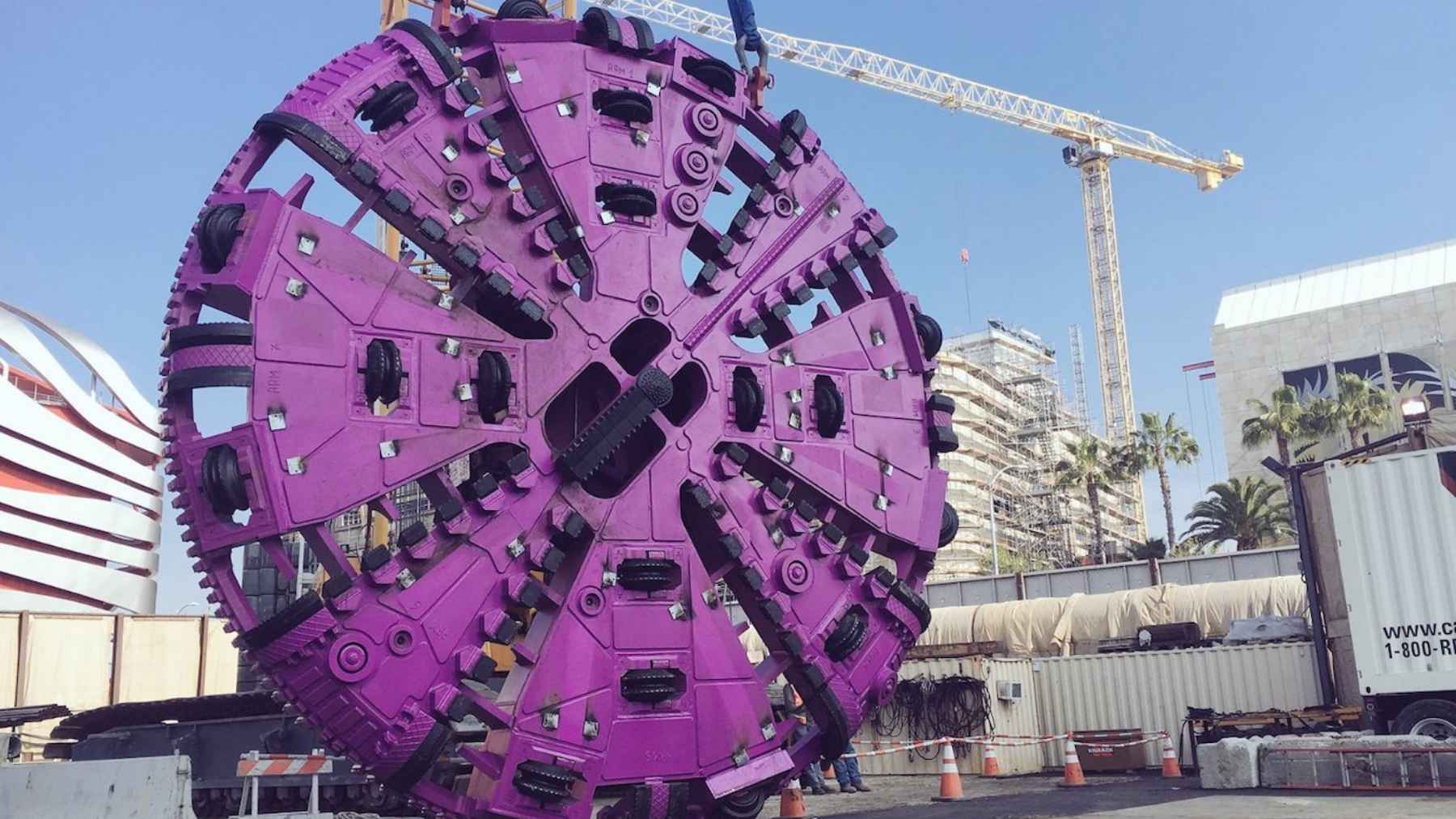
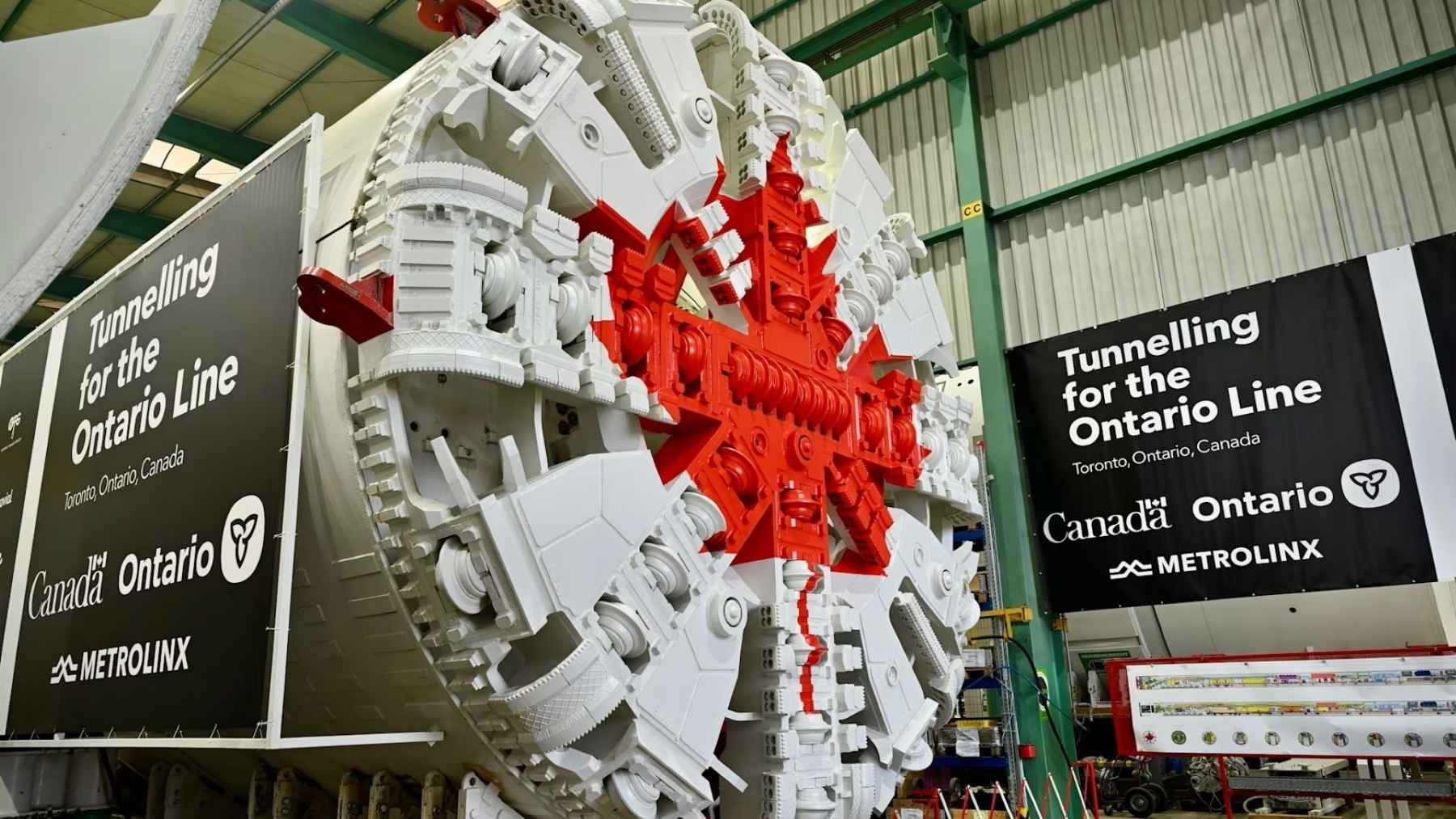
The machine still working is called Gillian. Her cutting face is 15.6 meters across, which is 51 feet, or a little wider than a basketball court. With her trailing gear she runs more than 90 meters (295 feet) end to end, and she weighs around 4,000 metric tons, about 4,400 US tons.
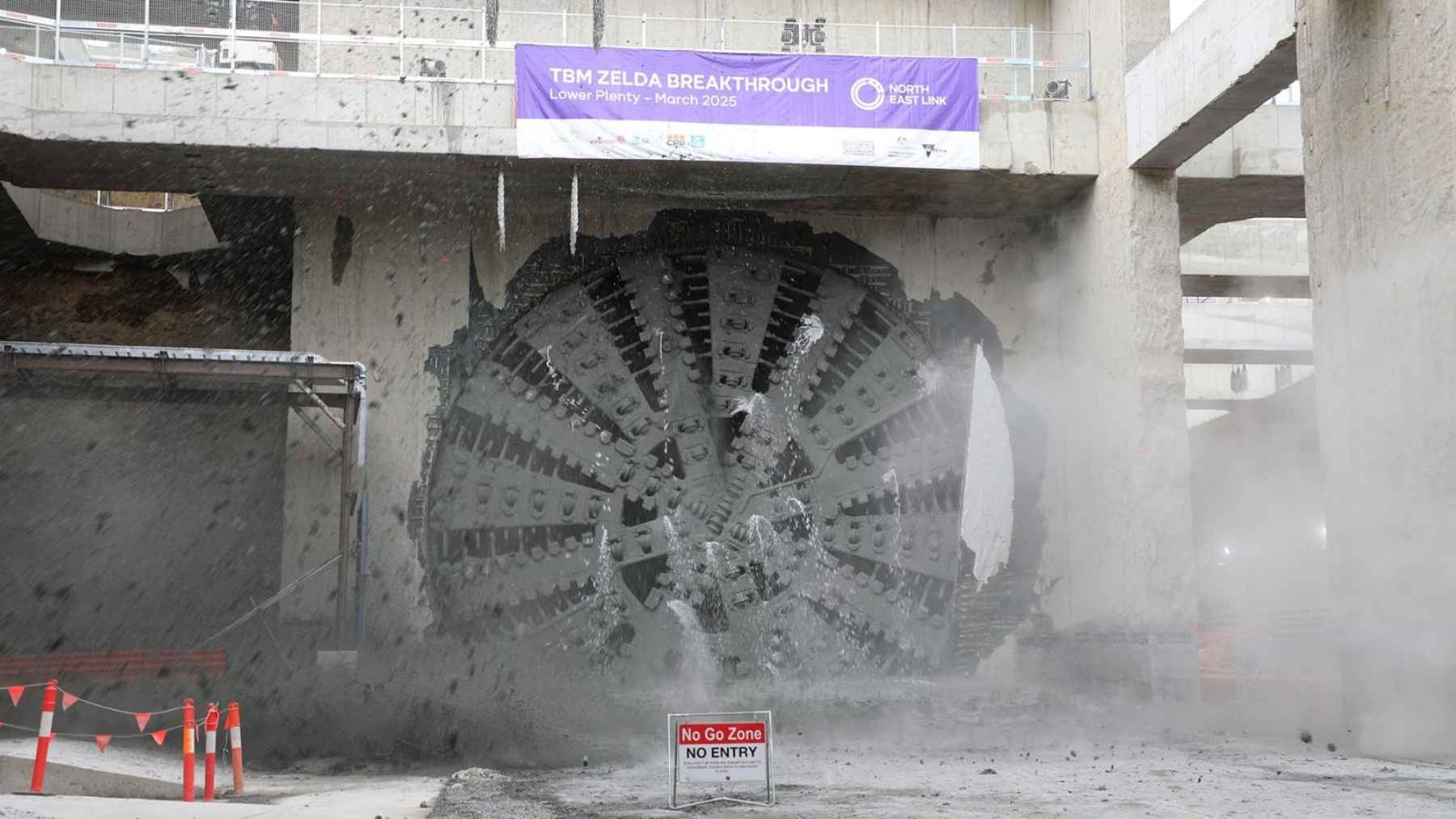
She has been under Melbourne’s northeastern suburbs since September 2024, and she is now the only tunnel boring machine left on the North East Link. Her twin, Zelda, broke through at Bulleen on Sunday, May 24, finishing the northbound tunnel. Crews have spent the weeks since pulling Zelda apart and driving her out of the city.
Gillian is still down there doing about 10 meters a day. The Victorian government expects her to surface later this year, and when she does, the digging on Victoria’s longest road tunnels is over.
Gillian has the tunnel to herself
Both machines are Herrenknecht earth pressure balance shields, the type you use when the ground in front of you is soft enough to fall into the hole if nothing is pushing back at it. The excavated muck sits in a pressurized chamber behind the cutterhead and holds the face steady while the machine advances.
Each one carries a crew of up to 20 and runs around the clock. Operators, electricians, mechanics, ring builders and tunnel engineers, according to the project’s own machine page.
The deepest part of the drive sits about 45 meters (148 feet) down, under the Yarra River. Contractor Webuild says a single 2.4-meter push produces around 1,150 tonnes of spoil, so roughly 1,270 US tons of dirt and rock comes out for every eight feet of forward progress.
All of it travels out on a conveyor into an acoustic shed at Winsor Reserve in Macleod and leaves by truck. The tunnelling runs on renewable electricity, which is one of the few genuinely unusual things about the job.
Nobody bored the full 6.5 kilometers
Every announcement about this project leans on the same number. Twin 6.5-kilometer tunnels, four miles each, Watsonia to Bulleen. That is the length of the finished road tunnel. It is not the distance either machine dug.
Victoria’s Big Build puts Zelda’s drive at just over 5 kilometers of that 6.5-kilometer northbound tube. Clough, part of the Spark consortium delivering the tunnels, gives the figure as 5.3 kilometers, or 3.3 miles.
The rest was cut another way. Five roadheaders, which are tracked machines with a rotating drum on a boom instead of a full-face shield, dug the southern section between Manningham Road and Trinity Grammar. Then there is the launch box at Watsonia and the 30-meter-deep interchange box at Lower Plenty Road, neither of which a shield can build for you.
None of that is unusual and nobody is hiding it. It does mean the machine in all the photographs did about 80 percent of the tube, and the number in the press release belongs to the road, not the borer.
Sydney took the size record while Melbourne was still digging
You will see these described as the largest boring machines in the southern hemisphere. Big Build itself is careful here and calls them among the biggest, which is the accurate version.
The title has moved three times in four years and all three holders are Australian. Herrenknecht’s Bella and Vida dug Melbourne’s West Gate Tunnel at 15.55 meters and held it. Zelda and Gillian took it at 15.6 meters.
Then Sydney showed up with Patyegarang at 15.7 meters and 4,350 tonnes, which the New South Wales government does call the largest in the southern hemisphere. She began her drive under Sydney Harbour at the start of July, and crews had to assemble her inside a cavern under a suburban cricket ground because a machine that wide does not fit on any road in the country.
Fifteen centimeters separate the current record from the one set four years ago. Six inches, across three of the largest machines ever built.
Zelda is leaving Melbourne by road, at night
Four thousand tonnes does not come out of a tunnel in one piece, and it does not fit on a highway either. Zelda is being broken down at the Manningham site and shipped to Port Melbourne.
The project’s work notice for Bulleen spells out what that takes. On Wednesday, July 1, an oversize load ran from Bulleen along Manningham Road, Rosanna Road, Lower Plenty Road and Greensborough Road to the M80 between 10pm and 5am, crawling and stopping repeatedly so crews could pull traffic lights down and lift overhead cables clear.
Sydney had the same problem days later with a smaller borer and solved it the same way, in 16 pieces on 68-wheelers at three in the morning. Parts get recycled or go back to the manufacturer for reuse.
Both machines are named after women from the same corner of Melbourne
The names came out of a public competition. Residents sent in hundreds of nominations for local legends and two of them ended up painted on the shields.
Zelda D’Aprano was an equal pay activist from West Heidelberg who chained herself to a Melbourne building in 1969 after an equal pay case was dismissed, then founded the Women’s Action Committee. Gillian Opie is a neonatal paediatrician at the Mercy Hospital for Women in Heidelberg who started Australia’s first breast milk bank.
Naming borers after women is an old habit, older than the machines themselves, and Adelaide is currently running one called Mary under its houses. Who gets to work inside them has been a slower conversation. On the other side of Melbourne, the Suburban Rail Loop is putting together the world’s first all-women tunnelling crew, 18 of them, due to operate one of eight machines from 2027.
What is left underground
Gillian was around 4.5 kilometers into her drive when Zelda finished, according to trade outlet The Tunnelling Journal, and no date has been put on her breakthrough beyond later this year. She has the southbound tube, running about seven meters from the one her twin already finished.
Above her, crews are laying the road deck inside the northbound tunnel and installing the electrics, lighting and safety systems. The tunnels are due to carry traffic in 2028 and are supposed to cut up to 35 minutes off a run between Melbourne’s north and east.
The cost is the part that does not make it into the podium speeches. Victoria’s own cost explainer put North East Link at A$26.1 billion in December 2023, an increase of roughly A$10 billion that Premier Jacinta Allan attributed to design changes, construction costs, supply chains and inflation. Canberra’s share is A$5 billion. Victoria covers the rest.
Zelda ground out 5.3 kilometers of Melbourne and will never dig anything again. Gillian gets a few more months underground, and then she takes the same road out to Port Melbourne, in pieces, after dark, with the traffic lights coming down behind her.