
Nuclear-powered ships are not a new idea. The U.S. Navy has been running reactors at sea since the 1950s, and it still has dozens of them quietly pushing submarines and aircraft carriers around the planet. Commercial shipping never followed. Putting a fission reactor on a container ship is a regulatory, insurance, and public-relations problem nobody wanted to own, so the industry that moves roughly 90 percent of global trade stuck with some of the dirtiest fuel on Earth.
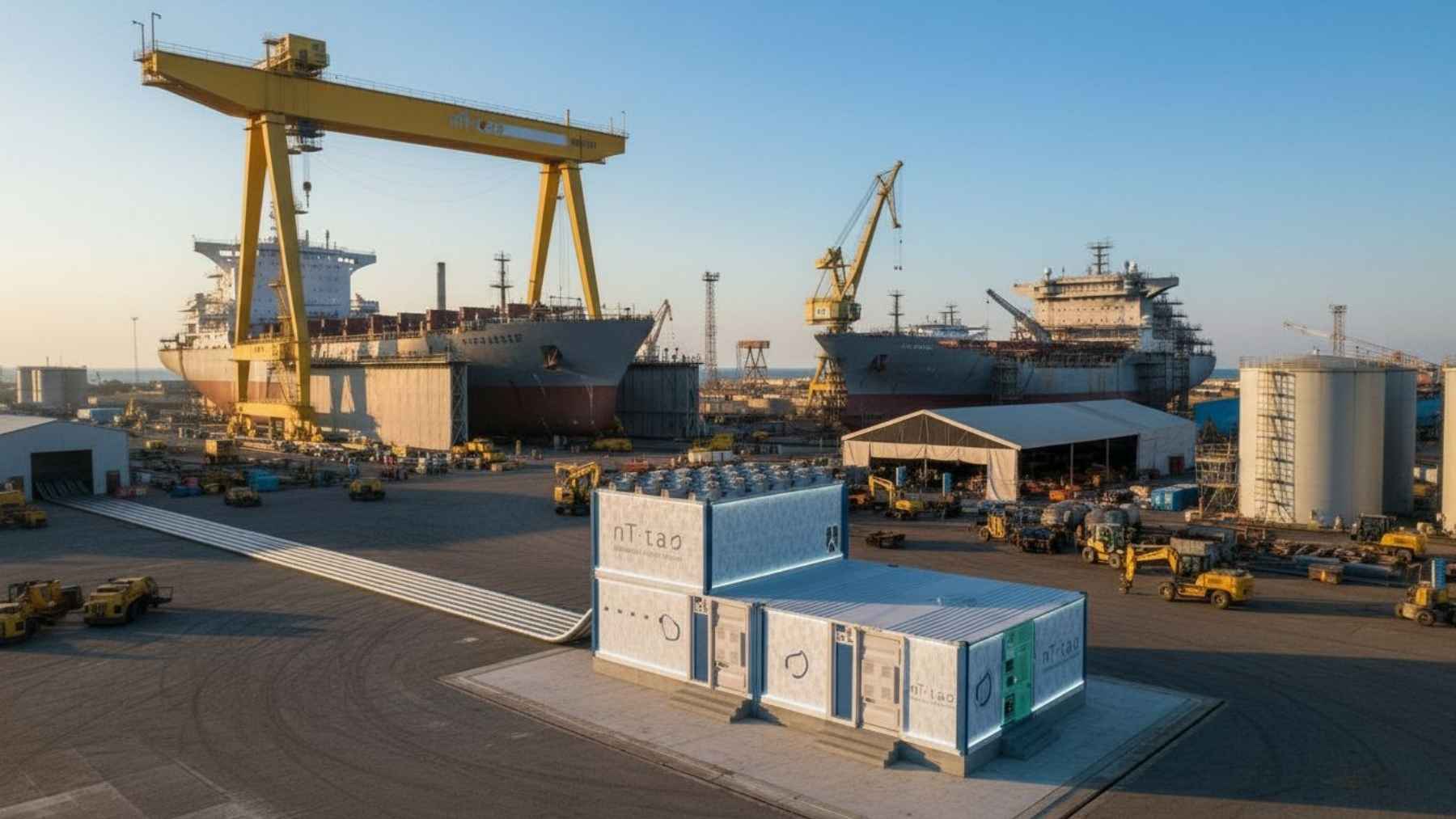
That is the backdrop for what turned up at the Posidonia 2026 maritime conference. A new five-party alliance led by the American Bureau of Shipping (ABS) and Israeli fusion developer nT-Tao announced a vessel built around an entirely different kind of reactor. They call it the Fusion Power Barge, or FusPoB. The pitch is a containerized fusion reactor generating up to 20 megawatts of electricity, dropped into a 71.4-meter barge, with a commercial prototype targeted for roughly 2032. Joining them are Siemens Energy, naval architects P&P Marine Consultants, and French thermal-solutions specialist TEMISTh. Together they are running a feasibility study, which is the careful way of saying the ship does not exist yet and they want to find out whether it can.
Shipping moves almost everything you own, and it’s chasing a 2050 deadline it can’t hit yet
Here is the scale of the problem the alliance is aiming at. The maritime industry is responsible for about 3 percent of global greenhouse gas emissions while carrying roughly 90 percent of world trade, according to the figures cited by Interesting Engineering, which broke the story. Those two numbers are the whole tension. You cannot simply switch the fleet off, and you cannot keep running it the way it runs now.
The deadline is real and it has teeth. Under the 2023 IMO GHG Strategy, the International Maritime Organization is steering international shipping toward net-zero emissions “by or around, i.e. close to, 2050,” with interim checkpoints that call for at least a 20 percent cut by 2030 and at least 70 percent by 2040, both measured against 2008 levels. Miss those and the fuel-standard penalties start stacking up.
The trouble is that the clean fuels meant to get the fleet there keep running into physics and infrastructure. Ammonia and hydrogen are the front-runners, and both struggle on energy density and on the simple fact that the bunkering network to supply them at scale mostly doesn’t exist. A fuel that eats too much of your cargo hold, or that you can only buy in a handful of ports, is not much of a fuel for a vessel that has to cross oceans on a schedule.
Fission powers warships. Fusion is the alliance’s way around everything that kept it off cargo ships
The reason commercial shipping never went nuclear isn’t that the engineering is impossible. It’s that fission brings spent fuel, meltdown risk, and a security and liability profile the merchant fleet was never going to take on voluntarily. Fusion is a different animal. It doesn’t sustain a runaway chain reaction, so there is no core to melt down, and it produces far less long-lived radioactive waste than fission. On paper, that removes most of the reasons a port or an insurer would slam the door.
There’s a catch, and it’s a large one. Nobody has a rulebook for this. As Interesting Engineering reports, no classification or safety framework currently exists for a fusion reactor on a commercial vessel, and writing that framework is a big part of what ABS is actually signing up to do. The class society wants to define the technical and safety standards for floating fusion before anyone tries to launch one, which is a less flashy but arguably more important job than building the barge itself.
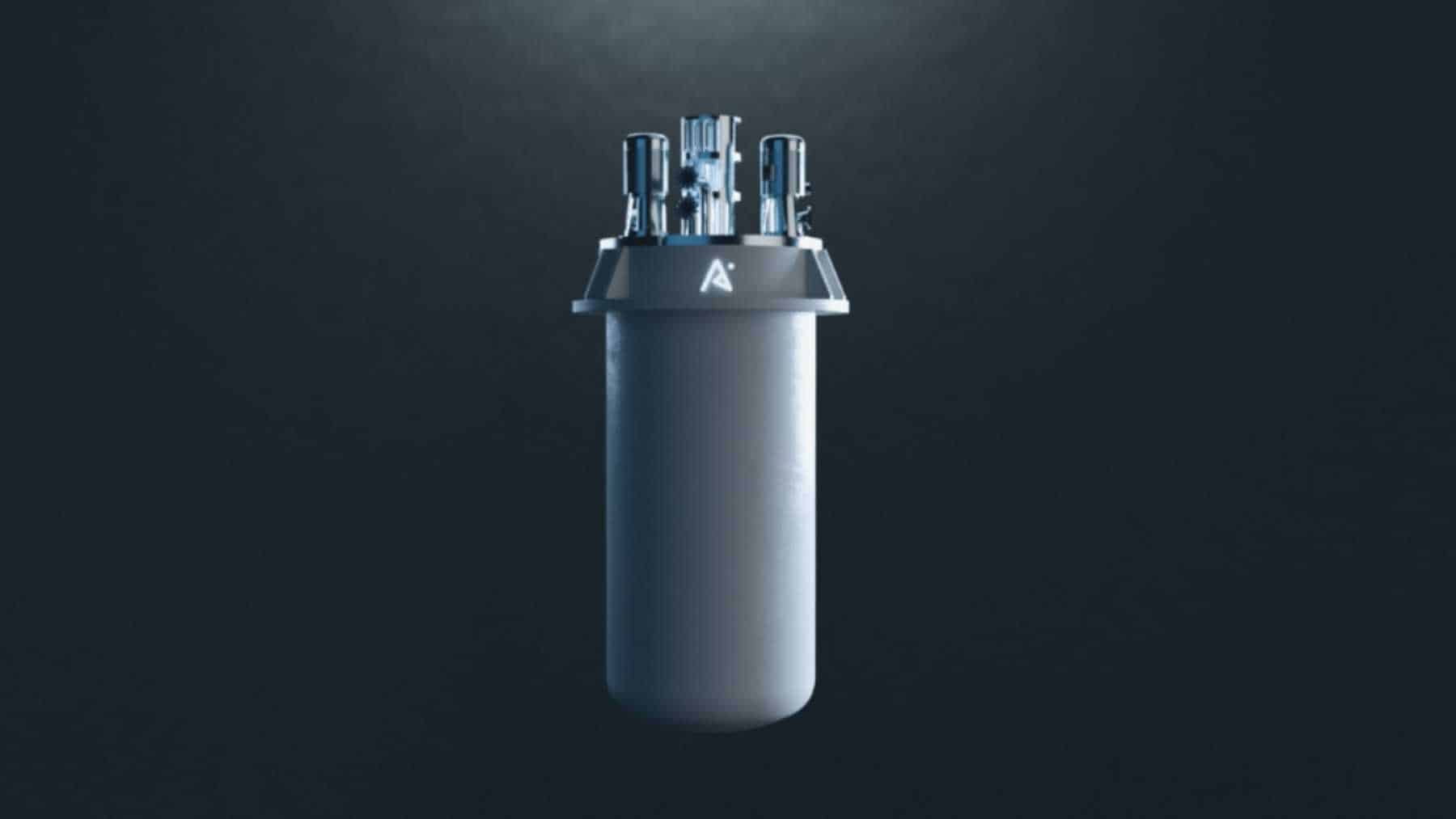
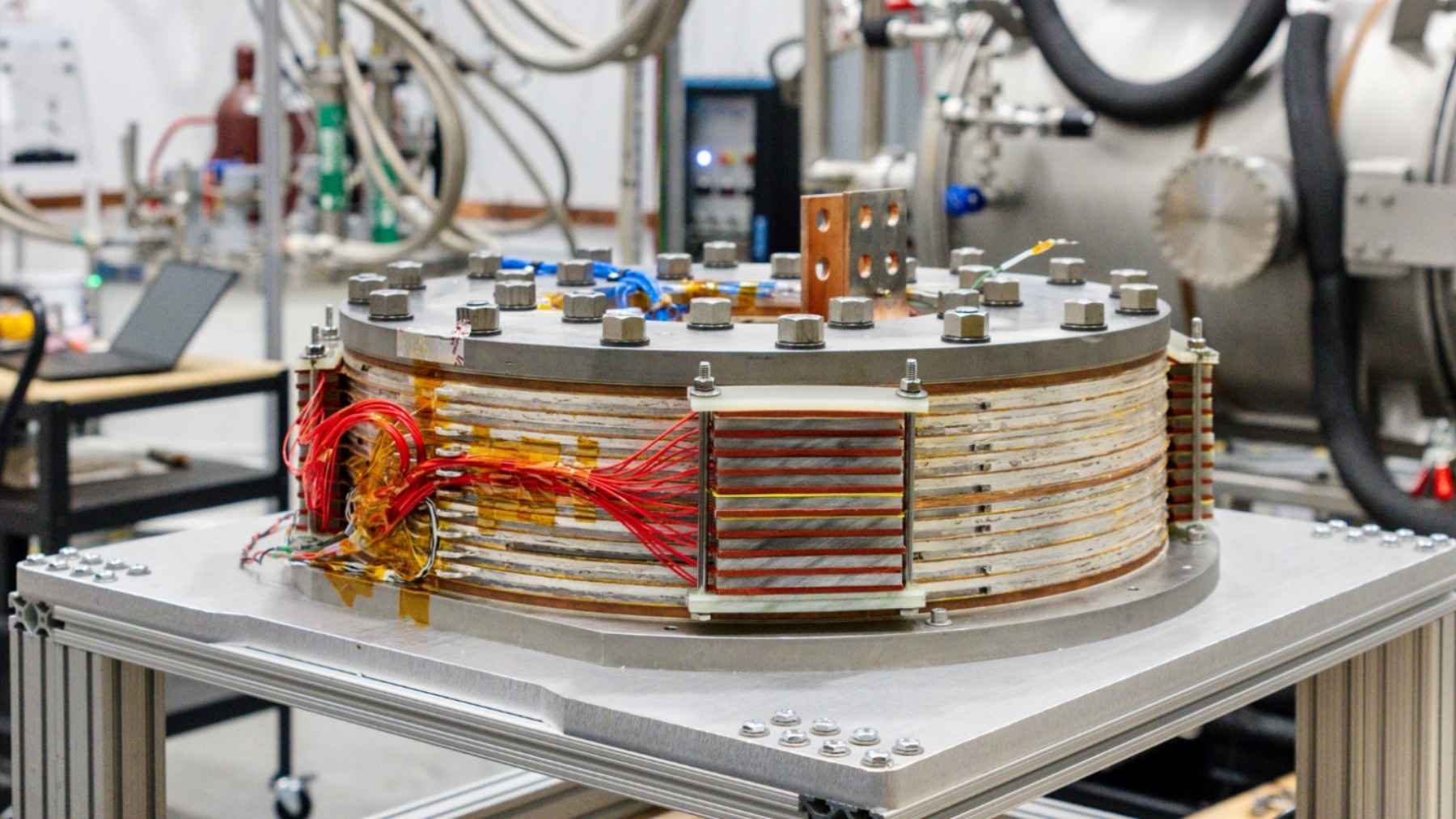
nT-Tao supplies the reactor. The company is developing a compact fusion system in the 10-to-20-megawatt range, built around a pulsed stellarator design and proprietary heating and magnet technology aimed at making fusion small enough to ship rather than housing it in a building the size of a stadium. Its own argument for why this suits the ocean is blunt: compact fusion is “clean, energy-dense, and requiring no fuel supply chain,” the company told Interesting Engineering. For a ship, no fuel supply chain is the entire selling point, and it’s the one thing ammonia and hydrogen can’t promise.
The reactor is the size of a shipping container, and that’s the whole point
The design work, handled by P&P Marine Consultants, centers on a 71.4-meter DP2 anchor-handling power barge supply vessel. In shipyard terms, that’s a heavy-duty utility boat with dynamic positioning, the kind of platform built to tow things and hold station offshore. The power train is where it gets unusual: an nT-Tao compact fusion reactor driving two 8,000-kilowatt steam generators, with the whole system designed to deliver up to 20 megawatts of electricity and zero carbon emissions.
The containerization is the clever bit. Because the reactor uses a pulsed stellarator configuration, the alliance says it can be packaged into standard ship dimensions instead of demanding a custom hull built around it. That’s the line between a technology you can fit into the existing maritime world and one that stays parked in a lab.
For propulsion, the barge is designed for a 14-knot service speed and a 30-metric-ton bollard pull, which is the static towing force it can put on a line. If the reactor drops offline, a battery system is meant to keep it moving for up to six hours at eight knots, which is enough to limp somewhere useful instead of drifting. Here’s how the headline numbers stack up.
None of those figures are exotic for a working support vessel. A diesel tug hits them every day. The novelty is entirely in what’s generating the power.
2032 is a target, not a launch date, and fusion still has to clear a bar nobody’s cleared
This is the part to keep straight. The FusPoB is a feasibility study with a prototype targeted for around 2032, not a boat about to leave a dock. And it rests on a foundation the entire energy world is still pouring: as of 2026, no fusion reactor anywhere has produced sustained, net-positive electricity for a commercial grid. nT-Tao’s reactor, like every other compact-fusion bet, has to prove it can do that before it can do it on water.
The maritime industry also has a recent habit of announcing the clean future and delivering the diesel present. Lürssen’s 114-meter superyacht Nausicaä was billed for years as a methanol fuel-cell yacht, then shipped with the fuel cells left out and five diesel gensets doing the work, an empty slot sitting where the clean powerplant is supposed to go someday. Drawing a reactor into a barge and certifying a working one are separated by that same kind of gap.
It’s also not the only piece of clean-energy hardware being built for a market that doesn’t quite exist yet. A Chinese lab recently put together a solid-state battery that stores electricity and hydrogen in the same device, genuinely clever chemistry that’s nowhere near a product. Compact fusion for ships lives in that same category right now: real engineering, real intent, and a commercial timeline measured in “ifs.”
What makes the FusPoB more interesting than the average green-shipping press release is what the alliance says it’s for. The barge is pitched as a multi-role platform for ocean towing, offshore power supply, and desalinated water, designed to operate wherever grid infrastructure isn’t available. That reframes the whole thing. If a containerized fusion reactor can sit on a hull and run for long stretches without refueling, the use case stops being only about hauling boxes across the Pacific and starts looking like portable power for places a grid can’t reach.
That’s the same logic driving the biggest off-grid energy builds on land, like the million-panel renewable network a mining giant just broke ground on in the Australian outback to run an iron-ore operation off the grid entirely. Build the power where you stand. A fusion barge is that idea taken out to sea, assuming the reactor ever shows up. Right now the deadline is real, the ship is a concept, and 2050 has a sizeable head start on 2032.
















See N.S. Savannah.