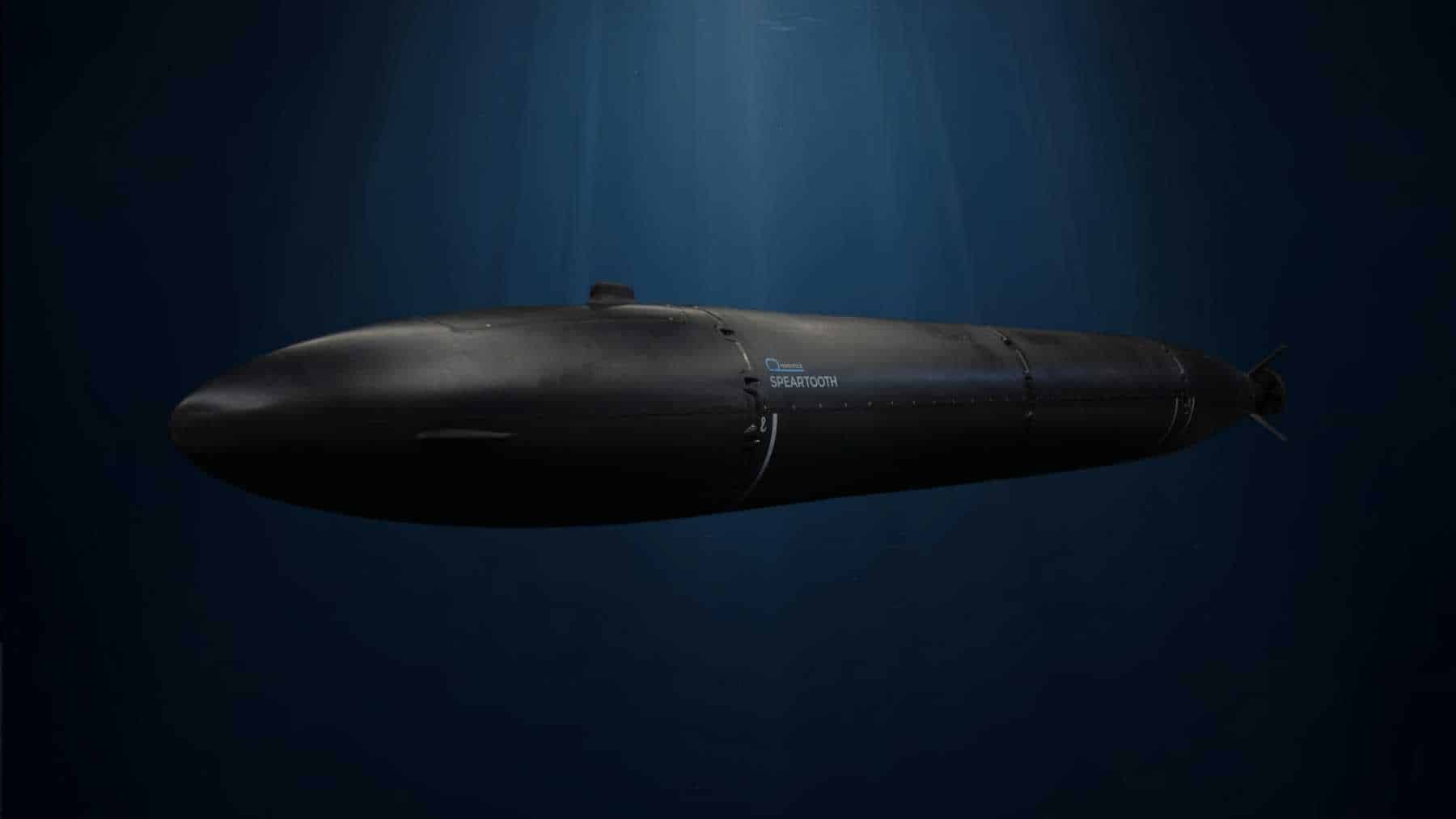

Most of the underwater drone news over the past two years has been about distance. China is testing uncrewed submarines roughly 148 feet long. Australia handed the US Navy a drone that swims about 1,240 miles and ships inside a standard container. Range is the number everybody quotes, because range is the number that sounds like a threat.
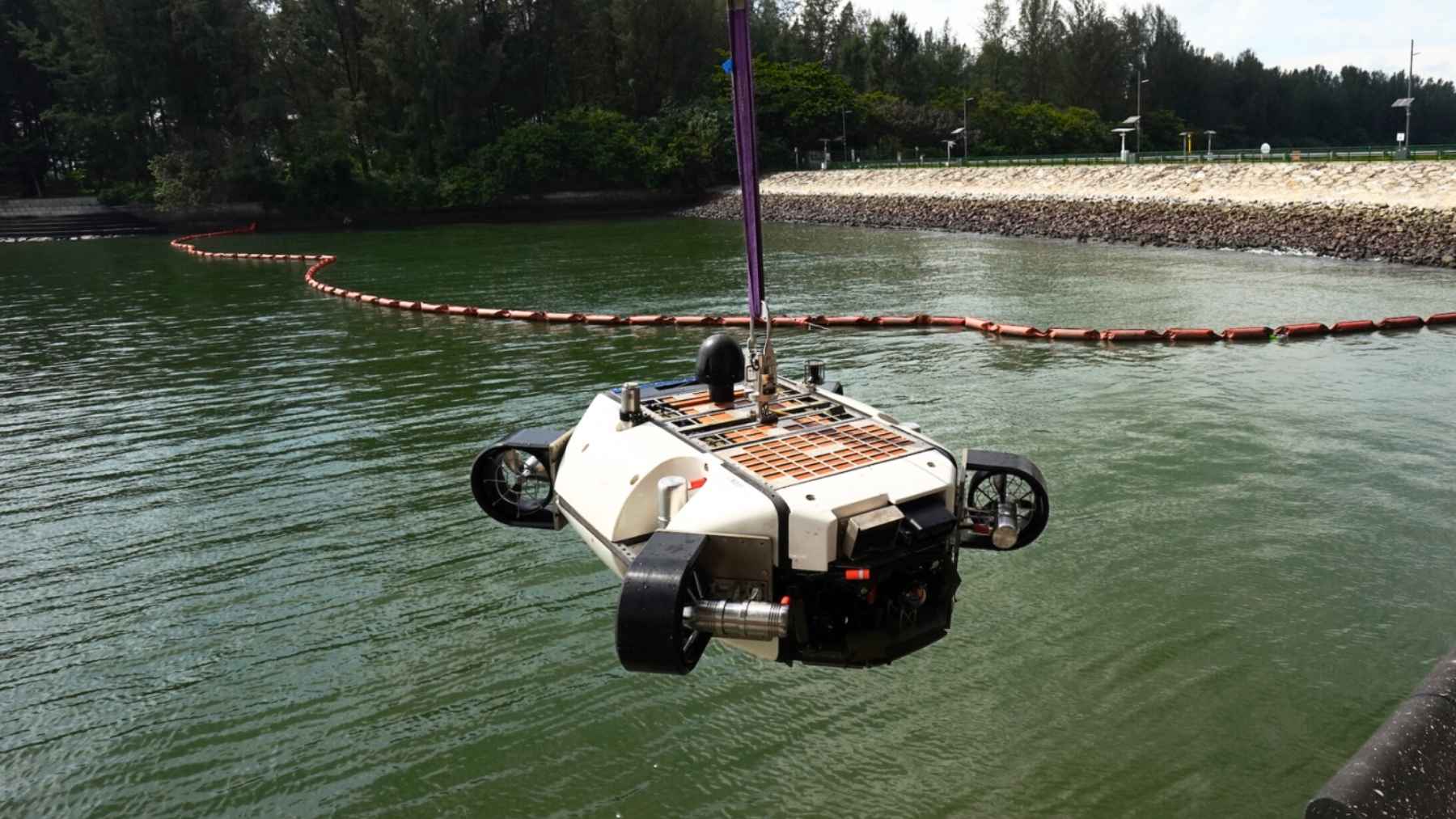
BeeX builds the opposite machine. Its newest drone, BETTA, measures 140 by 135 by 45 centimeters (55 by 53 by 18 inches), weighs 300 kilograms (661 pounds), and the entire pitch is that it will hold position in front of one piece of underwater steel for 24 hours. No tether. No pilot on a joystick. No support ship idling overhead.
On August 21, British defense consultancy Copper Turtle announced a partnership with BeeX to bring the Singapore company’s hovering drones to naval forces across the UK and Europe, covering critical underwater infrastructure inspection, clearance diving and mine countermeasures.
That is the sales channel. The machine behind it went public two months earlier, on June 24 in Singapore, and the number that actually matters is the battery.
The Copper Turtle deal is a door, not a contract
Copper Turtle is a UK consultancy that works the European defense market. What it signed is a route to market: it will represent BeeX’s hovering autonomous underwater vehicles to British and European navies. Chris Wardman, a director at the firm, called it “a step change in enhancing our offering on the European stage.”
Here is what the announcement does not contain. No navy is named. No order has been placed. No value is disclosed, because there is nothing yet to value. Copper Turtle has permission to sell, and BeeX has somebody in London who knows which procurement office to call.
The timing is the part worth paying attention to. The Royal Navy is in the middle of handing its mine warfare job to machines. It accepted its second uncrewed minehunting system, Adventure, at Plymouth in April, part of a joint UK-France program run with Thales, and it has been converting an auxiliary dock landing ship into a mothership for autonomous mine hunting. Anyone holding an inspection-class hovering drone wants a British phone number right now.
Twelve kilowatt-hours is what buys the 24-hour shift
BeeX made its name with A.IKANBILIS, a 60-kilogram (132-pound) inspection drone that the company’s published fleet specifications list at 1 kWh of battery and two to eight hours of run time, with hot-swap packs.
BETTA carries 12 kWh and is rated for 8 to 24 hours. BeeX describes that as a tenfold upgrade, which is the company’s own framing of a jump from 1 to 12.
The rest of the spec sheet moves with it. Forward thrust goes to 3.5 knots (4.0 mph) against 1.8 on the small drone, multi-direction endurance to 2.9 knots (3.3 mph), and the base build ships with a seven-sensor perception and positioning suite. BeeX says the autonomy stack was trained on 14 years of its own proprietary data, and the larger frame is built to take heavy-duty manipulator payloads, which is how an inspection drone becomes a light intervention drone.
Grace Chia, BeeX’s CEO and co-founder, said at the launch that BETTA’s “intelligence unlocks maximum productivity” when several drones work separate structures inside the same window. Strip the vendor gloss off that and you get the actual argument: one mobilization, one crew, more steel inspected before anybody goes home.
Hovering is the boring part, and it is the hard part
Most survey drones are torpedoes. They fly a lawnmower pattern at a set altitude, log a swath, and come back. They are excellent at covering ground and useless at looking closely at one weld.
A hovering AUV does the other job. It has to fight current with thrusters, hold a fixed distance off a structure, and keep its sensors steady while it works, all without a cable to the surface feeding it power and instructions. That is a station-keeping problem before it is a robotics problem, and it eats battery in a way that swimming in a straight line does not.
Which is why the 12 kWh matters more than it looks. Saab’s Sabertooth already proved the hovering concept works commercially, and we covered it turning valves 1,200 meters down and docking itself on a seabed charging station. BeeX is not claiming that kind of depth or residency. It is claiming a full working day on internal power, which is a scheduling claim aimed squarely at operators who currently pay for a vessel.
The positioning spec is the other half. BeeX says BETTA delivers IHO-rated accuracy, referring to the International Hydrographic Organization survey standards. The strictest of those, Special Order, requires detecting a one-meter cube on the seafloor, the same benchmark Bedrock’s 132-pound drone had to hit in the North Sea. Survey work is only billable if the data clears a published standard, which is the same reason a 20-pound Swiss ballast-tank robot needed class approval before anybody would pay for it.
BeeX’s own pages disagree about how deep it goes
The June 24 launch release calls BETTA a 100-meter depth-rated drone. That is 328 feet. The company’s fleet page, as it reads today, lists the depth rating at 150 meters, or 492 feet.
Both numbers are BeeX’s. Neither is a small print discrepancy: 50 meters is the difference between shallow harbor and structure work and a chunk of the North Sea.
For most of what the drone is sold to do, it probably never bites. Port walls, quays, jetties, coastal protection structures and the upper legs of offshore wind foundations all sit comfortably above 100 meters. If you are buying one for anything deeper, that is a question for the datasheet rather than the press release, and BeeX will send you the datasheet if you ask.
Singapore’s defense ministry got there before Europe did
The reason a UK firm bothered signing anything is that BeeX already sold this class of machine to a government. In October 2025, Singapore’s Defence Science and Technology Agency awarded a contract on behalf of the Ministry of Defence for the acquisition of BeeX hovering AUVs, after co-developing the autonomy with the company. DSTA’s Director Naval Systems, Ong Li Koon, framed it in that release as proof that “commercial, dual use technology can fuel innovation.” BeeX has not disclosed the value beyond calling it one of its largest projects.
The money followed. BeeX closed a $7.7 million Series A on June 29, five days after the BETTA launch, led by Monk’s Hill Ventures with SEEDS, ShipsFocus, OCTAVE Capital and NUS Technology Holdings participating. The round had been open since September 2025. The stated use is fleet expansion and operational reach.
The European groundwork is already physical. BeeX lists offices in London and Rostock, Germany alongside its Singapore headquarters, and in June it opened a live underwater test zone with the Singapore Institute of Technology at the university’s Punggol campus. Copper Turtle is the last mile of a plan that has been running for a while.
The real sell is the boat nobody has to send
Nothing about BETTA threatens anyone. It is not a weapon, it does not carry one, and at 3.5 knots it is not outrunning anything either. What it does is remove the boat and the diver from a category of routine work that navies and offshore operators are currently drowning in, from checking harbor walls to surveying cable landings to looking at whatever has attached itself to a hull.
Whether that turns into orders depends on things the announcement does not touch: price per day against a dive spread, how the autonomy behaves in an actual British winter, and which navy is willing to be the reference customer. Copper Turtle now has to go find that one. A 24-hour battery is a good opening line, but procurement offices have heard good opening lines before.