
If you have driven through a tunnel that runs under a river or a harbor, you have trusted a strip of rubber with your life and probably never thought about it. The thing keeping the water on the correct side of the concrete is not the concrete. It is a compressed rubber gasket sitting in every joint where two prefabricated tunnel sections meet, squeezed between steel faces and holding back the weight of everything above it. Engineers expect that rubber to do its job for a hundred years without anyone touching it. A new study out of China says the math behind that expectation was missing a variable, and once you add it back in, the seal loses its grip noticeably faster than the original models promised.
The number that has been bouncing around since the spring, repeated in defense and infrastructure coverage, is 35 percent faster degradation, and it is real, but it needs context before it becomes either a panic or a shrug. The seal is not about to flood anything. What the research actually found is narrower and, in some ways, more interesting: the safety margin engineers thought they had baked in is thinner than the design assumed, and the standard way of checking these seals in the field would not catch the problem if it ever did show up.
What a GINA gasket actually does down there
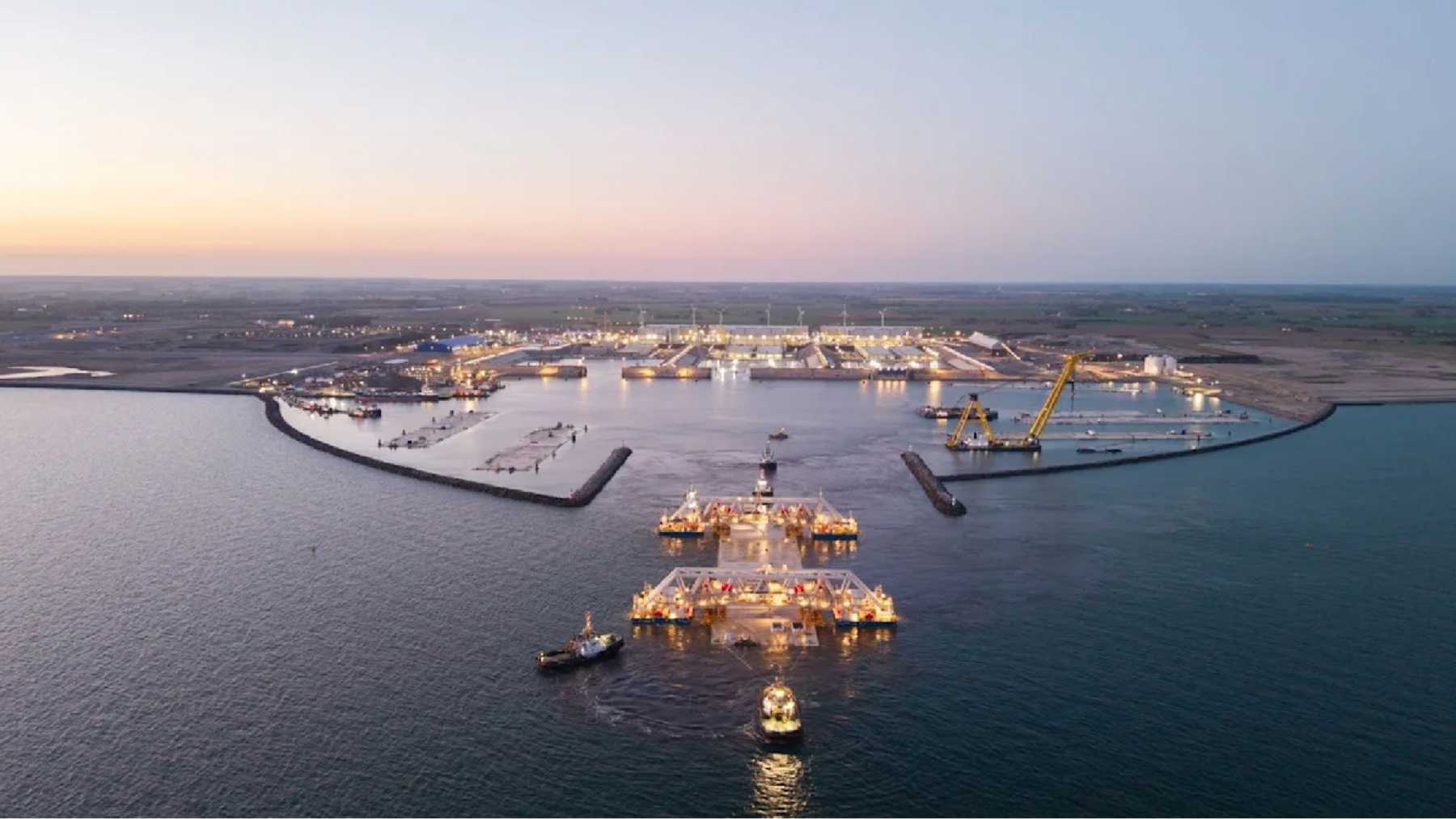
Immersed tunnels are not drilled through rock like a mountain tunnel. They are assembled. Hollow concrete sections are cast on land, floated out over a dredged trench, and then sunk and pulled together underwater until the joints close. At each of those joints sits a GINA gasket, a dense rubber profile manufactured by companies like Trelleborg, which makes both the primary GINA seal and the secondary OMEGA seal that backs it up. When the water gets pumped out from between two sections, the surrounding water pressure squeezes the gasket flat against the steel end shells, and that compression generates contact stress. Contact stress is the whole game. It is the outward pressure that resists the sea trying to find a path inside, and it stays under that load from the day the tunnel closes until the day it is decommissioned.
The design logic treats the gasket as a set-and-forget part. You compress it once, it seals, and it is supposed to keep sealing for the life of the structure. That assumption is exactly what the researchers wanted to stress-test, because nobody is going back into a joint 200 feet underwater to swap a rubber strip. If the seal is going to be the first and only line of defense for a century, somebody should probably know how it actually ages under the conditions it lives in.
The variable everyone left out
Here is where the new work, published in the journal Tunnelling and Underground Space Technology by Hongtao Mao, Zhinan Hu, and colleagues at Shijiazhuang Tiedao University, separates itself from earlier studies. Previous aging research looked at one thing: what seawater does to the rubber over time. Salt, chemistry, slow material breakdown. That is half of reality. The other half is that the gasket is being mechanically crushed the entire time it is being chemically attacked, and those two processes do not just add up politely. They compound.
The team pulled gasket samples from the operational Yuliangzhou tunnel and built a device that applied sustained compression and seawater exposure at the same time, instead of one and then the other. When they ran the rubber through that combined aging, the contact stress fell by 67.66 percent across the simulated service period. That is the headline figure, and it is a big drop, because it captures the loss that a seawater-only model simply never sees.
One honest detail the wave of coverage tends to skip: the Yuliangzhou tunnel does not run under the ocean. It crosses the Han River in Xiangyang, in central China, in fresh water. The researchers used seawater in the aging tests because that is the harsher, more representative condition for immersed tunnels in coastal and marine settings, where most of the world’s biggest examples live. The samples came from a river tunnel; the test simulated the saltwater environment those seals face elsewhere. The joint design and the failure logic are the same either way, which is the entire reason the result is being treated as a global question rather than a local one.
The trap that makes this worth caring about
The part that should bother engineers is not the 67.66 percent. It is what happens on the surface while that is going on. Over the test period, the gasket’s Shore A hardness rose by 14.18 percent and its density climbed by 5.88 percent. The rubber got harder and denser on the outside while its actual sealing force dropped on the inside. Those two indicators moved in opposite directions.
That matters because of how these seals get inspected. A field engineer checking a gasket visually, or with a standard hardness gauge, is looking at a piece of rubber that appears to be holding up just fine. Harder, denser, looks healthy. Meanwhile the polymer network that gives the rubber its elasticity, the thing that lets it push back against the water, is fracturing at the molecular level. The point where the rubber starts to stiffen under heat moved upward by about 5.8 degrees Fahrenheit, another marker of the internal change. As the researchers put it in the published study, “The aging essence of GINA gasket is material degradation.” A hardness test reads the symptom that looks reassuring and misses the one that does not.
Why the 35 percent number still clears the bar
Now the megapascals, because this is where the scary version and the accurate version split. An earlier model from the same research group, which considered seawater aging on its own, projected the gasket would still hold 2.32 megapascals of contact stress after 100 years. That is roughly 336 psi if you prefer the units on your tire gauge. Feed the compression load back into the model and that 100-year projection drops to 1.51 megapascals, about 219 psi. That fall, from 2.32 down to 1.51, is where the 35 percent figure comes from.
The thing is, the leak-proofing floor for this tunnel, the contact stress below which water can start getting through, was set at 0.61 megapascals, around 88 psi. So the updated projection of 1.51 still clears the threshold by a comfortable distance. The seal is not predicted to fail. What shrank is the cushion between “working fine” and “minimum acceptable,” and that cushion is what absorbs everything a clean lab model cannot account for: sediment shifts, construction tolerances, slow joint movement, the lower edge of the gasket where contact stress already runs lowest and prior work flagged as the weak point. Earlier research on this same tunnel found that once the gap between sections opens past roughly two inches, waterproofing performance starts to break down. Less margin means less room for any of that to go sideways before it matters.
The degradation also does not happen at a steady pace. The researchers identified three phases: a sharp early drop, a long moderate decline, then a slower taper as it converges. The early drop is the uncomfortable one, because it means a real chunk of the performance loss can land in the first stretch of service rather than politely waiting until year 99.
Why this reads as a global problem, not a Chinese one
Every immersed tunnel on the planet runs on the same basic idea. The Oresund link between Denmark and Sweden, the crossings in Hong Kong and across the world’s harbors and bays, the long Fehmarn tunnel being built between Germany and Denmark right now: different scales, different waters, same physics at the joint. A rubber gasket compressed between steel, holding back water with contact stress, expected to last a century. If the model used to design and validate that seal underestimates how fast it loses force under combined load, the gap is not specific to one tunnel in Xiangyang. It is baked into the assumption itself.
That is also why this connects to a quieter pattern in infrastructure materials, where the unglamorous parts keep turning out to be the weak link nobody was watching. The same logic is driving the push toward corrosion-proof rebar alternatives in bridges and parking decks, where the steel everyone trusted starts rusting the day it goes into the concrete. And it lands at the same moment governments are pouring money into protecting undersea infrastructure with seabed drones, watching for the threats they can see while the slow material problems sit quietly inside the joints. The expensive failures rarely announce themselves. They corrode, they fracture, they lose a little force at a time, and the inspection tools say everything looks fine.
What the researchers recommend is straightforward and a little pointed. For future tunnels, calibrate the rubber compound formulations and the initial compression targets using combined compression-and-seawater aging data, not chemical exposure alone. Translated out of engineering: stop validating these seals with a model that gives away safety margin before the tunnel ever opens. The seal in Xiangyang is holding. The question the study leaves on the table is whether everyone designing the next one is still doing the arithmetic the old way, and whether a standard hardness check would ever tell them otherwise.