
Nuclear power at sea has belonged to the Navy for most of a century. Submarines, carriers, a chain of command, and a fence around all of it. America did try the civilian version once, and the NS Savannah ended up defueled in 1971 after nine years of losing money.
The Department of Energy just opened the door again, and it went to an oilfield boat operator in Louisiana.
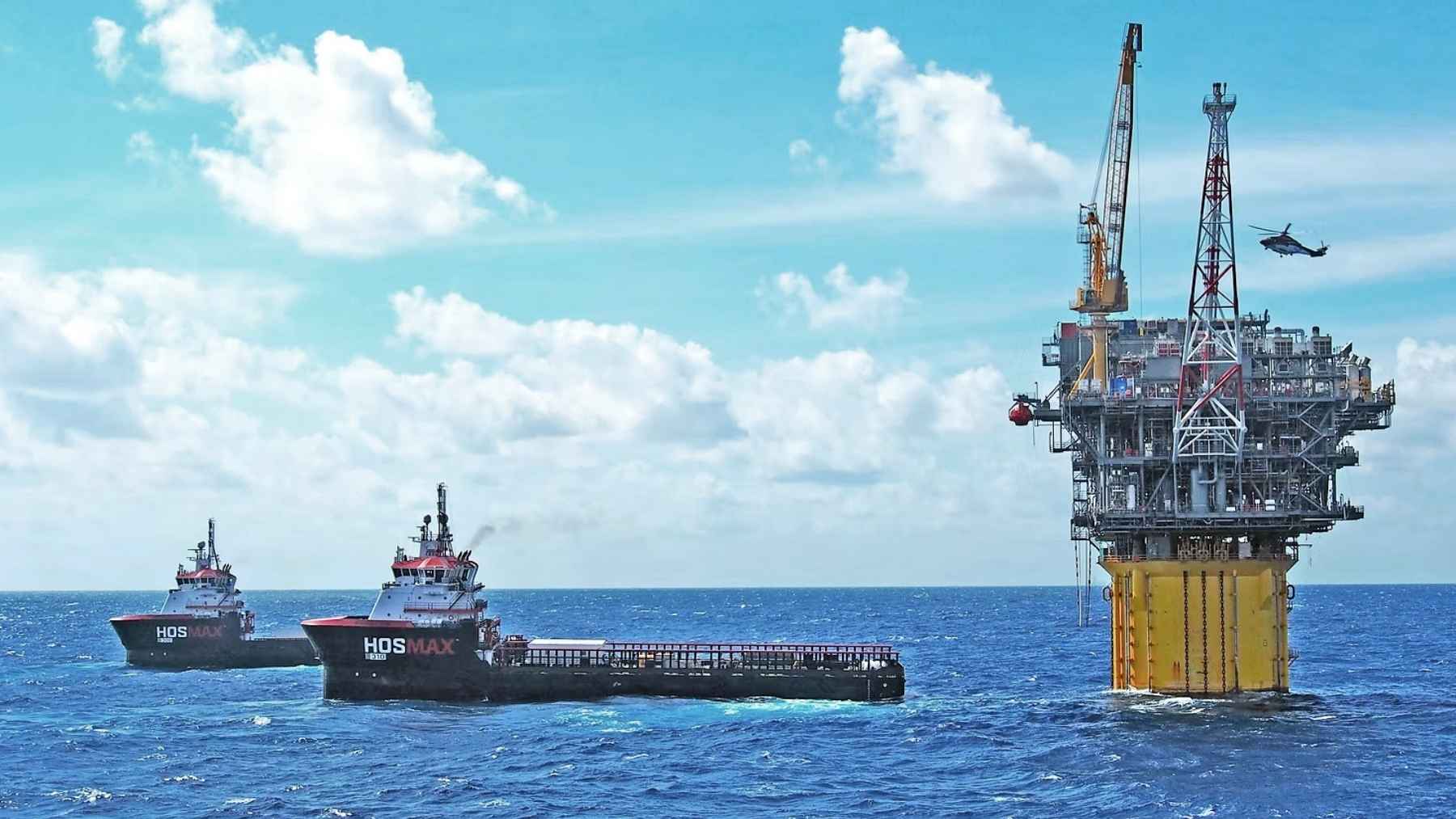
On August 28, Houston-based Deployable Energy announced that the National Reactor Innovation Center had selected it for two demonstrations under the Nuclear Energy Launch Pad program. One runs its Unity reactor at full power at Idaho National Laboratory. The other puts a Unity aboard a working vessel operated by Hornbeck Offshore, the Covington, Louisiana company that runs supply boats to rigs in the Gulf.
You may have read about this reactor here already. It is the 1-megawatt fission unit packed into a 20-foot shipping container that went critical at Idaho in roughly 150 days. The maritime chapter is new, and so is the reason the Idaho test needs a sequel at all.
June’s criticality test produced no electricity
Deployable’s reactor reached criticality late on June 30, 2026. What it achieved specifically was zero-power criticality, which POWER magazine described as a low-power physics demonstration where the core sustains a controlled chain reaction without producing meaningful thermal output or electricity.
The chain reaction was real. The megawatt was not.
The Idaho demonstration is built to close that gap. Deployable says the full-power run will evaluate system performance, integration, controls, safety and operational procedures at increased scale, and generate the data needed to support a future Nuclear Regulatory Commission licensing case. Nuclear Engineering International reports the full-power demonstration is slated for 2027.
INL director John Wagner has now put a slightly different number on the sprint than the company did in July. “Deployable Energy has set the benchmark for speed to criticality, moving from initial discussions to reaching criticality in just 155 days,” Wagner said in the announcement. Deployable’s own July press release called it roughly 150 days since project kickoff with the lab.
Deployable drove its criticality test rig cross-country to Idaho in a Ford F-150 before the June run. That is either an excellent demonstration of portability or the least glamorous nuclear logistics operation on record.
Hornbeck operates 74 boats and spent 2020 in Chapter 11
Hornbeck Offshore owns a fleet of 74 offshore vessels, made up of 15 multi-purpose support vessels and 59 offshore supply vessels, according to the S-1/A registration statement it filed with the SEC, with vessel counts stated as of October 31, 2025. It also operates and maintains four highly specialized OSVs it built and sold to the U.S. Navy.
Todd M. Hornbeck is chairman, president and CEO. His father Larry co-founded the company with him in 1997.
Hornbeck traded on the NYSE from 2004 to 2019, moved to the over-the-counter market, filed for Chapter 11 in June 2020, and emerged that September under a restructuring plan negotiated with lenders and note holders. It has been working toward a return to public markets since.
The two companies signed their memorandum of understanding on August 17, eleven days before the NRIC selection. Hornbeck also put money into Deployable as a strategic investor, on undisclosed terms. The MOU covers five markets: inland waterways, offshore vessels and platforms, national security logistics and autonomous vessels, power barges, and floating data centers.
The stated economic target is at least a 20% reduction in total cost of ownership against conventional marine diesel or grid power. Both companies described the pathway as phased, running through feasibility, front-end engineering, detailed design, regulatory approvals, and then deployment, with any of it subject to definitive agreements that do not yet exist.
Lloyd’s Register raised 40 recommendations on the same reactor
Deployable describes itself as the only commercial microreactor developer holding both an initial criticality and an Approval in Principle from a maritime classification society. The company does not name the society in its releases.
Lloyd’s Register has published its own account of working on the machine. In a case study dated July 6, 2026, covering work carried out in 2025, LR Advisory describes qualifying the Unity Battery alongside Australian ship designer Seatransport for integration into a 236-foot (72-meter) stern landing vessel.
LR ran two hazard identification workshops with both companies, benchmarked the reactor documentation against the ASME III code, and assessed the technology readiness level against its own 2022 guidance notes.
LR identified design gaps in thermal management, venting, enclosure robustness and fault isolation. It logged three low-risk scenarios covering thermal management and heat transfer, enclosure and containment integrity, and fault isolation and electrical protection. Those rankings, LR wrote, depend on the proposed measures actually making it into the final design and being verified in later stages. And the study raised 40 recommendations for further review or for alternatives with equivalent safety intent.
Separately, LR granted Approval in Principle in early 2026 to Seatransport for a hybrid nuclear-ready power concept covering 240-foot and 295-foot (73-meter and 90-meter) stern landing vessel designs, combining micro modular reactors with conventional diesel-electric systems. Deployable has been part of that project since April 2025.
Seatransport chairman Stuart Ballantyne, who has spent years arguing for the technology, told Lloyd’s Register in 2025 that he believes commercial nuclear propulsion is within reach and will be commonplace by 2030.
Washington spent the summer building the maritime side
The Maritime Administration issued a request for information in May seeking industry input on domestic, scalable, commercially viable reactors for U.S. marine transportation. Transportation Secretary Sean P. Duffy launched the department’s SMR initiative that same month.
MARAD then signed a memorandum of cooperation with the Port of Long Beach, and a second one with the Port of Corpus Christi on August 19. Duffy signed alongside Maritime Administrator Stephen M. Carmel, Representative Michael Cloud of Texas, port CEO Kent Britton and commission chairman Gabe Guerra. The Corpus Christi agreement covers small modular reactors, port microgrids, shoreside power architecture and infrastructure for emerging propulsion concepts.
None of those documents authorizes construction of anything.
The Launch Pad selection Deployable won is a different animal, and it comes with a catch that developers keep having to explain to investors. NRIC picked 13 projects across 12 companies on August 24, Deployable’s two among them. The program offers a prioritized path to DOE authorization, access to national lab expertise and regulatory support. It offers no money. INL’s Jess Gehin put it plainly at an industry day in May: applicants bear the cost of the project, and DOE provides no funding or cost share.
DOE authorization also does not replace the NRC. Deployable says it will invite the commission to observe the demonstrations to ease the eventual crosswalk to a commercial license.
The last American nuclear merchant ship cost $46.9 million and quit in 1972
Deployable chief commercial officer Sanjay Mukhi framed the maritime demonstration against the only precedent the country has. The Launch Pad program, he said, lets the company “demonstrate a commercial nuclear pathway that hasn’t been done in the US since the NS Savannah in the late 1950s.”
The Savannah’s actual timeline runs a bit later than that. Congress authorized her in 1956 under Eisenhower’s Atoms for Peace program. Her keel went down at New York Shipbuilding in Camden, New Jersey on May 22, 1958, Mamie Eisenhower christened her on July 21, 1959, and she was delivered on May 1, 1962. She was 596 feet long, carried a 74-megawatt-thermal Babcock & Wilcox reactor, and cost $46.9 million, of which $28.3 million went to the reactor and fuel alone.
She steamed more than 450,000 miles, hauled cargo and passengers, and never made money. MARAD defueled her in late 1971 and she went out of service on January 10, 1972. She sits in Baltimore as a museum ship.
Both reactors run on the same class of fuel, 68 years apart. The Savannah used low-enriched uranium at 4.6% or below; Unity uses uranium dioxide at 4.95%. Deployable’s whole cost argument rests on that, because fabricators already serving American power plants can make the stuff today, while microreactor rivals designed around HALEU are queueing for material that barely exists domestically.
Competitors are already in the same water. A Danish molten-salt developer has moved into South Korea’s licensing pipeline to build reactor barges in shipyards, and the Navy has been working out how to run a shore base off a carrier’s reactors. The Pentagon’s own transportable microreactor, Pele, still has 40,000 fuel compacts sitting in Idaho waiting on final assembly.
Deployable arrives at this stage with a customer that owns boats and a federal program with its name on the paperwork. It arrives without a sale. Zero Unity units have been sold, sited or licensed for commercial operation anywhere. The Hornbeck program starts with feasibility studies rather than shipyards. Neither company has announced where or when the vessel demonstration happens, and Deployable said only that timing, technical objectives and operational milestones will follow as the programs progress.
Todd Hornbeck wants the trial to cover more than the machine itself. “This maritime demonstration will allow us to test not only power generation, but also the deployment model, from transportation and integration to operations,” he said on August 28. Unity went critical at Idaho on June 30 and made zero watts. The NS Savannah last carried a nuclear core to sea in 1971, and the reactor America wants to put back on the water fits in a box you could stack on a container ship.