
Stuttgart, Arkansas calls itself the Rice and Duck Capital of the World, and it earns both halves of the title every year. The town of about 8,300 people sits on the Grand Prairie in the Arkansas Delta, ringed by rice fields that flood after harvest and pull in wintering mallards by the hundreds of thousands.
So when University of Arkansas researchers went looking for a place to float solar panels on a farm irrigation reservoir, they picked the one spot in America where the first visitors with strong opinions about the hardware would not be farmers or utility executives. They would be ducks.
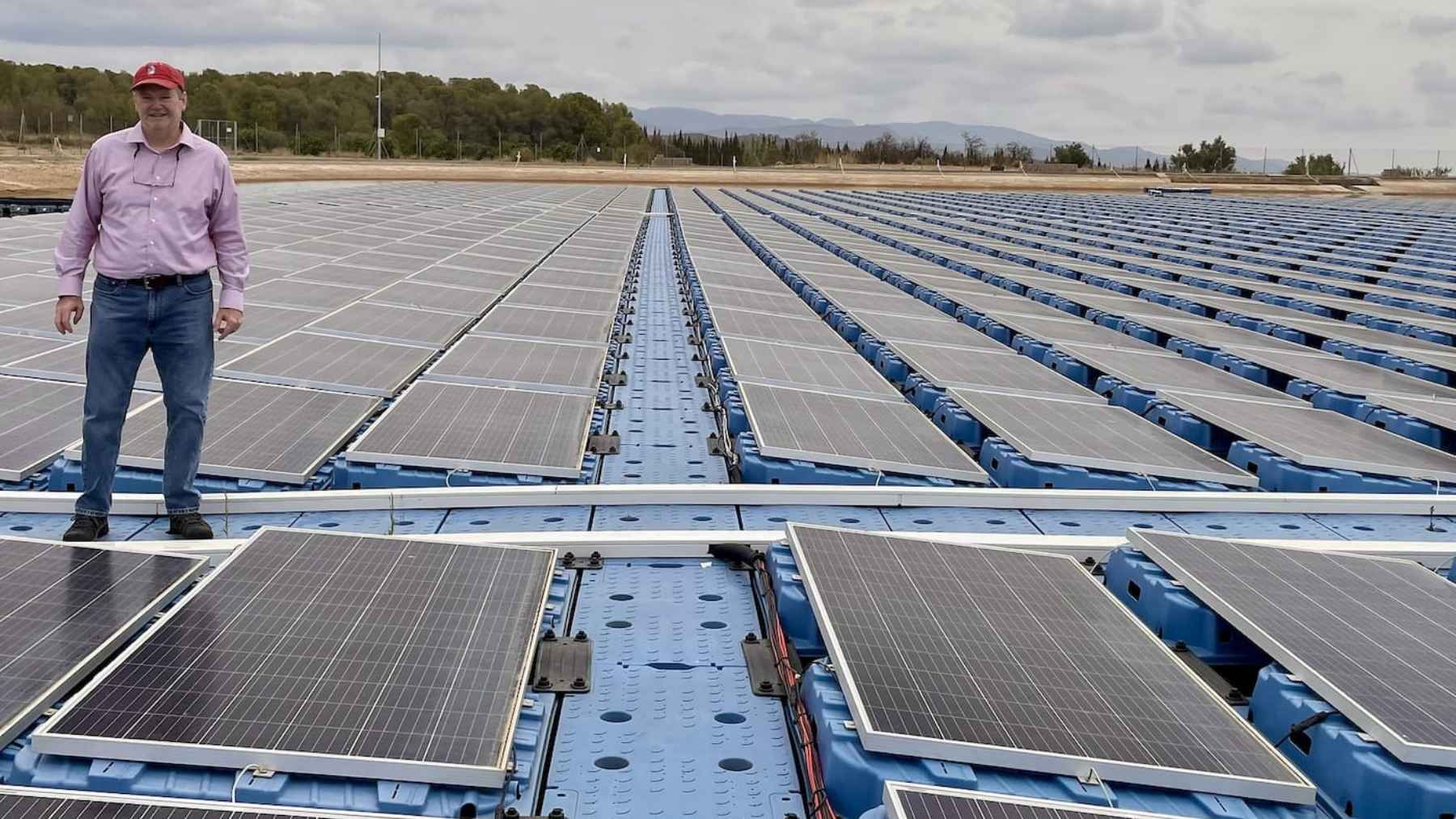
The Arkansas Agricultural Experiment Station announced in April that it is installing a 70-kilowatt, 96-panel floating solar array on the irrigation reservoir at its Rice Research and Extension Center in Stuttgart, plus another 24 panels on the reservoir embankment. The floating section covers about 0.1 acre of a 40-acre reservoir, which is the research equivalent of dipping a toe.
The pitch is simple. Generate electricity without touching a single acre of cropland, cut the water the reservoir loses to evaporation, and find out whether any of it pencils out under Arkansas conditions. Then there is the question no spreadsheet can answer: what happens when the ducks and geese funneling down the Mississippi Flyway this fall find glass floating on their water.
The array is small on purpose
Anchors for the buoys were already sitting in the reservoir when the university went public on April 20, and the panels themselves were scheduled to follow in May, according to the Division of Agriculture.
Michael Popp, the agricultural economist running the project, is not trying to power the town. Popp holds the Harold F. Ohlendorf Professorship in Farm Management at the experiment station, and what he wants out of a 70-kilowatt system is data: what it costs to operate, what it does to the water underneath, and what maintenance looks like when your solar farm spends July floating on a pond in the Delta.
“The goals are to not convert agricultural land to solar panel use, save irrigation water and create a synergy between utility companies, solar investors, farmers and policymakers,” Popp said in the announcement.
Water management engineer Chris Henry and Yi Liang, an associate professor emeritus of biological and agricultural engineering, round out the faculty side, along with a group of graduate and honors students. The money comes from Popp’s endowed chair and the Division of Agriculture itself, not from a solar developer with a brochure to fill.
The farmland math explains why anyone bothers
Solar developers in Arkansas will pay somewhere between $450 and $2,500 an acre to lease land, according to figures Popp cited in the announcement. Cash rent for the farmers actually working that ground has averaged about $150 an acre for irrigated cropland, $50 for dryland and $20 for pasture, per USDA survey data.
If you own farmland and just read those two numbers back to back, you do not need an economist to finish the thought.
Developers also want the same dirt farmers do. Cleared, level, well-drained ground near a transmission line describes good cropland almost perfectly, which is why utility-scale solar in Arkansas keeps landing on fields instead of hillsides. University projections put solar at roughly 0.2 percent of the state’s 13.7 million agricultural acres, but closer to 1.7 percent of cropland in some counties. Small statewide, very visible if it happens to be your county.
A reservoir dodges the whole fight. The water is already there, it is already flat, and nobody was going to plant soybeans on it.
The same megawatt needs half the space on water
Floating panels sit at a shallower tilt than ground-mounted ones, and a 2020 Brazilian study cited by the university found that the flatter geometry squeezes the same output from less area. Popp’s own numbers for Arkansas reservoirs work out to roughly 2.2 to 2.6 acres per megawatt, counting water surface and embankments. Land-based systems need about 5.5 to 9 acres per megawatt once you account for row shading and keeping vegetation down.
Then the water starts paying its own dividend. The panels shade the reservoir, and the university expects evaporation to drop by 25 to 50 percent depending on how much of the surface gets covered. On an irrigation reservoir, saved water is not an abstraction. It is next summer’s rice.
Shade may also knock back the algae that fouls pumps and irrigation gear, though Popp is careful to note that has not been definitively shown on systems this small.
If the logic sounds familiar, it should. It is the same reasoning that bolted 2,556 panels over an Arizona irrigation canal and sent Japanese engineers 12.5 feet above a rice paddy with panels that tilt out of the crop’s way. Most American floating solar already lives on small utility and irrigation ponds, a habit that goes back to the Napa winery that floated an array on its irrigation pond rather than give up vineyard rows. Arkansas is testing whether working rice farms belong on that list.
So what will the ducks do?
This is where Stuttgart stops being a convenient research site and starts being the whole point. Roughly 40 percent of North America’s ducks and geese travel the Mississippi Flyway, a funnel that runs from the Canadian Arctic down to the Gulf, and east-central Arkansas winters more mallards than anywhere else on Earth, according to Ducks Unlimited.
The birds come for the same reason the reservoir exists: rice. Flooded fields and farm ponds across the Grand Prairie double as waterfowl habitat every winter, and more than 100,000 waterfowl hunters take to the state’s flooded timber and rice country each season, per the Arkansas Game and Fish Commission. In this state, anything you do to water, waterfowl will eventually review.
Nobody knows what that review will say. The panels might read as an obstacle and push birds toward the open end of the reservoir. They might get ignored completely. Popp has said he wants to watch how migratory birds react to the array, which is a polite way of admitting that nobody can currently predict it.
The site helps his case in one respect: the reservoir’s embankments hide the array from anyone standing at ground level, one of the aesthetic arguments Popp makes for floating systems over field-mounted ones. Ducks, unhelpfully for that argument, approach from above.
The team also spent the spring asking humans for their opinion. A survey of Mid-South households and farmers ran through May 15, asking among other things what people would pay to keep solar development off farmland. Those answers will land alongside the operating numbers coming off the reservoir.
The first real test arrives with the cold fronts. Fall migration will push birds down the Flyway and into Arkansas County by the hundreds of thousands, and some of them are going to drop into a rice reservoir near Stuttgart that looks a little different than it did last winter. In this town, the ducks have always had the last word. This year they get a vote on solar, too.