
Every mechanic has a version of the same speech. Your part’s on order, the car’s fine to drive in the meantime, just don’t sit at 80 on the interstate for an hour until it comes in. So you take it easy, you wait, and a few weeks later the part shows up and you get your car back.
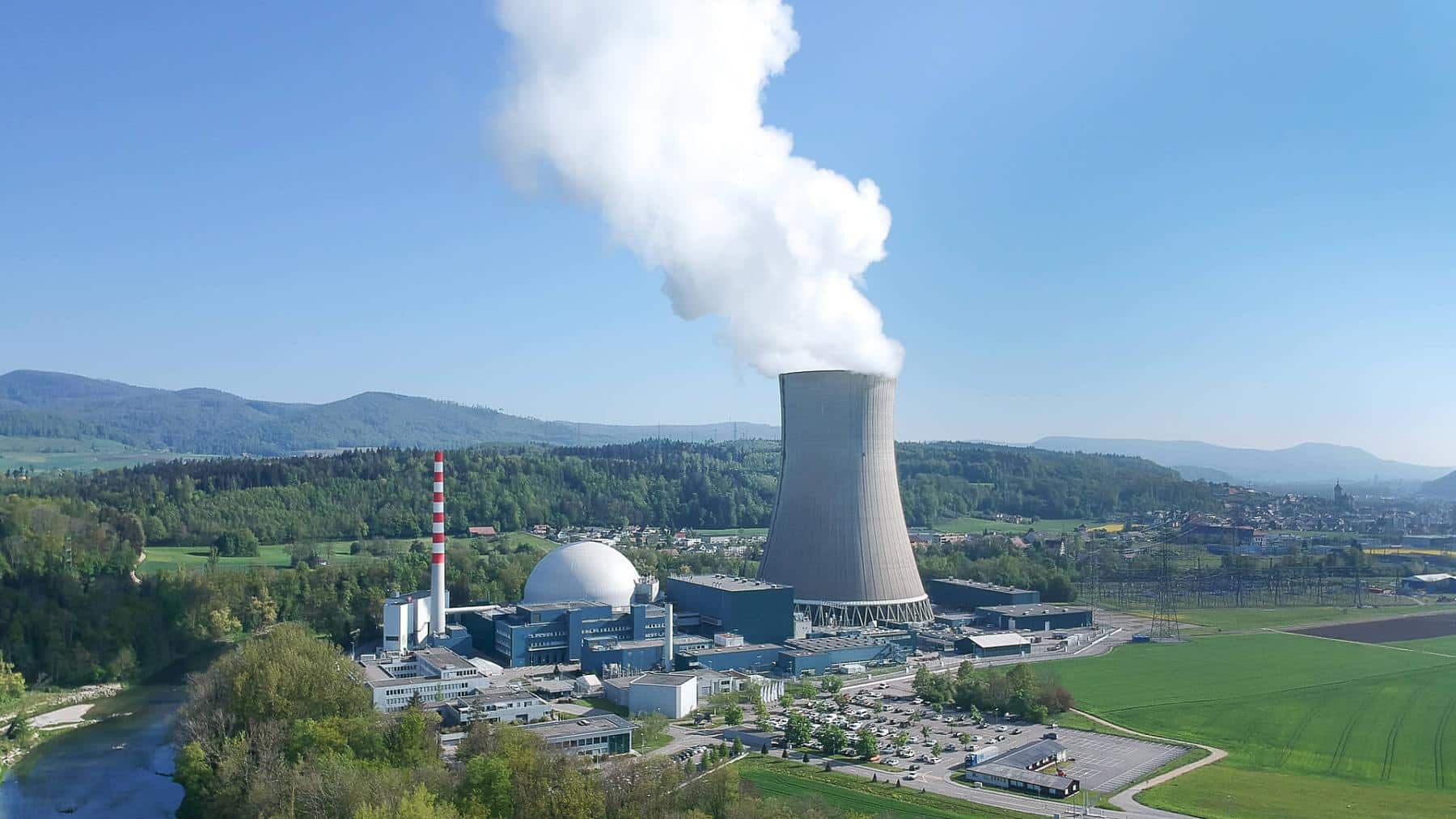
Olkiluoto 2, a boiling water reactor on an island off Finland’s west coast, has been having that conversation for almost two years. Its nameplate is 890 megawatts. It’s been held to 735 since the rotor inside its generator failed, because the utility that owns it would rather give up the power than risk the thing letting go. The replacement it had been waiting on arrived at the plant on July 15.
So the reactor went back up to full power, right?
It didn’t. Teollisuuden Voima, or TVO, said the next day that the unit keeps running at the reduced level until a completely new rotor has been installed, and that one isn’t expected at Olkiluoto until late 2027. The refurbished rotor that showed up in July goes on a stand as a spare.
So what does a generator rotor actually do?
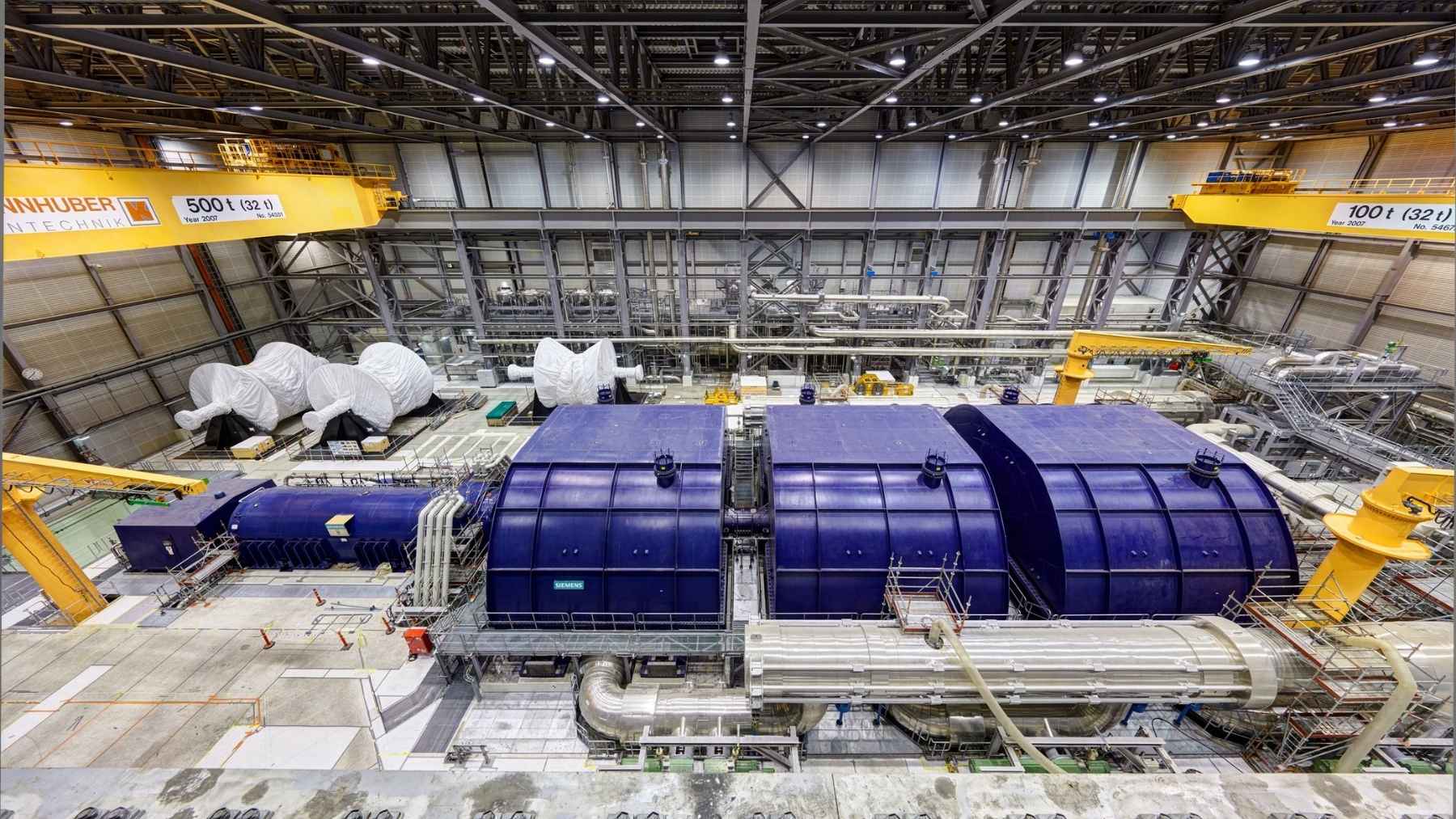
Nothing about the electricity leaving a nuclear plant is nuclear, which throws people the first time they hear it. Uranium boils water. The steam hits a turbine, the turbine turns a shaft, and the shaft turns a rotor inside the generator.
That rotor is basically a huge electromagnet, and spinning it inside the stationary windings wrapped around it is what pushes current out to the grid. A coal plant does the same thing. So does a gas plant, so does a hydro dam, and so does the odd tidal machine that bolts its generators onto the blade tips instead. Only the heat source changes.
The speed isn’t a styling decision either. TVO lists the rated speed of the OL2 turbine train at 3,000 rpm, which is what a two-pole machine has to hold to make 50-hertz power. American machines of the same type spin at 3,600, because our grid runs at 60 hertz. Either way, that rotor holds its speed for months on end without stopping, which is a strange thing to sit and think about.
Here’s where this story actually starts. The generators at Olkiluoto 1 and 2 are water-cooled, so there’s water moving through passages inside a component turning 3,000 times a minute. When that water ends up somewhere it shouldn’t be, moisture readings inside the generator climb, and you don’t get to wait and see what happens next. That’s how TVO caught the fault both times, and it’s why the unit came off the grid within hours on both occasions.
That rotor has already been swapped twice
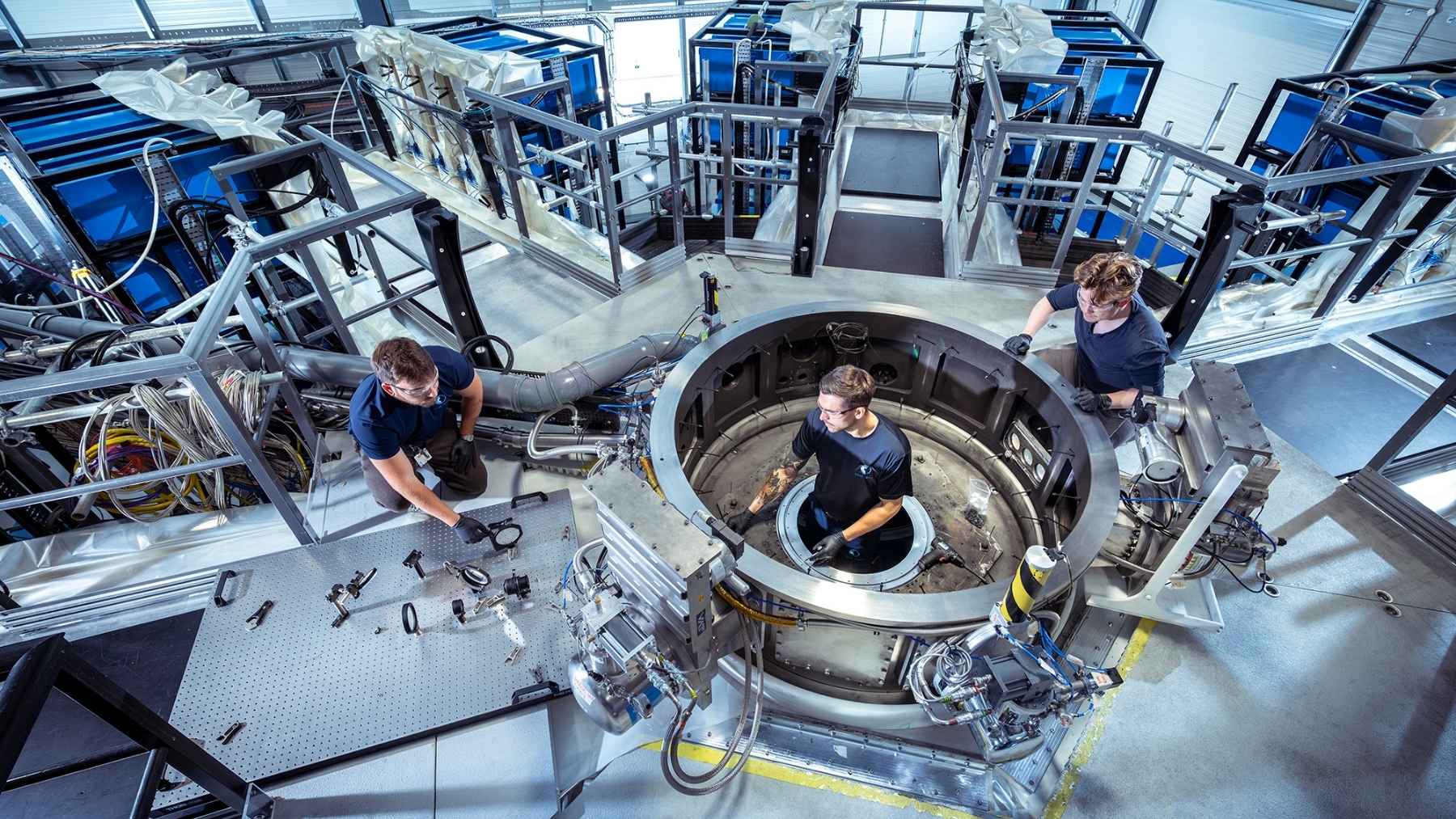
On the morning of Monday, September 9, 2024, moisture climbed inside the OL2 generator and the unit was disconnected from the grid. TVO traced it to the rotor of the water-cooled generator, took the machine apart and installed the last spare rotor left in its inventory. Production resumed on October 6, after 26 days and 20 hours off the grid.
That swap wasn’t a planned job, and it shows in how they did it. TVO put around 35 people in the turbine hall on two shifts, with none of the preparation that goes into an annual outage. The company later cut the whole operation into a one-minute video, which I’d recommend if you’ve never watched a rotor come out of a generator.
OL2 came back at 725 megawatts and settled at 735 soon after. TVO kept it there because the cause was still unknown and the rotor now spinning was the last one it had.
Then came April 2025, and this is the sequence I keep going back to. A fresh spare had been delivered, so TVO started walking the unit back up toward full power at 1:00 a.m. on Monday, April 14, expecting to get there by that Saturday. On Tuesday evening the moisture readings climbed again and the unit came down. Communications manager Johanna Aho told Finnish broadcaster Yle that the company was investigating “the matter calmly” and that it was too early to draw conclusions.
It never reached 890.
TVO swapped in the refurbished spare that had landed that same month, and OL2 was back on the grid on the afternoon of May 6, 2025, running at the same reduced level. That rotor is the one turning today. Two failures inside seven months looks like a design problem rather than bad luck, though I can’t find a published root cause from TVO, so we’re all reading the schedule instead of a statement.
So what does the cap actually cost?
The gap is 155 megawatts, and over a year that shows up in the production figures. OL2 generated 6.62 TWh in 2024 and 5.55 TWh in 2025, although the second number also carries the three weeks the unit spent off the grid that spring. At full output, TVO puts OL2 at about 8 percent of everything Finland uses.
That’s not a rounding error on a national grid, and it has run far longer than a normal outage. One damaged component can take a plant’s output off the table for a very long time. A split penstock has been doing exactly that to a California hydro station since February.
TVO wanted a spare on the shelf anyway
The refurbished rotor was supposed to reach Olkiluoto in early 2026 and got there in the middle of July, so it ran late by roughly half a year against TVO’s own earlier estimate. Its job is insurance. If the installed rotor gives out again, there’s something in the building to swap in, rather than the mess TVO was in during the fall of 2024 with an empty shelf and a reactor sitting dark.
What the spare can’t do is buy back the missing power, and the company has been fairly plain about why. TVO describes the rotor coming in late 2027 as completely new and technically improved. I read that as an admission that the design currently spinning is the one it doesn’t trust at full output, though TVO hasn’t said so in as many words, and it hasn’t had to. Frankly, I’d rather deal with an operator that’s twitchy about a spinning part than one that isn’t.
The deadline’s moved twice. The limit was first meant to end at the 2026 annual outage, then at the 2027 outage, and the July statement pushed it to the end of 2027. That 2026 outage came and went in April as a routine refueling stop lasting a bit over ten days, with no rotor work in it at all.
TVO says the redesigned rotor should reach Olkiluoto late in 2027. Until somebody lifts it into that generator, Olkiluoto 2 makes 735 megawatts, and the Finnish grid does without the other 155.
 deviantdevil DRIVER1 month ago