
Anyone who’s tried to swap a starter motor buried under an intake manifold knows the repair itself is rarely the hard part. Getting a wrench to it is. You pull off perfectly good components for two hours to reach twenty minutes of actual work.
Now move that job to the floor of a 42-foot steel tank that’s radioactive at the bottom end, and give yourself exactly one way in: a hatch 16 inches across, up on the roof of it.
That’s what a crew on the Swedish coast walked into in 2022, and the account Vattenfall published afterward is one of the more instructive maintenance stories I’ve read.
Early on the morning of August 29, 2022, with the annual outage at Ringhals 4 almost finished, the electric heaters in the bottom of the reactor’s pressurizer were switched on while the tank was empty. Thirty of the 67 heaters overheated and failed. Parts of them melted, and copper ran out and set as beads on the floor of the tank. The control room picked it up as a ground fault alarm, and the heaters were shut off after a quick check.
Vattenfall says nobody was hurt and the reactor was shut down at the time, so there wasn’t a safety consequence. Björn Linde, then the CEO of Ringhals, said it was an unintentional mistake, and that nobody was suspected of intent or sabotage.
So what does a pressurizer actually do?
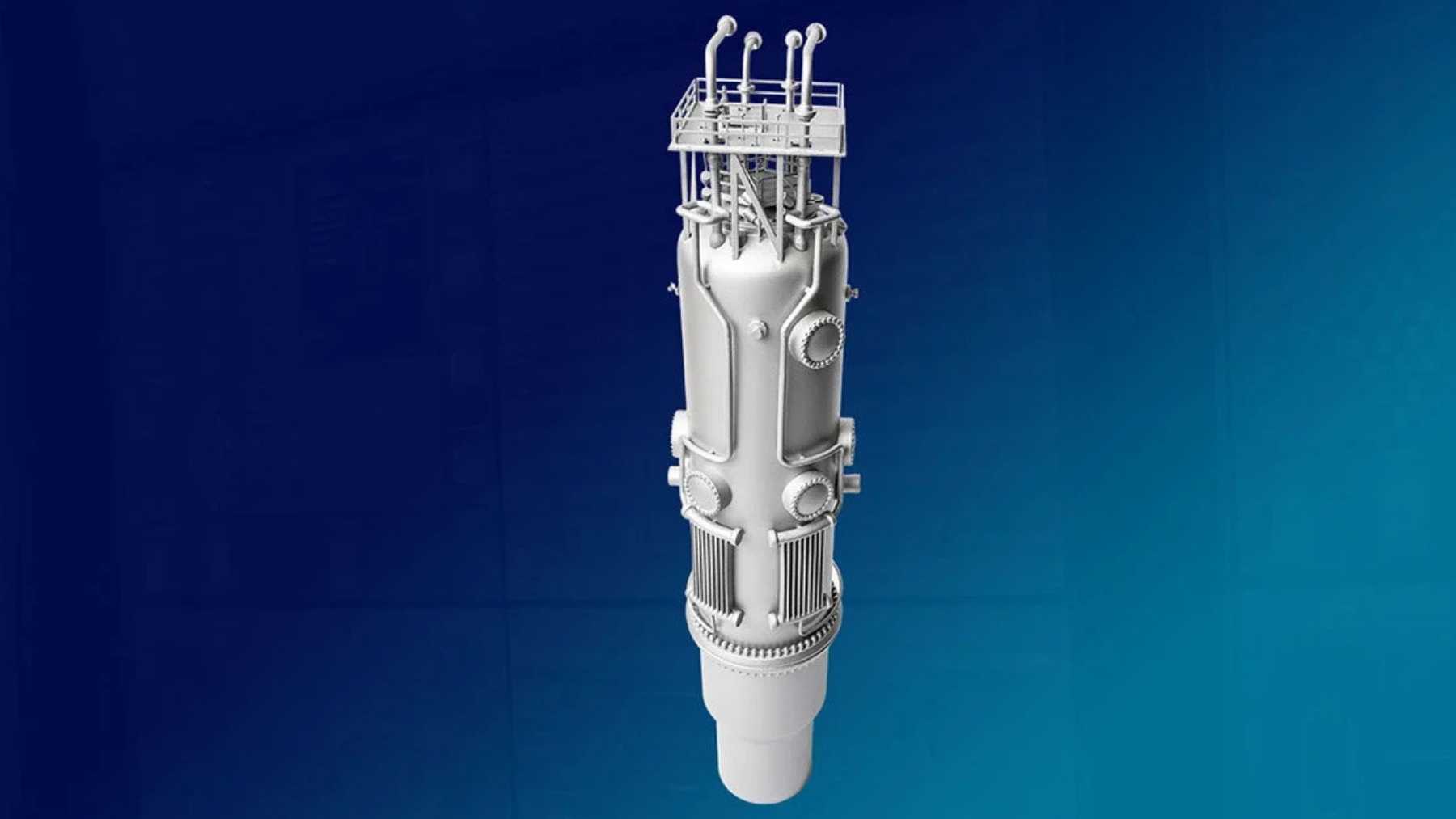
In a pressurized water reactor, the water going through the core runs far hotter than boiling water and still doesn’t boil, because the whole loop is held at high pressure. The pressurizer is the tank that sets that pressure. It’s half full of water with steam sitting above it, heaters in the floor to push the pressure up, sprays at the top to bring it back down.
Vattenfall compares it to the expansion tank on a home heating system, which is a fair way to picture it. The heaters are basically enormous immersion elements. Like the element in your water heater, they’re built to sit in water, and they don’t last long without it.
They’re also unique to this reactor, so you can’t order a spare off a shelf. So nobody was going to solve this by dropping in a box of replacements.
They built a second pressurizer to practice on
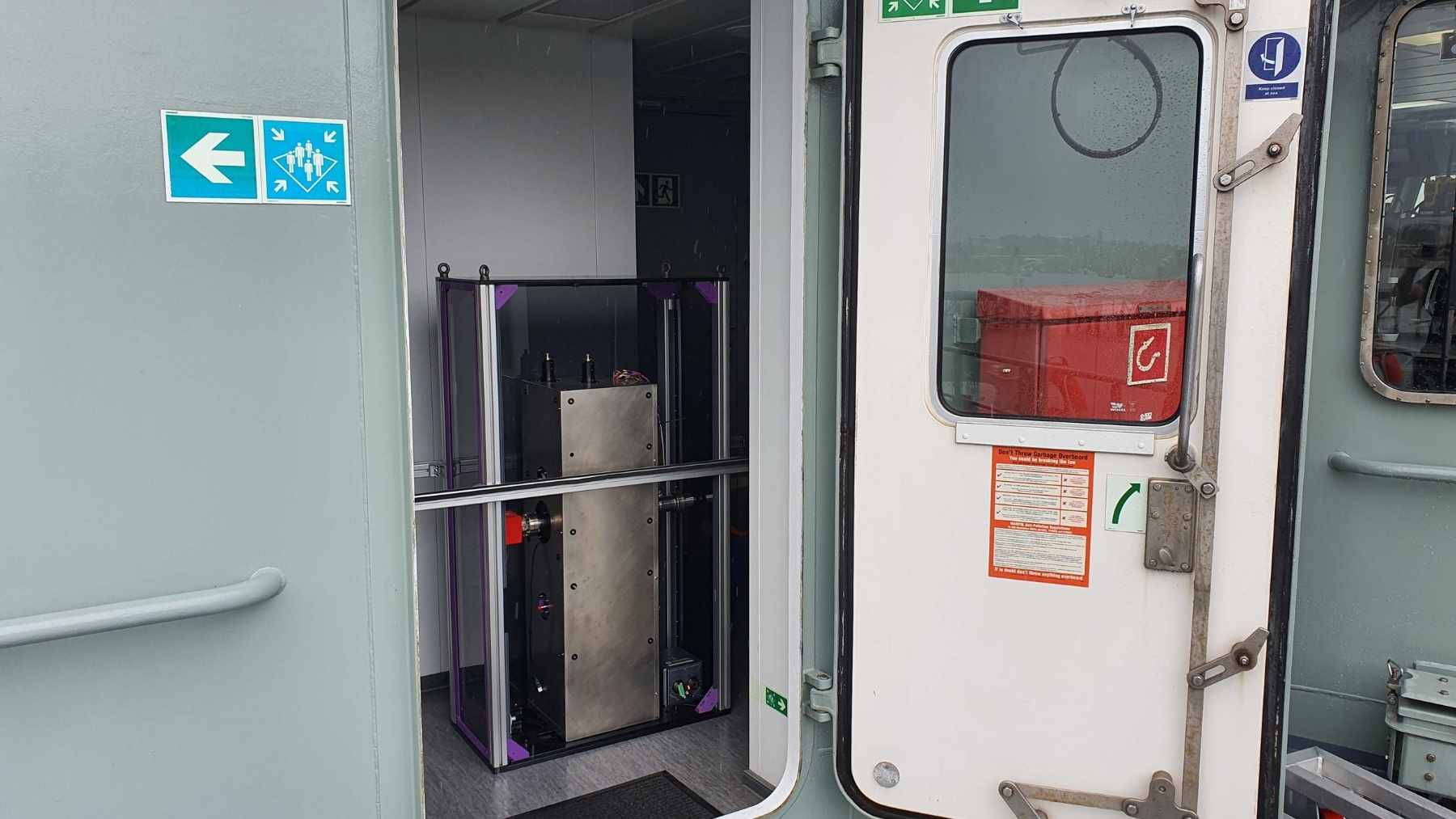
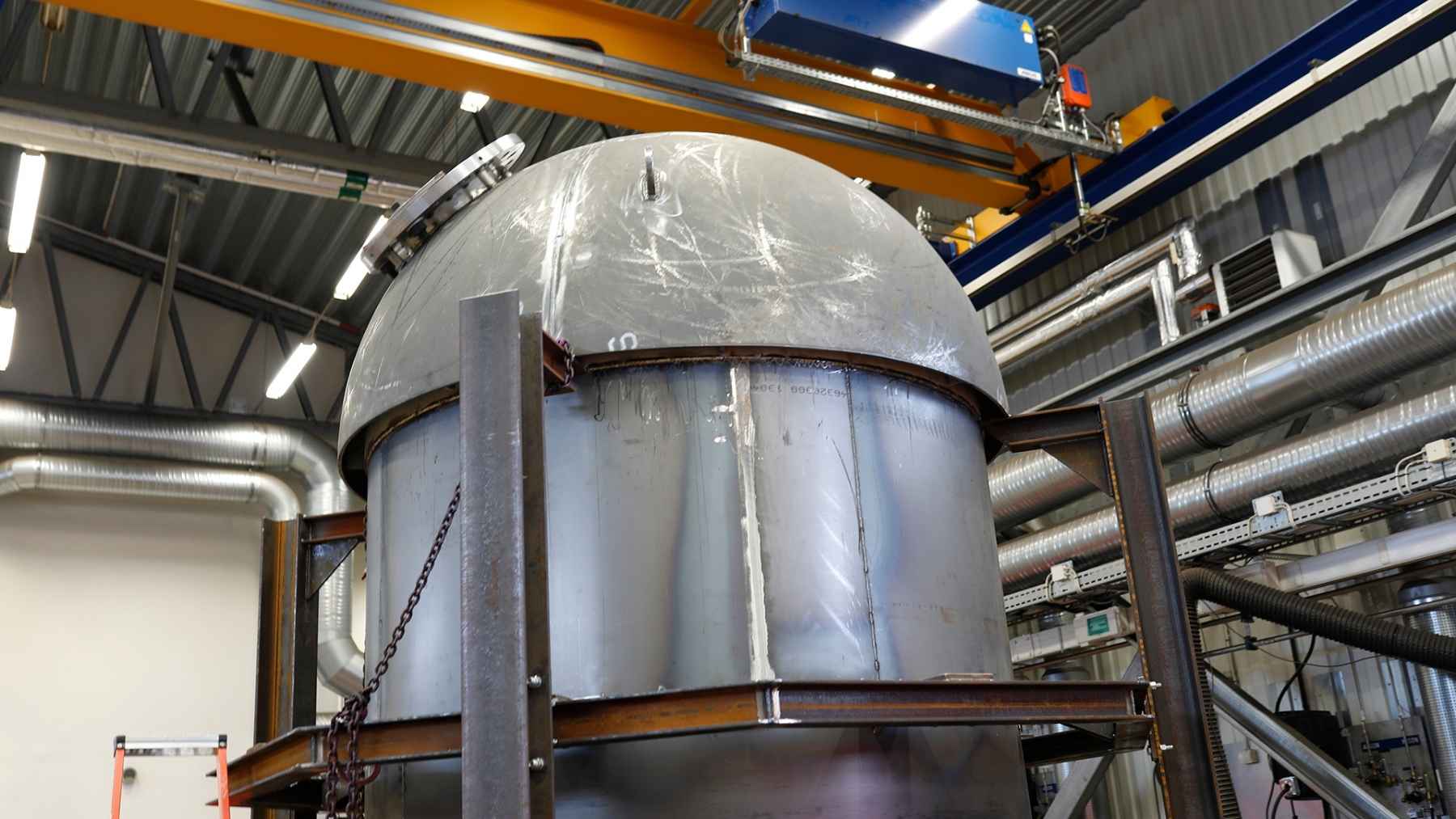
The first thing the plant did was build a full-size copy of the tank. Ringhals welders and designers put it together in under two months, and a company in Degerfors that specializes in large one-piece industrial parts turned out the shell modules on short notice. That’s partly because somebody on the team remembered that firm had made similar pieces for Vattenfall fifteen or twenty years earlier.
The replica was standing in the plant’s test facility by the middle of October 2022. Crews rehearsed on it until just before Christmas, and only then did anyone start work on the real tank.
Building a copy of the thing you’re about to fix sounds like an expensive detour, and it probably was. It’s also pretty much the only way to qualify tools and methods that don’t exist yet, which Vattenfall says the rules demanded before the first real cut.
The only way in is 16 inches across
The manway sits on the dome at the top and measures 40 cm, or just under 16 inches, and Vattenfall’s Energy Plaza write-up calls it the only route into the tank. There isn’t a bigger door. Down at the bottom there’s a smaller hand hole, used to take delivery of tools and parts lowered from above.
The crews worked off a lead-shielded platform, dropping cameras and tools through the opening on long poles, with the damaged heaters roughly 39 feet (12 m) below them. Radiation protection staff monitored dose the whole time.
If you’ve ever fished a dropped socket out of an engine bay with a magnet on a stick, you’ve got the general shape of it. The stick is just 39 feet long, and the socket is radioactive.
I keep coming back to that hatch.
A Canadian robot called the Creeper
The copper had to come out before anything else could happen. Vattenfall brought in a Canadian robot the crews named Kryparen, which translates roughly as the creeper. It’s electric, it moves on tracks, and an operator drives it by remote control.
It brushed and vacuumed the loose metal off the bottom plate and around the heater penetrations, and it carried a camera into the surge line, which is the pipe that connects the pressurizer to the reactor itself. Ringhals staff 3D printed its suction nozzle on site. Once it was finished, a second robot washed the inside of the tank at high pressure.
Why the fuss about a clean floor? Anything loose in that pipe can travel to the reactor and damage the fuel. So the tank had to be surgically clean before it could hold water again, and clean here means inspected and documented rather than swept.
We tend to picture this sort of job as fully robotic, and plenty of it was. The scraping tool wasn’t. Ringhals had one built to match the curve of the bottom of the tank, with a vacuum line attached to catch whatever it took off. You’ll see the same thinking in the vacuum-footed Mitsubishi robot that swims into Japanese reactor vessels to read welds, and in the machine that started cutting a 182-ton French reactor plug at its hottest end. Both times the tool went where a person couldn’t.
37 heaters went back in
Getting the heaters out took two different methods, and you can guess why. Damaged units were cut and lifted up through the hand hole so their copper wouldn’t smear the penetrations in the floor. Intact ones came out downward, once any residue was off them. Vattenfall’s photos show them tagged in red and green, defective and whole.
Two robot welders were installed and programmed, and the heaters went back in one at a time until the 37 the restart required were in place. The utility says all but one of the untouched heaters came through the incident working, which is a better result than I’d have guessed. The unit was ready in the middle of March 2023, seven and a half months after the incident, and it ran at full power over that Easter weekend.
That left the pressurizer short of a full set. The plant restored 17 more heaters during its next outage, and Vattenfall wrote in April 2023 that new ones were on order and the tank would be back to 67 after the following year’s outage.
Sweden’s Strålsäkerhetsmyndigheten, the country’s radiation safety regulator, said in its 2024 review that most of the damaged heaters had been restored, and its inspector, Francesco Cadinu, said the heaters regulate reactor pressure and don’t carry a safety function. I can’t find a public statement from Vattenfall confirming the count is back at 67 today, so treat 37 as a 2023 number and not the current setup.
One more caveat on the arithmetic. Vattenfall’s updates during the repair put the heater count at 68, and the wrap-up it published in April 2023 says 67. I’m going with the final number.
The reactor is open again, for something else entirely
Ringhals 4 isn’t running as you read this, and the pressurizer has nothing to do with it. Vattenfall took the unit off the grid on June 30 as a precaution ahead of inspections, then started the annual outage on August 19.
On September 8, 2026 Vattenfall moved the restart to November 30 to make room for extra decontamination, after rubber that had come loose from valves turned up in parts of the component cooling system. Production manager Sven-Anders Andersson said the valves were already scheduled for replacement in the coming years, and that the rubber had degraded faster than anyone expected. Ringhals 3, where the rubber was spotted first, is due back on October 31.