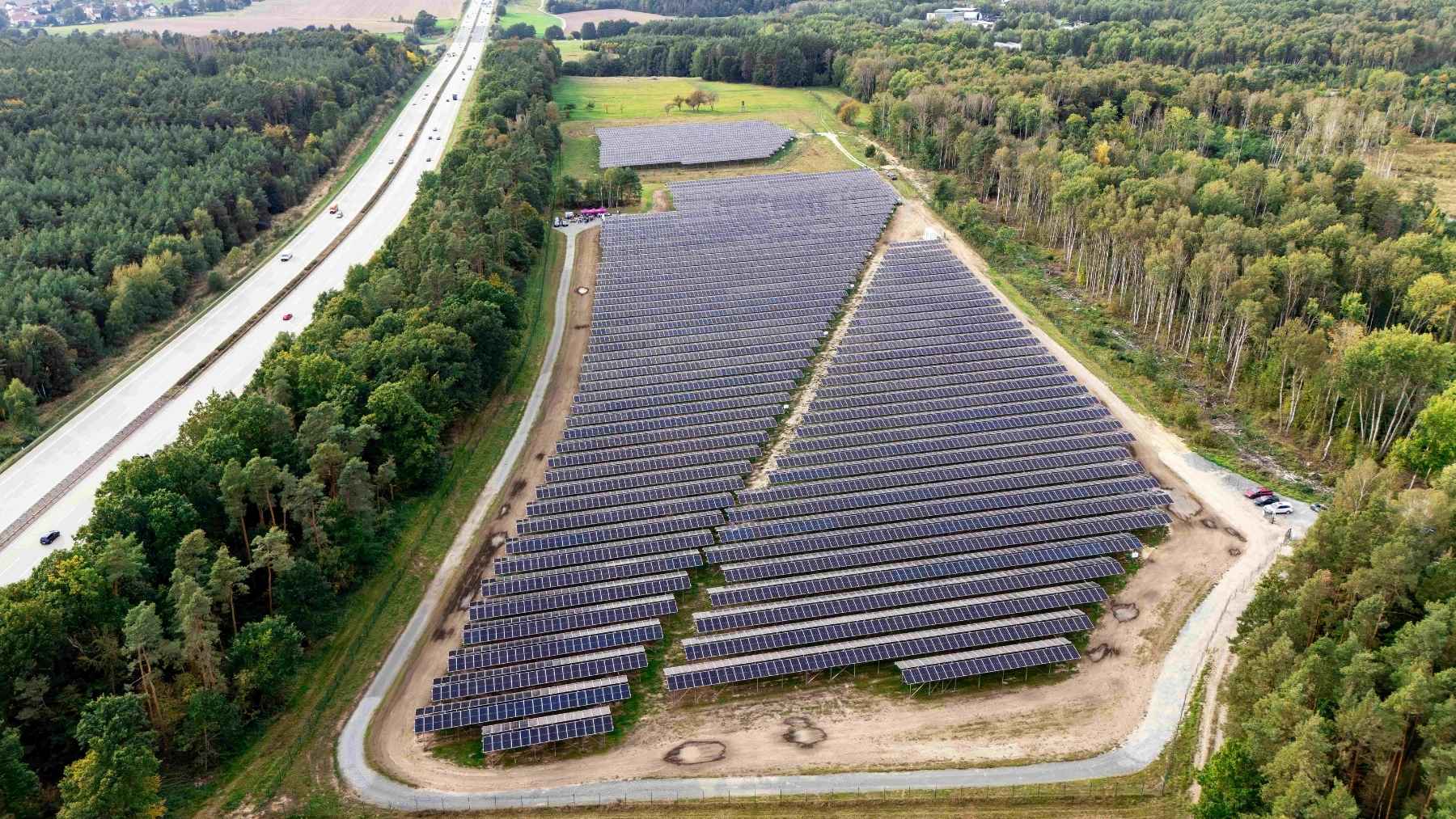

Solar panels have a bad habit of showing up where nobody wants them. They get strung over canals, floated on reservoirs, and planted across farmland that used to grow food, which is exactly the fight playing out in rural counties all over the country right now. So the pitch coming out of the Arizona desert sounds almost too tidy: leave the crops in the ground, build the panels up on stilts above them, and let the same acre do two jobs at once.
Then a research team in Tucson noticed the panels were quietly doing a third job nobody had put in the brochure. The shade that was keeping the soil cool and the plants happy was also keeping the people underneath alive.
That third job is the one worth talking about, because heat is the deadliest weather hazard in the United States, and the folks who pick the country’s vegetables are on the wrong end of the math.
The desert crop that grows better on half the water
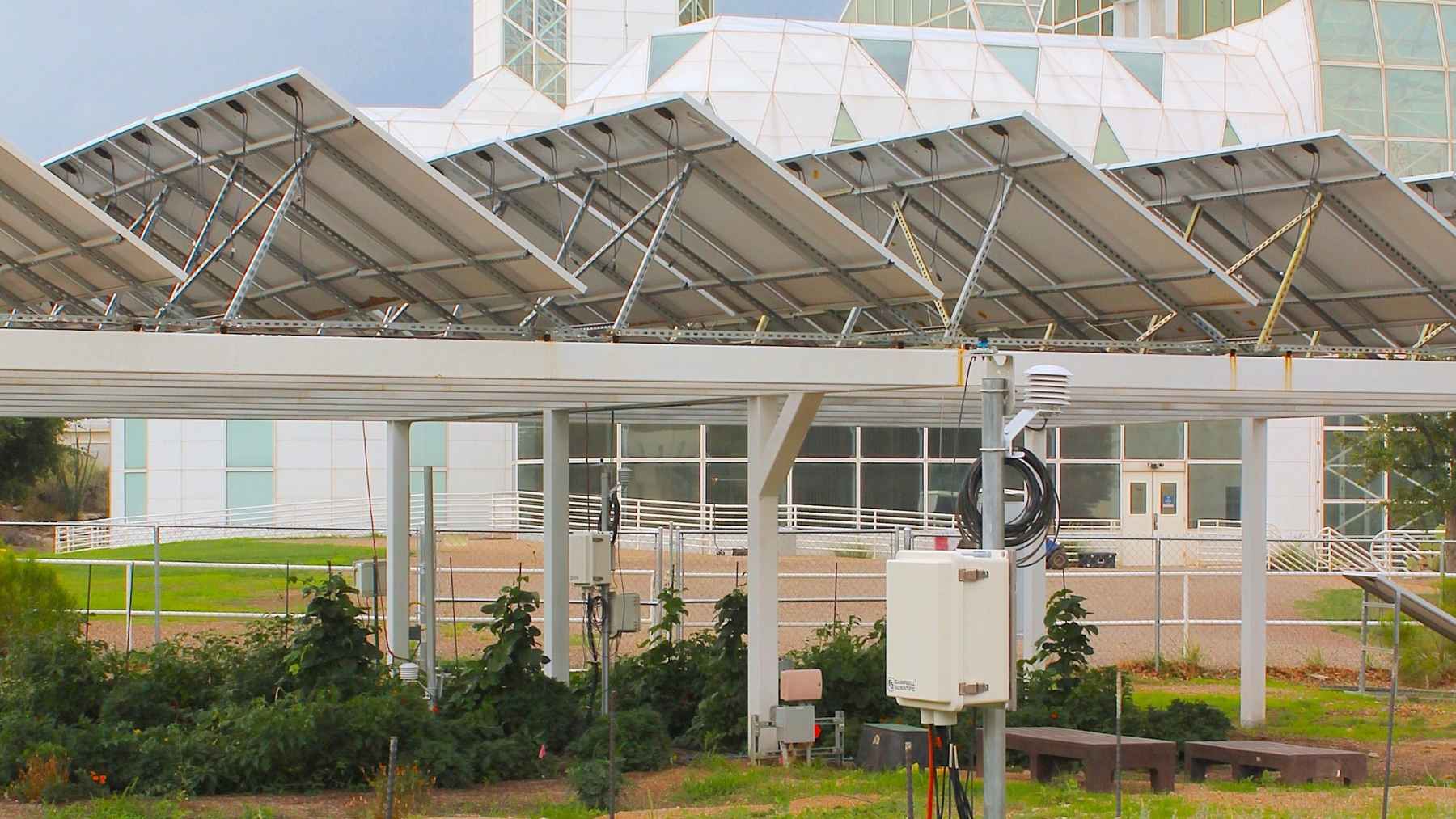
The practice is called agrivoltaics, and it’s not new. It’s the fairly simple idea of raising crops or grazing livestock underneath elevated solar arrays instead of siting panels on scraped, barren dirt. The same principle turns the dead ground under panels into something useful elsewhere too, whether that’s wildflowers feeding pollinators or beans feeding people. There are at least 604 agrivoltaic sites scattered across the U.S. now, according to the Department of Energy’s OpenEI database, and the biggest crop-based one in the country sits in Casa Grande, Arizona.
The person who has spent the longest making the case for it is Greg Barron-Gafford, a University of Arizona professor who runs a lab with the very Arizona acronym SALSA, short for the Semi-Arid Lab for Scaling Agrivoltaics. He’s been at this for over a decade, mostly at the university’s Biosphere 2 facility, growing beans, potatoes, kale, and basil in the shade of solar panels while everyone else assumed shade was the enemy of a garden.
In the desert, it isn’t. Plants out here routinely get more sun than they can use, which is why backyard gardeners in Phoenix already drape shade cloth over their tomatoes. The panels do the same thing, and the numbers hold up.
A study led by Barron-Gafford found that when a plot was watered every other day, the soil under the panels stayed 15% wetter than a matching plot out in the open, as reported by Cronkite News. Less direct sun on the ground means slower evaporation, which means the water you paid to pump stays where the roots can reach it.
Cowpea, the black-eyed pea, went a step further. Grown in the shade it produced a higher yield than cowpea grown in full sun, and the full-sun version needed roughly twice as much water to get there. A plant that gives you more while drinking less is not the trade-off anyone expects from farming in a drought.
Barron-Gafford’s blunter summary of the irrigation data, across dozens of crops and a stretch of good and bad winters, is that his team can usually cut watering by more than half. In a state where about three-quarters of the water goes to agriculture and the Colorado River keeps shrinking, that is not a rounding error.
The plants are cooling the panels back
Here’s the part that makes agrivoltaics more than a shade trick. The relationship runs both directions.
Solar panels are lazy in the heat. They hit peak efficiency at around 75 degrees Fahrenheit, and every degree above that chips away at how much electricity they push out, which is a genuinely awkward problem for a technology you keep installing in the sunniest, hottest places you can find. The desert that’s perfect for catching photons is terrible for the panels catching them.
Plants fix part of that for free. As they breathe, they release moisture into the air, and that evaporative cooling drifts up and takes the edge off the panels overhead. In one set of Barron-Gafford’s experiments, growing cilantro, tomatoes, and peppers under the arrays dropped the panels’ surface temperature by about 18 degrees. Cooler panels are more productive panels.
So the crops water-cool the hardware, the hardware shades the crops, and the same patch of ground spits out food and electricity at the same time. It’s the rare setup where the two things sharing a space actually make each other work better instead of fighting over it.
Crop workers are 20 times more likely to die in the heat
Now the human part, which is where the shade stops being an agronomy footnote and starts being a survival question.
Extreme heat kills more Americans in a typical year than hurricanes, floods, or tornadoes. The people who work outside in it carry the heaviest share of that risk, and farmworkers sit at the very top of the pile.
A 2008 CDC analysis found that U.S. crop workers were 20 times more likely to die from heat-related illness than American civilian workers overall. The figure is old, but researchers who study this say the gap hasn’t closed, and with summers getting hotter it has probably widened.
The total body count is genuinely hard to pin down, and the disagreement between sources tells you why. Public Citizen, a consumer advocacy nonprofit, estimates heat is responsible for as many as 2,000 worker deaths a year across all industries. The official federal tally is far lower: the Bureau of Labor Statistics logged 986 heat-related worker deaths over the entire 1992-to-2022 stretch, an average of about 34 a year.
That’s not two sources contradicting each other so much as one measuring what actually happens and the other counting only what gets formally attributed to heat. Heat deaths get miscoded as heart attacks. A worker collapses, drives home, and dies there, and it never touches the occupational column. Both numbers are almost certainly floors, not ceilings.
Which is the context the Arizona researchers walked into. Field crews told them that a strip of shade doesn’t just make the afternoon bearable, it keeps their drinking water cool all day, and on a triple-digit day a cool bottle of water is closer to medicine than comfort. Skin temperature readings taken by the AgriSolar Clearinghouse at sites around the country found skin ran about 15 degrees cooler under panels in Boulder and nearly 21 degrees cooler in Phoenix. That’s the difference between a hard shift and a trip to the ER.
The timing could not be worse for going it alone
All of this is landing in a summer where the heat is breaking records and the rules meant to handle it are going backwards.
Phoenix just came off its hottest spring on record, with a March-through-May average of 80.2 degrees that beat a mark standing since 1989. March alone ran more than 12 degrees above normal, and an analysis from World Weather Attribution concluded that kind of early-season Western heat would have been virtually impossible without human-caused climate change. In 2025, heat killed 430 people in the Phoenix area alone.
Meanwhile, the federal safety net keeps not showing up. OSHA has spent years working on the first national heat standard for workers, the one that would require water, shade, rest breaks, and acclimatization plans once the heat index crosses 80 degrees. The public hearings wrapped in 2025, and the rule has sat frozen since, with no finalization date and, by most read of the current administration’s posture, no near-term path to one.
What OSHA did do, in April, was renew its heat enforcement program for another five years, so inspectors can still cite employers under existing authority even without a dedicated standard. But some states are moving the other way entirely. Texas banned local governments from mandating water and rest breaks back in 2023, and Florida followed the next year. In a lot of the country, whether a crew gets shade and water is once again up to whoever signs their checks.
Against that backdrop, a shade structure that also generates revenue is a different kind of argument. It doesn’t need a farmer to do the right thing out of principle, because the electricity pays for the panels that happen to keep the crew alive. It’s the same logic that’s driving agrivoltaics onto rewetted peatland in Germany and over California’s irrigation canals: stop asking land to choose between two uses, and let it earn twice.
What the desert data can and can’t prove yet
Two honest caveats, because the good version of this story doesn’t need the hype.
Nearly all the headline numbers, the 15% wetter soil, the cowpea yield, the 18-degree panel cooling, come from experimental plots at Biosphere 2 and demonstration sites like Casa Grande, not from thousand-acre commercial farms. Barron-Gafford’s own crews describe working around the panels as an “obstacle course,” and interviews with farmers in Pinal County turned up plenty of skepticism about whether any of this pencils out at the scale real agriculture runs on. Elevating panels high enough for a tractor is expensive, and the up-front cost is the wall most farmers hit first.
The research funding itself nearly evaporated, too. SALSA lost roughly $4 million in USDA support and $1.2 million from the Department of Energy when federal grants were cut, and only stayed alive because the Thomas R. Brown Family Private Foundation stepped in to bridge three years. The largest crop-based agrivoltaic site in the country was, for a stretch, one canceled email away from going dark.
None of that erases the results. It just means the desert has proven the concept works and hasn’t yet proven it scales. For a technology whose best trick turns out to be keeping the people who feed the country from dying in the field, that feels like a gap worth closing before the next heat wave, not after.
 @mikenoel ROOKIE3 months ago