
Is Honda in trouble? A recent report from Reuters claimed the Japanese automaker is scrambling to cut costs as part of its goal to save $9.4 billion by 2030. This comes after President Donald Trump demanded a 50% tariff on vehicles imported from Canada. Another blow.
According to reports, Honda recently met with suppliers, asking them to reduce their costs in an attempt to lower overall production costs. Each supplier was given a specific target for cost-cutting. This means the suppliers would be the ones losing out on money at Honda’s request. Honda is also looking to source stuff from Chinese suppliers as a further cost-cutting plan.
The source told Reuters that the demand for cost reductions is “so severe” that suppliers will likely not meet it.
Honda is leaving EVs behind
Honda is likely having a bit of a meltdown after experiencing its first-ever annual loss as a publicly traded company. The total net loss was around $2.7 billion for the fiscal year ending March 31st, 2026.
Youch.
The loss can be traced to a few challenges, including tariffs and competition from Chinese automakers undercutting Honda’s pricing. The biggest one, however, is a pivot from EVs.
Honda is expecting its EV losses to soar to over $12 billion. Like many automakers, Honda was forced to make a dramatic pivot after the Trump Administration cut tax incentives for new EVs, and interest plummeted amidst the government’s anti-EV rhetoric and rulings.
Earlier this year, Honda canceled three electric vehicles planned for North America, wasting tons of money on development that ultimately didn’t matter. This included the Honda 0 Series Saloon, the 0 Series SUV, and the Acura RSX EV.
Instead, Honda is focusing on its hybrid lineup.
What vehicles does Honda have planned for 2027?
For 2027, Honda’s lineup favors hybrids over EVs, with the EV push scaled back but not entirely dead.
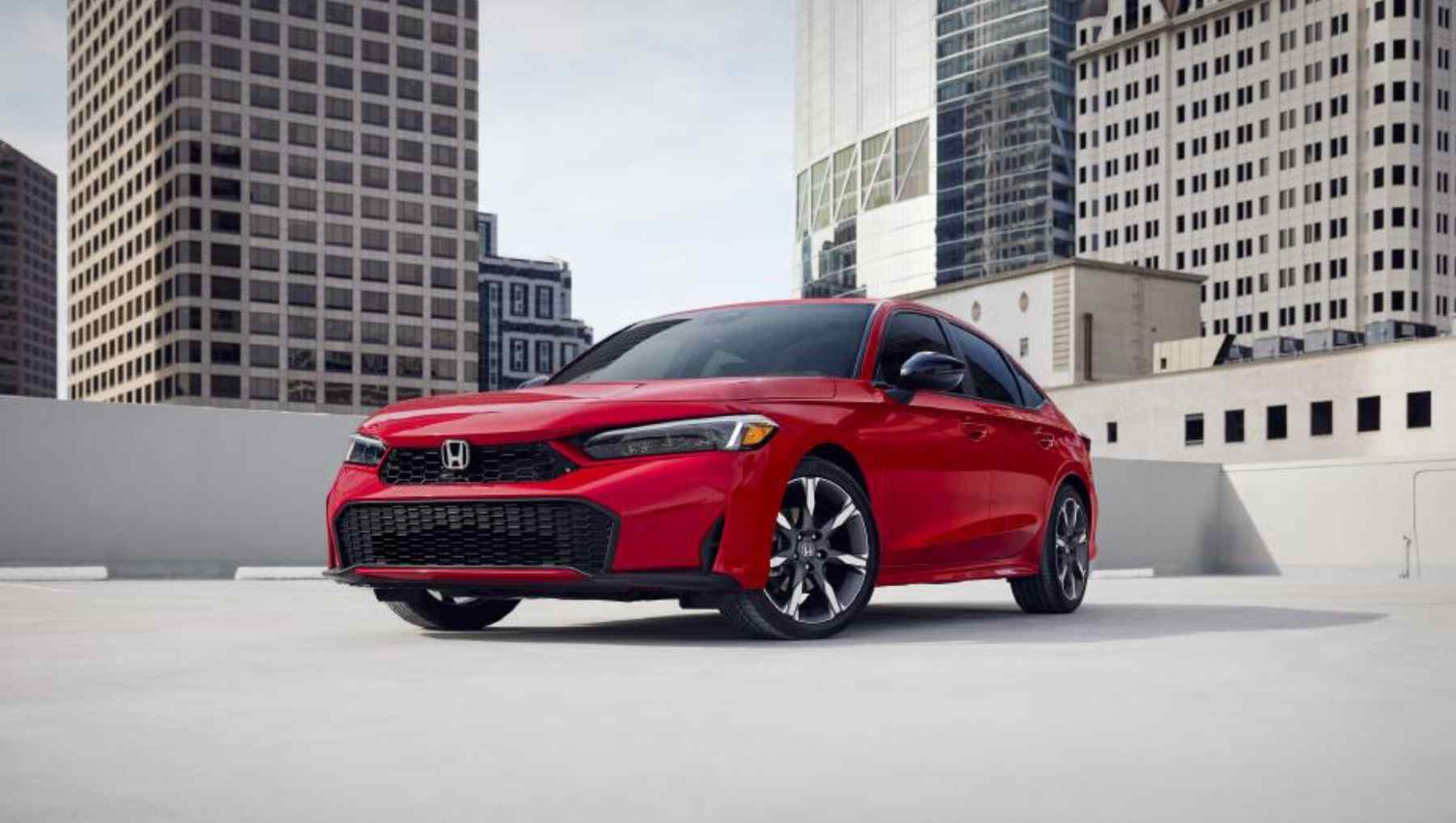
The next-generation Civic is expected to arrive around 2027 (though some reports point to a 2028 model year), and early renderings suggest a more mature look inside and out — though Honda hasn’t confirmed final styling yet.
The Accord, now three-plus years into its current cycle, is also expected to get a refresh with a new face and interior, based on similar speculative previews. Both are likely to lean on Honda’s next-gen e:HEV hybrid system, which the automaker is positioning as the backbone of its lineup through the back half of the decade.
Between 2027 and 2031, Honda plans to roll out 13 new hybrid models globally, all built around that updated e:HEV platform for better efficiency and tighter packaging, along with expanded driver-assist tech across the range.
On the EV side, Honda isn’t bailing entirely — the 0 SUV, built in Ohio, is expected to be the first production model to debut in 2027, followed by the closely related 0 Saloon. The 0 SUV was originally targeted for 2026, so its slip to 2027 lines up with everything else going on at the company right now.
There’s also a small but telling cosmetic shift coming: Honda’s new borderless H emblem will debut in 2027, appearing on EVs and next-generation hybrids rather than the classic badge. It’s a minor detail, but it fits the bigger picture: Honda using 2027 as a soft reset, easing EVs back onto the calendar while making hybrids and gas-powered mainstays like the Civic and Accord do the heavy lifting.