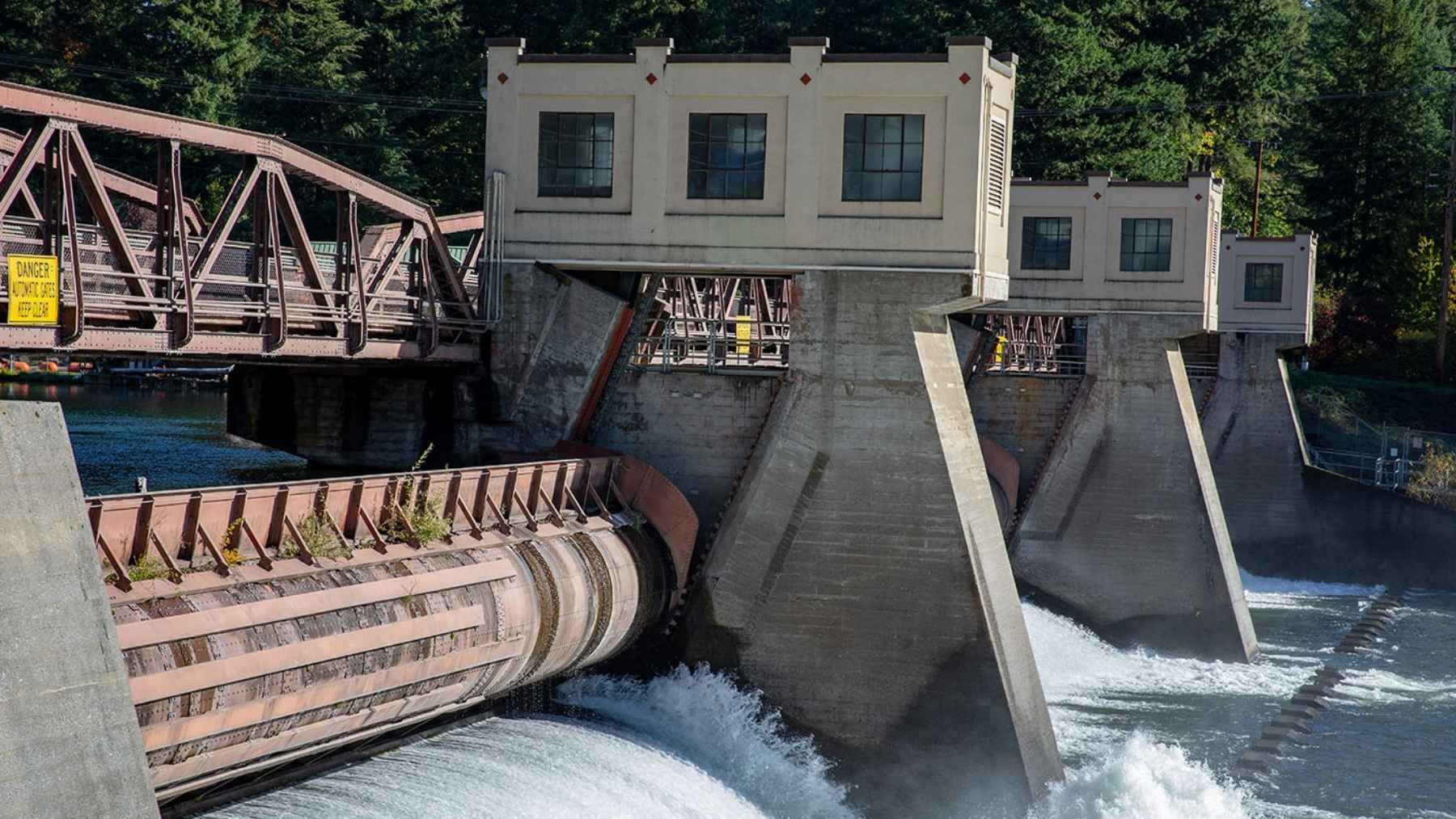
New Mexico isn’t the first place you’d go looking for a lake that’s filling up. It’s a desert state, and its biggest reservoir spent the summer close to empty. But Elephant Butte Lake, on the Rio Grande about 125 miles north of El Paso, has spent the last month doing something pretty unusual. It’s been filling fast, and the dam at the bottom end of it has kept its outlets almost completely shut the whole time.
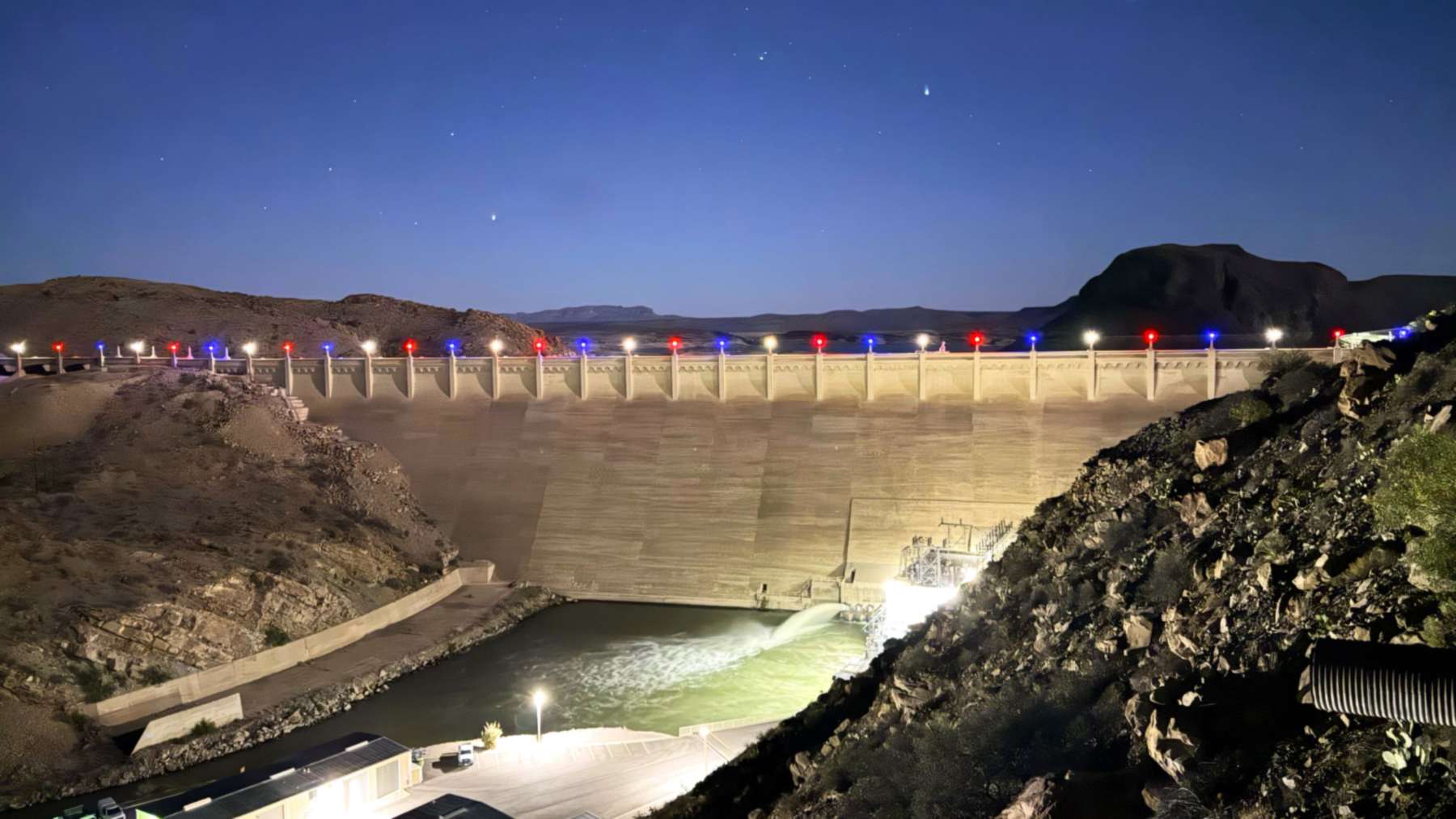
I wrote about this dam back in October, when I worked out that it had roughly 66 feet of water against it in mid-September. Running the same subtraction now gets you about 112.
Here’s how that works. The Bureau of Reclamation lists the streambed under Elephant Butte Dam at 4,210 feet above sea level, and the agency’s 40-day data had the lake’s surface at 4,322.00 feet on Nov. 24. Take one from the other and you’re left with about 112 feet of water. That’s my own estimate rather than an official Reclamation number, but it’s the same method I used in October, so the two figures line up.
The dam was built for a lot more water
You’ll see two heights for this dam, and they aren’t the same thing. The 301 feet measures the whole concrete structure, foundation included. The 197 feet is what Reclamation calls the hydraulic height, which is roughly how deep the water at the dam gets when the lake is as full as it’s designed to be.
So a wall built for 197 feet of water had about 66 in September and has about 112 now. That’s a big jump in two months. It’s also only a little over half of the 197.
So how low did this lake get? Pretty low, as it turns out. NASA’s Earth Observatory looked at a satellite image from July 27 and put the lake at 1.4 percent of capacity, its lowest level since 1971.
So where did 2.5 billion gallons come from?
Most of the rise came in one long push. Reclamation’s table shows daily inflows between 1,537 and 3,935 cubic feet per second every day from Oct. 27 through Nov. 22. On Oct. 26, the day before that run started, the inflow was 672.
If you don’t read river gauges for fun (and I don’t blame you), here’s what those units mean. One cubic foot per second, or cfs, is a cubic foot of water moving past a point every second, and a cubic foot holds about 7.5 gallons. An acre-foot is enough water to cover an acre of ground a foot deep, which comes to about 326,000 gallons.
Nov. 8 was the biggest day. The river brought in 3,935 cfs, and storage went from 180,522 acre-feet on Nov. 7 to 188,319 on Nov. 8. That’s 7,797 acre-feet in 24 hours, or about 2.5 billion gallons. On that same day, the dam let out 3 cfs.
Yes, that’s 3 going out against 3,935 coming in.
Over the full 40 days Reclamation lists, storage went from 94,891 acre-feet on Oct. 16 to 276,679 on Nov. 24, and the surface climbed 26 feet, from 4,296.00 to 4,322.00. As for the weather behind it, the Albuquerque Journal reported on Nov. 13 that most of this year’s heavy rain in New Mexico has fallen since September, and that the Rio Grande near Pilar hit its highest level since 1921. I can’t tell you which storm sent which share of that water south, and I haven’t found anything official that breaks it down.
It’s the same wet fall that pushed Navajo Lake up almost 43 feet in 13 days out in the northwest corner of the state. Which is a slightly surreal sentence to write about a year when Reclamation was warning, back in April, about a third dry year in a row on the Rio Grande.
So why is the dam letting almost nothing out?
The release column is frankly the most interesting thing in Reclamation’s table. While all that water was coming in, Elephant Butte Dam let out between 0 and 8 cfs a day. The release was zero on Oct. 27, the first day of the surge. It was 8 on Nov. 23 and again on Nov. 24, which are the highest numbers in the whole 40-day stretch. A dam letting out 8 cfs is pretty much a dam with the outlets shut.
There’s a simple reason for it. Elephant Butte is an irrigation reservoir, and it sends water downstream on the irrigation calendar. Reclamation scheduled this year’s releases to start on April 28 and warned at the time that it’d be a short season. Outside that window, Reclamation basically keeps whatever arrives, so farmers downstream have something to work with when the next season opens.
And those farmers didn’t get much this year. The National Weather Service’s El Paso office says the 2026 Rio Grande irrigation allotment ended at four inches of water per acre. Source NM has reported that farmers in the Elephant Butte Irrigation District are entitled to three acre-feet per acre, which works out to 36 inches. So it’s safe to assume nobody downstream is asking Reclamation to open the gates right now.
The lake is still a long way from full
Is 112 feet of water a lot, then?
Compared to September, absolutely. Compared to a full lake, not so much. The Texas Water Development Board, which tracks the lake from across the state line, puts the top of the conservation pool at 4,406.30 feet for this time of year. That leaves the surface about 84 feet short.
TWDB’s storage numbers tell the same story. The board had Elephant Butte at 27,461 acre-feet and 1.4 percent full on Aug. 24, and at 273,325 acre-feet and 13.8 percent full on Nov. 24. That’s about 10 times as much water in three months. TWDB’s figures run a little lower than Reclamation’s, so I’m keeping each agency’s numbers separate instead of mixing them. NASA said this summer that the lake “likely bottomed out for the year in late July,” and from the looks of things, it called that one right.
So what happens next year?
This is the point where I have to admit there’s plenty we don’t know. Reclamation hasn’t posted an inflow number for Nov. 23 or 24 yet, though storage kept climbing over those two days, from 266,044 acre-feet to 276,679. The last inflow it did list, for Nov. 22, was 2,526 cfs. I haven’t found any official forecast for how long the river will keep running this high, so I’d just be guessing.
The 2027 irrigation season is the other big unknown. I haven’t seen an allotment announced, and it’s probably too early for one. Reclamation had the lake at 13 percent of capacity in mid-April, right before a season that ended at four inches per acre, and TWDB has it at 13.8 percent now. Those two figures come from different agencies, so I wouldn’t read much into the gap. Either way, Elephant Butte is heading into winter with about as much water as it had going into this year’s irrigation season. Whether 2027 goes any better probably comes down to what falls in the mountains over the next few months. State climatologist David DuBois told the Albuquerque Journal the same weather pattern could bring more snow this winter. I’d guess that’s the forecast people along the river are watching hardest.
Reclamation’s latest reading, from Nov. 24, has Elephant Butte at 4,322.00 feet, about 46 feet higher than in mid-September, with the dam still letting out just 8 cfs.