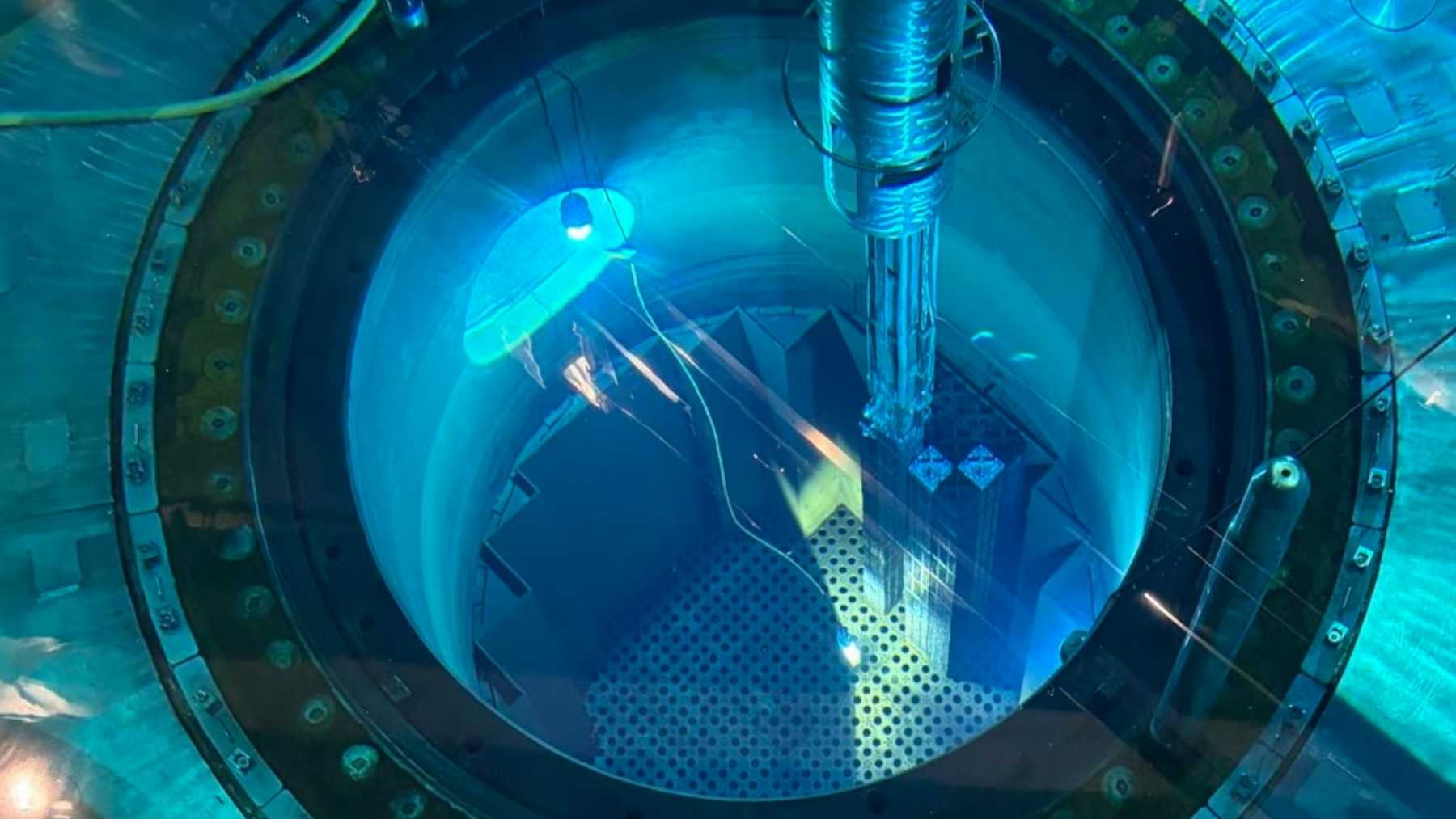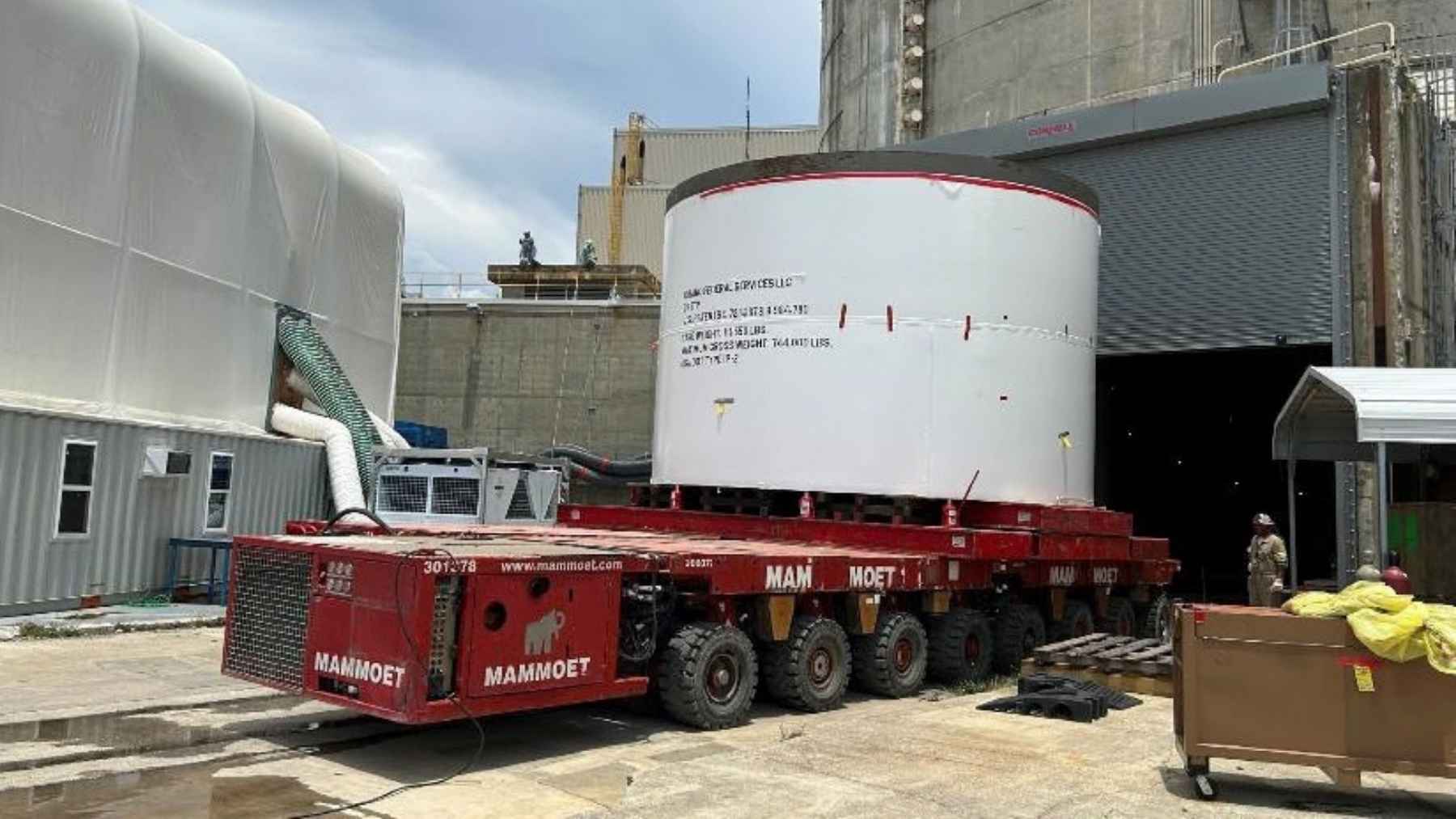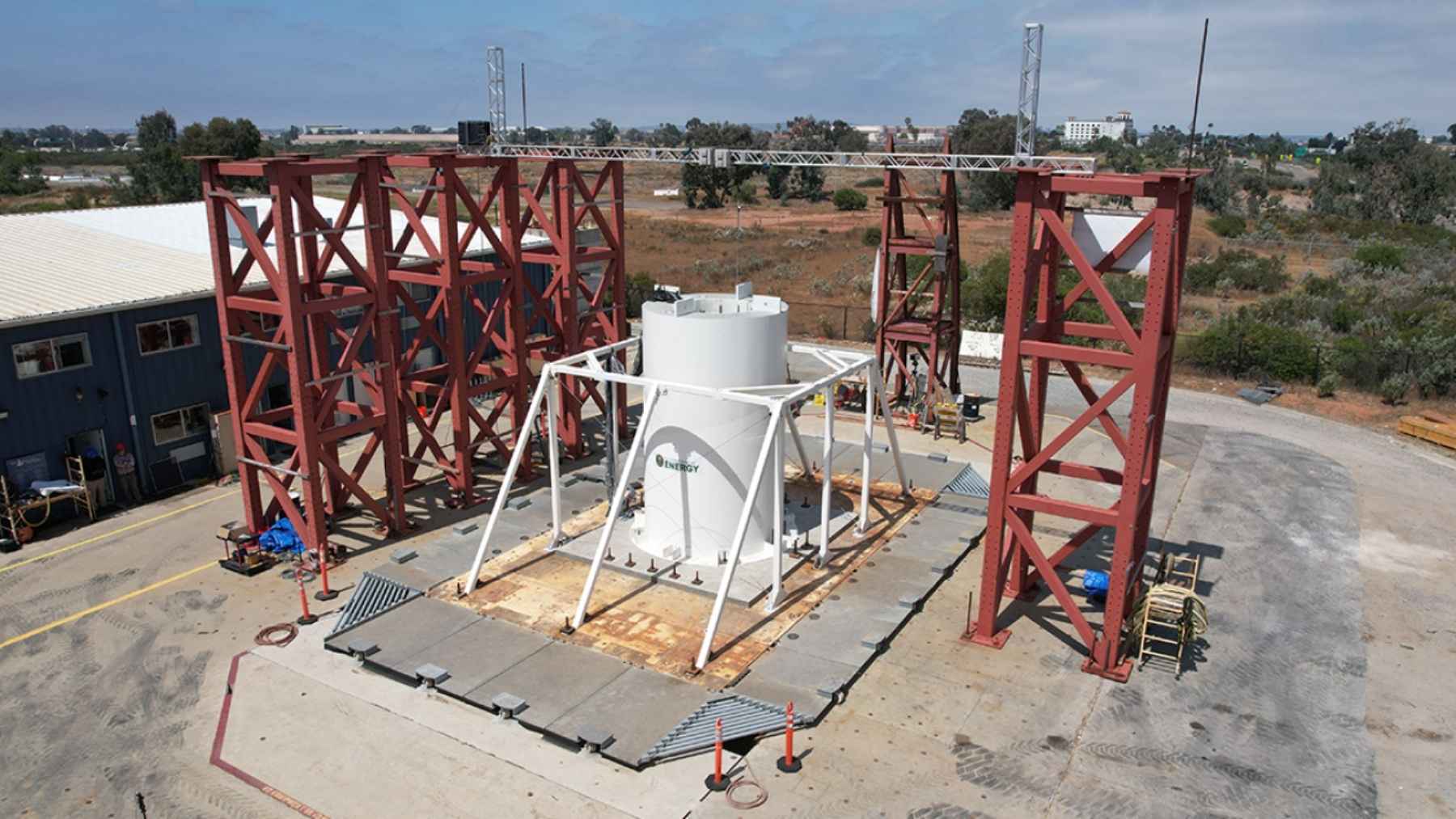

Late last year, a research team in South Korea finished building a pilot plant that produces 110 pounds of liquid synthetic gasoline a day from nothing but captured carbon dioxide, green hydrogen, and a proprietary catalyst. That works out to about three twenty-liter jerry cans of fuel, every twenty-four hours, made out of recycled air and water. The team, at the Korea Research Institute of Chemical Technology, has a roadmap for a commercial plant producing around 100,000 metric tons of the stuff annually. That is roughly thirty million U.S. gallons of synthetic gasoline a year, made without drilling a single hole in the ground.
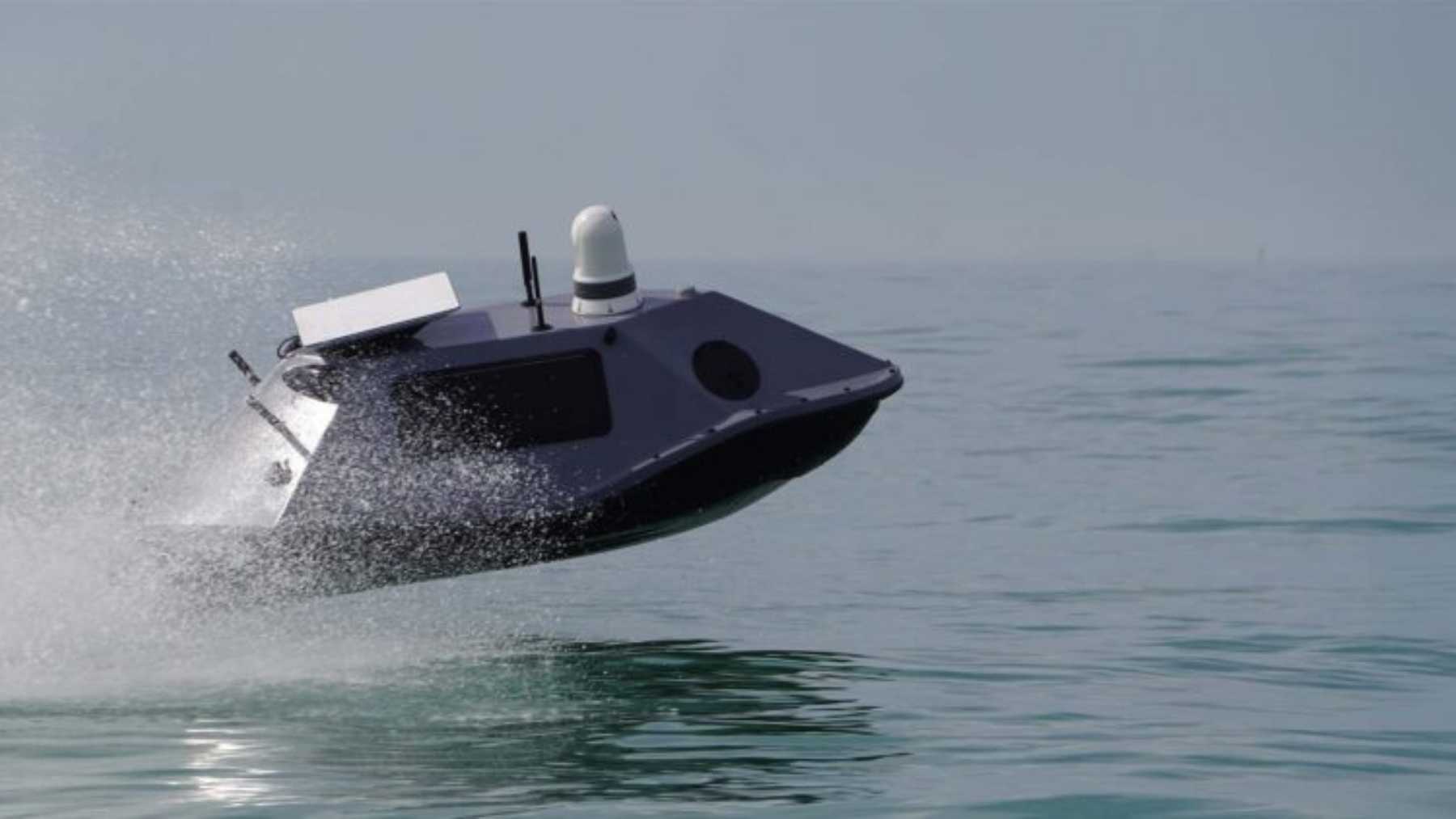
The reason the lab is in Korea, and not in Texas or Stuttgart or Detroit, has very little to do with chemistry and almost everything to do with a map. The Strait of Hormuz has been closed since the end of February. Iran finished laying its second wave of sea mines somewhere around the middle of April, then promptly lost track of where exactly it had laid them, which is a problem the Pentagon currently estimates will take six months to fully solve with American minesweeping assets.
Brent crude is north of $100 a barrel. South Korea moves roughly seventy percent of its imported crude through that strait. The reason KRICT is taking captured carbon and turning it into liquid hydrocarbons in 2026 is that the alternative — buying it from a tanker that may not be allowed to leave the Persian Gulf — has become an existential national-security question.
“Successful commercialization could substantially reduce dependence on imported petroleum and strengthen national energy security by establishing alternative carbon feedstock systems,” the KRICT team noted in the release announcing the pilot. The industrial partners on the project are GS Engineering and Construction and Hanwha TotalEnergies, both of which have the kind of balance sheets that can fund a real commercial plant.
The technical breakthrough behind the catalyst is straightforward to describe and difficult to actually build: it skips the intermediate step that every other industrial CO2-to-fuel process has to run through, the one that requires heating the gas above 1,400°F to break it down into carbon monoxide first. The new catalyst goes directly from carbon dioxide to liquid fuel in one pass. That is the part that changes the cost curve.
The whole thing has a familiar ring to it because Porsche has been trying to do approximately the same thing in Chile since 2022. The Haru Oni pilot plant in Punta Arenas, run by HIF Global with Porsche as the lead customer, was designed to produce 130,000 liters of synthetic gasoline a year in its pilot phase, with a roadmap promising 55 million liters by 2024 and 550 million by 2027. The original Porsche press release is still online. None of those scaling targets have been hit.
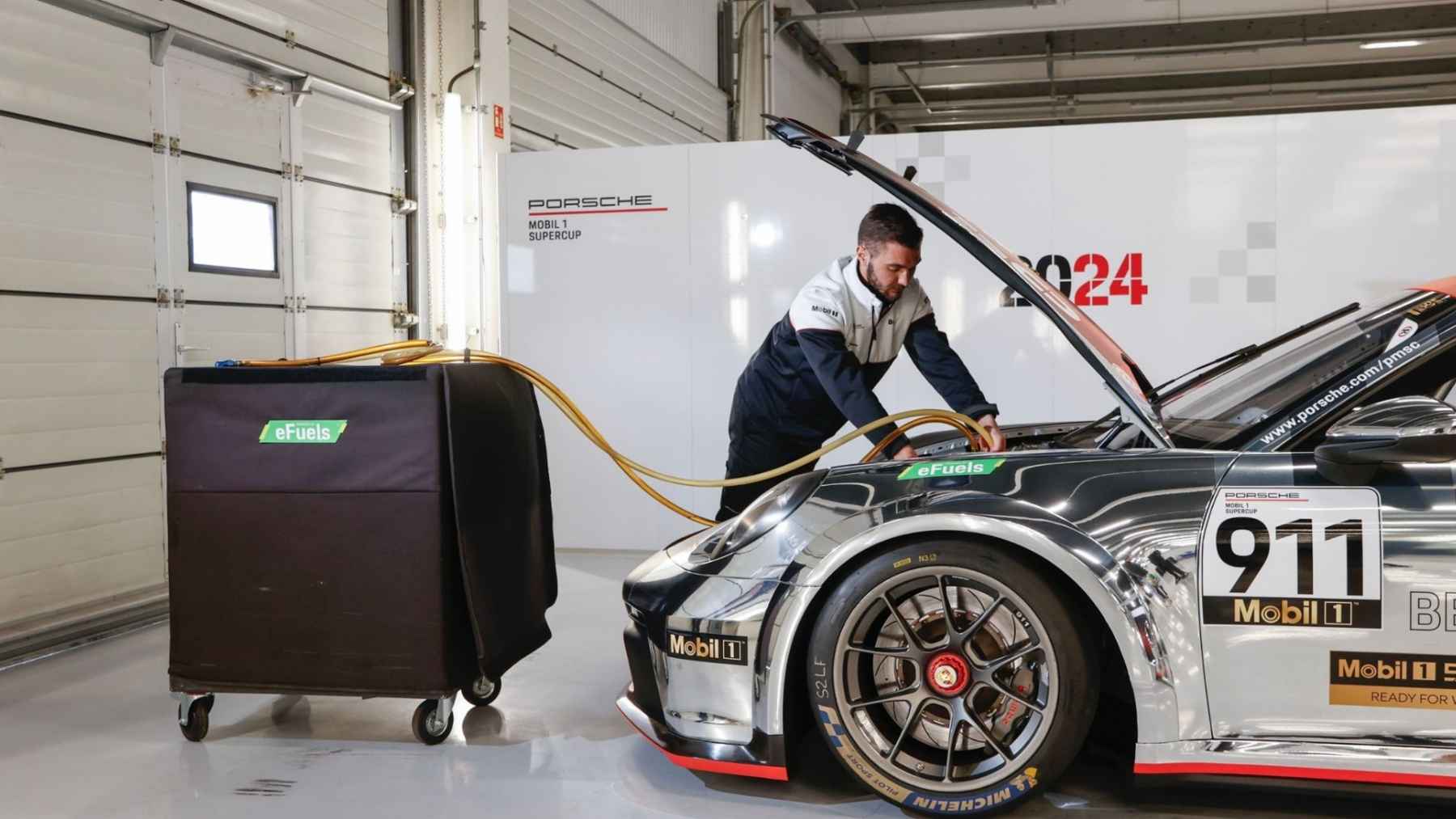
Industry Decarbonization, a trade publication that tracks the actual delivered output of e-fuel projects, reported last summer that HIF had quietly removed the line “Mass production of e-Fuels is expected from 2026” from its web page after a German news outlet started asking why. The Punta Arenas plant is still producing roughly the same 34,000 U.S. gallons a year it produced when it opened. The fuel still gets used, mostly in the Porsche Mobil 1 Supercup racing series, but not in customer cars on a regular road. After three and a half years and more than $100 million of Porsche investment, the project’s main commercial output to date is a press kit.
What this is not going to do for the Mustang
The American auto reader’s instinctive question, looking at a synthetic-fuel headline in 2026, is whether the V8 has been quietly given a pardon. The honest answer is no, or rather, the V8 has been given a pardon, but not by a Korean catalyst.
The Mustang is now the only domestic muscle car still in production. The Chevrolet Camaro went away in 2024. The Dodge Challenger went away the same year. The Charger came back as an electric vehicle. The 500-horsepower naturally aspirated 5.0-liter Coyote V8 in the Mustang Dark Horse is, in the spring of 2026, the last meaningful naturally aspirated American performance engine being sold in volume to civilians. It is surviving for a reason that has nothing to do with synthetic gasoline.
The reason is that the United States produced 13.6 million barrels of crude a day in 2025, the highest figure in the country’s history, and is currently pumping around 24 million barrels of total liquid fuels a day, which is more than Russia and Saudi Arabia produce combined. The Trump administration’s energy policy through its first year has done several specific things at once: it has accelerated oil and gas leasing on federal land, terminated $7.5 billion in clean-energy project awards across hydrogen, carbon capture, and grid storage last October, proposed an additional $20 billion in further terminations, and cut the Department of Energy’s Office of Science biological and environmental research budget by more than half.
What it has not done, anywhere I have been able to find, is fund a domestic equivalent of what KRICT is building. The federal research dollars that might once have gone to American synthetic-fuel R&D have either been cancelled or redirected to small modular nuclear reactors and uranium enrichment, which are useful for many things but not for filling a Mustang’s gas tank.
The arithmetic from inside an American garage in 2026 ends up looking like this. The V8 is safe in the short term because there is more cheap gasoline being pumped out of West Texas, the Permian Basin, and the Bakken than at any point in U.S. history, and because the Mustang is the last name on the showroom floor that still offers one.
The V8 is not safe in the long term because nobody in the United States is building the technology that would let it run on something other than what comes out of the ground. The country that is building that technology is a country with no oil of its own and with its only viable shipping lane closed to commercial traffic. If the next time a Strait of Hormuz situation lasts longer than six months, the American driver may discover that the choice in front of them is not between gasoline and electricity. It may be between gasoline and a Korean patent.
The Mustang Dark Horse, in the meantime, starts at $63,080. It has a six-speed manual on the GT and a 10-speed automatic on the Dark Horse. The Coyote V8 will pull to 7,500 rpm. None of it requires a catalyst from Seoul. None of it will, for at least the next ten years. After that, the question gets more interesting.
 @charlesrachal ROOKIE5 months ago