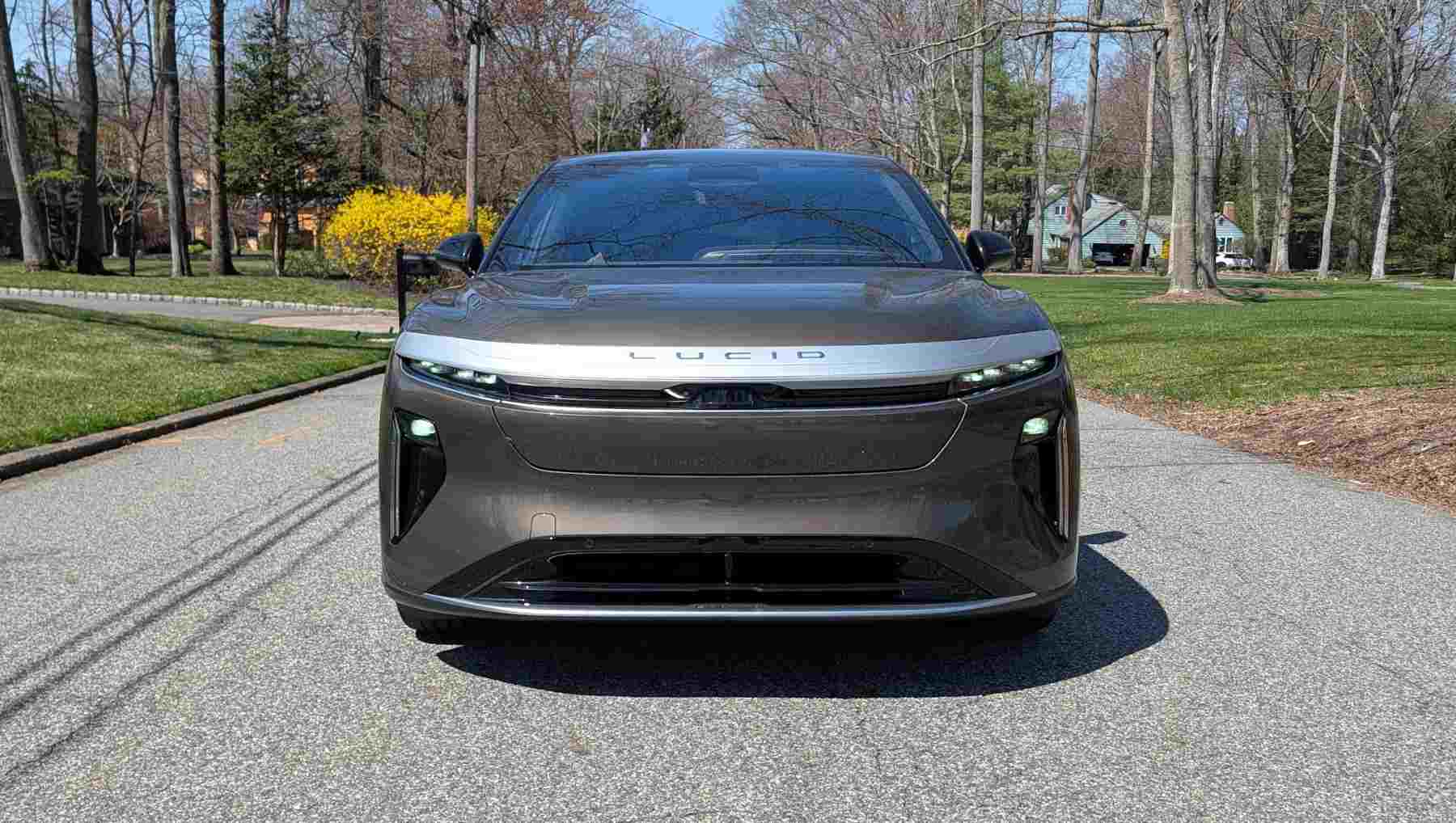

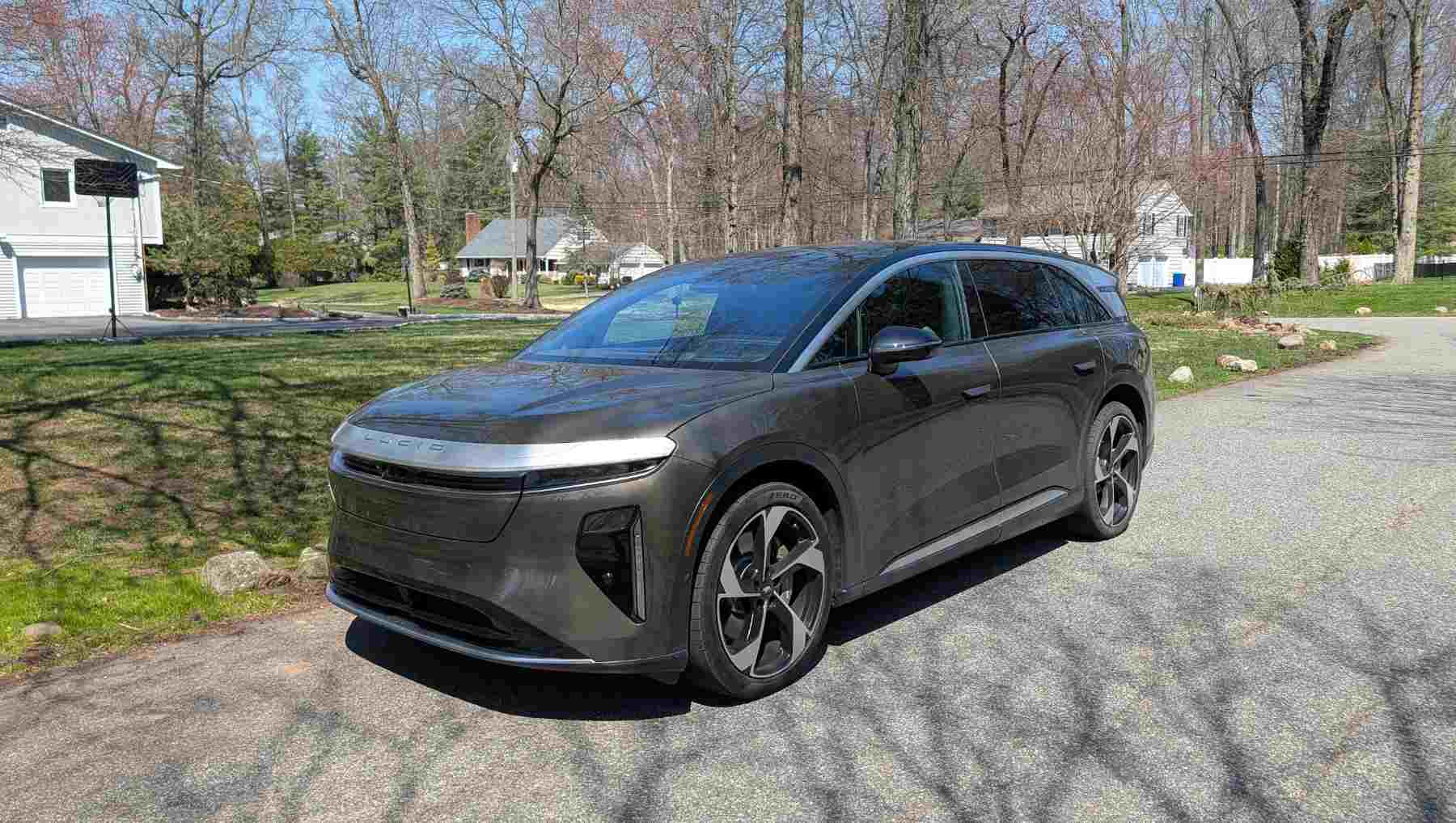
I’ve tested out many of Lucid’s vehicles over the years, but recently I was lucky enough to snag a Gravity Grand Touring for a week. Normally I try to go into reviews with a neutral mindset, as it allows you to dodge the crushing disappointment you feel when something you’ve admired from afar turns out to be absolutely terrible. This time was a little different, I couldn’t help but be hyped about Lucid’s electric SUV.
Thankfully it didn’t let me down. Despite the testing period involving two incredibly long drives, and some of the worst traffic on planet earth, I still had a very good time. Here’s how the Lucid’s 828-horsepower, dual-motor, SUV lived up to and exceeded my expectations.
It’s like sitting in a slice of the future
When you get into a Lucid Gravity, or any Lucid for that matter, it’s like sitting in something from 2545, not 2026. Seriously, I know Tesla likes the Blade Runner aesthetic too much, but this is like the smooth, fancy side of that whole universe.
There isn’t a on, or start, or anything button. When you’re in the vehicle with the key on, you simply hit the brake, pop it in drive, and go. Everything has a beautiful geometry to it, too. The dash is wonderfully curved, the finish is excellent, and the materials used are exquisite. It’s a mixture of wood, metal, and beautiful leather on the seats.
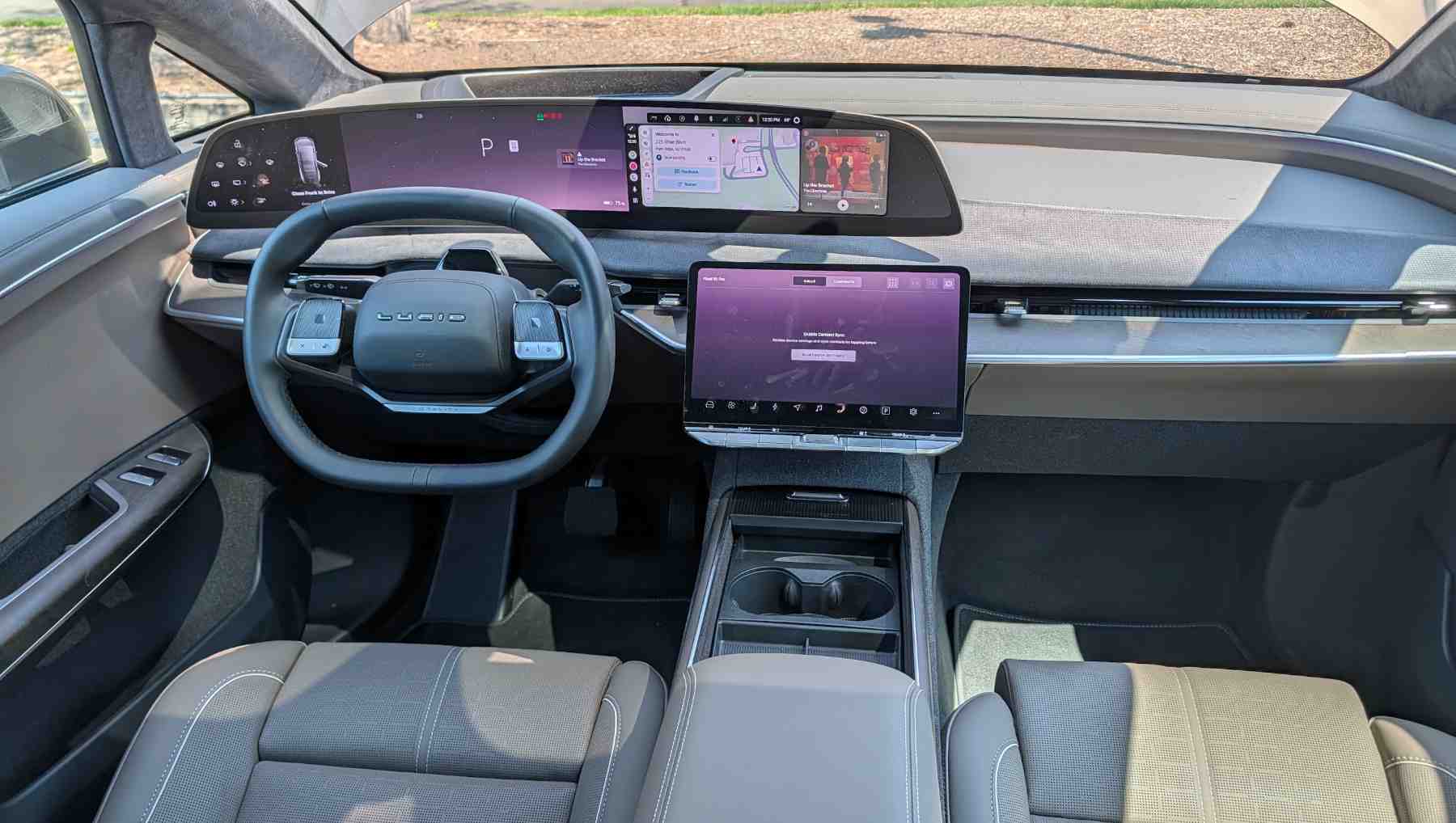
Quality control is exceptional, which may be a given considering the vehicle’s price point, but I’ve been in plenty of $70,000+ press cars with visible manufacturing faults inside and out. Keeping in mind these are press cars, and should really be as perfect as you can get so people like me don’t whinge about a discolored panel, or a bubble in a bit of trim. No danger of that with Lucid, the company seems to take quality seriously.
Despite the Gravity looking a bit small for an SUV, there seems to be a good amount of space inside. The first and second rows feel extremely comfortable. I had the third row folded away for most of my testing time because doing so ups the rear cargo space from 21 cubic feet to around 56 cubic feet.
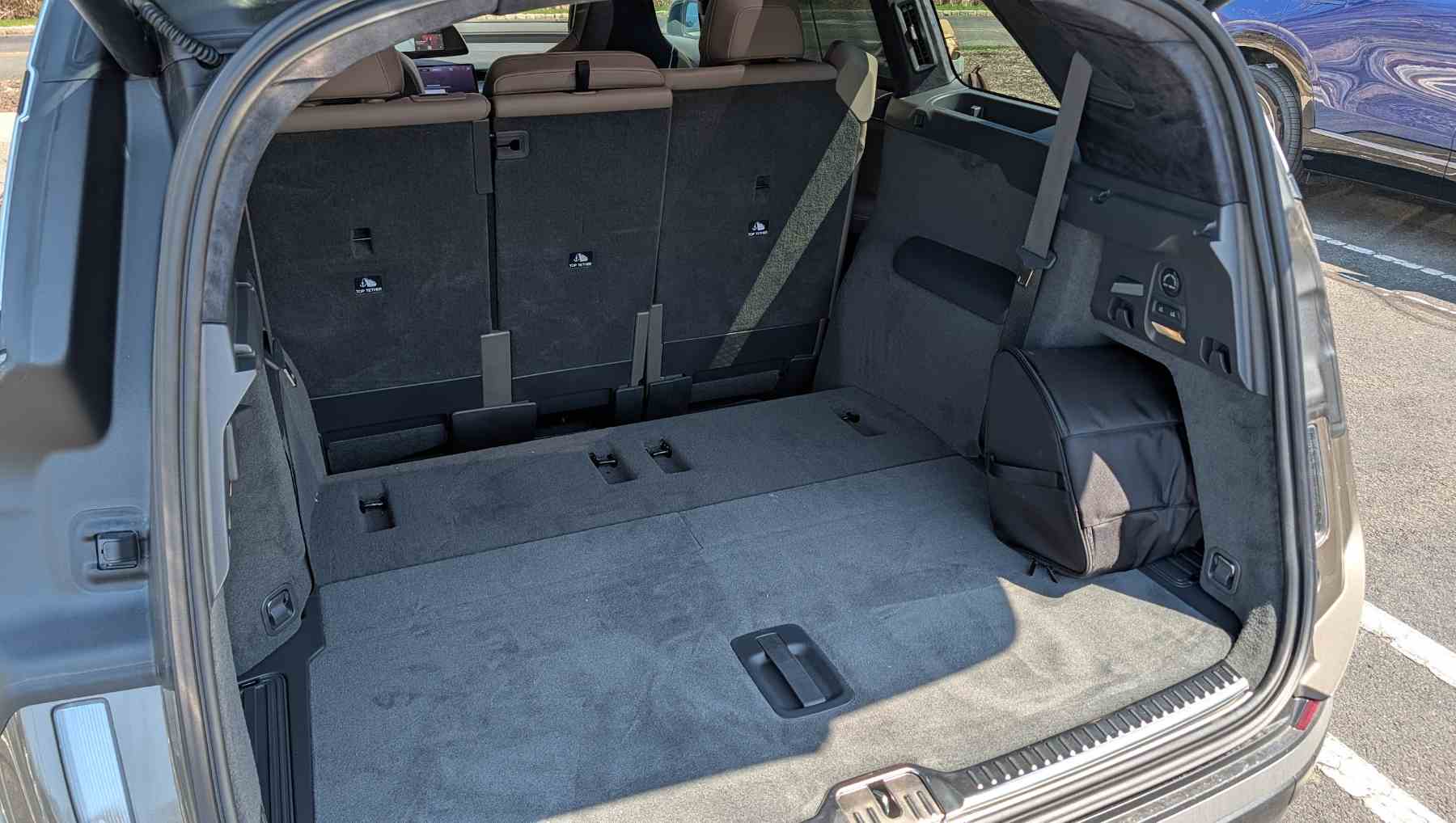
It’s worth noting that while the third row will fit an adult somewhat comfortably, it’s a smaller SUV, and that means the third row isn’t ideal. If you opt for the two-row variant, the space taken up by the folded rear seats becomes an extra storage well. There’s also an 8.1 cubic foot frunk, which contained a 120v power outlet on my test unit. There’s also an accessory that turns the frunk into a seat, which is a nice touch.
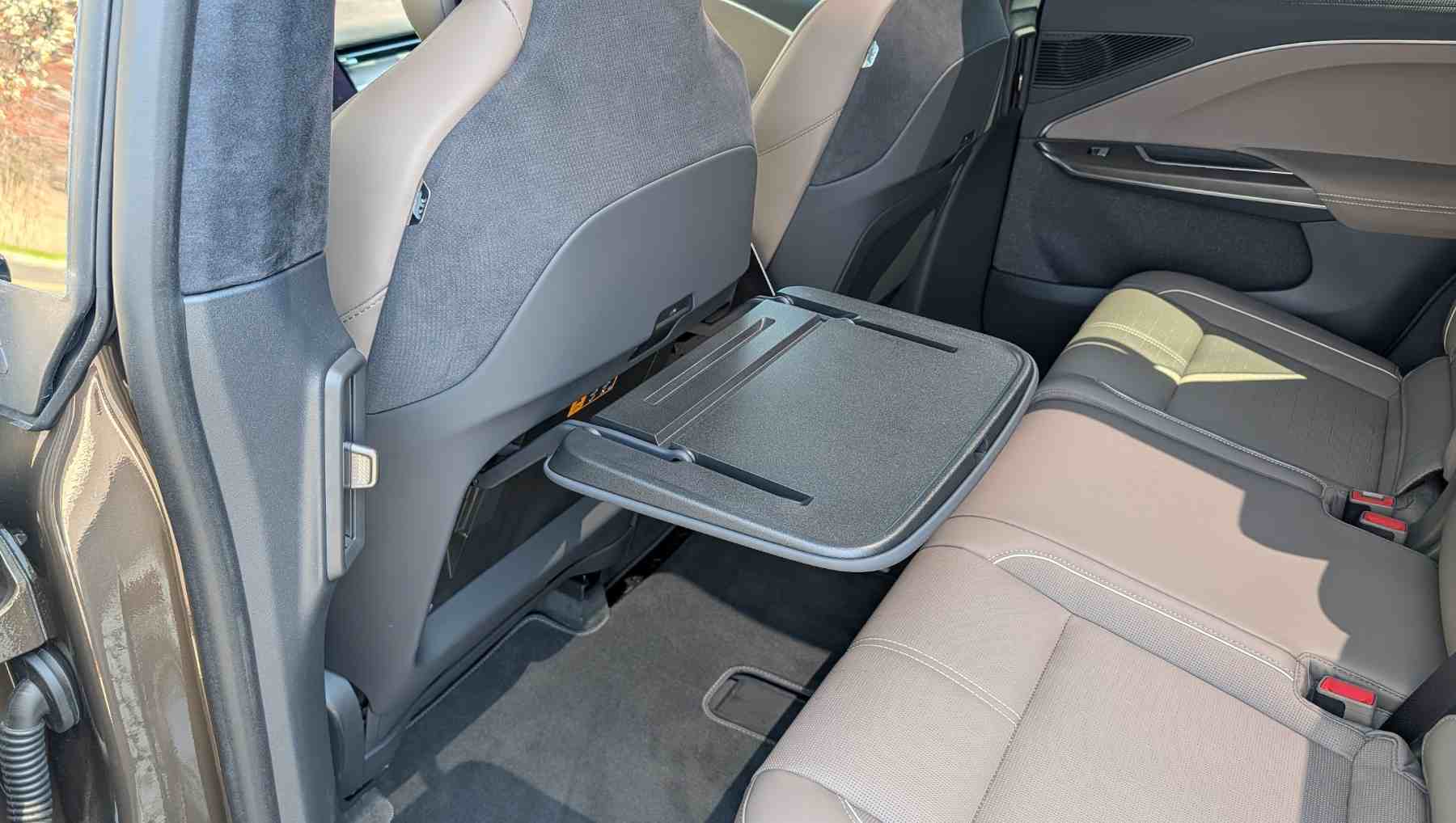
If you look in the back, the second row seats have little tray tables built into the backs of the seats in front of them. Those tables seem very well built, so if you’re being driven around in a Gravity, it’s ideal for getting some work done. It also gives you a nice surface to eat your dinner off if the driver swings by the Taco Bell drive-through or whatever. Either way, it’s a wonderful and very well-implemented feature.
Performance is outstanding for an SUV
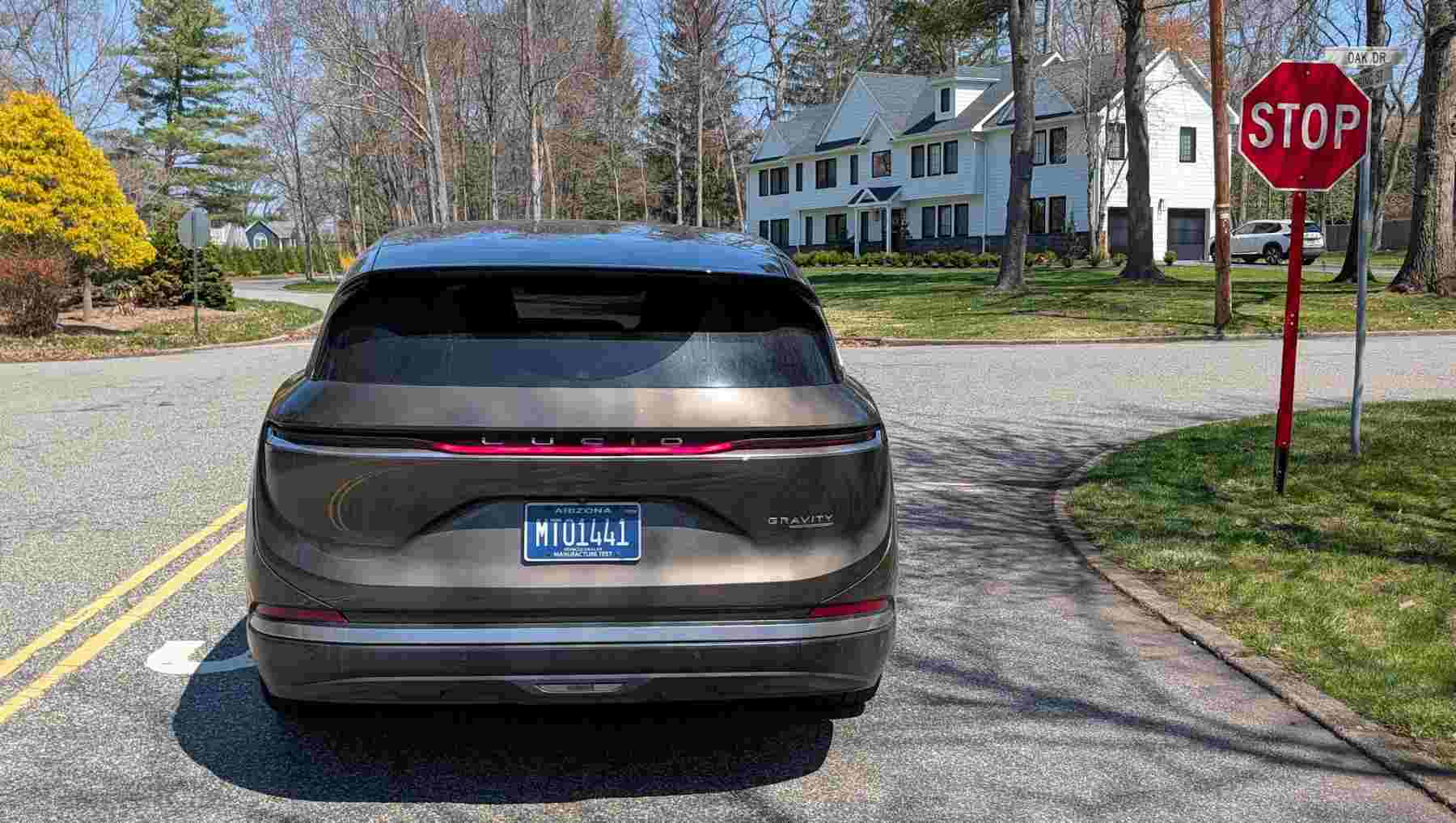
The Gravity Grand Touring can go from 0-60 in just 3.4 seconds. Now we’ve talked about 0-60 times being a bit irrelevant, but if you’re joining a busy section of road with a 50 mph limit from an absolute standstill, it’s a lifesaver. Getting up to speed in seconds in a completely controlled manner gives you the ability to take a gap that would have felt a little uncomfortable otherwise.
But it’s not all about raw power. The Gravity is one of the best-handling SUVs on the road. It’s almost impossible to break traction in one, even if you drive like a simpleton. It can take curves at speed without the slightest issue. In short, it’s remarkably easy to drive.
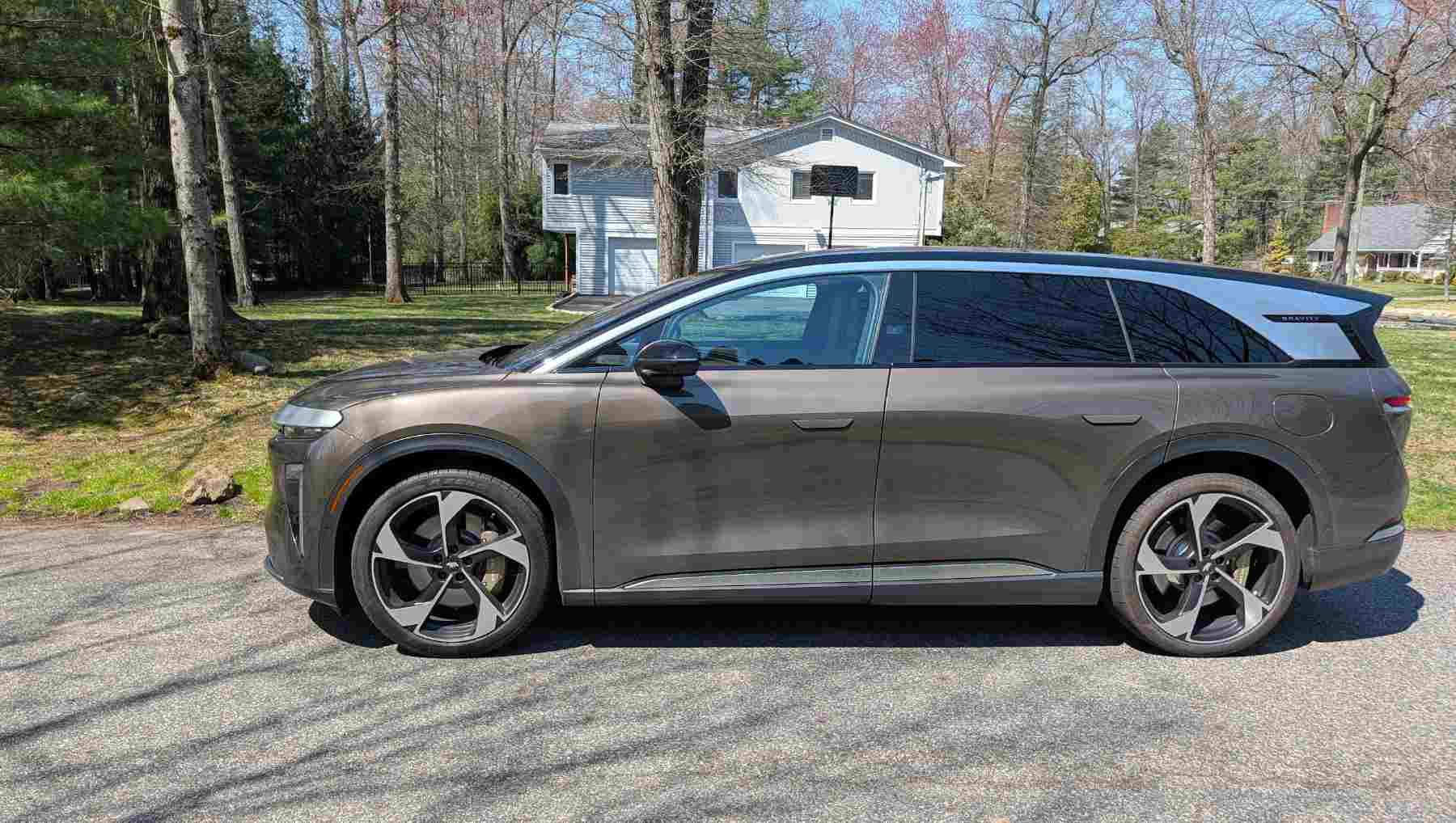
Plus, its smaller form factor means maneuvering and parking in congested areas is refreshingly easy too. Even without the litany of driver aids keeping you on the straight and narrow. Though Lucid does include plenty of those.
Lucid may have made the safest vehicle on the road
A safe SUV is always nice, particularly as the vehicle format tends to appeal to families. Lucid has some of the most aggressive safety tech I have ever encountered. First is the fact that it’s surrounded by cameras, which come on automatically whenever you’re in a tight spot. Allowing you to easily navigate without risking your tire walls or rims.
Then there’s the hazard detection, which alerts you when a potential danger enters your vicinity. That one is particularly fun in Manhattan, where you’re guaranteed to get a braindead cyclist with no will to live and the dress sense of a lycra-clad degenerate whizzing out in front of you with no regard for the consequences. See also: London, Los Angeles, or any other major city with heavy congestion. The Gravity will even hit the brakes for you faster than you can react, even if not braking for these people would be a net benefit to humanity.
Finally, it has an incredibly aggressive lane assist system. If it detects you drifting out of a lane, it will yank the steering wheel back towards the center with all the force of a disgruntled driving instructor. Seriously, I was getting flashbacks to my driving lessons almost 20 years ago while testing this SUV.
Now, as a little disclaimer, my driving habits are actually the issue here, not Lucid’s safety system. But I had to turn it off. Using your directional is a good thing, but sometimes it cancels after you cross one lane over. Sometimes I like to drift two lanes over if I have an exit coming up and it’s safe to do so, and I don’t always check I’m indicating for that second lane. Because it’s normally the sort of thing you only do in light traffic.
Maybe I should change my habits, but what actually happens is I end up fighting the lane departure prevention feature, forcing the vehicle to go where I want it to. It felt unsafe and probably looked a little weird from outside the vehicle.
This feature can save you time, but it may conflict with your driving habits. And Lucid’s temperamental directionals didn’t help matters either.
Lucid’s self-driving system is a weak point
Lucid offers a Level 2 self-driving system on the Gravity, and is in fact including it as standard on most trims going forward. That said, it lags somewhat behind its competitors.
It isn’t hands-free, which immediately puts it behind Tesla, GM, Ford, Nissan, Mercedes, BMW, and Subaru when it comes to self-driving by default. It will change lanes for you, and even suggest when a lane change may be a good idea, but again, you’ll have to hit your directional to confirm said lane change.
This is an area where Lucid is aiming to improve over the next few years. Subscription-based self driving is a key part of the company’s game plan going forward, and it plans to have Level 3 self driving in the Gravity and other vehicles by the end of the decade. Level 2+, which will let you go hands-free and put it on par with its peers, is expected later in 2026.
Let’s talk about the “effective range” of the Lucid Gravity Grand Touring
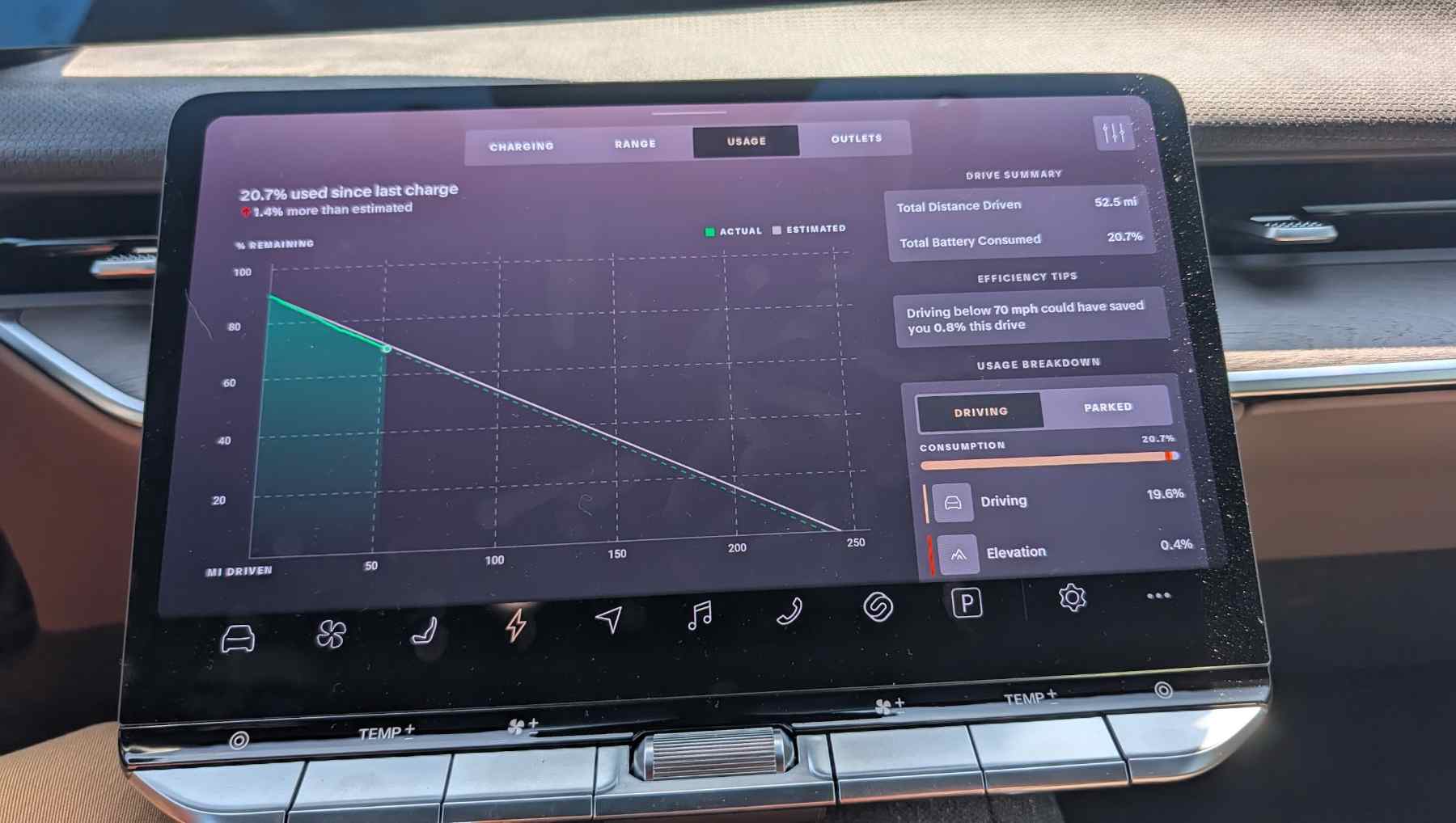
Lucid boasts the Gravity Grand Touring’s EPA-estimated 450 miles of range. I can’t debate the EPA’s figures; the government agency has its own rigorous testing process that’s applied equally to all vehicles. I can, however, say you shouldn’t expect to go 450 miles in a gravity, or any other EV for that matter.
First, there’s charging practicality. Just as you shouldn’t drive an ICE car until the gas tank is empty, driving an EV until the battery dies is an awful idea. Ignoring how bad that would be for the battery itself, you can’t fix a flat battery by pulling a jerry can out of the trunk and pouring in enough fuel to get you to a gas station. You’re either calling a flatbed or a generator on wheels, and you’ll be stuck on the shoulder for a good while.
So going under 10% is a bad idea. Equally, going above 80% (though Lucid does support and seemingly recommend charging to 90%) is also sort of frowned upon. Again, it’s not great for battery health, and charging tends to slow down drastically above that point. So, since it’s a Lucid, let’s take 10-80% as your actual working range. Or 360 miles on average between charges.
That’s still a very good range and actually better than most manufacturers can offer. Lucid achieves it through a combination of advanced aerodynamics, cutting-edge components, top-level software, and some of the most aggressive regenerative braking you’ll find on a vehicle.
Unfortunately, the circumstances in which I conducted most of my testing did not play to the vehicle’s strengths. It was mostly highway driving in light traffic. The aerodynamics help a bit here, but for the most part, it takes a lot of energy to keep a heavy vehicle (the Gravity Grand Touring weighs over 6,000 pounds) moving at highway speeds. Aerodynamics will help a lot, but you’re not getting the benefit of regenerative braking at constant highway speeds.
On the trips where I spent 90% or more of the journey on a highway, I was looking at a usable range of around 250 to 270 miles. Again, more than the total range in ideal circumstances of some other EVs, but if you’re distance driving in a Lucid or planning a road trip don’t expect the reported 450.
Conversely, I decided to try to leave Manhattan at 5 pm because I consistently make terrible life choices. During the roughly hour and 45 minutes I spent going from 25th street/11th Avenue to the Lincoln Tunnel, I had the radio blasting, heated and massage seats running, and the HVAC system keeping the cabin at a pleasant 72 degrees. In an ICE car, even idling, I’d have gone through a noticeable amount of gas. The Lucid didn’t use a single percentage point of charge until I was well into New Jersey.
This is the best EV in America at this time
So I can list a few tiny faults. Those indicator stalks are very temperamental in my experience. Sometimes they just won’t turn off, sometimes a light touch will result in your direction disappearing after a few seconds. It’s not something I got used to within a week, but it may be better with long-term use. And yes, the self-driving could be better and will be soon if Lucid comes good on its promises.
But beyond that, the Gravity is far and away the best EV in America right now. It has an outstanding range, even in the worst circumstances. It’s spacious, even if it’s small. It has so many safety features and is so easy to drive, even the worst driver you know would struggle to get into trouble in it. If I had to spend my own money on an EV tomorrow, it would be this one.
 @benjaminpilking ROOKIE5 months ago