
Solid-state batteries have been “five years away” for about a decade now, with every other quarter bringing a press release about some lab breakthrough that never quite makes it into a car you can actually buy. The promise is always the same: more range, faster charging, no fire risk. The delivery date is always vague. But a team at the Chinese Academy of Sciences just published numbers that, if they hold up outside the lab, would genuinely move the needle for EVs rather than just generate another round of headlines.
The team’s solid-state lithium-metal cell hits an energy density of 451.5 Wh/kg that survives charging cycles equivalent to roughly three minutes, while holding 81.9 percent of its capacity after 700 cycles. That’s more than double what the lithium iron phosphate cells running most Chinese EVs today can manage. The work appeared in the peer-reviewed Journal of the American Chemical Society, and it’s already getting picked apart by the rest of the battery world, as BGR reported on May 27.
What the 451.5 Wh/kg number actually means
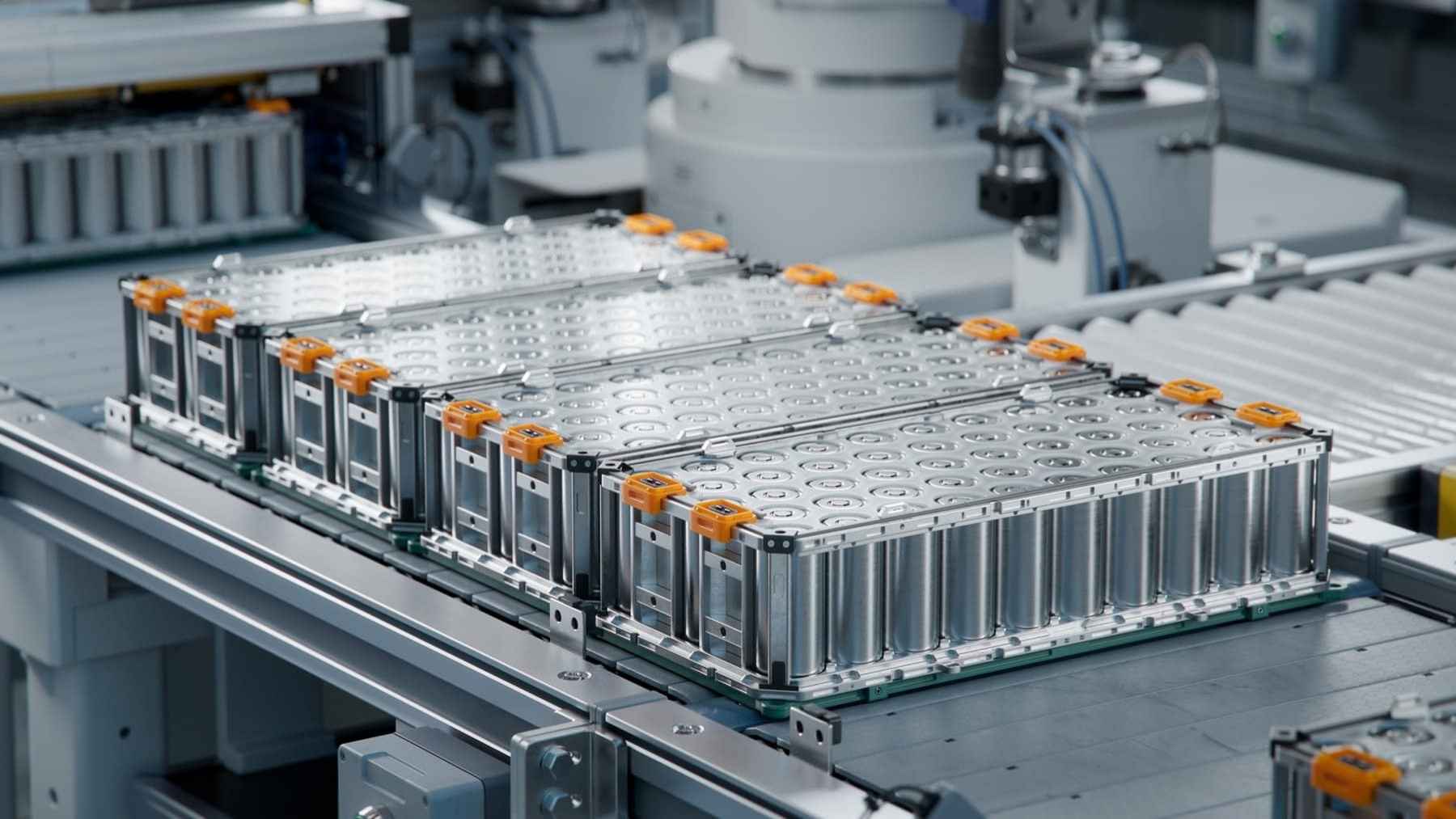
Energy density is the spec that matters for EV range, because it tells you how much juice you can pack into a given weight of battery. A typical LFP pack in something like a base BYD or a Tesla Model 3 RWD sits around 160 to 200 Wh/kg at the cell level. The top NMC cells in premium EVs push closer to 300 Wh/kg. The Chinese Academy of Sciences team is claiming 451.5 Wh/kg in a pouch cell, which is the format that actually goes into cars, not just a coin cell on a lab bench.
For context on where the industry is heading commercially, Interesting Engineering notes that multiple developers in China aim to bring commercial solid-state systems to market at roughly 400-500 Wh/kg sometime in 2026 or 2027. So the lab number lines up with where the commercial roadmap is supposed to land. Whether the two actually meet in the middle is the part nobody knows yet.
The three-minute charging claim comes from running the cell at what the researchers describe as a 20C charging rate paired with a 4.7V high-nickel cathode. A 20C rate basically means you’re dumping the entire pack’s worth of energy in and out in one-twentieth of an hour. Most production EV batteries today tap out somewhere between 2C and 4C before they start degrading fast or catching fire. Pushing 20C through a lithium-metal cell and still getting 700 cycles out of it is the part of this paper that made battery researchers actually look up from their coffee.
The dendrite problem and what they did about it
Solid-state lithium-metal batteries have one big recurring villain, and it’s called a dendrite. When you charge a lithium-metal cell fast, the lithium doesn’t always plate back onto the anode in a nice smooth layer. It grows little metallic spikes that, over enough cycles, punch through the electrolyte and short the cell. Short circuits in a lithium-metal battery range from “your phone gets warm” to “your car is now a flare”, which is why companies have been throwing money at this problem for fifteen years.
The Chinese Academy of Sciences team focused on a polymer electrolyte based on polyvinylidene fluoride, or PVDF, which has decent oxidation stability but tends to react badly with the plasticizers normally mixed in to make it usable. Their fix is what they call a compatibilizing-solvent plasticization strategy. They use acetone as a temporary volatile solvent during the electrolyte preparation, which improves the marriage between the polymer and the plasticizer. The acetone then evaporates during film formation, leaving the plasticizer locked inside the polymer network.
The result, according to the paper, is a lithium fluoride-rich interfacial layer that suppresses side reactions at both electrodes. They used sulfolane as the plasticizer, and the interaction between the PVDF and the sulfolane apparently keeps the plasticizer from migrating around inside the cell over time. The team also reports an average lithium plating and stripping Coulombic efficiency of 99.1 percent over 1,400 cycles, which is the technical way of saying the lithium is going where it’s supposed to go almost every single cycle. For a different angle on the same problem, an Australian mining company recently claimed sulphide-class performance without using sulphur at all — a parallel route to the same end goal, working a completely different chemistry.
The pouch cell and the nail test
Lab claims about coin cells are basically free, which is why anyone serious about a battery breakthrough has to demonstrate it in a pouch cell at ampere-hour scale. That’s what the team did here, building a pouch cell with a thin lithium-metal anode at an N/P ratio of 1.1. For anyone who doesn’t speak battery, the N/P ratio describes how much extra lithium you’re carrying around to make the math work. A 1.1 ratio is aggressive. It means almost no buffer, which is great for energy density and terrible for safety margins, unless your chemistry is genuinely stable.
The team also says the pouch cell passed a nail-penetration test, which is exactly what it sounds like. You drive a nail through a fully charged cell and see what happens. A conventional lithium-ion pouch under those conditions vents, smokes, and frequently catches fire. Passing nail penetration is the standard benchmark for claiming intrinsic safety in a solid-state design, and it’s the kind of result that actually matters to automakers running their own internal certification.
Why this still might not end up in your driveway
Here’s where the cold water comes in. Every solid-state breakthrough of the last five years has run into the same wall: scaling from one pouch cell in a lab to gigawatt-hour production lines without the costs blowing up or the yields collapsing. LFP didn’t dominate the Chinese EV market because it has the best specs. It dominates because it’s cheap and easy to manufacture at scale, and as Interesting Engineering points out, that’s still the chemistry running the show in China’s EV market right now.
There’s also the question of how 451.5 Wh/kg at the cell level translates to pack level once you add cooling, structural housing, and battery management. The rule of thumb is you lose about 25 to 30 percent going from cell to pack. So a 451.5 Wh/kg cell probably becomes a 320 Wh/kg pack, which is still excellent, but not quite the double-the-range marketing line some headlines are running with.
And the dendrite issue, even with this fix, doesn’t fully disappear. BGR notes that dense solid-state batteries are still plagued by high-current metallic cracks that can cause short circuiting. The Chinese Academy of Sciences paper shows a path to managing them at 20C over 700 cycles, which is real progress, but a production EV battery needs to survive 1,500 to 2,000 cycles and ten-plus years of temperature swings. The supplier base has its own problems on top of that — Cummins just sold its fuel cell unit after $657 million in losses, a reminder that “we built one in a lab” and “we can make ten million on a production line” are different sentences.
Where the commercial race actually stands
The lab side of solid-state has been moving faster than the production side for years now. Toyota keeps announcing roadmaps. In China, CATL has filed extensive solid-state patents ahead of the country’s first national standard for the technology, which takes effect this summer. Changan plans to deploy 400 Wh/kg solid-state packs before the end of Q3 2026, and Ganfeng Lithium says its 400 Wh/kg solid-state cell passed engineering validation after 1,100 cycles. Outside China, Factorial Energy went public after a range test covering about 1,200 kilometers, and ION Storage Systems became the first US company to qualify a solid-state cell with a customer. Most of these players, however, are still aiming at meaningful serial production volumes somewhere between 2027 and 2030.
The Chinese Academy of Sciences result is academic research, not a product announcement. There’s no timeline attached, no automaker partnership disclosed in the paper, and no indication of when, if ever, the compatibilizing-solvent plasticization process scales to a factory. What the paper really does is widen the toolkit for PVDF-based polymer electrolytes, which is the polite academic way of saying “here’s a new tool, somebody else go figure out how to build with it”.
If a Chinese battery maker picks this chemistry up and runs with it, the 2026 to 2027 commercial window that Interesting Engineering flags could actually deliver on the higher end of its energy density target. If it stays in the journal, it’ll be one more interesting data point in a field that has produced a lot of interesting data points and not many cars. The numbers are real and the methodology checks out. The factory is the part nobody has solved yet.