
Every so often an airport loses power and immediately stops being an airport. Jet bridges stop moving, screens go dark, and passengers end up walking down air stairs onto a taxiway.
Hartsfield-Jackson in Atlanta went through about eleven hours of that in December 2017. The Government Accountability Office later counted roughly 1,200 cancelled flights and put one airline’s losses at around $50 million.
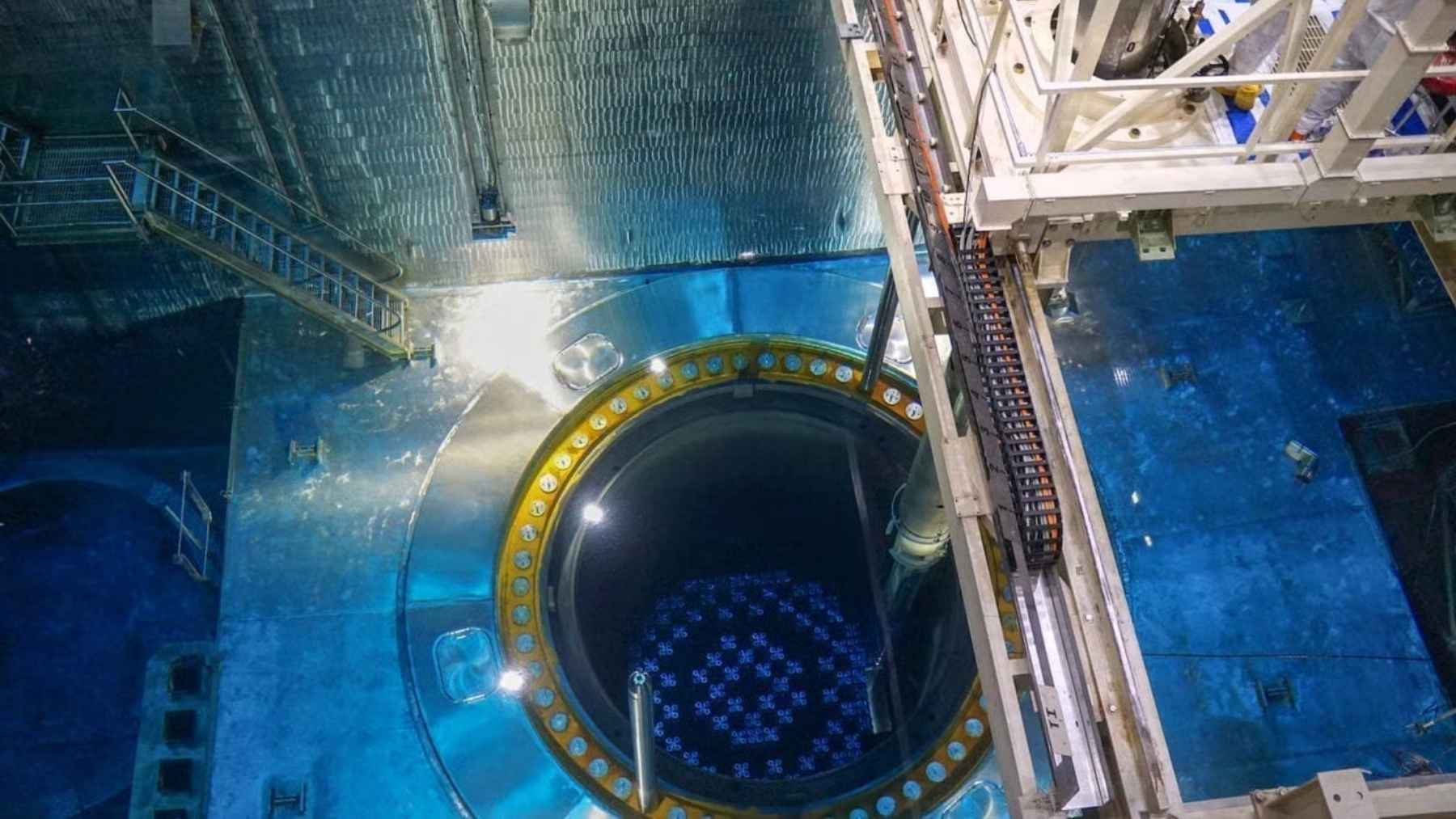
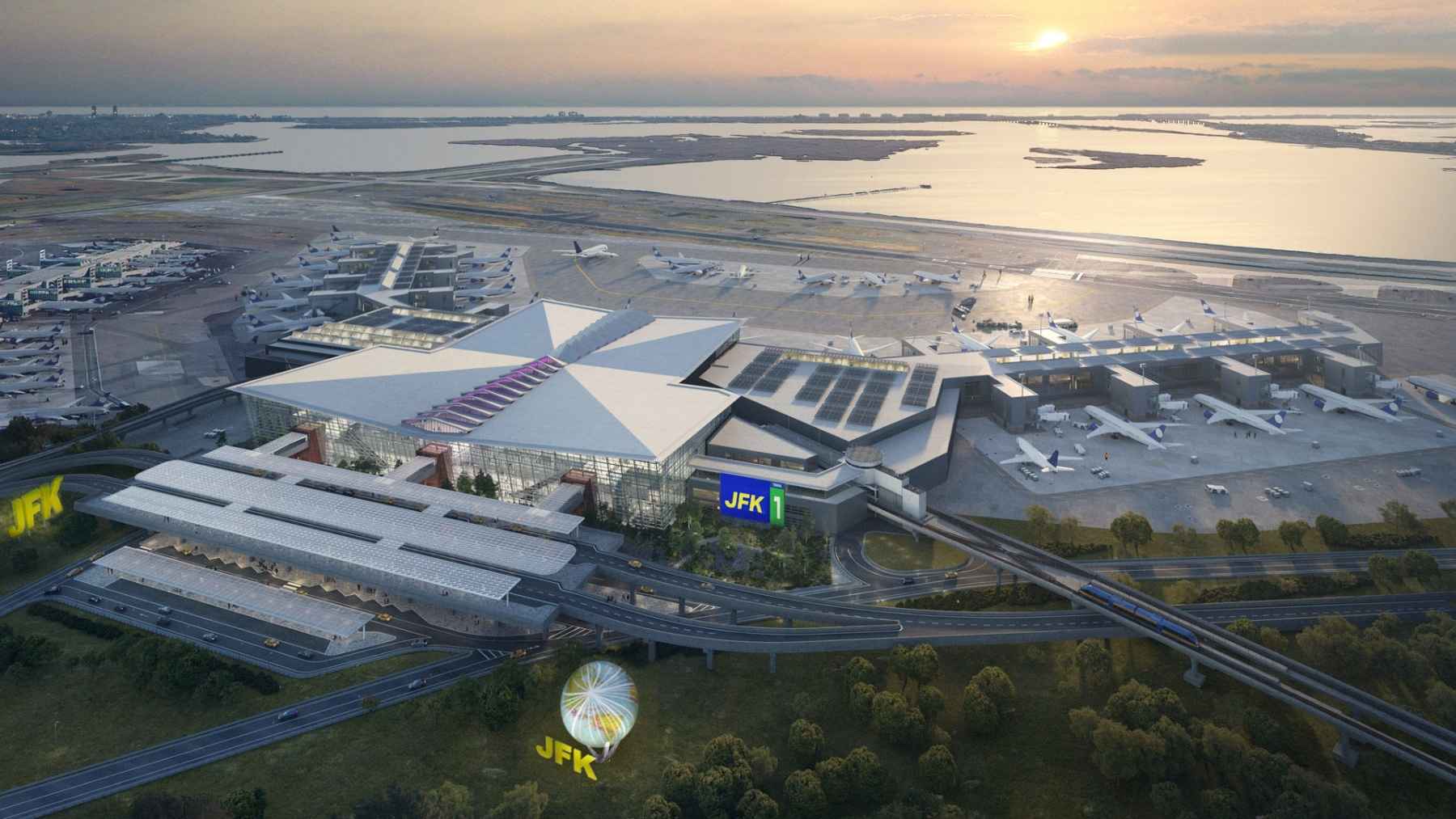
JFK’s newest terminal was designed on the assumption that this happens again. The New Terminal One carries around 13,000 solar panels across roughly 370,000 square feet of its own roof, feeding a microgrid that is split into four separate power islands and backed by fuel cells and a battery. The building is supposed to keep running when the utility feed drops.
There is one problem with all of that. The terminal was supposed to open on June 1 and it didn’t, and the explanation the rating agencies have been given involves the electrical work.
13,000 panels, and none of them are what gets you through a blackout
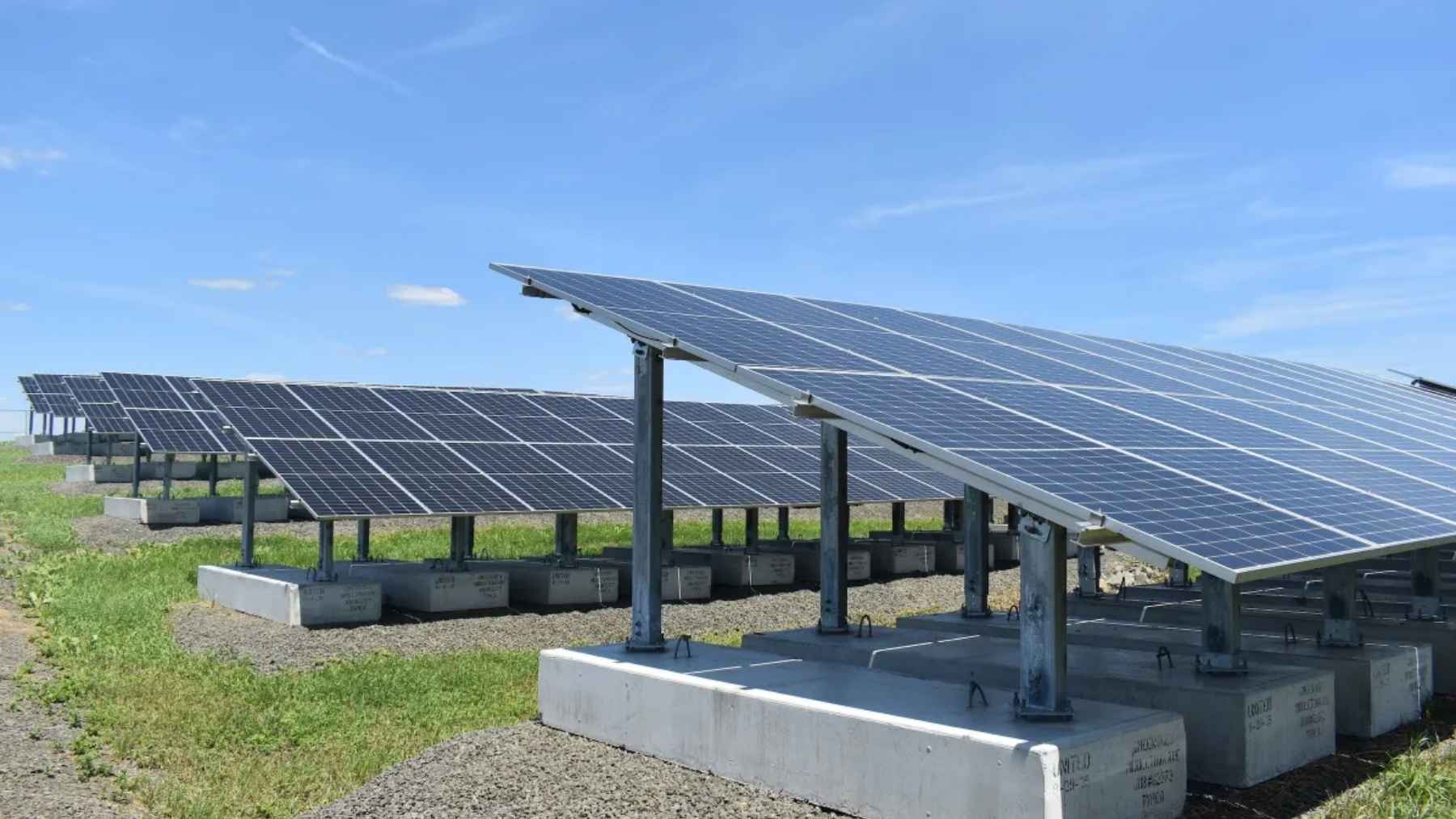
The array itself is the headline number, and it earns it. AlphaStruxure, the company financing, building and operating the energy system, puts it at 7.7 megawatts measured DC, which is the panel nameplate, or 6.63 megawatts as it is counted going into the microgrid. That spread is normal for any solar project and it’s why you’ll see both figures quoted.
The Port Authority of New York and New Jersey calls it the largest solar array at any airport terminal in the country, and the largest in New York City, period. The footprint works out to about six and a half football fields of glass sitting over a baggage hall.
Here’s the part that gets skipped in every press release about this project: at 2am in a January blackout, that array is producing nothing at all.
What actually keeps a terminal alive in an outage is 3.84 megawatts of fuel cells, which run around the clock on gas and are built to be switched over to renewable natural gas later. Behind them sits a 1.5 megawatt battery holding 3.34 megawatt-hours, there to cover the seconds in between.
The panels cut the fuel bill and the emissions. The gas hardware does the surviving.
That distinction matters more than it sounds. A Florida town with 687,000 solar panels next to it kept its lights on through a Category 4 hurricane, and its own utility went out of its way to say the solar farm had nothing to do with it. Same principle, much bigger scale.
Airports skipped rooftop solar because of glare, not because of cost
Big roofs are the easiest solar real estate there is. You already own the surface, it’s already paid for, and nobody has to be talked into leasing it. A Welsh rugby stadium quietly fitted 3,296 panels to its roof over one off-season and barely mentioned it for months.
Airports have avoided doing the same thing, and the reason is glare. Sunlight bouncing off a panel field toward a control tower or an approaching cockpit is a Federal Aviation Administration problem, not an aesthetic one, so US airports have historically kept solar on parking canopies and spare land rather than on terminal roofs.
AlphaStruxure says the project required glare studies to confirm that reflected light wouldn’t reach pilots or air traffic controllers, and that the terminal’s roof made the modeling harder because it isn’t one flat plane. It pitches at multiple angles, so every surface had to clear separately.
Other operators have gone the other way and stood their panels vertically to dodge the same problem. Frankfurt stood 37,000 panels dead upright along a runway, edge-on to the midday sun.
A building in Queens did a smaller version of that on a green roof and still beat the tilted array beside it. JFK took the harder route and kept its panels down on the roof.
Four power islands means there’s no single plug to pull
The layout is the genuinely unusual part. Rather than one central plant feeding the whole building, the microgrid is broken into four clusters, each with its own generation, storage and controls, positioned around the terminal near the loads they serve. One sits at ground level, the rest are up top.
Each island can run on its own. Take one down for maintenance and the other three stay up, which is not how a single large plant behaves when you need to work on it.
The other advantage is boring and expensive: you don’t have to trench new utility feeds across a live tarmac to move power from one end of a terminal to the other. Generating close to where the power gets used avoids most of that.
Three of the four islands are tied to the first phase alongside the initial 14 gates. The fourth arrives with the rest of the building, which is scheduled for 2030.
The delay is on electrical work, and nobody has pinned it on the microgrid
Phase A was booked for June 1, 2026. It didn’t happen, and the slippage has been rolling since spring.
Moody’s Ratings moved the outlook on JFK NTO LLC to negative in May while keeping the Baa3 rating, and Fitch Ratings put the credit on negative watch in early July. According to The Bond Buyer, the target now sits somewhere between December and March, with construction about 90% complete, and Fitch has said a slip past March would likely bring a downgrade.
Fitch attributed the problems to resourcing constraints and to coordination trouble across the terminal’s mechanical, electrical and plumbing systems. Tobey Collins, the terminal company’s chief financial officer, pushed back on the resourcing framing and told the publication it was more a question of getting everyone working together than of being short-handed.
What’s left, by her account, is “putting up walls and finalizing the electrical connections”, plus testing and inspections.
The coincidence is a good one, so it’s worth stating the limits of it. No party has publicly attributed the delay to the microgrid specifically.
Mechanical, electrical and plumbing covers everything from baggage belts to restrooms in a 2.6 million square foot building. The terminal whose selling point is electrical independence is running late on electrical work, and that is as far as the public record goes.
It’s expensive either way. The project carries $5.917 billion in bonds and doesn’t earn a cent until airlines start moving passengers through it.
Missing the June date also put the developer in default on its lease with the Port Authority, which triggered a remedial plan the agency has asked for more detail on. There’s a $500 million ramp-up reserve and $250 million in credit lines sitting behind all of it.
Half the load is the number that actually matters
The Port Authority describes the system as a 12-megawatt microgrid. AlphaStruxure lists the same project at 10.5 megawatts elsewhere. Both are right, and the arithmetic explains it: 6.63 megawatts of solar plus 3.84 megawatts of fuel cells lands on 10.5, and adding the battery’s 1.5 megawatt rating gets you to 12.
Against the terminal’s own consumption, the system is sized to cover about half. The terminal’s first sustainability report, From the Ground Up, published in June, puts it at 50% of projected energy demand for 2050 across six on-site fuel cells and the battery, with the building running on Schneider Electric’s management software and chasing LEED Gold certification.
That 2050 framing is deliberate, and it points at a load that is going to climb. The New Terminal One has committed to running an entirely electric ground support equipment fleet through a shared pooling model, which it says is a first for any airport terminal. Every tug, belt loader and baggage tractor on those stands charges from the building.
An airport terminal that electrifies its own ramp stops being a building with lights in it and turns into something closer to a small industrial site with a runway attached. Generating half of that on the roof is a different proposition than bolting panels onto an office block.
The whole system was announced as reaching commercial operation in early 2026. That date has come and gone with the terminal still shut, and the four islands have yet to carry a single boarding pass.
The proof of any of this isn’t the ribbon cutting. It’s the first Sunday afternoon the feed drops with 14 gates full, and nobody gets to schedule that one.
 @jimmyautry ROOKIE1 month ago