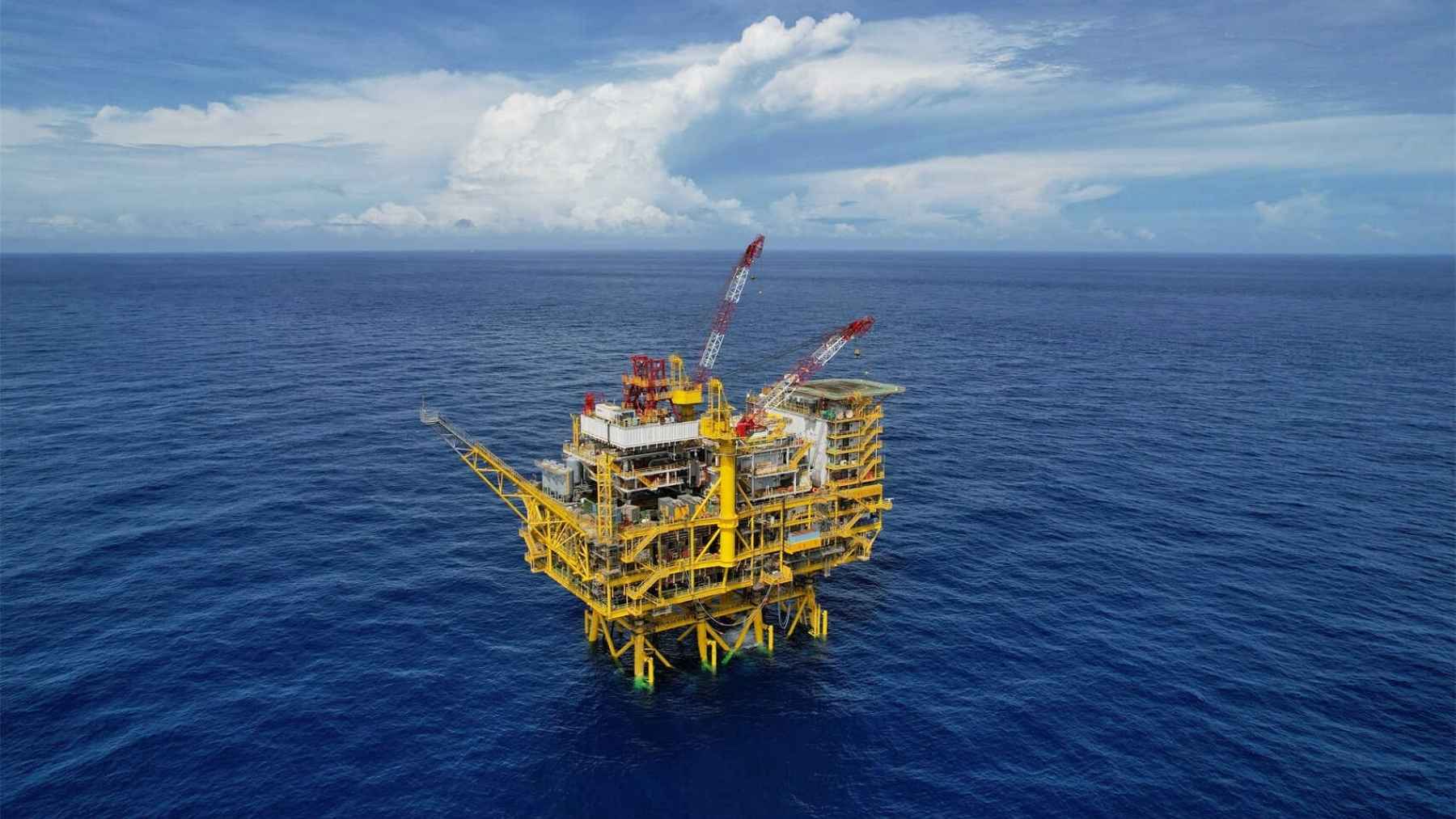

Offshore oil platforms make their own electricity, and they make it the blunt way, by burning some of the gas they are sitting on top of. It has been the arrangement for decades. It is also why the North Sea Transition Authority puts emissions from power generation for UK oil and gas infrastructure at around 10 million metric tons of CO2 a year, roughly what nine million British homes produce through their electricity use.
The industry’s answer was to stop burning and start plugging in. Scotland took that further than anyone, consenting a 560-megawatt floating wind farm called Green Volt about 50 miles off Aberdeenshire, with a job description that includes running North Sea oil platforms on wind.
Two years after it cleared planning, the rig lined up to be its anchor customer has walked away. And the floating turbine that actually started feeding an oil field this month is moored in the South China Sea.
Burning gas to pump gas is an expensive habit
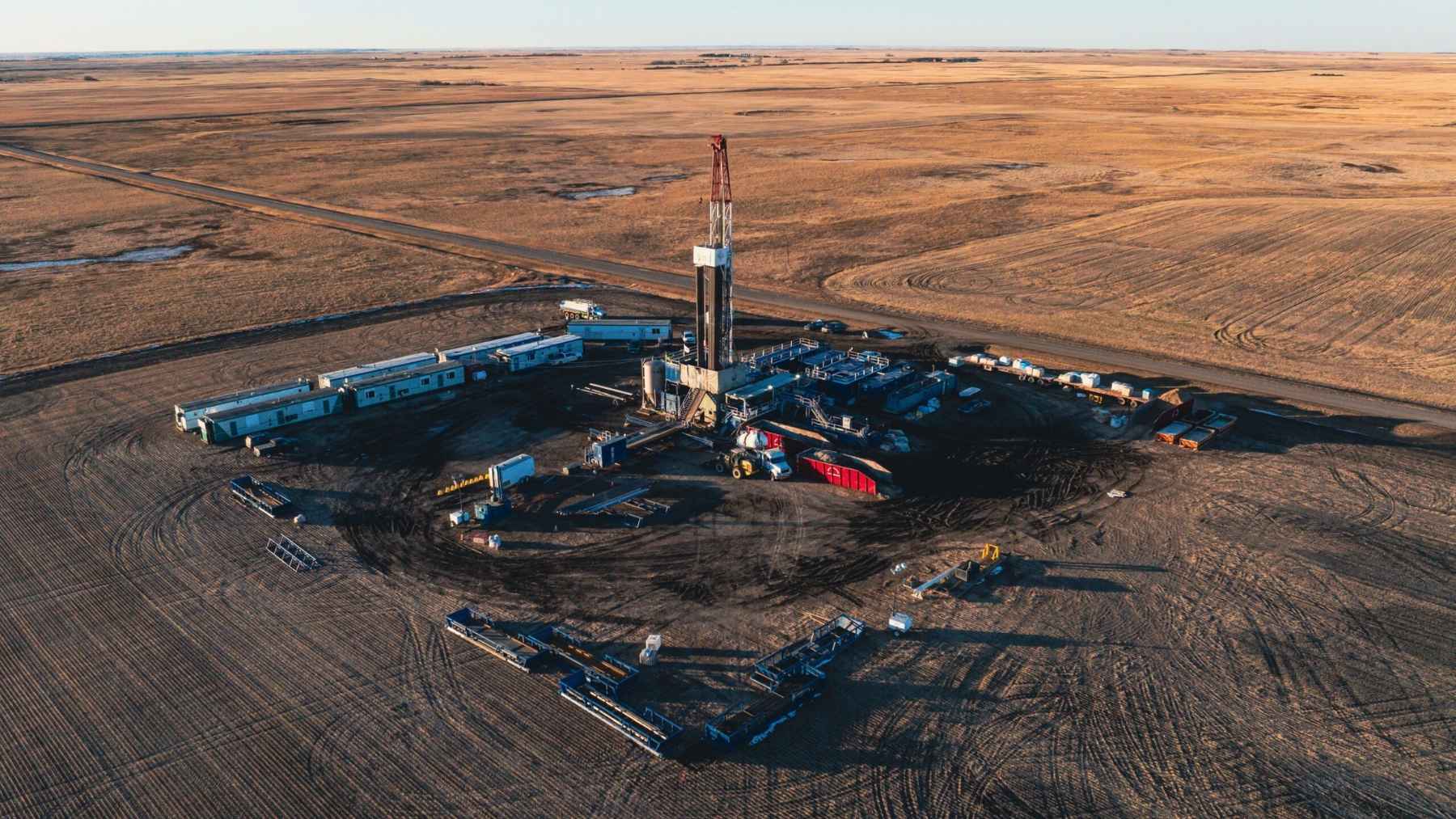
A platform like Buzzard, the UK’s highest-producing oil field, carries a constant electrical load of around 70 megawatts. That covers processing, gas lift, water injection and everything else that keeps oil moving, and on most North Sea installations it comes from gas turbines bolted to the deck.
British operators signed up under the North Sea Transition Deal to halve production emissions by 2030. Power generation is the bulk of those emissions, which made electrification the obvious lever to pull.
So Crown Estate Scotland built a seabed round around it. INTOG, short for Innovation and Targeted Oil and Gas, was the first leasing round anywhere designed to put wind farms directly on the end of an oil platform’s power cable. Twelve projects hold agreements, all of them floating. The ones tied to oil and gas get a 50-year lease once the conditions are met.
The rig that was going to buy the power backed out
On August 28, 2025, Energy Voice reported that CNOOC International had dropped plans to electrify Buzzard. The company’s UK arm said that after a technical and economic review it had “been unable to find an investible solution in the current economic climate,” and that it remained committed to cutting the platform’s emissions by other means.
CNOOC operates Buzzard with a 43.21% stake, about 62 miles northeast of Aberdeen. It declined to say which technical or economic factors drove the decision, or whether its nearby Golden Eagle and Scott platforms were still candidates.
The site itself came from CNOOC. Green Volt’s seabed sits on the decommissioned Ettrick and Blackbird fields, which the company also operated. Flotation Energy has said its discussions with oil and gas partners are commercially confidential and ongoing.
The lease has a condition attached, and it isn’t about megawatts
Green Volt holds an option agreement, signed on April 19, 2024. It does not hold a lease.
Crown Estate Scotland told Energy Voice that one pre-condition of stepping through to a lease is a current electricity offtake agreement, and that where a developer cannot produce one but can show best endeavours and credible future oil and gas demand, it may exercise discretion case by case.
That requirement runs through the entire structure. The UK government granted Green Volt an exemption from holding an electricity supply licence specifically so it could sell power straight to offshore installations. Energy Voice, citing the Subsidy Advice Unit report on that exemption, valued it at between £100 million and £500 million, capped at 195.5 MW of the project’s 560.
Which is the awkward part. The megawatts are consented and the revenue is contracted. The customer is the open item.
Floating power costs more than twice what fixed-bottom does
Green Volt won a Contract for Difference in the UK’s sixth allocation round in September 2024, covering 400 of its 560 megawatts at £139.93 per megawatt-hour in 2012 prices, the convention these contracts use. That lands near $189 at current exchange rates, before indexation.
In the same auction, conventional fixed-bottom offshore wind cleared at £58.87. Hornsea Project Four alone took 2,400 megawatts at that price. Green Volt was the only floating project in the round, and floating wind’s entire allocation was its 400 megawatts.
The strike price still came in about 20% under the £176 administrative cap set for floating wind, so the auction worked as designed. It just worked at a number that only stands up with a government contract behind it.
CNOOC switched on a floating turbine for an oil field anyway
On August 10, offshoreWIND.biz reported, citing Chinese media, that CNOOC had begun operating a 16-megawatt floating platform called Haiyou Anlan in the South China Sea, feeding the Lufeng oilfield grid.
The machine sits about 85 miles offshore in the Pearl River Mouth Basin on a tension-leg foundation. It stands more than 1,000 feet tall, weighs around 7,800 metric tons, and pushes power to the field through a 2.7-mile subsea cable.
Expected output is about 54 million kWh a year. CNOOC puts the saving at roughly 15,000 cubic meters of fuel oil and 35,000 metric tons of CO2 annually, and says the platform is built to take typhoons with sustained winds near 137 mph. It left Zhuhai’s Gaolan Port on June 28.
This is not CNOOC’s first. Its 7.25-megawatt Haiyou Guanlan has been powering the Wenchang oilfield since May 2023. Chinese yards have been turning out floating hardware built for typhoon country for a while now, including Mingyang’s twin-rotor OceanX, and Haiyou Anlan should not be confused with Three Gorges Pilot, a separate 16-megawatt floating turbine installed off Yangjiang in May as a demonstrator rather than an oilfield supply.
The two situations are not equivalent, and it is worth being precise about why. In China, a state-owned operator is building generation for fields it owns outright. In the UK, an operator has to sign a long-term contract with a third-party developer while an increased Energy Profits Levy squeezes what anyone wants to spend on discretionary capital.
The machines actually in the water are a lot smaller than the plan
Crown Estate Scotland signed the first oil-and-gas lease of the entire INTOG round on March 25, 2026. It went to Culzean Floating Wind, a pilot consisting of one turbine.
Archer, the EPC contractor, confirmed at the end of July that a Vestas turbine had been mated to an Ocergy semi-submersible foundation and the unit was ready for tow-out. It will sit about 1.2 miles west of the Culzean platform, roughly 137 miles off Scotland’s east coast, and cover around 20% of that platform’s electricity demand.
The project is now run by NEO NEXT+ Energy, an independent UK producer formed on March 30, 2026 from NEO Energy, Repsol UK and TotalEnergies’ UK upstream business. For Ocergy it is the first commercial deployment of its OCG-Wind foundation, one of several attempts to strip mass and cost out of floating platforms, a problem other designers are attacking from stranger angles.
That is the state of Britain’s oil-and-gas floating wind push three years after the seabed was handed out: one 3-megawatt pilot on its way offshore, and 560 megawatts still looking for a buyer.
Norway got there first and is still ahead. Equinor’s Hywind Tampen has been feeding the Snorre and Gullfaks platforms since November 2022. Eleven turbines, 94.6 megawatts, about 87 miles offshore, covering roughly 35% of the annual electricity demand across five platforms and cutting around 200,000 metric tons of CO2 a year.
Equinor still describes it as the largest floating wind farm in operation anywhere, and nothing has displaced it. Green Volt at 560 megawatts would be about six times the size, which is why its developers call it the world’s largest commercial-scale floating windfarm. That title currently belongs to a project nobody has built.
What has to happen next
The timeline has already moved once. In 2023, Flotation Energy’s then chief executive said the plan was to be delivering renewable power to the oil and gas sector by 2026. First power is now targeted for 2029. The CfD delivery year is 2028/29, and Scottish Development International’s project listing puts the final investment decision in 2026 and commercial operations in 2030.
FEED contracts went out in December 2024 to two consortia, Aker Solutions with ABB and Aibel with Hitachi Energy, covering the offshore substation and a high-voltage system that has to move power in two directions at once. No final investment decision has been announced.
Hywind Tampen shows both the shape of the answer and its limit, because its useful life is tied to how long the fields it feeds keep producing. Green Volt was designed the other way around, sitting on two fields that were already being decommissioned, with a cable to shore so it can sell into the grid whether or not a platform is buying.
That cable may turn out to be the most valuable thing about it.