
If I asked you to name the least flammable building in your state, a hydroelectric plant would be a pretty good answer. The thing’s a concrete box with a river running through it. There’s no fuel pile parked out back, and nothing inside it is supposed to burn in the first place.
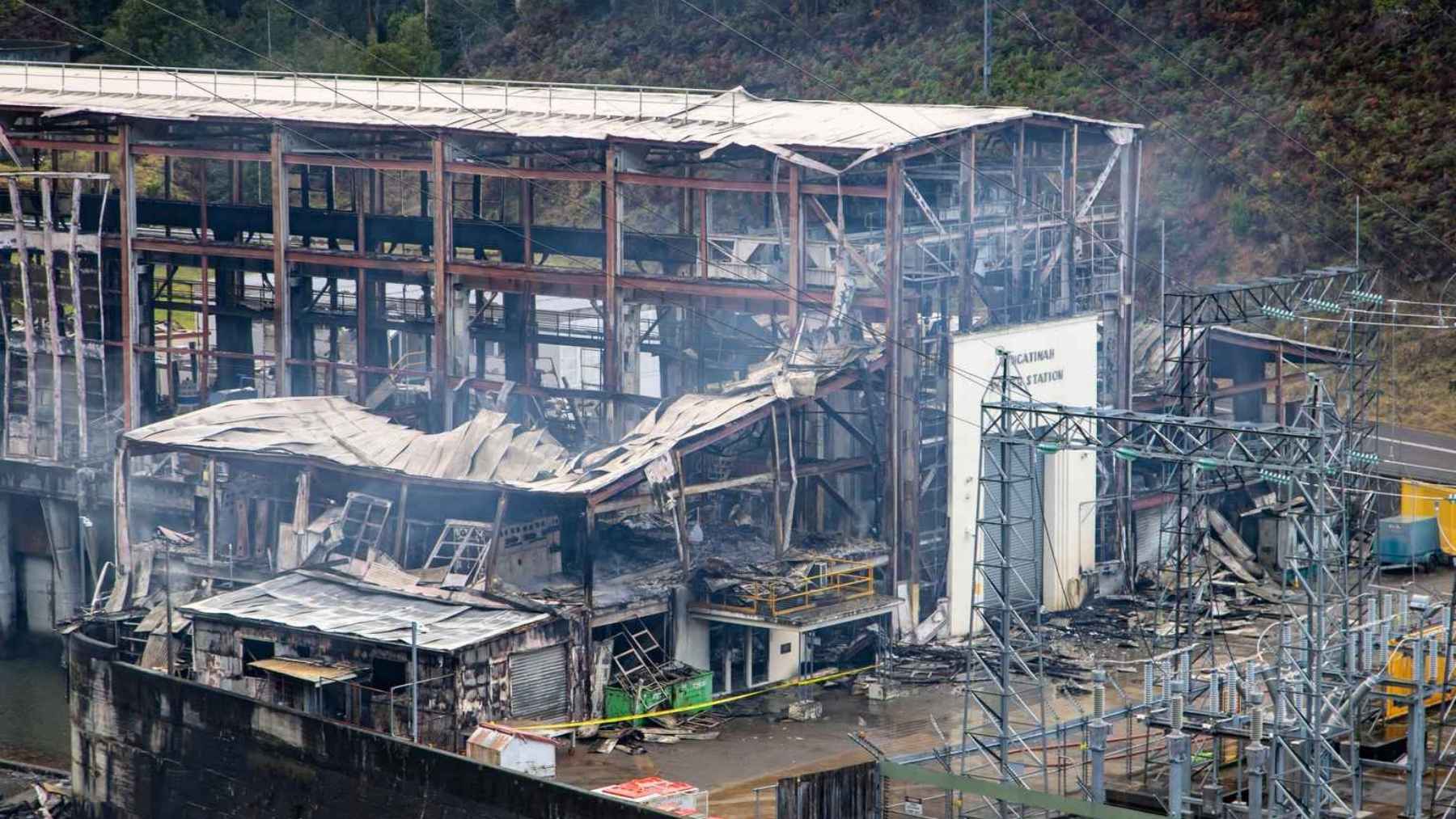
So the photos that came out of Tasmania’s Central Highlands on September 3 took a second to process. One of the state’s biggest hydro stations had burned overnight, and by morning the walls were gone and the steel frame was standing over an empty shell.
That was Tungatinah, a 142.2-megawatt station near Tarraleah that Hydro Tasmania brought online in stages between 1953 and 1956. It runs five Francis turbines and makes close to 5 percent of the state’s electricity, which puts it fifth among Tasmania’s hydro stations according to the ABC. Or it did, until about 9 p.m. on September 2.
On Thursday the fire service came back with a preliminary finding, and it’s the least dramatic one on the menu. The fire was an accident. It started on the assembly bay floor.
As spots inside a power station for a fire to start, that’s about as good as it gets.
So what’s an assembly bay?
It’s the open stretch of floor at one end of the machine hall, sitting under the overhead crane. Crews lay parts out there when they pull a machine apart, so think of it as half workshop and half parking space for things you can’t move without the crane. Tasmania Fire Service Deputy Chief Officer Matt Lowe told the ABC that the fire “has originated on the assembly bay floor, away from the main turbines.”
That finding doesn’t mean the machines came through it, only that the fire started somewhere else in the building. Lowe’s investigators turned up several possible ignition sources that are still being worked through, and he says the full investigation runs for months yet. The scene went back to Hydro Tasmania on September 9.
So did the turbines survive?
Nobody can answer that yet, including the people who own them. Chief executive Rachel Watson says nobody will know what shape the generating gear is in until people can physically get down to that end of the station in safety, and right now they can’t, because the structure on top has to come off first. She’s already written the building itself off. The morning after the fire, Hydro Tasmania warned that Tungatinah was going off the grid for an extended stretch, which sounded like corporate hedging at the time and reads like an understatement now.
A hydro powerhouse keeps its machines down in the concrete, with the water arriving from below, and the hall on top is mostly a roof, a floor and a crane. Erin van Maanen, who runs strategy and commercial for Hydro Tasmania, said the fire did its damage mainly above ground level, and that the company has hopes for the machinery underneath once somebody can assess it. That’s a careful sentence from someone who hasn’t been able to walk in and look. I’d read it as cautious optimism rather than a promise, and I’d want to know what came down through the floor openings before I got excited.
Watson has been blunt about how her people took it. “This is not just a building to us,” she said.
The grid barely reacted
That’s what surprised me most. A station making 5 percent of the state’s power fell over in one night, so why didn’t anyone else notice? Because the network was built on the assumption that one of these would eventually go.
The market operator logged the whole thing as a non-credible contingency event at 10:08 p.m., noted that the 110-kilovolt substation had tripped because of a fire on site, and recorded roughly 2 megawatts of bulk load dropping off. No load shedding. Jason King, who runs network operations at TasNetworks, put the local outage at about 330 customers, off for 24 hours and reconnected the next night. The switching station next door came through undamaged.
Hydro Tasmania also caught a run of luck it had nothing to do with. Premier Jeremy Rockliff told parliament the state’s dams were sitting at their highest level in a decade. Goanna Energy analyst Marc White put storage around 50 percent, roughly 15 percent above the prudent level for early September.
The 342-megawatt Tamar Valley gas plant was already coming back and was due in service by the end of that week, the 250-megawatt Basslink cable to Victoria was available, and demand is soft right now because the Liberty Bell Bay manganese smelter went into liquidation in August and the Nyrstar zinc smelter is running under capacity. White’s summary was that you couldn’t have picked a better week for a catastrophic failure.
Which is a fairly grim way to be lucky, but it counts. Burn the same building down in a dry January and you’re reading a very different story.
Somebody still has to pay for it
White’s estimate is that Tungatinah generated roughly A$33 million of electricity over the last 12 months, and that’s revenue the utility stops collecting while the station sits dead. Rebuilding it will likely run into the hundreds of millions. Watson says the plant carried full insurance, so it’s an insurer that probably eats most of that bill rather than the state-owned company, and Rockliff’s estimate to parliament was at least a year of work.
Energy and Renewables Minister Nick Duigan has said the station will be rebuilt and will generate again. He hasn’t attached a timeline or a price to that, which is what I’d expect two weeks in.
A 1950s powerhouse isn’t something you order from a catalog, though. Those five machines were built for one specific drop of water and one specific slab of concrete, so if they’re scrap, you’re looking at a custom job with a lead time measured in years. Everybody running mid-century hydro ends up doing this eventually, usually on their own schedule. Finland’s Loviisa plant is pulling apart all eight of its low-pressure turbines right now to get 38 more megawatts out of the same reactor heat, and that one’s a planned outage.
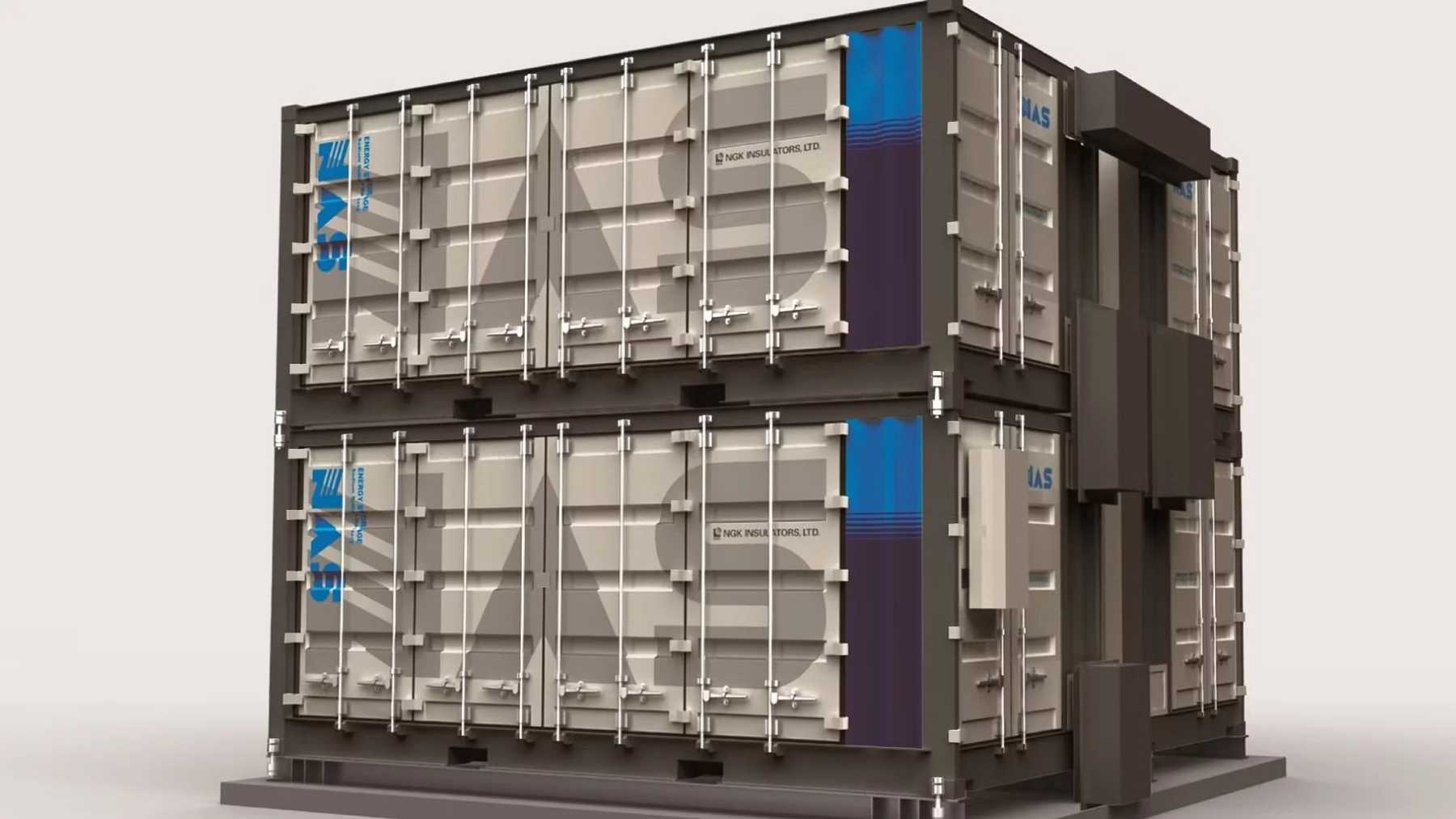
Something also has to cover the hole while Tungatinah’s out, and lately in Australia that job keeps going to batteries instead of machines with bearings in them. There’s a container of molten sodium sitting outside Brisbane doing work that used to belong to plants like this one. A container isn’t a swap for 142 megawatts of hydro, and nobody’s pretending it is, but the gap has to come from somewhere for at least the next year.
Hydro Tasmania’s public page for the Derwent scheme still lists the station’s numbers in full: 1953 to 1956, five Francis turbines, 142.2 megawatts. There’s one new line underneath them now, saying a fire on September 2, 2026 caused significant damage and the station isn’t currently in operation.