
Lithium tends to show up in the news attached to a fight. Somebody wants to dig an open pit, somebody else sues, and the metal keeps arriving from Chile, Argentina and China while the lawyers bill hours. Arkansas has been running a quieter version of the hunt since 2020, and the project behind it just signed customer number two.
Smackover Lithium, a joint venture between Standard Lithium and Norway’s Equinor, announced a binding deal on August 31 that will send LG Energy Solution 8,000 metric tons (about 8,800 US tons) of battery-quality lithium carbonate a year for ten years, starting when commercial production begins. All of it will come out of salty water, not rock.
The contract is take-or-pay, so LG Energy Solution pays for its volume whether it collects the powder or not. Buyer number one arrived in March. Commodities trader Trafigura signed back then for the same 8,000 metric tons a year over the same ten-year run, and the two contracts together now cover roughly 90 percent of the offtake volume the project set out to sell.
An ancient sea already did the digging
The brine in question is the leftover water of a sea that covered the Gulf region during the Jurassic, roughly 150 million years ago. That sea left behind a porous, permeable limestone layer called the Smackover Formation, which runs under Arkansas, Louisiana, Texas, Alabama, Mississippi and Florida. Oil drillers hit it a century ago. Bromine producers have pumped its brine in south Arkansas for decades, mostly bound for flame retardants. The lithium rode along, unbilled.
The USGS put a hard estimate on that metal on October 21, 2024. Working with the Arkansas Department of Energy and Environment’s Office of the State Geologist, the agency calculated between 5 and 19 million tons of lithium dissolved in Smackover brines under southern Arkansas alone, a range equal to 35 to 136 percent of the previous estimate for the entire US lithium resource.
Even the low end, 5 million tons, covers the International Energy Agency’s projected 2030 world demand for lithium in EV batteries nine times over. Southern Arkansas samples in the study also carried more than 400 milligrams of lithium per liter, against a commonly cited commercial floor of about 80.
Oil, gas and bromine operations hauled about 5,000 tons of dissolved lithium to the surface in 2022 alone, inside brine they were pumping for other things, and every bit of it went back underground or out as waste.
The US imports more than 25 percent of the lithium it consumes.
Six years of brine through one building in El Dorado
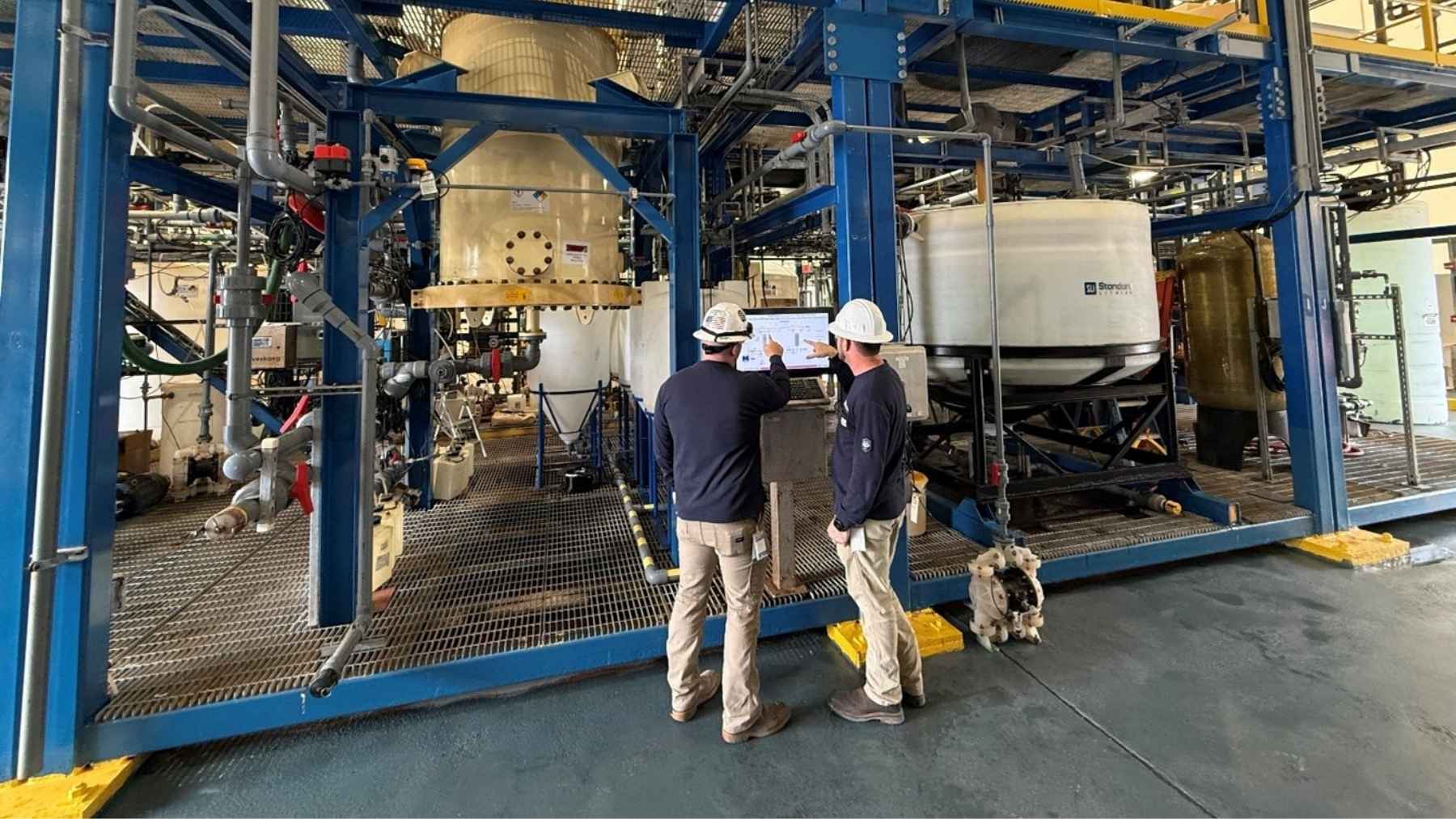
Standard Lithium has been testing the harvesting side since May 2020 at a demonstration plant bolted onto Lanxess’s bromine operation near El Dorado, Arkansas. The setup borrows the German chemical company’s wells and pipelines, takes the tail brine left over after bromine extraction, and runs it through direct lithium extraction, or DLE. Sorbent-filled columns grab lithium ions out of the hot brine and let everything else pass. The stripped water then goes back underground through existing injection wells. The pit never gets dug.
Standard Lithium calls the unit the only large-scale, continuously operating DLE plant in North America, and by its August 10 quarterly report the columns had processed 1 million barrels of Smackover brine, which works out to 42 million gallons, across more than 15,000 DLE cycles. Staff logged roughly 340,000 man-hours over six years with zero recorded incidents, per the company. Standard Lithium puts lithium recovery at around 90 percent in a matter of hours, against the 40 to 60 percent that evaporation ponds pull out over stretches that can reach a year.
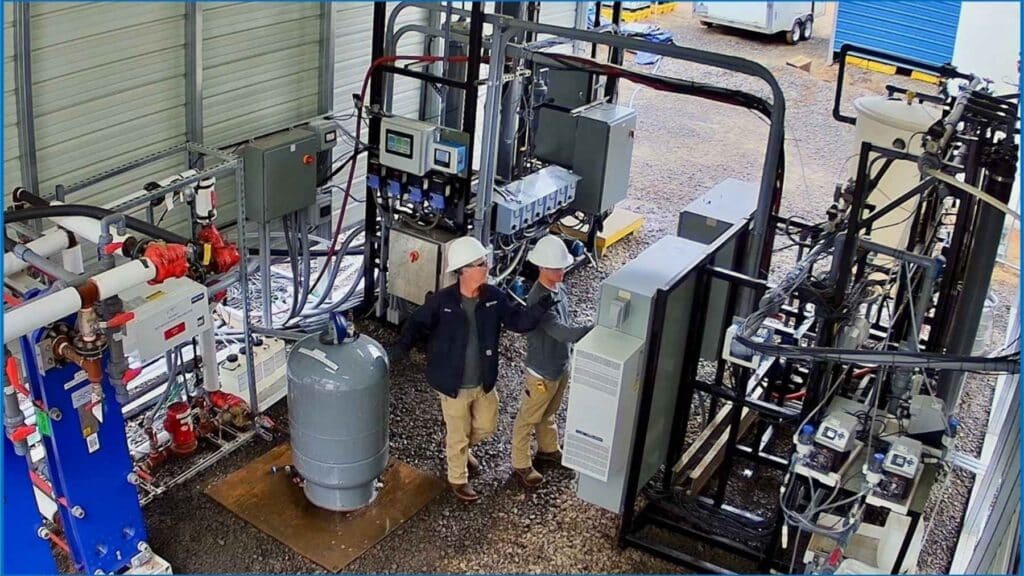
Evaporation ponds demand a desert and patience. South Arkansas offers pine trees, humidity and a brine industry that already owned the plumbing, which is an odd resume for a battery-metals hub, and a working one so far.
Buyer number two takes 8,000 tons a year
The LG Energy Solution volumes will come from a different and much larger site: the South West Arkansas Project, a greenfield plant planned near Lewisville, in the state’s southwest corner. Phase 1 carries a nameplate capacity of 22,500 metric tons (about 24,800 US tons) of lithium carbonate a year, and the partnership set out to pre-sell roughly 80 percent of that before committing construction money. Lenders like signed customers, so the offtake hunt has been running in lockstep with the financing talks. The partnership expects one additional, smaller agreement to close out the process.
“We have now secured a vast majority of the offtake agreements needed to move forward with our Project financing plans and a Final Investment Decision,” Standard Lithium CEO David Park said in the August 31 announcement. LG Energy Solution Procurement Center Leader Kang Yeol Lee framed the deal as part of moving both battery production and battery sourcing onto US soil, feeding the company’s EV and grid-storage cell lines.
An offtake is a contract, not a plant
Nobody at the Lewisville site is producing commercial lithium today. An offtake promises volumes from a plant that still needs its Final Investment Decision, and Smackover Lithium is targeting that FID before the end of 2026, with construction to start promptly afterward and first commercial production planned for 2029.
Smackover Lithium spent 2026 clearing the runway anyway. The US Department of Energy closed its environmental review of the site under NEPA with a Finding of No Significant Impact and attached no extra conditions. S&B Engineers and Constructors signed on to build the central processing facility, with engineering firm Hatch in support. Wood Group took the well-field side under a separate contract.
Both agreements carry limited notices to proceed, so early work continues while the money side closes. Three export credit agencies signaled interest in more than $1 billion of project debt on December 9, 2025, and a $225 million grant from the Department of Energy has been attached to the project since January 2025.
Washington has been paying to loosen Chinese chokepoints well beyond lithium, from tungsten to rare-earth magnets, and the Arkansas grant belongs to the same family of bets.
Standard Lithium also showed off what the Arkansas powder can do two weeks before the LG signing. On August 13, 2026, the company announced that Nano One, a Canadian battery-materials firm, had taken lithium carbonate from the South West Arkansas pilot plant and turned it into finished lithium iron phosphate battery cells. Jurassic seawater, filtered in Arkansas, ended up holding a charge in a North American cell. LG Energy Solution starts collecting its 8,000 metric tons a year once the Lewisville plant delivers, and Smackover Lithium has put that start in 2029.