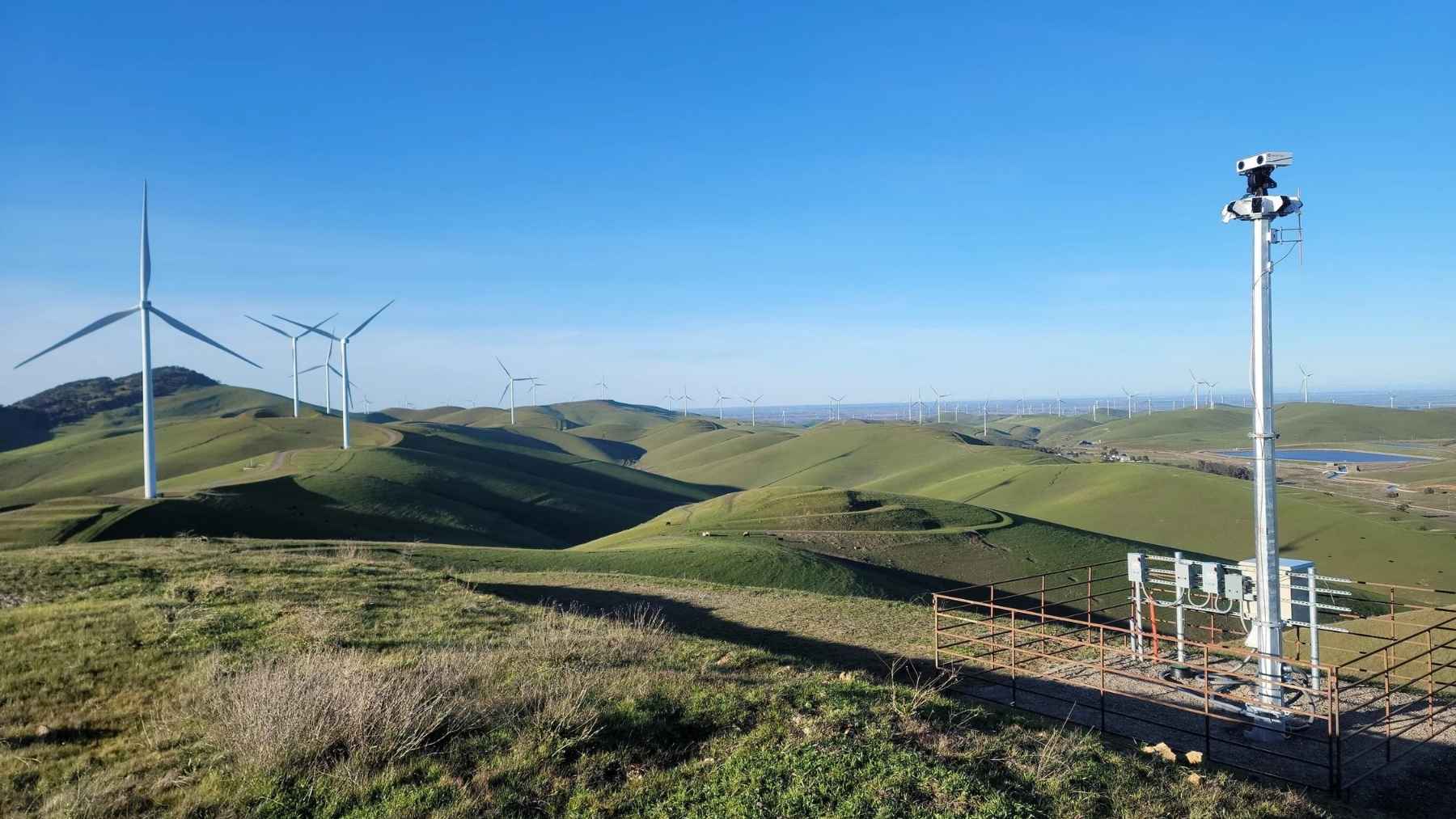

Wind turbines stop in storms. Once the wind passes a machine’s cut-out speed, the operator feathers the three blades and parks the rotor, because the loads above that point are more than the blades and the tower were built to carry. Vestas lists the aerodynamic brake on its V236-15.0 MW offshore turbine as three blades, full feathering. The biggest, most expensive machine on the site produces nothing on the windiest day of the year.
A Dutch startup put the opposite idea in the water on May 28.
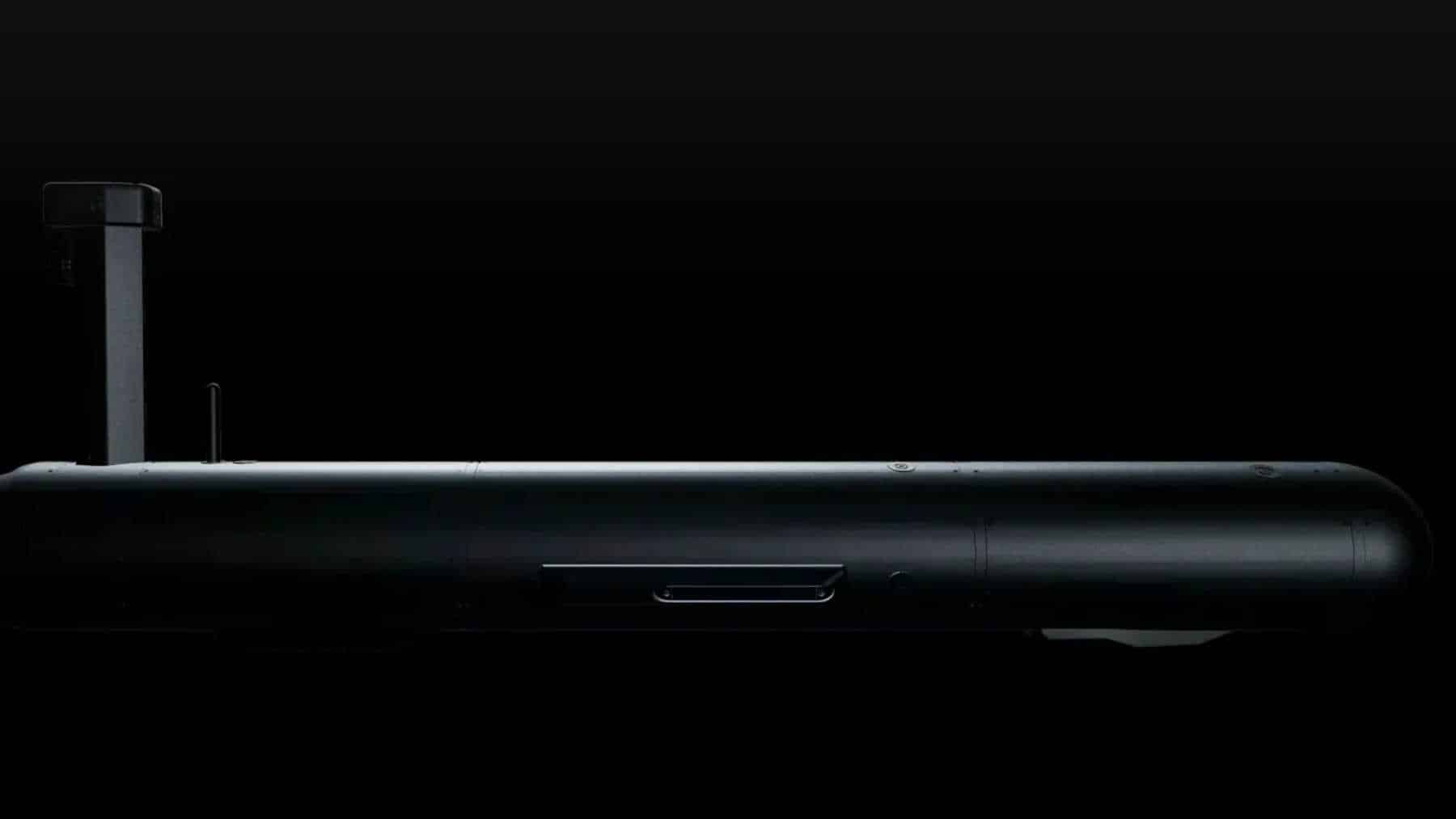
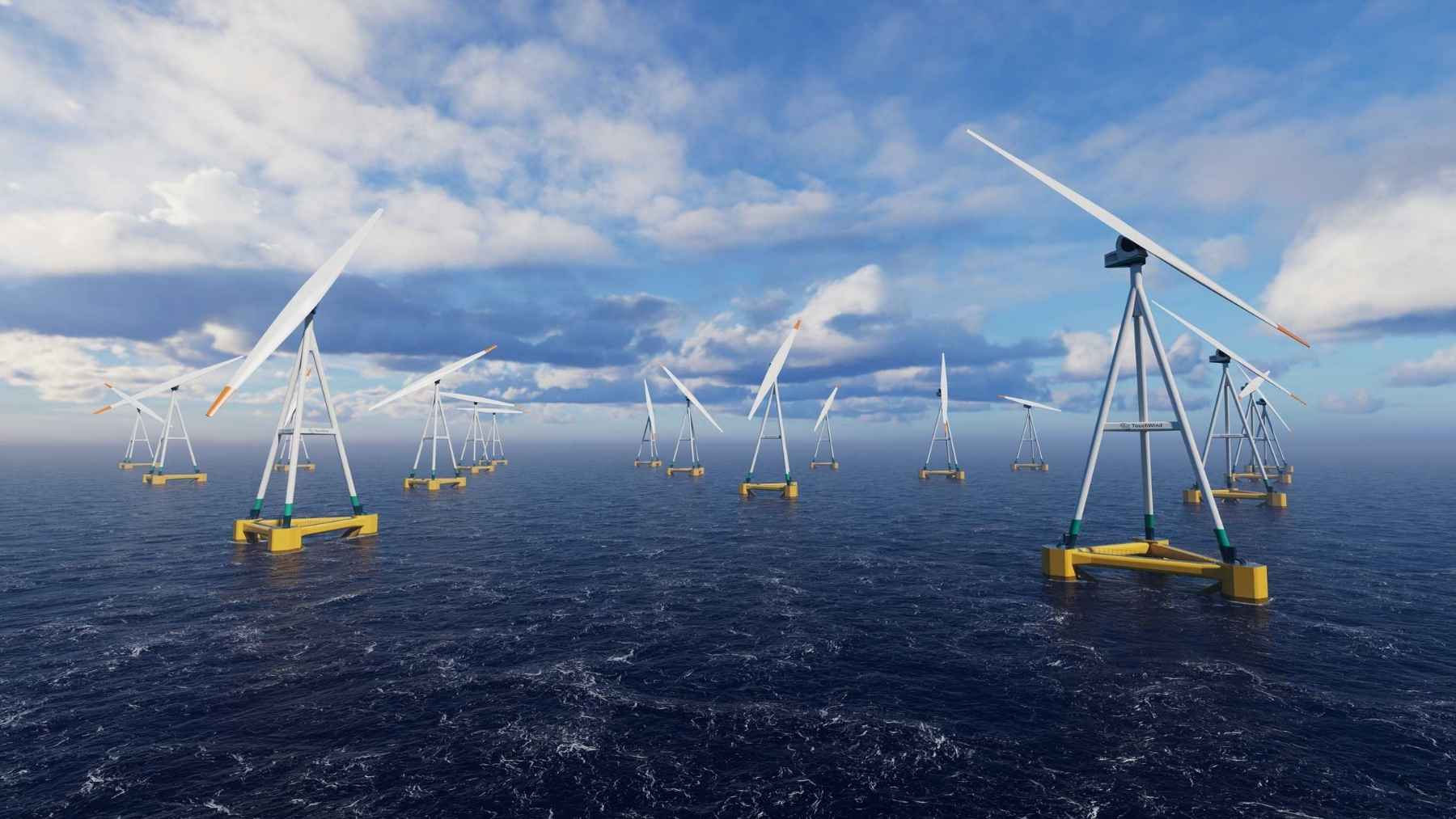
Its prototype hangs one rotor downwind of the mast on a float, 19.7 feet across (6 meters), built as a single piece instead of three blades on a hub. When the wind gets up, the rotor tilts back toward horizontal and keeps turning. TouchWind, based in Eindhoven, calls the far end of that movement the helicopter position. The company rates the machine at roughly 12 kilowatts and says the architecture is designed to keep producing in wind up to 155 mph (250 km/h).
That is the whole pitch. Everything after it is a test program.
The rotor answers a gale by lying down
TouchWind puts its rotor downwind of the mast, and that is where the tilt comes from. Aerodynamic force pushes the rotor backward rather than bending the tower forward, and the harder it blows, the further back the rotor goes. TouchWind says the tilt angle grows with wind speed and the structural loads fall as the angle opens.
Arnold Timmer, managing director of blade designer We4Ce, put the geometry this way in Renewable Energy Magazine in April 2025: “The rotor tilts upward, nearly parallel to the water surface at high wind speeds.”
One piece also means no pitch system. A conventional turbine rotates each blade about its own axis to regulate power and to feather it in a gale, which takes bearings, actuators and control gear inside the hub. TouchWind deletes all of that and lets the tilt angle do the regulating. Fewer moving parts a few hundred feet up in salt air is the argument, and it is a reasonable one.
It is also the part that has to survive contact with a real winter, which is what the machine in the lake is there for.
What is actually in the water is 12 kilowatts in a lake
The prototype is the TW6, named for the 6-meter rotor. TouchWind announced the installation on May 28, 2026, at Fieldlab Green Economy Westvoorne in South Holland. The water underneath it is the Oostvoornse Meer, and TouchWind’s own release describes the anchors as fitted to stimulate ecology in the lake. This is a test basin behind the coast, not the North Sea.
Steel and polyester lines run from the float to concrete deadweight anchors. Load shackles built into those lines measure the forces the mooring takes while the turbine runs. Coastruction supplied 3D-printed reef structures fitted to the anchors. A floating met mast, installed in April 2025, sits at the same site on a similar mooring without the shackles. MARIN, the Dutch maritime research institute, watched the shackle data during the operation so the lines could be tensioned correctly.
Testing runs through the end of 2026 and covers turbine performance, platform behavior and mooring loads. The project is called POWER, for POsitive Wake Effects of turbines with tilted Rotors, and the consortium behind it is TouchWind, Mitsui O.S.K. Lines, TNO, MARIN, Nidec and We4Ce, funded by the Netherlands Enterprise Agency.
The TW6 is rated at roughly 12 kilowatts, against 15,000 kilowatts for a Vestas V236-15.0 MW swinging a 774-foot rotor (236 meters).
Ten sets of blades went out for one campaign
We4Ce designed and delivered ten rotor blade sets for the TW6 tests, produced with mold specialist Kleizen. TouchWind describes the machine as “a 6 m rotor, ~12 kW prototype” running its one-piece tilting rotor principle.
Ten sets go a long way for one turbine. The POWER project explains the count: one machine floats on the lake and nine more TouchWind turbines stand near the shore for wake interaction studies. A tilted rotor is supposed to shove its wake downward instead of spreading it sideways, which would let a farm pack turbines closer together, and a row of nine machines on land is how you find out whether that holds outside a wind tunnel.
The blades are glass fiber in epoxy, laid up by vacuum infusion. We4Ce removed the bonding line from the nose of the blade to cut erosion risk, which matters more on a rotor that spends its life leaning into spray.
TouchWind’s proof-of-principle work, which started with a 1.2-meter rotor before scaling to the 6-meter one, reported a power coefficient of at least 0.25. The theoretical ceiling for any wind turbine is 0.593, the Betz limit.
A small boat can pull alongside it
On June 11, TouchWind published field-test results from Westvoorne on the least glamorous subject in offshore wind: reaching the machine at all. The turbine can be approached by small vessel for inspection, and it can be lowered when somebody needs to work on it.
Servicing a 15-megawatt offshore turbine means a crew transfer vessel and a climb into a nacelle carrying 379-foot blades (115.5 meters), plus a jack-up vessel or a floating crane whenever a major component has to come out. TouchWind’s alternative is to bring the rotor down to deck level and work at chest height.
The company puts the saving at about 10% on capital costs and 30% on operating costs. Both of those are TouchWind estimates for a commercial machine that does not exist yet.
TouchWind’s own site files floating wind under future project
TouchWind’s technology page lists two applications for the tilting rotor. Mobile wind turbines get three lines about compact transport, fast deployment and easier onsite maintenance. Floating wind turbines get two lines about loads and wake behavior, and a third that reads “Future project.”
The same page says the company’s primary focus today is accelerating containerized mobile wind energy. TouchWind Special Products, the branch handling that work, aims the same rotor at defense, disaster relief, remote industry and other jobs where a turbine has to arrive on a truck and start working.
The offshore roadmap is still there. The SUPER project is meant to design, build and test a 3-megawatt turbine with a 328-foot rotor (100 meters), chasing DNV prototype certification and TRL7 through roughly six months of onshore testing followed by about two years offshore. TouchWind has also talked publicly about a 15-megawatt version on a 787-foot rotor (240 meters), which it ties to future investment and regulatory support.
Nothing at Westvoorne is 3 megawatts.
Other people are attacking the same problem with completely different shapes. A Wyoming startup backed by Bill Gates runs wings around an oval track about 80 feet off the ground. A German company is taking orders for a 450-kilowatt kite that flies on a tether. One outfit has built a mast with no blades on it at all, and another a lighter floating platform carrying an otherwise conventional turbine. Britain, going the other way, has finished the turbines on phase one of the largest wind farm ever built, using machines roughly 850 feet tall.
Every one of those bets says the tower and the crane are what is holding wind back. TouchWind’s version is that a rotor should get out of the way of a storm rather than brace against it, and 12 kilowatts on a Dutch lake is what that argument looks like when somebody finally builds it.
TouchWind’s most recent post about the machine is dated June 11, 2026, and it is a clip of a small boat pulling up alongside a wind turbine. The Westvoorne program runs to the end of 2026, and the question it was funded to answer is whether nine tilted rotors in a row get in each other’s way less than nine conventional ones would.