
Someone at the Greenland Institute of Natural Resources is apparently a Star Wars fan. The factsheet for GREAT, the Arctic expedition the institute just led, carries the line “These are not the vents we are looking for!” That’s a pretty good Obi-Wan Kenobi joke if you spend your working life staring at the seafloor.
It also fits a little too well, because there’s an actual droid in this story. AQUARIUS, the European Union-funded program that paid for the trip, said on August 31 that GREAT had wrapped up 18 days working in the Arctic aboard the Celtic Explorer, Ireland’s national research ship. The ship’s back in Killybegs now.
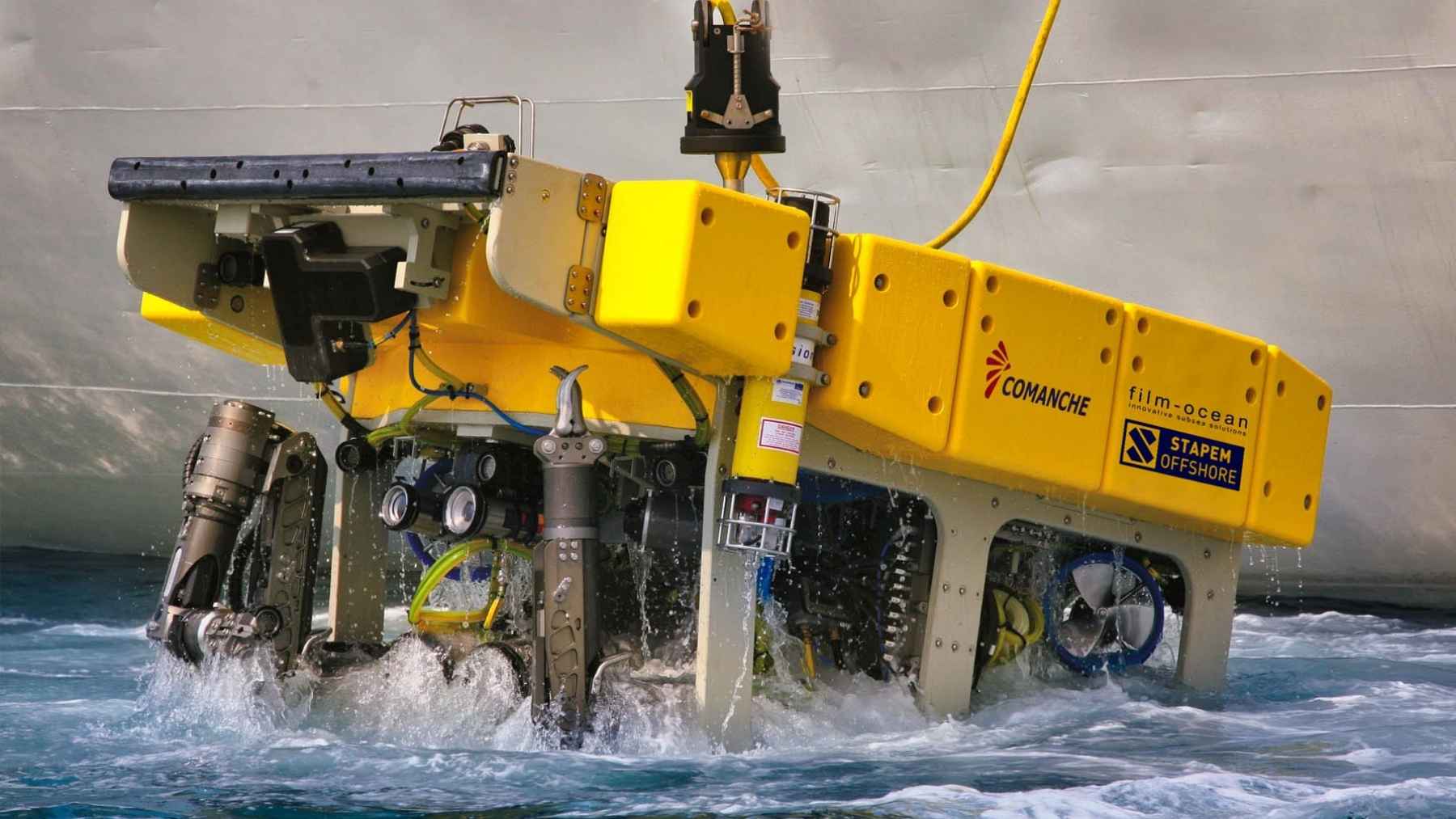
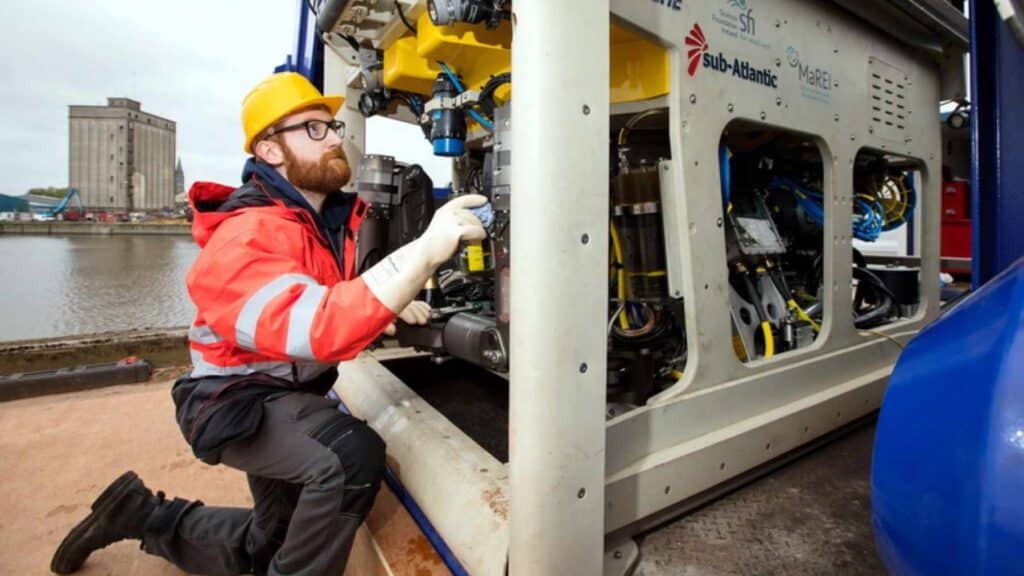
The droid belongs to the University of Limerick. It’s an ROV, short for remotely operated vehicle, and that’s more or less an underwater drone on a cable that a pilot flies from the ship. The photos the program posted show the science team watching one of its dives from the control room. Limerick calls it Étaín. Underneath everything Limerick added, it’s a Comanche, a model built by Forum Energy Technologies, and it weighs 2,491 pounds (1,130 kilograms) on Limerick’s spec sheet.
GREAT stands for Greenland Spreading Zone: Exploring Extreme Habitats in Arctic Seamounts and Hydrothermal Vents, which doesn’t exactly roll off the tongue. A spreading zone is a seam where two of Earth’s tectonic plates are pulling apart. Seawater seeps down into the cracks, gets heated by the rock underneath and comes back out hot and loaded with dissolved minerals. Those outlets are hydrothermal vents, and the food chain around them runs on chemicals instead of sunlight. That’s where the extreme habitats in the name come from.
According to the factsheet, the plan put the ship in the southern Greenland Sea, around a cluster of seamounts called Logi Ridge with both known and possible vents on it, not far from the Vesteris Seamount and some sponge and coral gardens. AQUARIUS bills GREAT as the first expedition to Arctic vents and seamounts with a Greenland institution running it. Diana Krawczyk of the Greenland Institute of Natural Resources led it, and it pulled in scientists from around Europe.
AQUARIUS hasn’t published how deep the robot went, how many dives it made or what anyone found down there, and I’m not going to guess. Limerick’s listing in the program’s catalog also caps users at 14 days with the robot, so I wouldn’t read those 18 days as 18 days of diving.
It rides down in a steel garage
If you picture an ROV hanging off the back of a ship on one very long extension cord, you’re about half right. Étaín can work that way, and on its free-swimming tether Limerick rates it to 1,969 feet.
To go deeper, it uses a garage. The crew lowers a stainless steel cage on a cable more than a mile long with the robot parked inside, and once it’s down there, the robot drives out on a 1,312-foot tether of its own. Set up that way, it’s rated to 6,562 feet.
So why bother with the cage?
Mostly because the ship doesn’t stop moving. It heaves up and down on the swell, and a long, heavy cable gets pushed sideways by the current along its whole length. Hang a robot off the end of a mile of that and it’ll get yanked around with every wave. Put a heavy garage on the end instead and the garage soaks up most of that abuse, while the robot’s only towing a short, light tether behind it. It’s the same reason you’d rather do delicate work at a desk than on a trampoline.
Getting it back in the garage apparently takes some finesse, since the robot’s a tight fit in there. Limerick’s engineers have even published research on getting it to steer itself back inside using cameras. The program hasn’t said whether the GREAT team ran Étaín out of the garage or on the free-swimming tether.
It’s electric, apart from the arms
The University of Limerick spec sheet calls Étaín a “fully electric Observation Class ROV,” while the university’s robotics center lists it as a lightweight work-class ROV and the AQUARIUS catalog just says work class. Observation-class ROVs are basically flying cameras with lights on them. Work-class ROVs are the big hydraulic brutes offshore crews use to turn valves and cut things. Étaín’s somewhere in between. Frankly, that’s a pretty sensible spot for a science robot.
Seven electric thrusters do all the moving around, and the spec sheet rates each one at 220 pounds of thrust. The ship sends power down the cable at 3,000 volts. Étaín gets 35 kilowatts in all, which is about 47 horsepower, to run the thrusters, the lights, the cameras, the sonar and everything else bolted to it.
The arms are the exception. Limerick lists a 10-kilowatt hydraulic power unit on the robot, which is essentially an electric pump pushing oil at about 3,000 psi, and it runs two Schilling Orion 7P manipulator arms. The program’s catalog says the arm setup varies, so I can’t tell you for sure which pair went north.
How do you drive a robot arm from a ship, anyway?
You basically puppet it. According to Schilling’s datasheet, the 7P comes with a miniature replica of the arm, and whatever the pilot does with the small copy, the real arm does too. Stretched all the way out to about 5 feet, it’ll still hold 150 pounds. It’s a very expensive claw machine, except the prize is whatever the biologist standing behind you wants.
The pilot doesn’t have to fight the current the whole time, either. Limerick’s robotics center lists hands-free navigation and station keeping, which means Étaín can hold itself in one spot while someone’s working the arms. GPS doesn’t reach underwater, so the robot keeps track of its position with an inertial navigation unit and a Doppler sonar that measures its speed over the bottom. The AQUARIUS catalog says Limerick’s own software, OceanRINGS, can run it anywhere from fully manual to fully autonomous, including driving itself to a list of coordinates on the seafloor. That’s pretty clever for a robot on a leash. Some underwater work robots skip the leash altogether, like the 9,260-pound American drone that swims out on its own battery and runs its own arms.
The whole setup weighs 22 tons
You might remember Deep Discoverer, the robot NOAA just used to sample metal lumps off American Samoa. Étaín’s 2,491 pounds is about a quarter of Deep Discoverer’s 9,700, and Étaín’s rated to 6,562 feet against 19,685 for NOAA’s robot.
I’d argue a robot this size is a good match for a project like GREAT. Limerick’s catalog listing says the system can go overseas as long as someone covers the shipping, and it comes with a pilot and two technicians. So a team led out of Greenland can borrow a deep-sea robot plus the people who fly it, put them on an Irish ship through the same program and head north.
That doesn’t mean it travels light. The AQUARIUS catalog lists a total system weight of about 22 tons (20,000 kilograms). The same listing gives a weight in air of 6,614 pounds (3,000 kilograms), against the brochure’s 2,491. My guess is that figure includes the garage, but neither document spells that out.
AQUARIUS posted its wrap-up of GREAT on August 31, and Étaín’s catalog listing still has it down as available every month of 2027, pilot included.