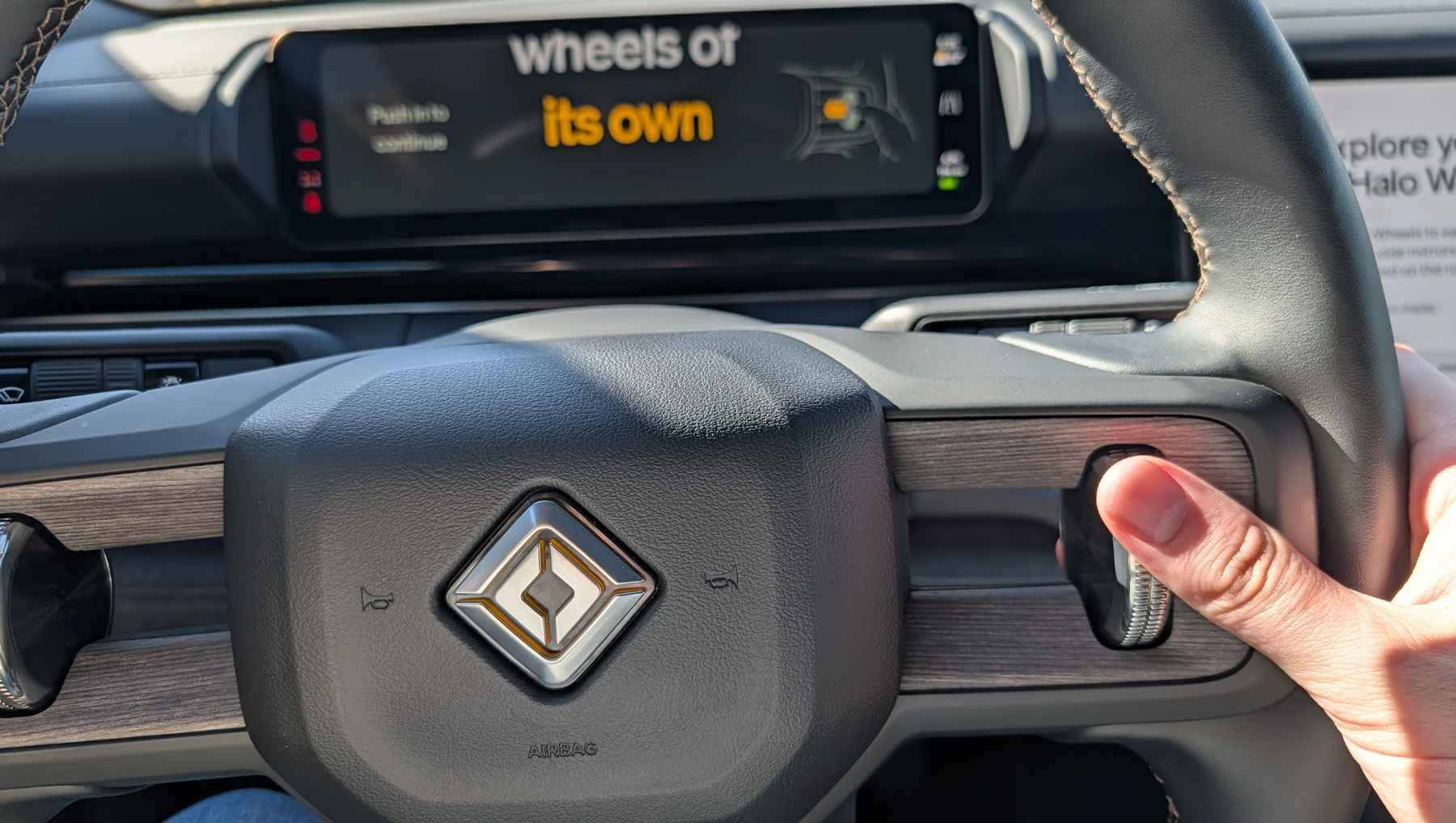

One of the standout features on the Rivian R2 is the pair of “Haptic Halo Wheels” nestled inside the vehicle’s steering wheel. The two dials essentially replace most of the control buttons you would usually find on the dash, wheel, and door.
How do they do that? Well, Rivian’s AI helps to an extent. It can use context to make sure you’re controlling what you want to control with the dials. Then you have the central touch screen which allows you to pick certain options before literally dialing it in. There are some defaults too, such as the right dial controlling music if nothing else is really happening.
The wheels themselves are pretty versatile. You can control them through either side of the steering wheel, roll them forwards and backwards, push the wheel towards or away from you, and nudge the dial to the left or right. That amount of input is totally necessary given the amount Rivian expects the Haptic Halo Wheels to manage. As the name suggests, the wheels also provide haptic feedback, via heavy feeling clicks and the occasional vibration.
I recently got hands on with the Haptic Halo Wheels, both during a tour of the new Rivian R2, and for several hours while driving the new EV. Here’s what I managed to take away from the experience.
The Rivian R2’s dials feel very high quality
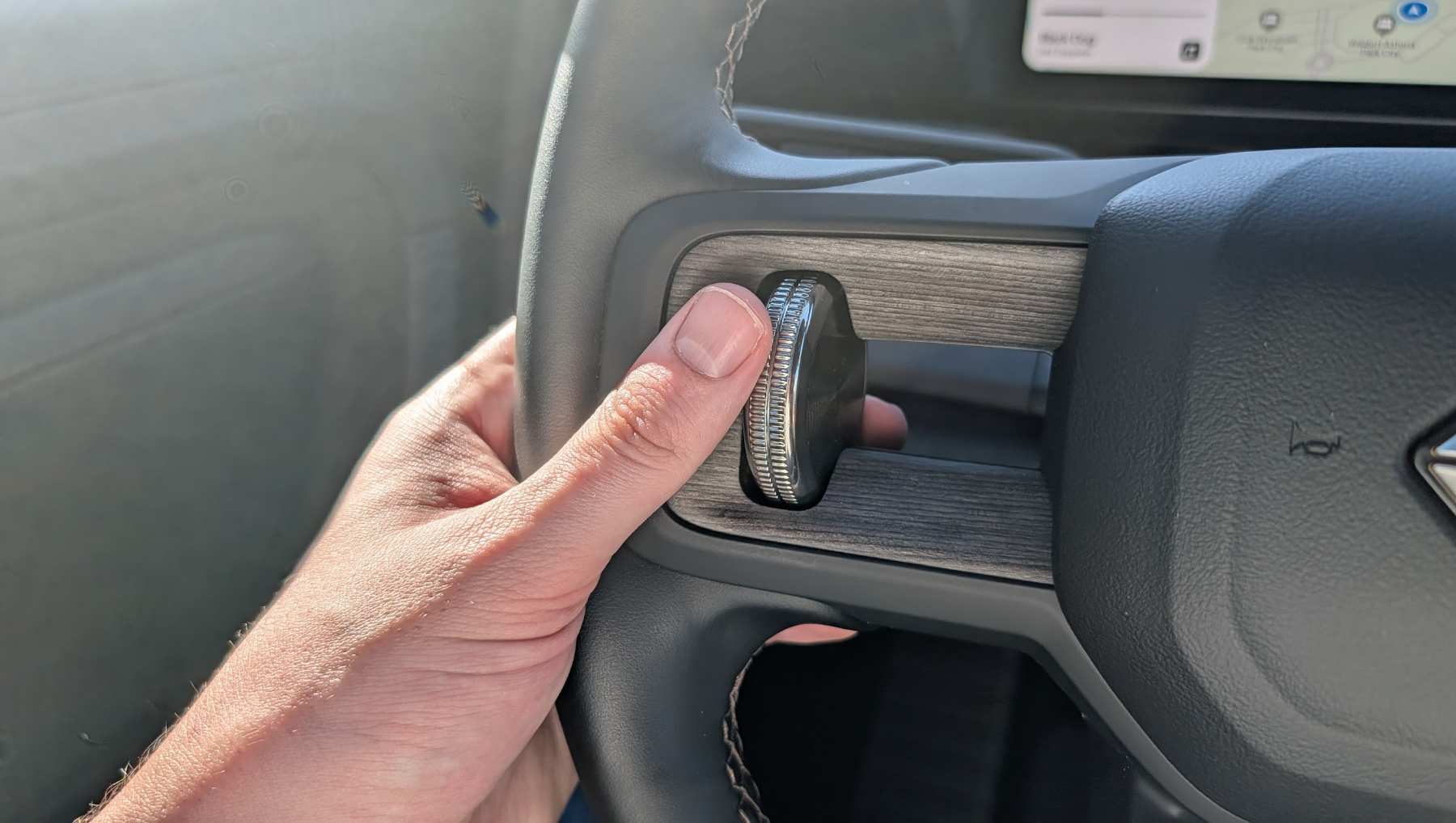
The wheels replace a lot of buttons. Basically everything on the steering wheel, almost everything on the door, and maybe one of the stalks behind the wheel at the very least. On a vehicle like the Rivian R2, which has a surprisingly low starting price, all of those buttons would be made from some kind of plastic.
Plastic, no matter what the quality, always feels a bit cheap. And actual cheap plastic, the kind an OEM uses when cutting costs, feels worse than anything. I’ve long argued that touch is as important a sense as anything else. And there’s nothing that will make you subconsciously hate a car more than touching something unpleasant repeatedly every time you get in it.
That’s not the deal with the Haptic Halo Wheels. They’re both made from what seems to be solid pieces of milled metal. They feel substantial, and of high quality. If you do use them every single day, your thumbs will be happy at least.
It makes some adjustments on the Rivian R2 a lot easier
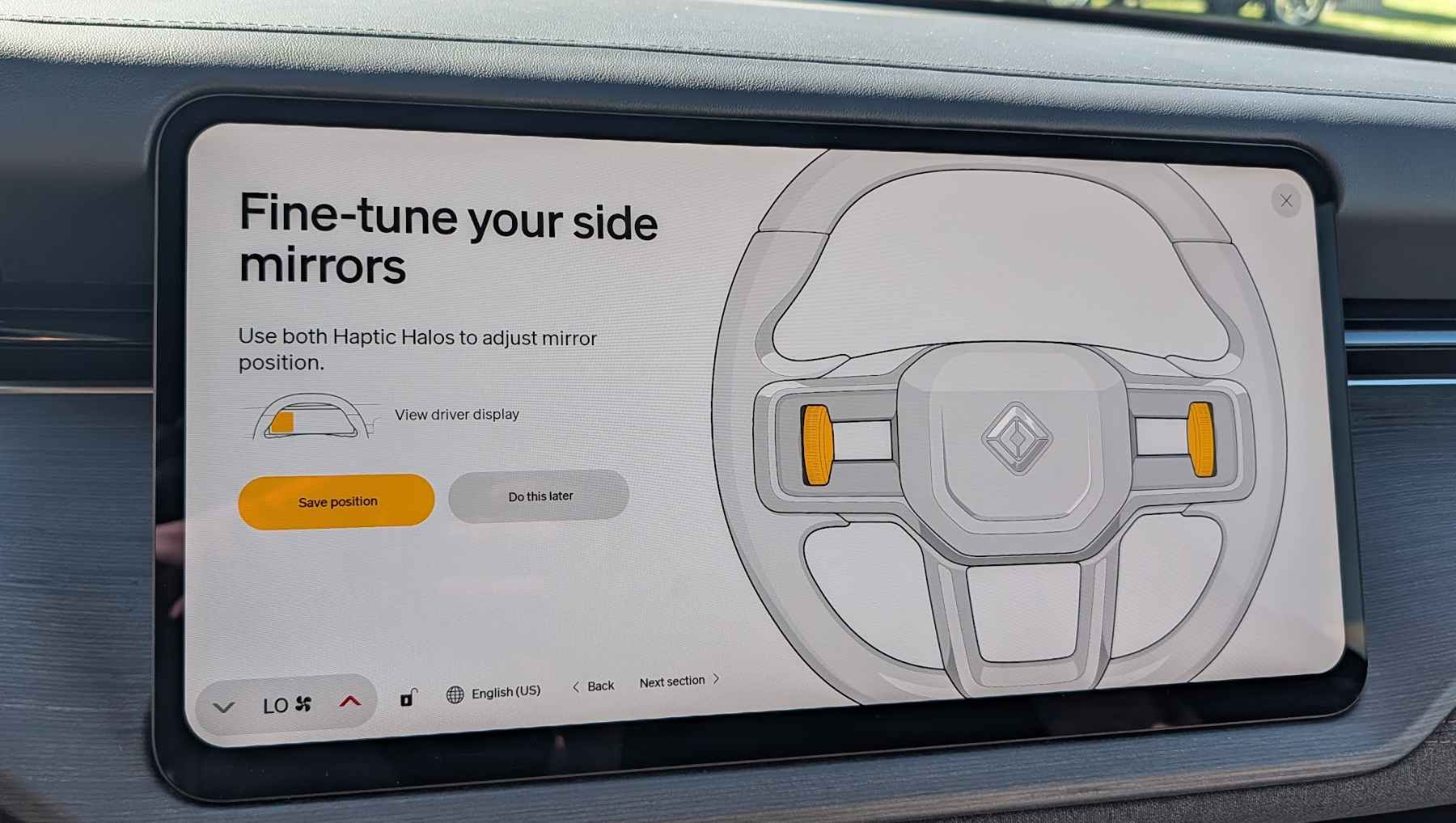
The wheels can be used to adjust all manner of things, from volume to the vehicle’s hands free self driving settings. But they really stood out when it came to wing mirror adjustments. When you’re adjusting your mirrors, each wheel corresponds to an individual mirror. So the right wheel adjusts the right mirror, and the left adjusts the left.
It’s really easy to dial in your perfect mirror angle with the Haptic Halo Wheels. Each movement you make on the wheel in question translates perfectly to the mirror. Need to shift the angle slightly? Scroll the wheel up or down. Want to take things left? Nudge the wheels in that direction.
If the other wheel-based commands felt as natural, which they may in time, then the Haptic Halo Wheels would be a major game changer.
There is a learning curve
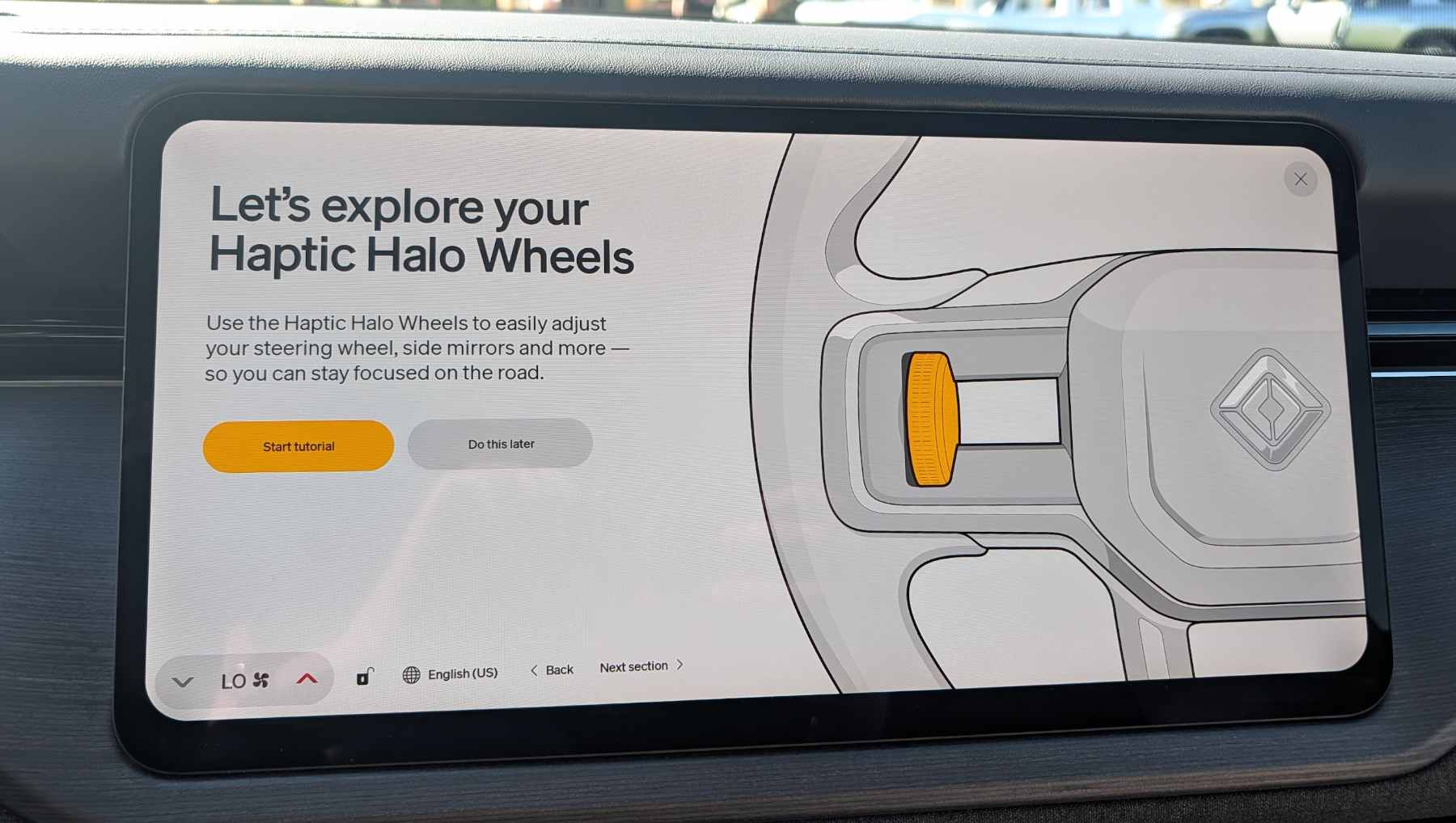
The first drive event consisted of a brief vehicle tour on the first evening, during which I received around 10 minutes of hands on time with the infotainment system, and a longer drive the next day. This was not enough time to get to grips with the Haptic Halo Wheels.
Some parts did get easier, like using the wheels to adjust the volume or skip songs when listening to music. But it wasn’t enough time for my use of the wheels to get particularly precise, nor was it enough time to explore everything the wheels do.
Rivian does have a tutorial which helps you set various parts of the vehicle up and explains how the wheels work, but it will take a while for your brain and body to adapt to the new control system. Some things could change on Rivian’s end too. The company is a big fan of over the air updates, so this may improve in time.
People will either love it or hate it
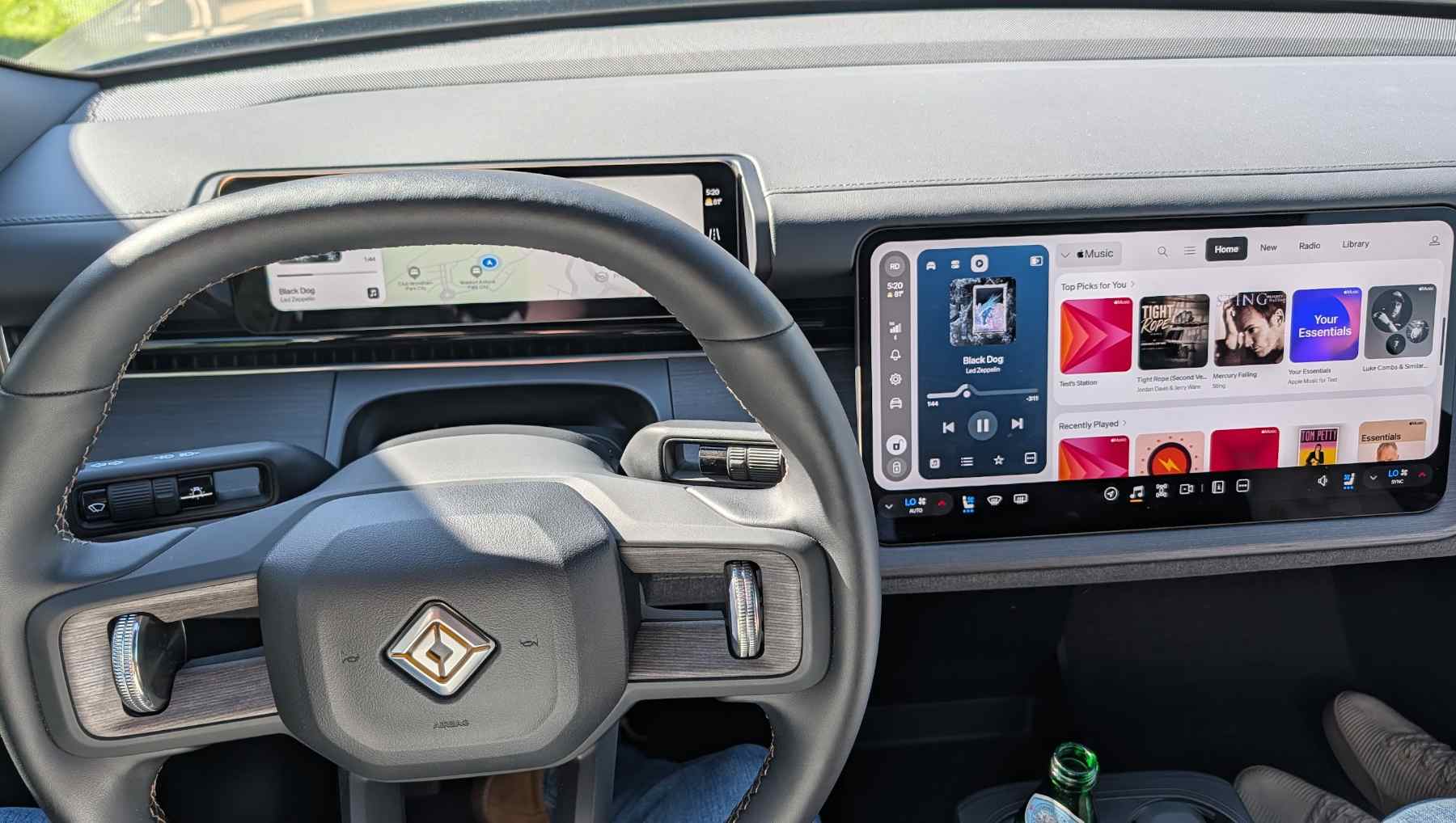
After getting hands on with Rivian’s Haptic Halo Wheels, I can tell there isn’t going to be a middle ground with them. People are either going to love this feature, to the point they look down on vehicles that don’t have it, or utterly despise Rivian’s new controls.
Rivian did take a gamble here, but having experienced the new control system, I think it’s a smart one. It’s allowed the company to do something unique, and cut down on the number of buttons in a vehicle, without just shifting everything to a touch screen.
That innovation, and concentration of quality, sums up the Rivian R2 on the whole. It’s a smartly designed vehicle that takes a few risks. But it has to given the segment it operates in.