
Desalination in California usually ends in a fight. Somebody proposes a plant on the coast, the plant needs a huge intake and somewhere to put the leftover brine, and then everybody spends a decade arguing about it in hearing rooms. The last serious attempt, in Huntington Beach, drew opposition from more than 100 groups before the Coastal Commission killed it in 2022.
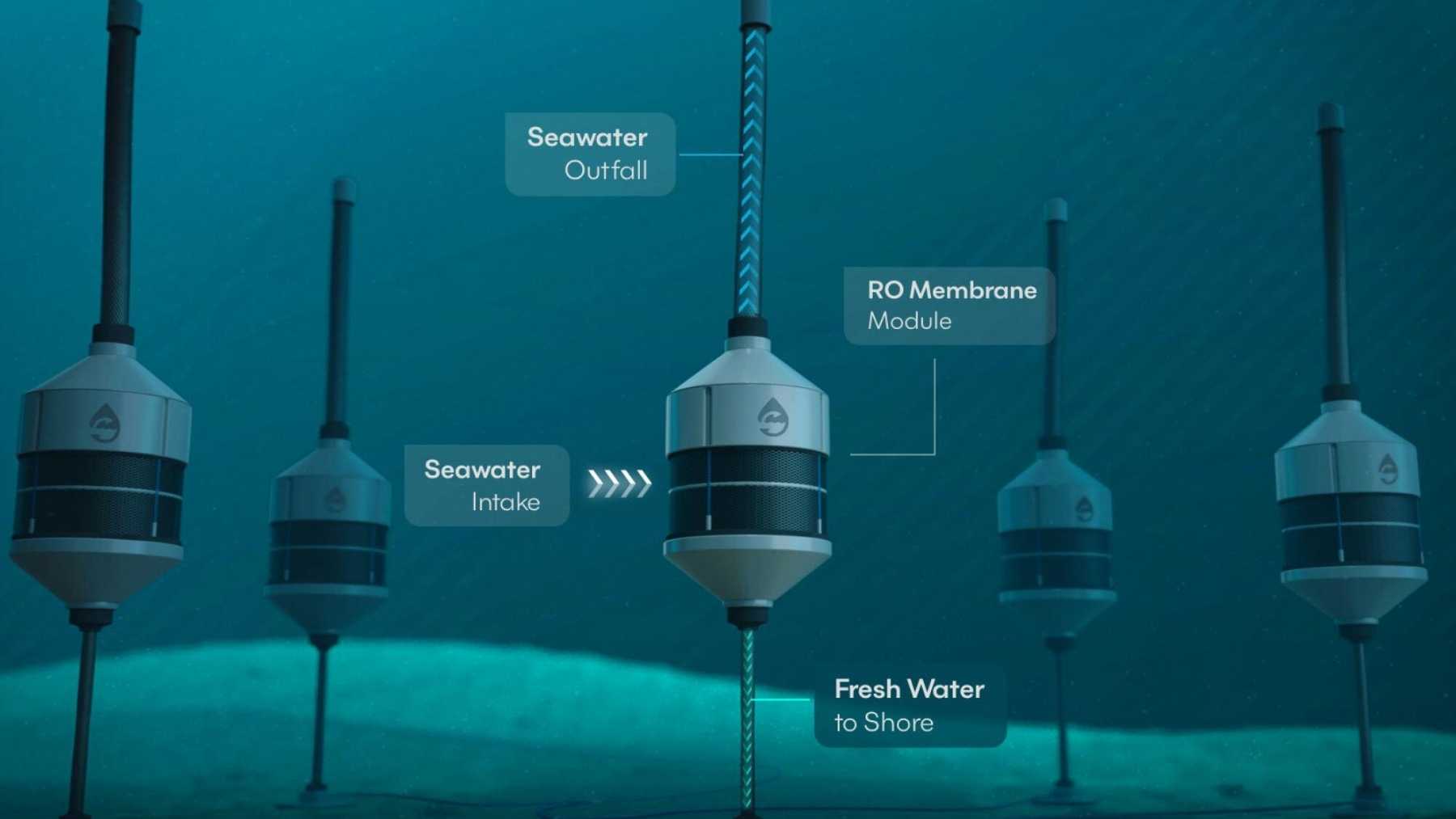
A Menlo Park company called OceanWell has been selling a different pitch. Skip the plant. Put the filters inside a sealed pod, drop the pod 1,300 feet into the Pacific, and let the weight of the water overhead do the part that normally eats all the electricity.
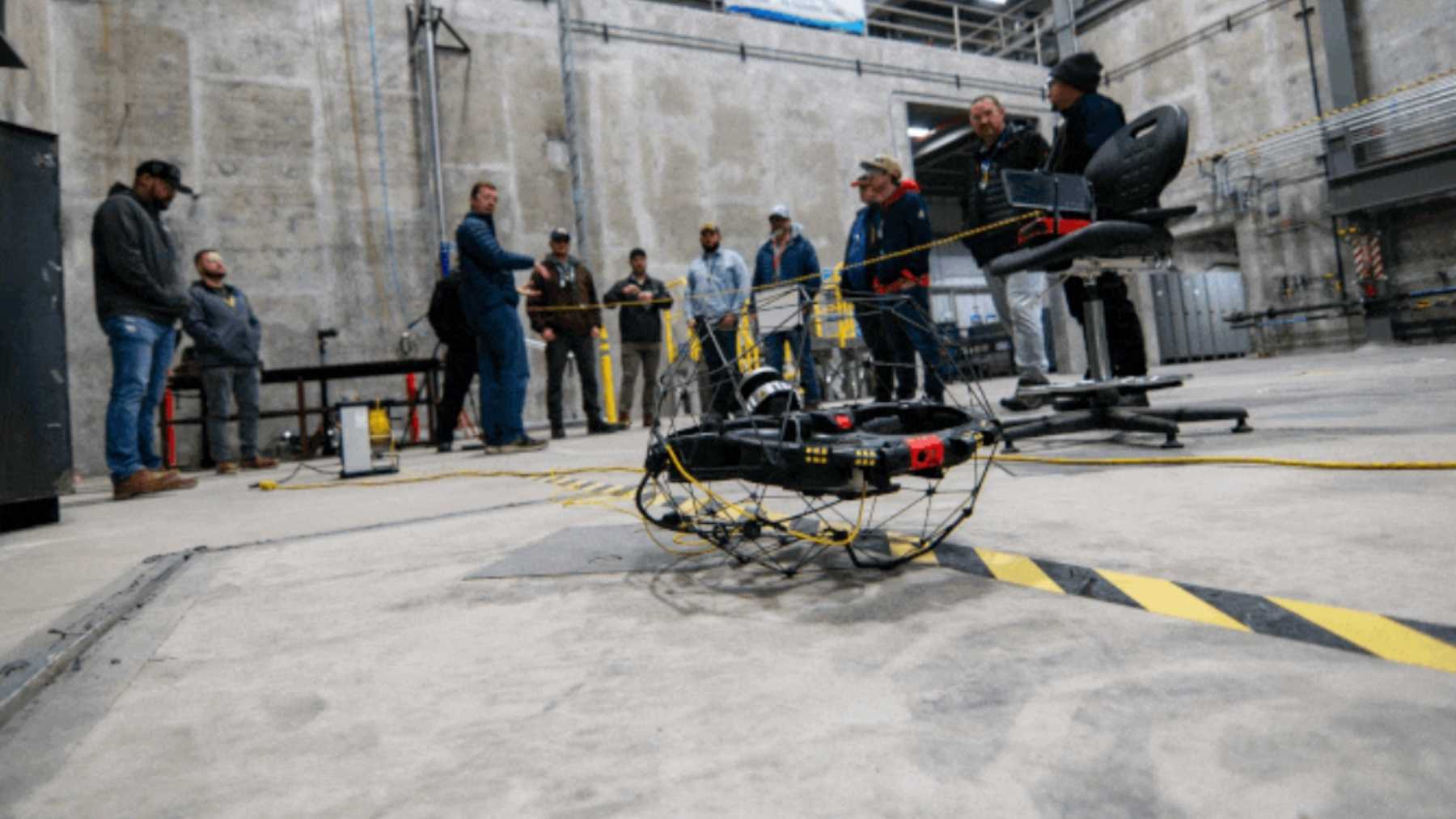
That pitch just got its first public audit. On June 2, Las Virgenes Municipal Water District released the report on a pod it ran inside one of its own reservoirs, and the same technology is due in Santa Monica Bay this fall.
The report proves the thing California regulators have been blocking desalination over for twenty years. It does not prove the thing that decides your water bill.
The ocean supplies the pressure, but not the whole job
Reverse osmosis is simple in principle. You press salty water against a membrane hard enough that fresh water squeezes through and the salt stays behind. On land, “hard enough” means a bank of high-pressure pumps, and those pumps are the biggest line on the power bill.
Go down 400 meters and the pressure is already sitting there for free. Every 33 feet of seawater adds roughly another atmosphere, so at pod depth the ocean leans on the outside of the membrane at something like 40 times what it does at the surface.
OceanWell’s move is to hold the inside of the pod at a lower pressure than the water around it. Seawater flows in on its own and gets pushed through the membranes with no pressure pump doing the shoving.
The pumps do not vanish, though. The district’s public report on the pilot is blunt about it: the fresh water still has to be pumped up to shore, and that pumping is what maintains the pressure difference across the membranes and keeps the process running at all. The 40% energy saving OceanWell projects is measured against that, not against zero.
The second half of the pitch is what does not come back up. The pods pull only a small fraction of fresh water out of the seawater they take in, so what is left is a mild brine rather than the concentrated stream a coastal plant discharges. It gets released well above the seafloor and disperses in deep water.
The test everyone is quoting ran at 50 feet, in a lake
The detail that got lost in most of the coverage is where the pod actually sat. The pilot ran in the Las Virgenes Reservoir in Westlake Village, about 50 feet down. Not 1,300.
That matters twice. At 50 feet there is almost no free pressure to borrow, so the pod’s own pumps were doing the job the ocean is supposed to take over later. And the reservoir holds treated drinking water from the Metropolitan Water District, which typically ran above 320 parts per million of dissolved solids. Seawater is around a hundred times saltier than that.
So the pilot’s headline energy figure, roughly 1 kilowatt-hour per cubic meter, is not a seawater number, and the report never presents it as one. What it says is that the figure closely matched what the engineers had predicted for a pod running at 50 feet. The pumps behaved. The model was right about the pumps.
The 40% saving stays a projection. Las Virgenes says as much in its own document and adds that the result will need validating under deep ocean conditions.
What the pilot did nail down is that the hardware keeps working. Across a three-month endurance run the pod produced more than 150,000 gallons at 93% uptime, with scheduled maintenance every two or three weeks accounting for all the downtime. Mark Golay, OceanWell’s director of engineering projects, told Engineering News-Record the nine-month pilot “exceeded expectations.”
Water quality was the standout. The filtered water generally came out below 50 parts per million of total dissolved solids, against a World Health Organization drinking limit of 500. At the start of the trial it was under 10.
A diving bird hunting fish next to a running intake is the finding that matters
California has not been blocking ocean desalination over energy. It has been blocking it over what the intake does to sea life. Two words carry that fight: impingement, meaning animals pinned against the screens, and entrainment, meaning everything small enough to get pulled inside.
OceanWell’s answer is to draw water in slowly enough that nothing ends up in a current it cannot swim out of. To check, engineers put an ROV and cameras on the pod and filmed it working.
The footage shows fish swimming around the screens during normal operation and during cleaning cycles without sticking to them. At one point a grebe, a diving freshwater bird, is filmed hunting a school of fish right next to the running equipment. That is not a marketing render. It is in a public agency document, and it is the most persuasive thing in the file.
The microscopic side is more interesting technically. Anything small enough to slip through the half-millimeter screen openings gets caught by internal prefilters, then flushed back out by an automated backwash. Researchers strapped a fine mesh net over the discharge and put what came through under a microscope. Live algae, diatoms and copepods.
Conventional intakes are permitted on the assumption that everything entrained dies. The report notes that some mortality still turned up here and that the design needs refining. Even so, “some” against “all” is the whole regulatory argument.
Santa Monica Bay this fall is where the pressure claim gets tested
Next comes a pod lowered from the back of an anchored boat into deep water in Santa Monica Bay, scheduled for the fall according to ENR. The California Coastal Commission has already signed off, and the EPA issued the federal discharge permit for the ocean trials in August 2025, effective that September and running to 2030.
That permit is worth a look if you want the unglamorous version of the story. It authorizes fresh water and brine discharge at up to six sites in federal waters five to fifteen miles offshore, from Morro Bay down to Oceanside, at depths between 400 and 500 meters, for a total of about a month of testing.
After that comes a pod anchored in place at depth for roughly a year, gathering data. Only then does anyone build the real thing.
The real thing is Water Farm 1, about 4.5 miles off Malibu, scaling from 10 million gallons a day to as much as 60. Seven water agencies led by Las Virgenes are behind it. They are funding a feasibility study on the onshore pipework, they have hired engineering firm HDR to design the conveyance, and they are assembling a joint powers authority to hold it together. OceanWell targets delivery by 2030; ENR reports the group is aiming to be operating by around 2028.
A Stanford engineer thinks the savings get eaten somewhere else
Megan Mauter, an associate professor of civil engineering at Stanford, is not sold, and her objection has nothing to do with the physics. She told Heatmap News in May that whatever a subsea system saves on energy gets handed back elsewhere in the design: skids nobody mass-produces, subsea installation, mooring, pipelines to maintain all the way to land, and “significantly higher maintenance burdens in an open ocean environment.”
She also raises the awkward Californian problem. Desalination costs a fortune to build and the state only badly needs it in drought years. Carlsbad, the largest plant in the country, currently has surplus water it is trying to sell to Arizona and Nevada.
Which is its own strange loop. California agencies signed an agreement on June 3 with counterparts in Arizona and Nevada to explore trading desalinated and recycled supply through existing Colorado River infrastructure, ENR reported. The same drought that makes a Malibu water farm look necessary is what makes Carlsbad’s leftovers worth money.
OceanWell is also not alone down there. Norway’s Flocean, spun out of subsea pump specialist FSubsea, has already logged more than a year of testing in the actual deep ocean, a stage OceanWell has not reached. And the field keeps producing stranger ideas, including a black metal panel that desalinates seawater with nothing but sunlight, no pumps and no membranes at all.
What Las Virgenes actually bought with this pilot
Credibility with the agencies that decide whether any pod ever goes in the water off Malibu. The district is already using the data to push for changes to the 2015 California Ocean Plan, and Mauter’s read is that permitting, not engineering, is the binding constraint on all of this.
The physics were never really in doubt. Membranes and pressure differentials are old technology, whether you are running them backwards to make electricity in Fukuoka or hanging them off a mooring line in the Pacific, and the ocean has been sitting at 40 atmospheres this whole time.
Whether 1,300 feet of free pressure saves more money than a mooring, a pipeline and a boat full of technicians costs is a different question, and nobody was ever going to answer it in a reservoir. The same goes for every other machine currently being talked into the sea, from wave-powered buoys running AI chips to seabed data centers. That answer starts arriving off Santa Monica this fall.
 @larryblue ROOKIE2 months ago