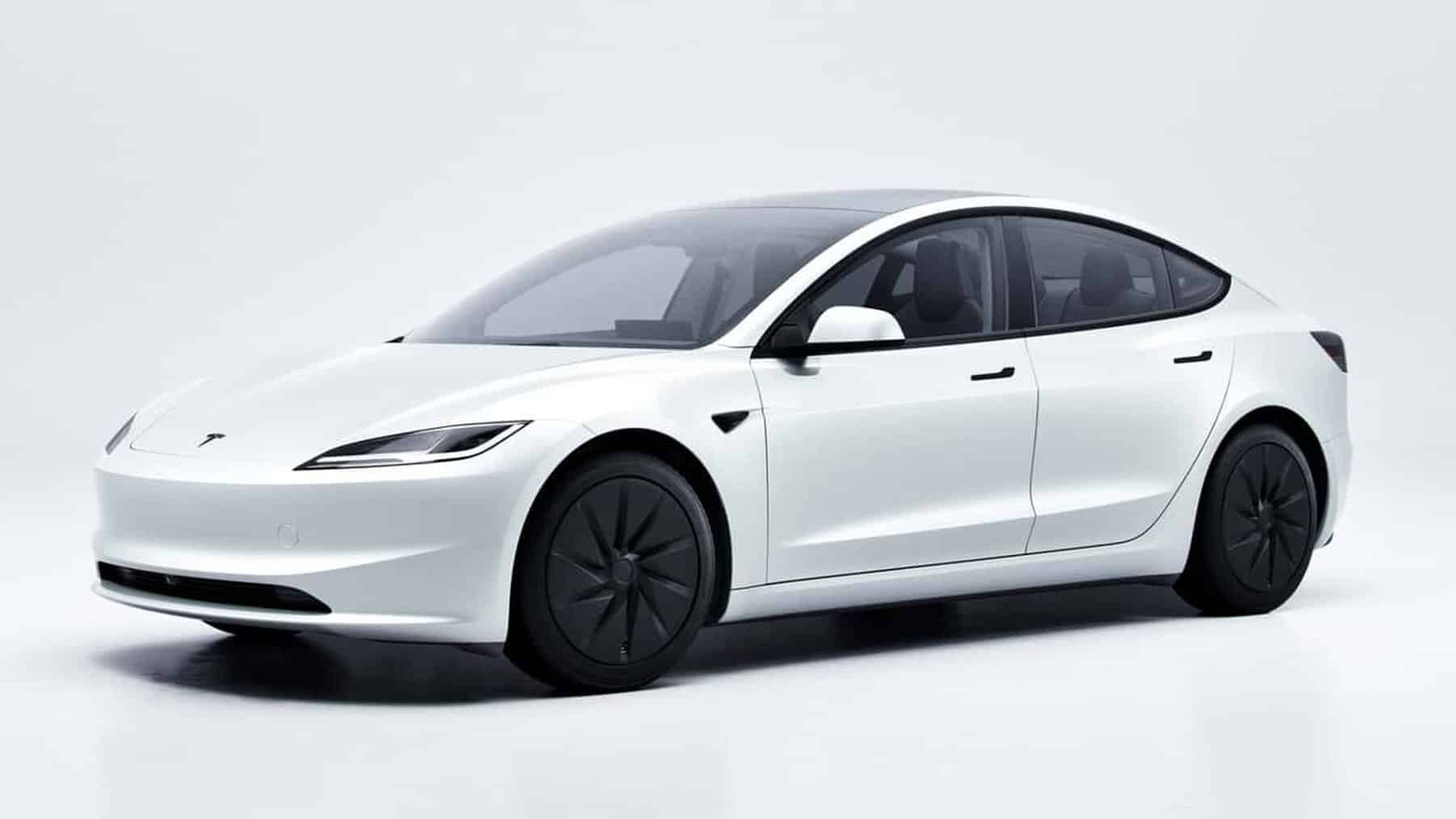

EVs have come a long way in the last few years. Comparing a 2012 Nissan Leaf to its 2026 equivalent is like comparing a gas powered ride on lawnmower to a Honda Civic. Actually, that’s a silly analogy, most people wouldn’t be embarrassed if they were spotted riding a lawnmower in public.
Still, EV tech is still advancing at breakneck speed but there are two major breakthroughs on the horizon that could turn the platform from a divisive niche into the default mode of transportation. Apparently, both pieces of tech are something we could see within the next five years and could send your range north of 1,000 miles while also making charging free.
Everyone’s talking about solid state batteries
You may have heard a lot about solid state batteries lately. Donut Labs has been in the news a lot, publishing test results and claiming it has built the first viable solid state automotive battery. There’s also a recent story claiming all of that is a lie, and a former executive is suing the company in a Finnish court because of that. Several Chinese companies are also on the verge of solid state tech, major OEMs like Mercedes and Toyota are pretty close by all accounts, and some “semi solid state” batteries are also on the market.
So what’s the big deal with a solid state battery? Well, if they are what we think they are, modern lithium-based batteries will look like a leaky AAA in the back of an early 90s GameBoy by comparison.
Solid state batteries pack twice the energy density of their lithium-ion counterparts. This gives manufacturers a choice. They can pretty much double the range of an EV, which could see some vehicles crack 1,000 miles on a single charge. Or they can halve the weight of the battery pack, enhancing performance, boosting efficiency, and likely extending range by a significant amount due to the weight loss.
They’re also more durable and safer than lithium batteries. They can operate efficiently at colder and hotter temperatures, which makes them suitable in a wider range of climates. Solid state batteries can tolerate more damage too. A piece recently criticized Donut’s battery for only managing to hold 50% of its charge after sustaining catastrophic damage, which destroyed its vacuum seal amongst other things. In the same circumstances, a lithium battery would have caught fire.
Then there’s the number of charging cycles a solid state battery can apparently handle. While we seem to have underestimated what lithium batteries can do, and EV cells are lasting far longer than expected, solid state still outshines them. On the low end, a solid state battery may be able to handle 10,000 charging cycles. That’s around five times what a current EV battery is rated for.
Some designs can allegedly handle ten times more charging cycles than that. So when solid state becomes viable, an EV battery is going to outlast the car it’s in. You’re probably looking at 30 years of use on the more conservative side, and some batteries staying good for over a century on the extreme end.
Fusion power should make electricity cheap everywhere
Scientists have been chasing fusion power for decades. If you don’t know what that is, it’s basically how the sun works. Hydrogen, the most common element in the universe, is fused into helium with the excess energy produced by the reaction being used to generate electricity.
While the notion of shoving a little sun in the middle of a city sounds obscenely dangerous, it really isn’t. Fusion reactions are difficult to sustain, and the fact we need to put more energy into sustaining the reaction than the reaction produces is why we aren’t benefitting from fusion power already. So while a traditional fission reactor breaking could potentially lead to another Chernobyl or Fukushima, a fusion reactor catastrophically failing just kills the reaction instantly.
Fusion uses the universe’s abundant element to generate electricity, so it would be shocking if we managed to run out of fuel. It’s also incredibly clean, with the byproducts being deuterium-tritium, which is then used to fuel reactors more efficiently, and helium, which is really useful for things like MRI scanners. Nearly-free electricity means nearly-free EV charging, which beats the $0.17 per kWh the average American pays to charge at home, and definitely beats the borderline extortionate prices charging stations are demanding from customers.
So when we crack this, your power bill should plummet to near zero and your medical bills may also get lower. Scientists believe viable fusion power is five to ten years out, with recent tests actually producing more energy than sustaining the reaction used for the first time. On the other hand, scientists have been saying fusion is five to ten years out since the 1970s. So make of that what you will.















1. Halving the weight of an EV's battery doesn't increase range that much -- on a level highway, you get about a 12% increase in range (wind resistance, not weight, is the culprit). For start/stop or hilly driving, you might see a 22% increase in range. Calculations available upon request.
2. 10,000 charging cycles sounds great, but how long to you plan to keep your EV? Even if you charged your EV twice a day every day, the battery would last 13 years -- far longer than most people keep their cars.
3. Fusion. Ah, if only. There are fundamental problems of physics (maintaining plasma, getting more than 40x above unity) and engineering (making structural steel that will hold up, capturing enough Thorium in the lithium blanket to fuel the reactor, radiation-hardenend solid-state devices to control the superconducting magnets, etc) that it's hard to see how fusion will become cost competitive against SMRs and/or battery-backed renewables.
But I'm certainly looking forward to any and all improvements in battery and energy technologies!