
2026 Honda Civic
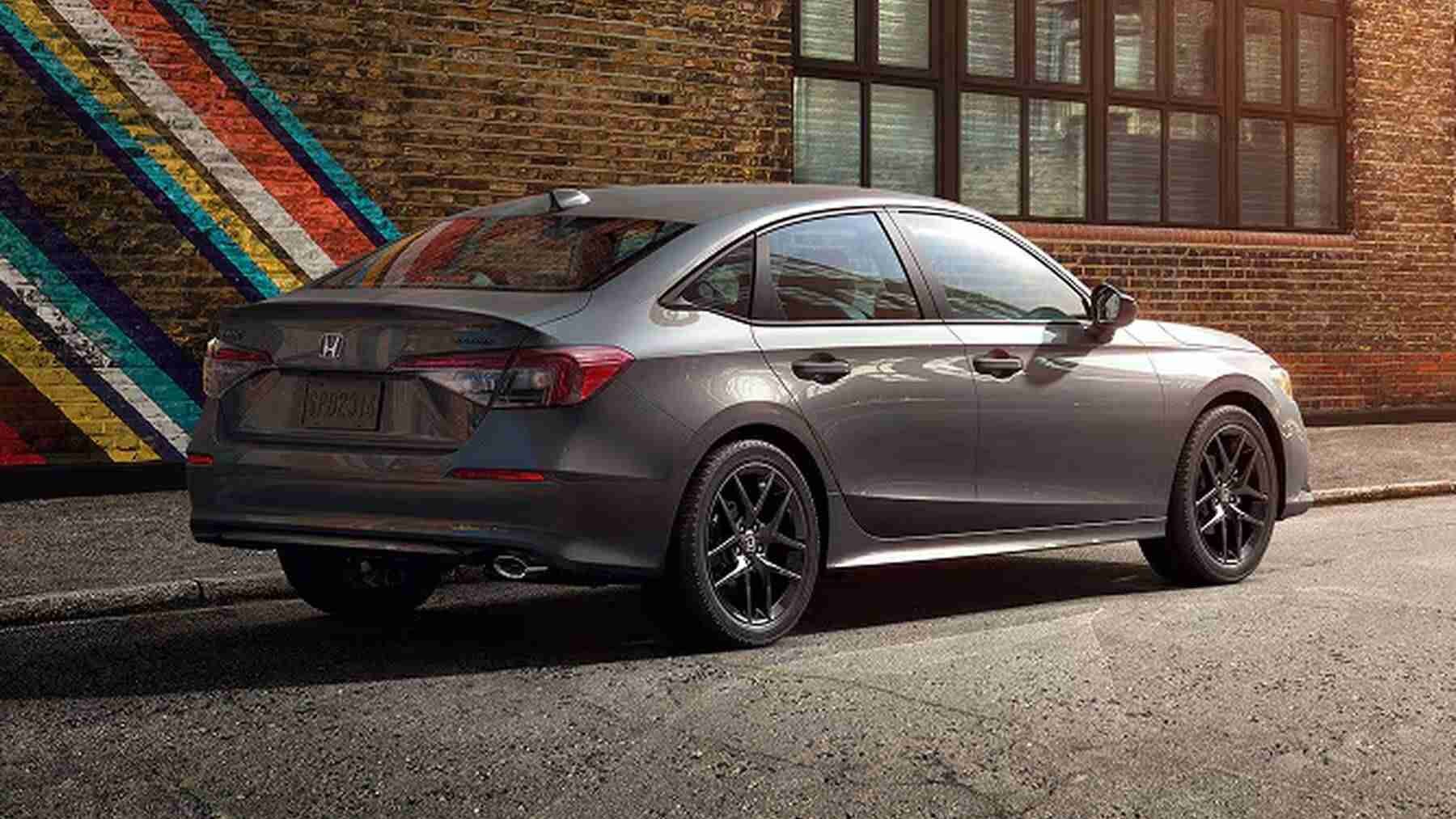
Overview
What's New for 2026
The 2026 Honda Civic sedan and hatchback receive refined technology updates including a larger touchscreen with wireless CarPlay/Android Auto. The hybrid powertrain, now available across sedan and hatchback lineups, continues to be a standout offering 50/47 MPG on the sedan. A new Si trim with sport tuning replaces the previous Si model, bringing back focus to driving engagement at a $31,495 price point.
Overview
The 2026 Honda Civic is among the most value-conscious compact sedans available, starting at just $24,695. Honda offers both sedan and hatchback body styles, allowing buyers to choose based on practicality and space needs. The compact design excels in urban environments where parking and maneuverability matter most.
Three powertrains are available: a 2.0L naturally-aspirated four-cylinder (gas sedan/hatch base models), a 2.0L hybrid system (sedan and hatchback), and the Si sports trim which features a specific turbocharged tune. Pricing is aggressively competitive: the Corolla starts at $24,800, the Elantra at $22,000, and the Mazda3 at $25,000. For buyers prioritizing reliability and driving dynamics, the Civic justifies its position.
Driving Experience
The base 2.0L naturally-aspirated engine produces 150 horsepower and 133 lb-ft of torque. This engine is adequate for city driving and light highway use, delivering 32 city/41 highway/36 combined MPG on the sedan LX. The engine is at its best in stop-and-go traffic where it excels; at highway speeds above 70 mph, the Civic feels more efficient than quick.
The 2.0L hybrid system offers 200 horsepower, distributed via a two-motor hybrid setup common to Honda's lineup. On the sedan, EPA estimates are 50 city/47 highway/49 combined—exceptional for the class. The Corolla hybrid achieves 50/48/49, nearly identical, but the Civic's lighter weight and responsive steering make it feel more engaging. The hatchback hybrid achieves 50/45/48 MPG, slightly lower due to aerodynamic factors.
The Si trim features the base 2.0L engine with sport tuning, producing the same 150 hp but with firmer suspension and a lower ride height. The Si is not a performance powerhouse—Honda discontinued the Civic Si with the turbocharged engine—but it delivers the best driving dynamics in the Civic lineup. Steering response is quicker, and the suspension is tuned for corner carving rather than comfort.
Transmission options include a manual CVT on base and hybrid models (responsive, responsive for a CVT), and a six-speed manual on the Si, which is the only transmission available for that trim. The manual provides direct control and is well-suited to spirited driving.
The Civic's compact wheelbase (107.6 inches) and responsive steering make it one of the most nimble compact sedans available. Body roll in corners is minimal, and braking is confident. All-wheel drive is not available; the Civic comes exclusively in front-wheel drive.
Interior, Comfort & Technology
The Civic's interior is modern and functional, prioritizing clarity and intuitive controls. Lower trims use hard plastic extensively, while higher trims incorporate soft-touch materials on the steering wheel and dashboard. The layout emphasizes simplicity—there are physical buttons for climate control and audio, reducing reliance on the touchscreen menu diving that plagues some competitors.
The touchscreen display is now 10.2 inches on 2026 models (up from 7-8 inches previously), with wireless Apple CarPlay and Android Auto support. The screen is bright and responsive, and software updates are available over-the-air. Bluetooth audio streaming is standard, as is voice control for navigation and calling.
Front seats are surprisingly comfortable for a car at this price, with adequate lumbar support and bolstering. Rear legroom is tight at 34.8 inches (compared to Corolla's 36.7"), making long road trips uncomfortable for six-footers. The rear seat is 60/40 split-folding, providing cargo flexibility.
Cargo space is adequate: the sedan trunk holds 14.3 cubic feet, while the hatchback offers 25.7 cu ft with seats up and 76.2 cu ft with seats folded. For practical daily use, the hatchback is notably more versatile, justifying the $2,100+ premium over the sedan equivalent.
Sound insulation is better than the price suggests, particularly on hybrid models which operate mostly in electric mode at city speeds. Road and wind noise are well-controlled even at highway speeds.
Trim Levels & Pricing
| Trim | Body | Engine | MSRP | Key Features |
|---|---|---|---|---|
| LX | Sedan | 2.0L I4 (150 hp) | $24,695 | Base model, 16" wheels, cloth, 6-speaker audio |
| Sport | Sedan | 2.0L I4 (150 hp) | $26,695 | 17" alloy wheels, touchscreen, backup camera, heated seats |
| Sport Hybrid | Sedan | 2.0L Hybrid (200 hp) | $29,395 | Hybrid powertrain, 17" wheels, sunroof, Apple CarPlay/Android Auto |
| Si | Sedan | 2.0L I4 (150 hp) | $31,495 | Sport-tuned suspension, 18" wheels, manual transmission, sport exterior |
| Sport Touring Hybrid | Sedan | 2.0L Hybrid (200 hp) | $32,395 | Leather, sunroof, navigation, heated seats, power driver seat |
| Sport | Hatchback | 2.0L I4 (150 hp) | $27,895 | Hatch body, 17" wheels, touchscreen, backup camera |
| Sport Hybrid | Hatchback | 2.0L Hybrid (200 hp) | $30,595 | Hybrid + hatch, 17" wheels, sunroof, wireless CarPlay/AA |
| Sport Touring Hybrid | Hatchback | 2.0L Hybrid (200 hp) | $33,595 | Top trim, leather, navigation, heated/ventilated seats, panoramic roof |
Sedan prices exclude $1,195 destination; hatchback excludes $1,150 destination. Hybrid saves roughly $1,000/year in fuel vs. gas models (50 vs. 32 MPG combined).
Safety
Honda Sensing is standard on all 2026 Civic models, including adaptive cruise control, lane keeping assist, lane departure warning, and forward collision warning with automatic emergency braking. The collision warning system activates at speeds above 5 mph, providing ample time to react in urban scenarios.
The Civic's lightweight construction uses high-strength steel in critical load paths, protecting occupants during frontal, side, and rollover impacts. Ten airbags are distributed across the cabin: dual front, front/rear side curtain, front and rear seat-mounted, and dual front knee airbags.
Electronic stability control and vehicle stability assist are standard, continuously monitoring lateral acceleration and adjusting braking at individual wheels. Anti-lock braking prevents wheel lock-up during hard stops on slippery surfaces.
For comprehensive crash test ratings, visit nhtsa.gov and iihs.org.
Warranty & Ownership Costs
| Coverage | Term/Mileage | Details |
|---|---|---|
| Basic Warranty | 3 years / 36,000 miles | Covers all defects in materials and workmanship |
| Powertrain Warranty | 5 years / 60,000 miles | Engine, transmission, drivetrain |
| Hybrid Battery | 8 years / 100,000 miles | Hybrid models only; 70% capacity minimum |
| Annual Fuel Cost (EPA) | Gas LX: $1,950 | Based on 15,000 miles/year, $3.50/gal, 32 MPG |
| Annual Fuel Cost (EPA) | Hybrid: $1,575 | 50 MPG combined; saves $375/year vs. gas |
| Insurance (Estimated) | $1,200/year | Base LX; varies by age, location, driving record |
The Bottom Line
The 2026 Honda Civic is the best value proposition in the compact sedan segment, offering a choice between sedan and hatchback, gas and hybrid powertrains, and a Si performance variant all starting under $25,000. At $24,695, the LX sedan undercuts the Corolla ($24,800), Elantra ($22,000 base, but lower trim), and Mazda3 ($25,000) while delivering superior driving dynamics and Honda's reliability reputation.
The hybrid is exceptional: 50 city/47 highway MPG matches the Corolla hybrid while providing more responsive steering and a lighter, more nimble driving experience. At $29,395 for the Sport Hybrid sedan, it offers outstanding efficiency for the money, with fuel savings of $375/year justifying the $4,700 hybrid premium.
The Si is worth considering for buyers prioritizing handling over raw power. At $31,495 with a six-speed manual, it delivers a driver-focused experience rare in the compact sedan class at this price. However, the Si lacks the efficiency advantages of the hybrid, so buyers should weigh driving engagement against fuel economy.
Limitations include tight rear legroom, small trunk on the sedan (though the hatchback solves this), and modest gas-engine power. For reliability, warranty support, and fun factor per dollar, the Civic remains a top choice.
FAQ
Should I choose the sedan or hatchback?
Key Highlights
- Starting at $24,695âcheapest entry into compact sedan class
- Hybrid achieves 50 city/47 hwy MPG (sedan)
- Hatchback and sedan body styles available
- Si trim offers sporty handling at $31,495
Powertrain Options
| Engine | Horsepower | Torque | Fuel | MPG |
|---|---|---|---|---|
| 2.0L I4 | 150 hp | 133 lb-ft | Gasoline | 32 city / 41 hwy / 36 combined |
| 2.0L Hybrid | 200 hp | 232 lb-ft | Hybrid | 50 city / 47 hwy / 49 combined |
Transmission: CVT / 6-speed manual
0-60 mph: 7.2 seconds
Specifications
Pros & Cons
✓ Pros
- Excellent value for the money
- Superior fuel economy on hybrid
- Small, nimble, easy to park
- Si provides genuine driving engagement
- Reliable Honda reputation
✗ Cons
- Tight rear legroom vs. competitors
- Small trunk on sedan
- 1.5T power adequate but not exciting
- Hatchback Sport-Touring tops $33k