
With gas prices surging, EVs may start to look appealing to a huge number of Americans. Especially when you look at the spec sheets and see figures like “80 MPGe,” which seem vastly more efficient than even the best performing hybrids on the market. Unfortunately, things aren’t that simple. Especially if you intend to rely on “fast charging.”
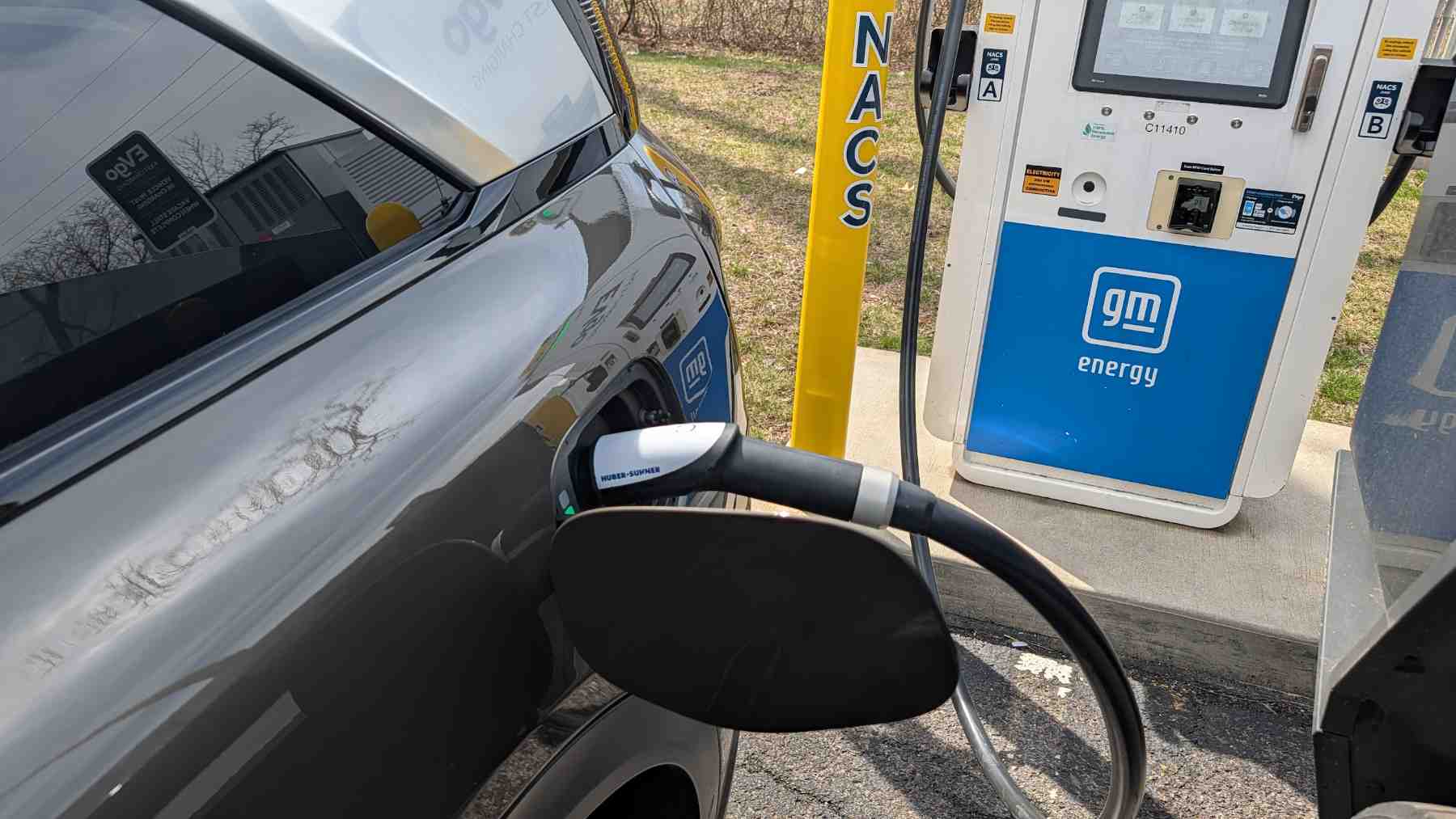
I recently had a Lucid Gravity on loan, and I hit the point where I had to charge it. Seeing this as a great opportunity to test out the vehicle’s fast-charging capabilities, I rolled up to a local Level-3 Charger and plugged in. Going from 10-80% charge, about 250 miles of range in this case, cost me $55.
Admittedly, the rate per kWh was displayed on the charger, so I could have done the math. But thinking this was a little steep, I looked into things further. Places like Reddit are awash with complaints that charging an EV, something often seen as a “cheaper option,” is now “more expensive than gas.”
And they would be correct in certain cases.
The Lucid Gravity was actually a pretty good deal. Last year, I was seemingly plugging in a Mustang Mach-E every 200 miles and getting hit with a $45-50 bill. For reference, that’s about half the range of a standard gas tank, which still doesn’t cost $100 to brim at today’s uncomfortable prices. So how bad is it overall? And how can you run an EV cheaply in 2026?
Wasn’t EV charging free at one point?
Historically, one of the main selling points of an EV was its low running costs. Yes, you were often paying a $20,000 or so premium over an equivalent ICE vehicle, but you would theoretically make that back and then some with cheaper running costs.
Many providers even threw free charging in as a perk. Some of Tesla’s early adopters snagged a Model S with “free charging for life,” and as far as I’m aware, Tesla is still honoring that deal. Other companies, like Lucid and Mercedes, had deals with charging providers like Electrify America, offering one or more years of “free charging” with an EV purchase.
However, even back then, “paid” charging wasn’t exactly cheap. At $0.30 per kWh on average, it was arguably better than gas, especially when gas would shoot up to $4 per gallon. It’s certainly better than the way things are now.
Level 3 charging is the main problem
Level 3 charging isn’t the only way to do things, but I would argue it’s core to EV practicality for many people. A Level 3 charger can get you back to 80% in under 30 minutes on most vehicles. But it’s also the most expensive way to do things.
At the low-end, Level 3 charging costs around $0.45 per kWh. However, at the other end of the scale, you’ll be paying around $0.65 per kWh of charge. That higher end of the scale tends to apply in states like California, where EVs are popular, and in places like highway rest stops, where fast EV charging is actually needed.
To put those numbers into perspective, an average ICE vehicle gets around 25 mpg in 2026. So even with gas prices soaring, you’re traveling around 25 miles for $4.
The average EV gets about 3.5 miles per kWh.If you find an EV charger at the lower end of the pricing scale, you can get 25 miles for around $3.21 worth of electricity. However, if you’re charging at a station that’s charging $0.65 per kWh, that 25 miles is costing you $4.64. So Level 3 EV chargers can cost more than a gas pump, even when gas prices are high.
To make matters worse, a lot of the cost is tied to “peak” and “off-peak” hours. It’s basically surge pricing, when there’s more demand on the electricity grid, prices go up to compensate. This varies by location but can boost costs by $0.15 to $0.20 per kWh in most places, and even send total costs north of $1 per kWh in some locations.
If we look at this the same way we compared EV charging to the equivalent gas prices, it’s basically like a gas station jacking up prices by 70 cents per gallon in the middle of the day because more people are fueling up at that time.
Pricing does vary by provider
The True Cost of
EV Fast Charging in 2026
Based on first-hand testing by Dave McQuilling. Level 3 charging data from Tesla Supercharger, Electrify America, EVgo, Shell Recharge, and home charging across multiple US states.
We’ve called Tesla out a few times at AutoNotion, but credit where it’s due: they’re one of the better providers. If you’re driving a Tesla anyway. Tesla charges between $0.30 and $0.45 per kWh at the majority of its locations. Though these are location and time-dependent, with prices hitting as much as $0.60 per kWh during peak times in heavily congested urban areas.
Tesla tends to undercut other Level 3 networks for its customers, but non-Tesla vehicles tend to pay between $0.10 and $0.15 more per kWh when using the charging network. The exception is non-Tesla owners who stump up $12.99 per month for the “Supercharging Membership.” They pay the same rates as Tesla owners after that fee.
Electrify America is more expensive than Tesla, but it still undercuts some competitors, with rates averaging $0.45 to $0.55 per kWh. It also offers subscribers who pay $4 a month a roughly 11-cent-per-kWh discount.
EvGo, the other major charging station provider, is the most expensive of the big three. It charges between $0.45 and $0.55 per kWh, plus a $0.99 “session fee” each time you plug in. Its subscription has both a $7 and a $13 tier, which lowers the rate and eliminates the session fee.
Minor providers like Circle K Charge and 7Charge (7 Eleven) still fall within the $0.40 to $0.60 kWh pricing bracket, though 7Charge tends to use slower 90kW and 180kW chargers, which may defeat the point of using them. At $0.48 to $0.62, Shell Recharge is one of the priciest providers on average.
There’s an argument that Level 3 charging’s high prices are a bit of a kick in the teeth for EV owners. Charging times are a major part of any EVs spec sheet. Companies boast about getting 60-70% back into a battery in as little as 20, 15, or even 10 minutes.
So if you buy an EV with the expectation that you’ll be topping up and getting back on the road almost as quickly as an ICE driver, be aware that the ICE driver will probably be paying less per mile than you. And while certain loyalty schemes save ICE drivers a few cents per gallon, they don’t need to stump up a monthly fee and stick to one brand of gas station when they want to save a few bucks.
Charging at home makes the most sense
While this isn’t an option for everyone, charging your EV at home is the cheapest way to do things. I flagged the Mustang Mach-E as a bit of a gigawatt guzzler earlier, but Ford has run several promotions where it offers to install a Level 2 charger in your home when you buy one of its EVs. If you want to drive cheaply, you should take Ford up on it.
Electricity prices vary throughout the US, and like EV chargers, many providers operate peak and off-peak pricing. However, costs tend to range from $0.16 to $0.19 in most places. That’s about a third of what the average fast charger will cost you per “fill up.” If you have solar panels on your roof, you can charge your EV for free and use charging stations only on rare occasions.
Level 2 chargers also exist, though leaving your vehicle overnight in a random Ace Hardware parking lot or otherwise doing without it for several hours may not be too appealing. Many of these stations are significantly cheaper than Level 3 charging, though still more expensive than charging at home. Flo tends to charge between $0.25 and $0.35 per kWh, for example.
Be careful, though, at the top end ChargePoint, Blink Charging, and other providers can cost as much as $0.40 to $0.50 per kWh, which is in the lower end of Level 3 charging territory and arguably the worst of both worlds.
Charging companies aren’t taking all of the blame
EV charging companies have blamed increased costs on several factors. And they do make a few good points. Firstly, EV subsidies have dried up under the current administration, and there’s an argument that they would have decreased anyway as EV uptake increased and technologies matured.
Couple that with rising electricity costs, and the fees power companies slap charging providers with when their facilities are used during “peak” hours, and a lot of the increases do make some sense.
However, that won’t make the average EV owner feel any better. Many will feel lured in by promises of “free charging” or at least “cheaper than gas” and have now been left with a vehicle that’s both more expensive to run and holds far less resale value than the hybrid or ICE equivalent.
It’s also not great news at a time when EV sales seem to have plateaued, and automotive manufacturers are desperately trying to pivot after diving a bit too hard into the concept. Especially when “hey, you can recharge this in 20 minutes” is still a major selling point, but doing so is going to cost you more than just refilling a gas tank and still take four times as long.
So are you an EV owner who’s feeling the pinch every time you plug in? Or have increased charging costs not affected you too much? Let us know below.
 @af ROOKIE5 months ago