
Liquid hydrogen turns into vapor at any temperature above minus 253 degrees Celsius. That is roughly 20 degrees above absolute zero, and it is the basic physics that has kept the hydrogen aircraft programs of every major European aerospace research center in the laboratory for the better part of a decade. On March 9, 2026, the German Aerospace Center, known by its German acronym DLR for Deutsches Zentrum für Luft- und Raumfahrt, announced that it had tested a complete liquid hydrogen fuel delivery system at exactly that temperature.
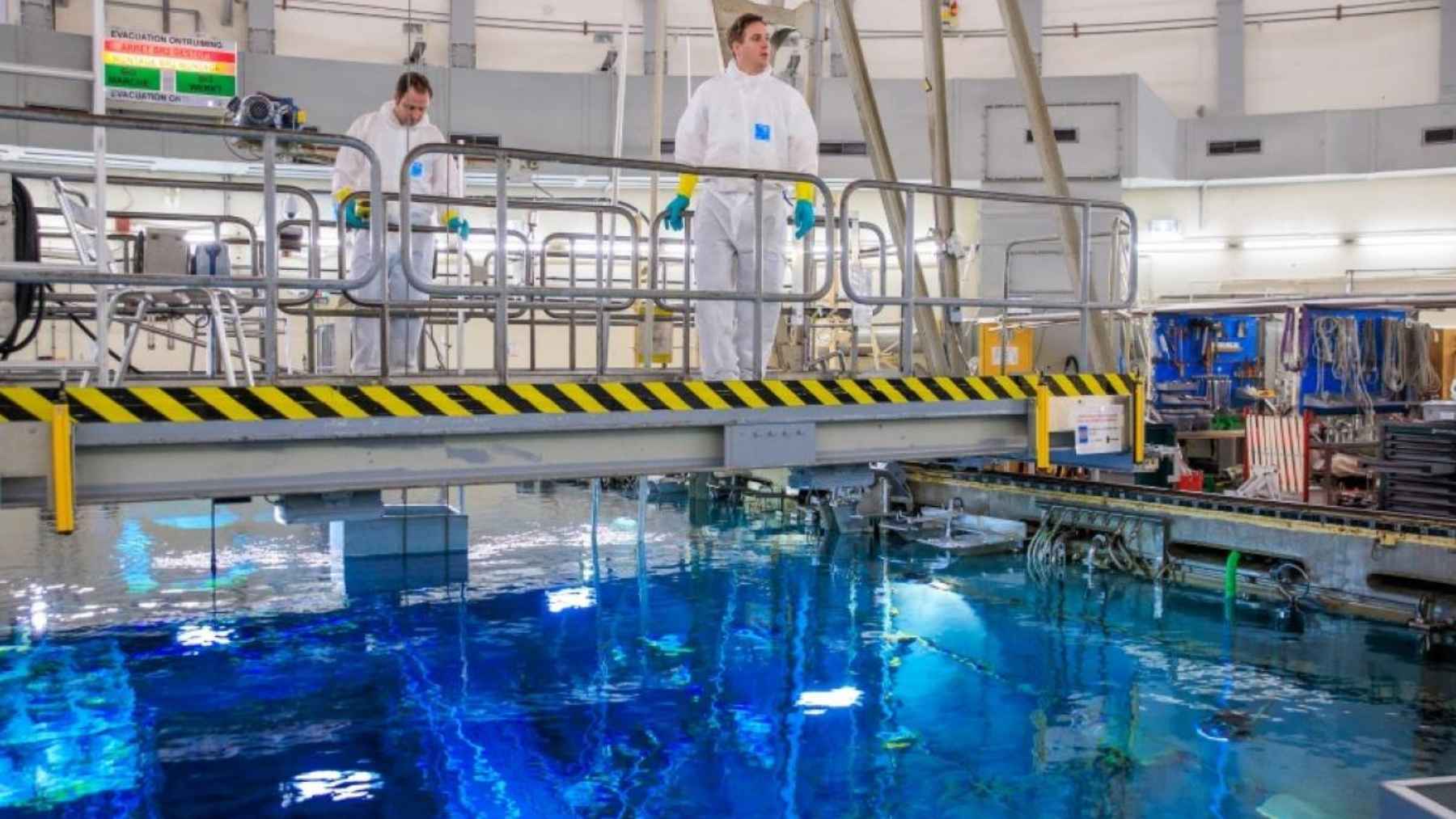
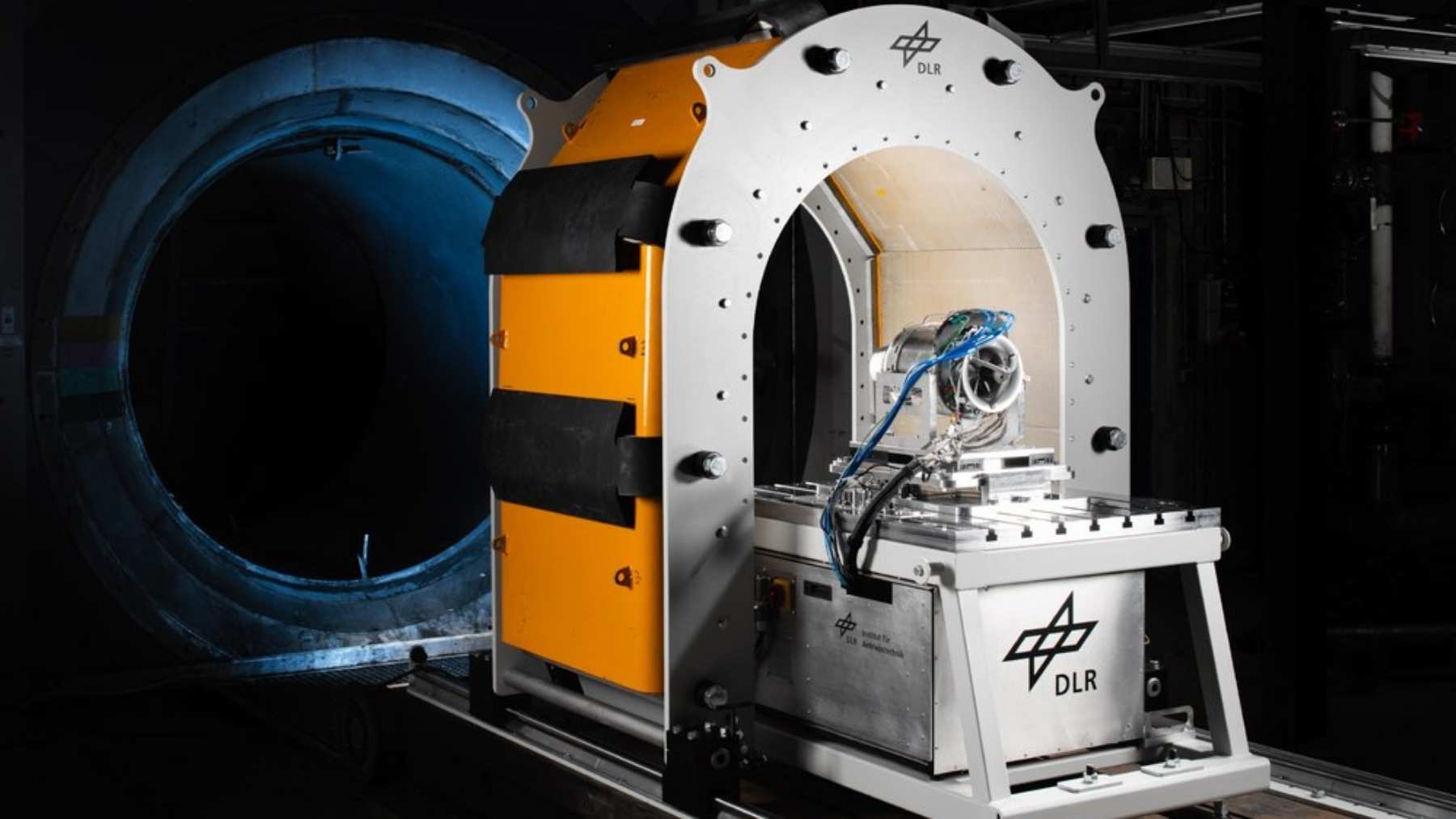
The tests ran in February at the new Future Propulsion Test Facility in Cologne, which became operational in October 2025. They validated four components working together for the first time in an aviation context: cryogenic tanks, cryogenic pumps, distribution lines, and heat exchangers. The system reached what European researchers call Technology Readiness Level 4 on a scale that ends at nine. That is a long way from a flying aircraft. It is also the first time anyone has assembled and run the full system in a laboratory.
The press release coming out of Cologne in early March did not announce a flying aircraft. It announced a piece of plumbing.
What DLR actually tested
The work in Cologne did not test hydrogen combustion. DLR already cleared that hurdle in 2024, when its Institute of Propulsion Technology demonstrated that aircraft engine combustion chambers can run on 100 percent gaseous hydrogen under realistic operating conditions. The remaining problem, and the one that has been quietly holding back European hydrogen aviation programs since, was getting liquid hydrogen from a tank to a combustion chamber without losing it to evaporation on the way.
That is what the February tests validated. According to DLR, the system has to keep hydrogen at minus 253 Celsius across the entire fuel path while pushing it through cryogenic pumps at pressures of up to 100 bar, the equivalent of about 1,450 pounds per square inch. Any heat leak vaporizes the fuel. Any pressure drop kills the flow. The four-component system handled both inside a controlled lab environment, with a submerged cryogenic pump moving liquid hydrogen at a mass flow rate of 180 grams per second.
“There was nothing comparable in the aviation industry – but there was in the shipping industry,” DLR project leader Christian Fleing told the agency’s communications office in the official announcement.
The pumps came from a shipyard supplier
The Italian company behind the hardware is Vanzetti Engineering, headquartered in Cavallerleone, a town in the Piedmont region’s province of Cuneo. Vanzetti was established in 1984 as a designer and manufacturer of cryogenic pumps for industrial gases, and entered the liquefied natural gas marine market in the early 2000s. Its customers today are largely commercial shipbuilders, not aircraft makers. The maritime industry has been moving LNG on commercial ships for the better part of two decades, and the cryogenic pumping hardware required is mature, certified, and widely in service.
What DLR did was adapt that mature shipboard hardware for aviation. The collaboration also pulled in the Messer Group, a German industrial gas company with deep cryogenic expertise. According to DLR and the Italian firm’s own published accounts, the joint test bench was developed under the UpLift Aviation Research Programme of the German Federal Ministry for Economic Affairs and Energy (BMWE), the ministry renamed in May 2025 under the Merz government from its previous title under the previous coalition. A first test of the submerged pump alone took place in January. The complete system test, with tanks, distribution lines, and heat exchangers integrated, followed in February.
“Our tests serve to gather data and demonstrate that the concept works,” Fleing said in the DLR announcement, adding that the work is a first step in a long development cycle.
TRL 4 is not flying
Technology Readiness Level is the European Space Agency’s nine-step scale for tracking how far a technology has progressed from concept to operational service. Level 1 is a written idea. Level 9 is a system that has flown in its intended environment. Level 4, where the DLR work currently sits, means a prototype has been validated in a controlled laboratory setting. It does not mean the technology is certified for flight. It does not mean it has flown. And it does not mean it has run through the thousands of thermal and pressure cycles a commercial aircraft engine would impose on it over years of service.
The next steps, according to DLR, will involve running the collected data through computer simulations to model how the system would behave inside a real aircraft. After that come scaled-up rig tests, then airborne demonstrators, then a long certification process with the European Union Aviation Safety Agency for cryogenic systems that has, as of this writing, no precedent in commercial aviation.
Where this fits in the European hydrogen aviation race
DLR is one node in a wider European push that includes Airbus, Rolls-Royce, GE Aerospace’s European partner GE Avio Aero, and the EU-funded HYDEA program. The civilian aviation track also runs in parallel to a defense track that has moved faster: in March 2026, the U.S. Army Contracting Command at Redstone Arsenal awarded a Basic Ordering Agreement to Heven AeroTech for the hydrogen-powered Z1 drone, and a German consortium led by Bremen-based Euroatlas has been moving the Greyshark hydrogen underwater drone from prototype toward procurement in the same window. Each program has been working on different pieces of the same puzzle, and the timelines on the civilian aviation side are not what they were two years ago.
Airbus has been working since 2020 toward what it calls the ZEROe demonstrator. In February 2025 the company pushed the program’s service-entry target back by five to ten years, cut the ZEROe budget by 25 percent, terminated certain sub-projects, and cancelled its plan to flight-test a hydrogen fuel-cell powertrain on an A380 testbed.
The hydrogen-combustion engine demonstrator on the A380 remains in the schedule, but the launch decision for the eventual ZEROe airliner has slid from 2027 to around 2028, and service entry has slid from 2035 to somewhere in the 2040–2045 window. The hydrogen-converted GE Passport engine that will fly on the A380 testbed is being developed by CFM International, the 50/50 joint venture between GE Aerospace and Safran Aircraft Engines, with ground testing underway since 2022. DLR contributes testing infrastructure but is not a direct partner on the engine itself.
Rolls-Royce, working with the UK low-cost carrier easyJet, announced in late April that its own four-year hydrogen testing program had completed a major milestone, running a modified Rolls-Royce Pearl 15 aircraft engine on 100 percent hydrogen at full take-off power at NASA’s Stennis Space Center in Mississippi. The Rolls-Royce work runs in parallel with a cryogenic hydrogen fuel system patent published in late 2025, designed to retrofit existing gas-turbine engines rather than starting from a clean-sheet airframe.
The piece DLR has now validated, the fuel delivery system between tank and combustion chamber, is the connecting tissue between two halves of the puzzle that each of these competing programs has been working separately. Without it, hydrogen tanks and hydrogen-capable combustion chambers are two unconnected components on a hangar floor. With a validated delivery system, even at lab scale, the architecture of a hydrogen aircraft becomes possible to draw with hardware that exists.
What still has to be proven
The list of unsolved problems remains substantial. There is no certified cryogenic aviation pump on the market, only a validated lab prototype. There is no commercial airport in the United States or Europe equipped to handle liquid hydrogen at scale, which means no fueling infrastructure. There is no certified onboard storage architecture for liquid hydrogen in a passenger aircraft, although DLR’s Institute for Lightweight Systems exhibited a full-scale carbon-fiber tank prototype at the Hydrogen Technology World Expo in Hamburg in October 2025. And there is no green hydrogen production capacity at the volumes that commercial aviation would require, which means the climate benefit of any hydrogen aircraft depends on a parallel buildout of renewable electricity and electrolyzer capacity that is not currently on track.
Cologne did not build an aircraft. It built the first piece of plumbing for an aircraft that does not yet exist. Two months ago, that piece of plumbing did not exist either.