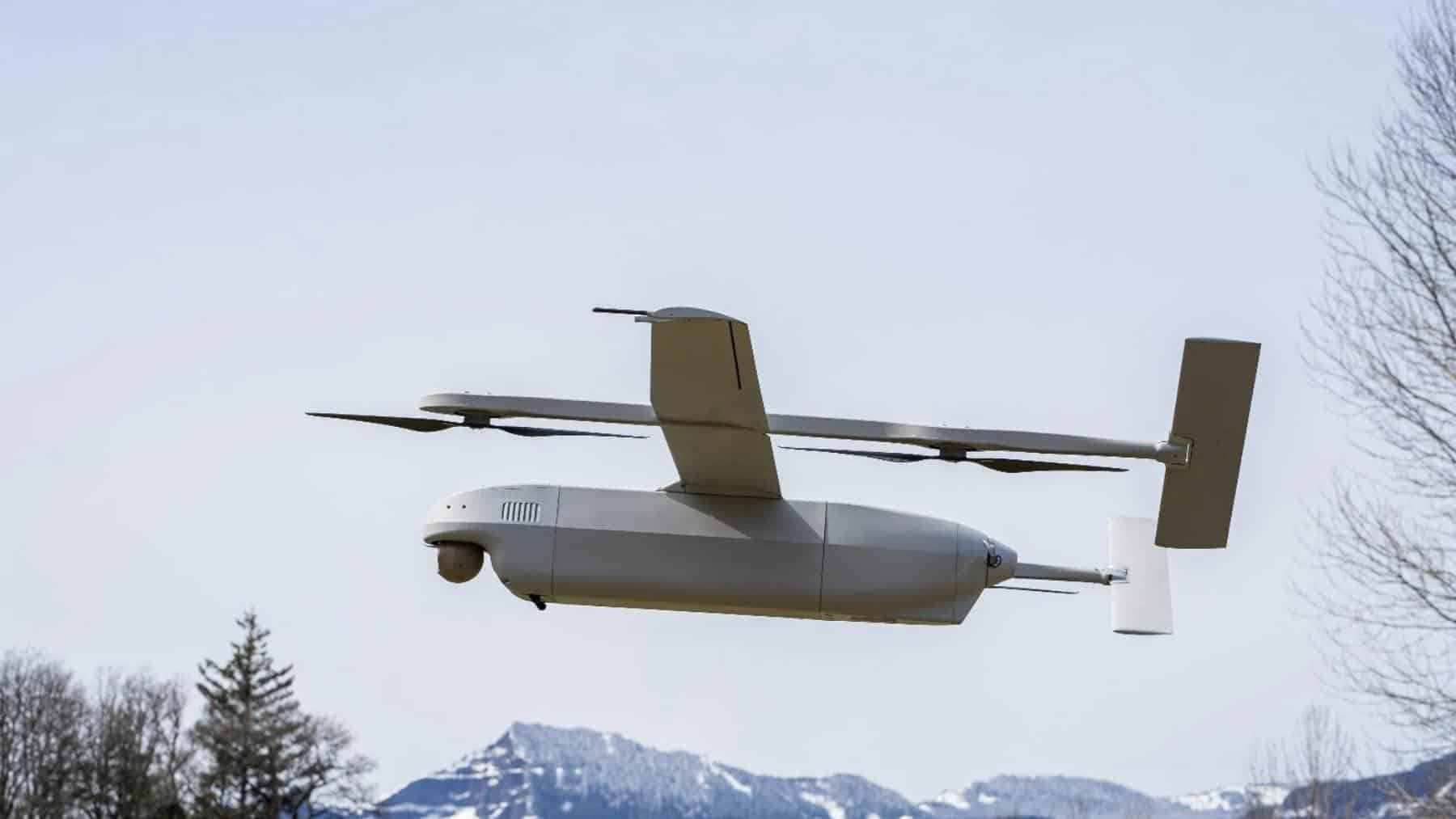

On March 12, 2026, the US Army Contracting Command at Redstone Arsenal, in Huntsville, Alabama, made an announcement that received almost no mainstream coverage in the United States. Heven AeroTech, a hydrogen-powered drone manufacturer headquartered in Sterling, Virginia, had been awarded a Basic Ordering Agreement, or BOA, for the Z1, a hydrogen-powered, long-endurance unmanned aerial system. The agreement, effective since January 2026, lets Army units order Z1 drones and the hydrogen generation equipment that fuels them without renegotiating basic terms each time. It is the second hydrogen contract a Heven entity has signed with the U.S. military in roughly five weeks. It is also a piece of a longer thread we picked up last fall in Bremen, Germany, when a separate hydrogen drone, this one designed to operate sixteen weeks underwater, went public with its specs. We covered that one as the Greyshark. The Z1 is its American cousin in the air.
The BOA was issued by the US Army Contracting Command in support of the Uncrewed Aircraft Systems (UAS) Project Office, the Army office responsible for fielding small and medium unmanned systems across the service. The qualification that made it possible is Blue UAS Select, a Defense Innovation Unit pre-vetting list for drones that meet Department of Defense security and supply-chain requirements. The full announcement came through PR Newswire on March 12.
What a Basic Ordering Agreement actually is
A BOA is not a purchase order. It is a contract vehicle. The mechanism gives Army units a pre-negotiated framework for buying the Z1 and its associated hydrogen generation hardware. When a unit decides it wants the capability, it can issue a delivery order against the BOA without going back through the full contracting cycle. Heven describes it in the release as “a pre-negotiated acquisition pathway.”
Michael Buscher, the company’s President of U.S. Operations, framed the practical effect this way in the PR Newswire release: “This agreement represents an important step in reducing procurement friction for Army units seeking advanced UAS capabilities.” That is procurement-speak, but the substance is straightforward. The Army has decided the Z1 is a known quantity, has signed off on the security and supply-chain provenance through Blue UAS Select, and has set a price book. Field units can now move.
The Z1 itself is a Group II hydrogen-powered vertical takeoff and landing platform. According to the company, the airframe is engineered for more than ten hours of flight time on a single hydrogen fill, with modular payload integration. In July 2025, Heven’s Zepher Flight Labs subsidiary demonstrated the Z1 performing a vertical takeoff at maximum gross weight and a climb to a density altitude of roughly 12,000 feet during an ISR mission profile. Heven is the only company on the Blue UAS Select list with a hydrogen-powered platform.
The Naval Research Lab thread that runs through this
One name attached to Heven AeroTech is worth pausing on. Dr. Karen Swider-Lyons is the company’s VP of Hydrogen Technology and Strategy. CleanTechnica ran an interview with her on April 29, and the biographical detail that lands hardest is the entry point: Swider-Lyons began flying fuel cell UAVs with the US Naval Research Laboratory in 2004. She later headed the lab’s alternative energy section and served as Senior Principal R&D Engineer at the U.S. hydrogen and fuel cell firm Plug Power before joining Heven.
That timeline matters. The American passenger-car conversation about hydrogen, the one that has revolved around Toyota Mirai sales numbers and California station closures, started somewhere around the same time Swider-Lyons was first putting fuel cells in small Navy drones. Two decades of military R&D on fuel cell UAVs have continued in parallel to that consumer story, mostly out of public view. The Z1 BOA is one of the points where that work surfaces as procurement.
Swider-Lyons told CleanTechnica that the cost calculus for fuel cell drones reads differently than for cars. “The military does not care about the cost,” she said. “Drones are smaller and there is a cost reduction in the reduced need for manpower.” The point she keeps coming back to in the interview is that low noise, low heat signature, and reduced supply-chain dependence — the same three attributes that make fuel cells uninteresting to a mass-market automaker focused on fueling stations and dealership networks — are exactly the attributes the Army wants in a Group II ISR platform.
HyTEC: fueling a hydrogen drone where there is no hydrogen
The BOA solves the procurement side of the equation. The other side, fueling a hydrogen-powered drone in a place where there is no hydrogen infrastructure, is being handled under a separate Defense Innovation Unit program called HyTEC, short for Hydrogen at the Tactical Edge of Contested Logistics.
On February 11, 2026, Heven’s Zepher Flight Labs subsidiary announced a contract modification under HyTEC to keep developing a transportable hydrogen generation trailer. The original Zepher HyTEC award came through DIU in April 2024, alongside a parallel award to NovaSpark Energy. By March 2025, those first prototypes had been delivered to Marine Corps Base Hawaii at Kaneohe Bay and Marine Corps Air Station Yuma for operator testing. The DIU’s own announcement describes the trailers as “the first electrolysis based hydrogen generation systems within the DoD designed to operate in an expeditionary environment using electrical energy from renewable sources, tactical generators, or tactical vehicles.”
Bentzion Levinson, the founder and CEO of Heven AeroTech, framed the underlying logic in the February release: “Logistics risk is a real operational constraint, not an abstract problem.” The HyTEC trailer, under development now with H3 Dynamics as a partner, is being designed to generate hydrogen on site, from water and solar electricity, in places where a fuel convoy would be a target. Heven has separately partnered with Sesame Solar on a transportable “Mobile Nanogrid” green hydrogen generating and storage system to pair with the Z1.
The Trump policy framework around all of this
Two pieces of executive action provide the political context. On June 6, 2025, President Trump signed Executive Order 14307, “Unleashing American Drone Dominance”, along with the companion EO 14305, “Restoring American Airspace Sovereignty.” EO 14307 directs federal agencies to prioritize procurement of American-made drones, reduce reliance on foreign UAS, and support development, testing, and scaling of domestic drone technologies. The text frames the goal as “a strong and secure domestic drone sector.” Heven AeroTech’s BOA announcement explicitly aligns the contract with that order.
The second piece is administrative. On September 5, 2025, Trump signed Executive Order 14347, which authorizes the Department of Defense and its subordinate offices to use “Department of War” as a secondary title in official correspondence and ceremonial contexts. The legal name remains Department of Defense; only Congress can change that. Several outlets covering the HyTEC contract modification in February already referred to the program as a “Department of War” initiative, reflecting the new naming convention rather than a statutory change.
Greyshark goes underwater. Z1 goes airborne. Same physics.
The thread we opened in our Greyshark piece ended on an open question. If German engineers in Bremen could deliver a hydrogen-powered drone submarine rated for sixteen weeks underwater, what was the United States doing with the same chemistry? The short version of the answer is in this BOA. The longer version is that the same fuel cell physics that lets the Greyshark Foxtrot variant stay submerged for sixteen weeks at four knots lets the Z1 stay airborne for ten-plus hours without recharging. Hydrogen carries far more energy per kilogram than a lithium-ion battery. That difference is most useful at the extreme ends of mission duration, which is exactly where defense use cases live and where consumer cars do not.
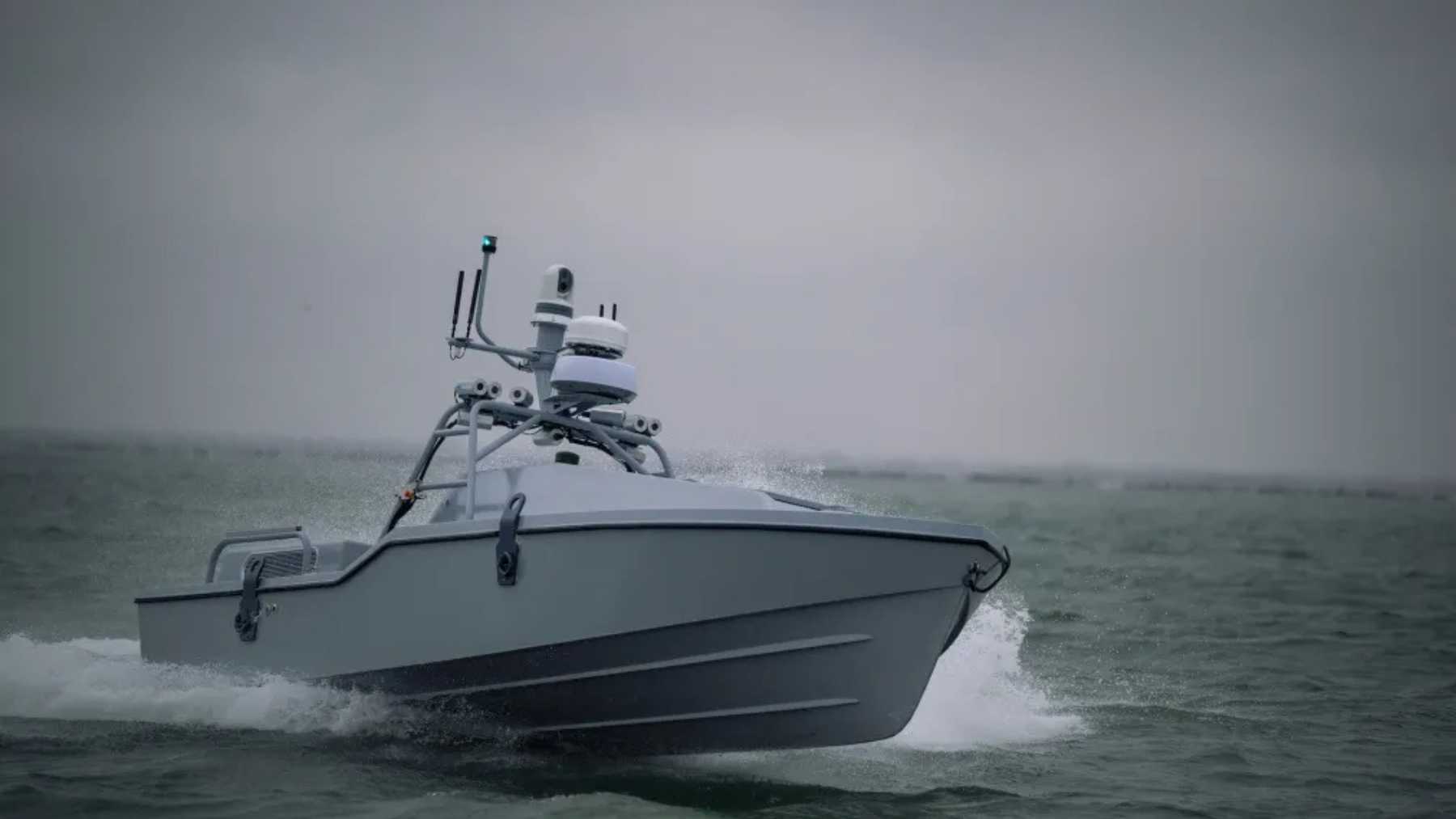
The two platforms are not direct equivalents. The Greyshark is a long-range autonomous underwater vehicle co-developed by a German consortium that includes Euroatlas, EvoLogics, Fassmer, and Rheinmetall. The Z1 is a Group II airborne ISR platform built by an 88-person U.S. company that completed a $100 million Series B in December 2025 at a billion-dollar valuation, led by IonQ. What links them is the choice of energy carrier, and the fact that two separate Western defense ecosystems have, in the same six months, moved hydrogen fuel cell drones from prototype into procurement.
What this contract does not say
Three things are worth keeping in view.
- A BOA is a contract vehicle, not a purchase order. Heven and the Army have not disclosed how many Z1 units, if any, have been ordered against the BOA to date, or what the unit price is. The agreement makes future orders easier; it does not in itself buy drones.
- The civilian read-across is talked about by the company, not by the Army. Heven’s own materials cite “defense, commercial, and humanitarian” applications, and the CleanTechnica interview frames technology transfer from defense to civilian markets as a known pattern. The Z1 BOA itself is defense-only.
- The Trump policy framework around the contract is political. EO 14307 is the current administration’s posture on domestic drone industrial base. A different administration could reframe priorities, although a signed BOA is a contract in force regardless of who is in the White House.