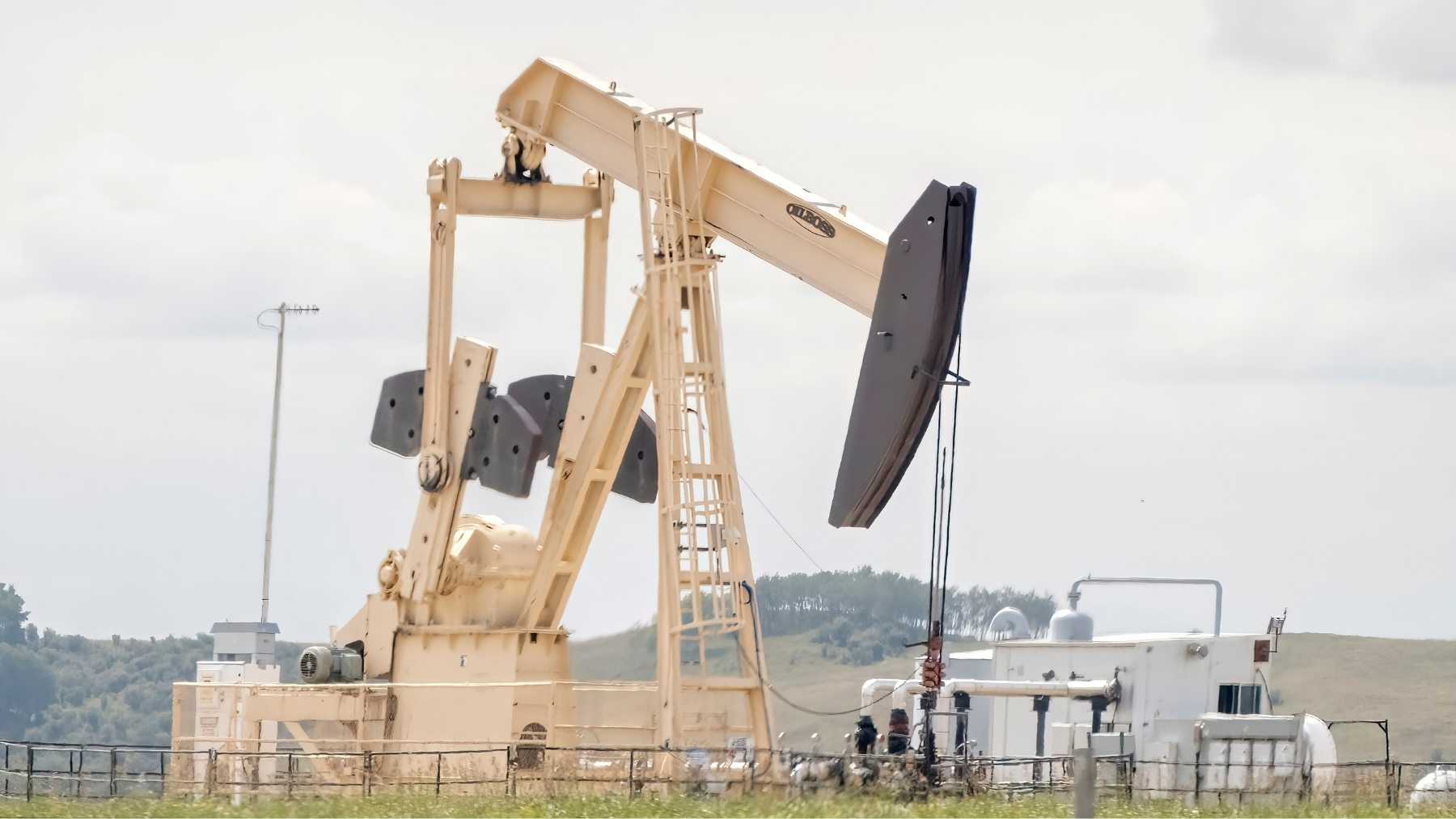

Alberta is oil country, and it has been since a well called Leduc No. 1 came in back in 1947 and launched the province’s modern petroleum industry. For decades, the crews working those fields knew there was lithium dissolved in the salty water that gets pumped up alongside the crude, the same metal that ends up in just about every EV battery on the road. They just had no economical way to separate it, so it stayed down there as a geological curiosity nobody could put on a balance sheet. This spring, the province finally put a number on that curiosity, and it turned out to be worth close to a trillion dollars.
The figure comes from the Alberta Geological Survey, which for the first time quantified how much lithium is locked in the province’s deep brine. The answer was 82.5 million metric tons of lithium carbonate equivalent, enough, the province says, to potentially rank Alberta as the third-largest lithium resource on the planet. Premier Danielle Smith called it a position “few jurisdictions can match.” The catch, and it’s a big one, is that having lithium in the ground and getting it out at a price anyone will pay are two completely different things. Nobody in Alberta is producing lithium yet. Whether they ever will at scale rides on a technology that has never been proven at full commercial size, anywhere in the world.
That trillion-dollar number is theoretical, and the province says so
Before anyone starts spending it, here’s the asterisk. The 82.5 million metric tons is an “in-place” figure, which means it’s the total amount of lithium the survey believes is down there, not the amount anyone can realistically pump out and sell. Those are very different numbers in mining, and the gap between them is usually enormous.
The trillion-dollar valuation is built on top of that in-place number. The math assumes the lithium gets produced using direct lithium extraction and sells at a conservative $20,000 per metric ton of battery-grade material, which works out to revenue north of US$1 trillion, or roughly CAD $1.4 trillion at current exchange rates. By the province’s own arithmetic, that’s enough lithium to supply about 1.9 billion EV battery packs.
Chris Doornbos, the president and CEO of E3 Lithium, the company furthest along on actually doing this, was the first to wave a flag. He pointed out the trillion-dollar number is theoretical because “you never get 100 per cent” of what’s in the ground. He still thinks the report matters, because for years the open question was whether the resource was even real and worth chasing. Now it has an official survey behind it.
Ninety-five percent of it sits in the same rock that made Alberta rich in 1947
The geology here is almost too on-the-nose. About 95 percent of the lithium, roughly 77.7 million metric tons of it, sits in the Devonian-age Leduc Formation. That’s the exact same geological layer that produced the Leduc No. 1 discovery and turned Alberta into an oil province in the first place. The rest is spread mostly across the Swan Hills and Slave Point formations, with another formation called the Nisku showing high lithium concentrations the survey hasn’t formally counted yet.
The lithium isn’t in rock you dig up. It’s dissolved in brine, the hot, salty groundwater that oil and gas operations have been pulling to the surface and reinjecting for generations as a waste product. For most of Alberta’s oil history that brine was a nuisance to be disposed of. The new framing is that the nuisance is the asset.
This is where Alberta thinks it has an edge. The province is already covered in the infrastructure you’d need to chase brine: wells, pipelines, roads, power lines, and a workforce that has spent decades pumping fluids out of the ground and putting them back. Kevin Piepgrass, the chief operating officer of LithiumBank, has made the point that all of that existing hardware is what keeps the upfront capital costs from being ruinous. Reuse a well that’s already drilled and you’ve skipped one of the most expensive parts of the job.
No one has proven this extraction method at commercial scale, anywhere
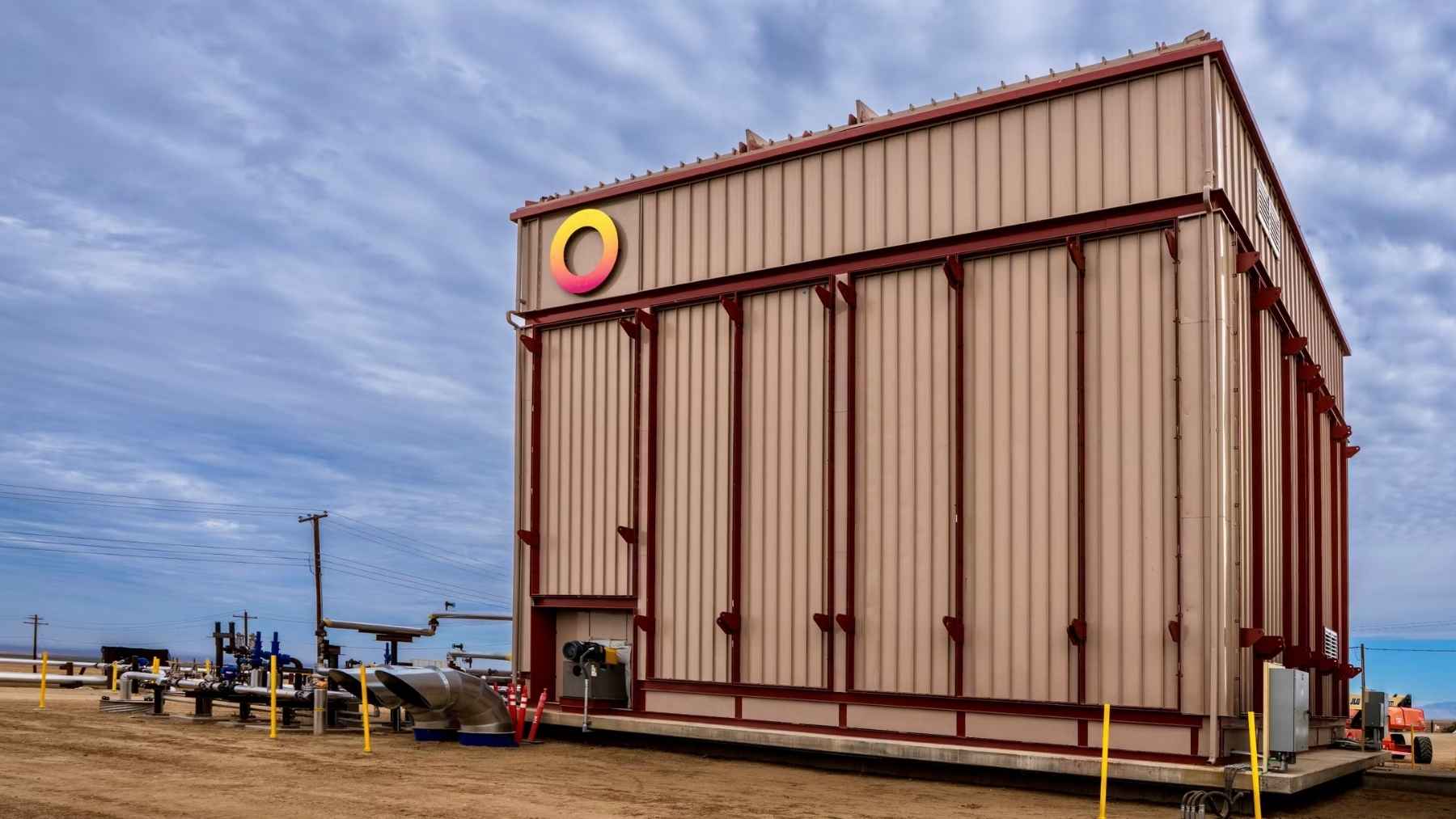
The technology everything hinges on is direct lithium extraction, or DLE. The concept is straightforward enough: pump the brine to the surface, run it through a system that strips out the lithium, and reinject the leftover water back underground. No giant evaporation ponds, no open-pit mine.
Those evaporation ponds are how a lot of the world’s lithium gets made today, in the high-altitude salt flats of Chile and Argentina, where the sun does the work of concentrating the brine over months. Alberta doesn’t have that option. It’s cold, and its brine is lower grade than the South American stuff, which makes the chemistry harder. Piepgrass put it bluntly: in Alberta, “the only way it’s possible is direct lithium extraction.” Evaporation simply isn’t on the table.
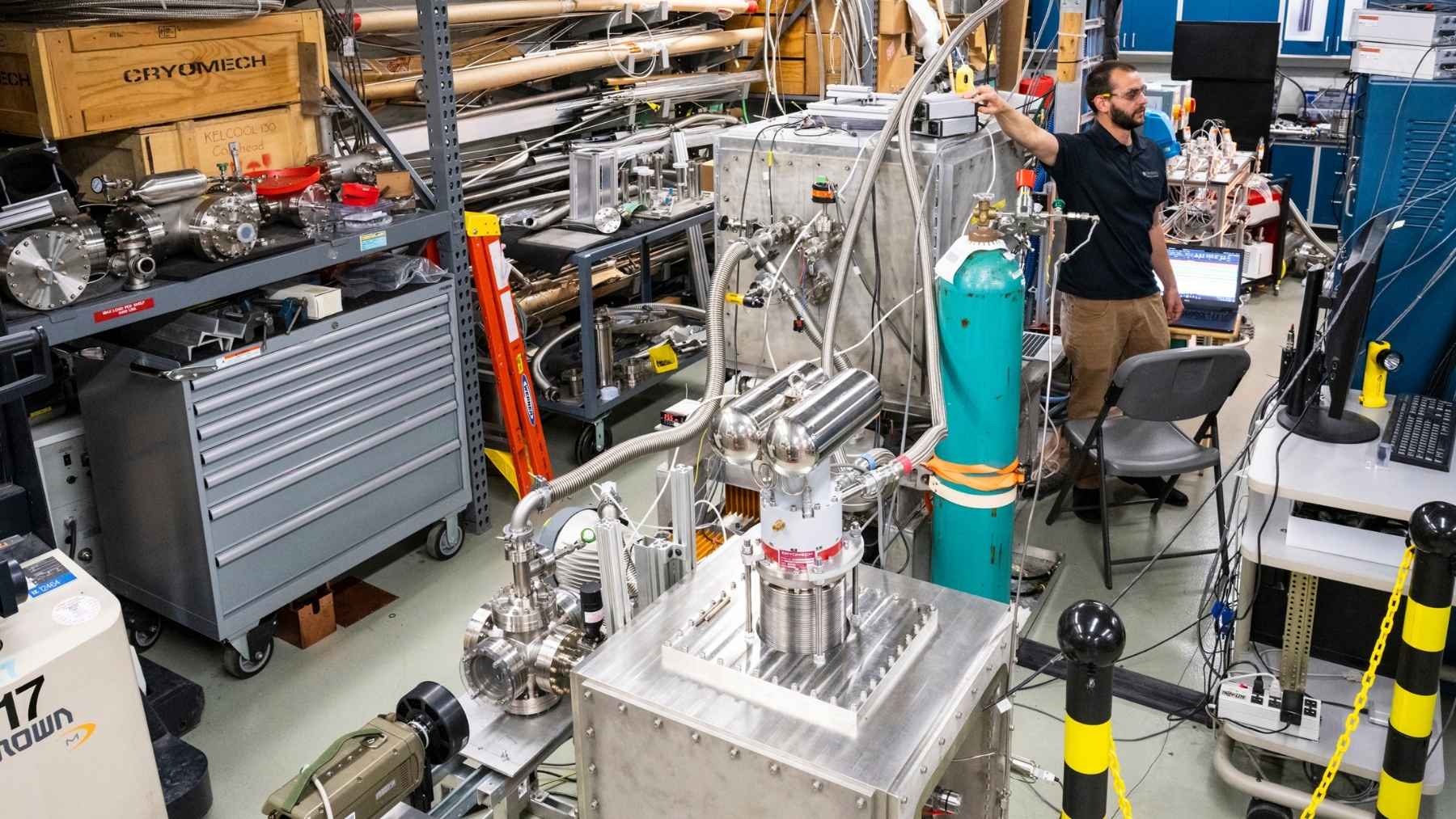
The catch is the one the province can’t engineer around. DLE works in pilot plants and demonstration facilities. It has not been proven at full commercial scale, anywhere on the planet. Plenty of companies are racing to be first, and several have produced battery-grade lithium in small batches, but going from a demonstration unit to a plant cranking out tens of thousands of tons a year, reliably and profitably, is a leap nobody has completed yet. That’s not a knock on Alberta specifically. It’s the open question hanging over the entire DLE industry.
E3 Lithium is the company closest to pulling it off
If you want to know whether this works, watch E3 Lithium. The Calgary company has been at this since 2016, ran a field pilot in 2023, and in September 2025 commissioned a demonstration facility east of Olds, Alberta, that produced the province’s first battery-grade lithium carbonate. The project, called Clearwater, pumps brine from the Leduc reservoir about 2,500 meters down, pulls the lithium out, and sends the water back.
E3 is targeting its first commercial production sometime between 2028 and 2029, starting at around 12,000 metric tons a year, with room to expand from there. Through the first quarter of 2026 the company says it delivered battery-grade carbonate to partners and off-takers, kept pushing its permits through the Alberta Energy Regulator, and lined up its first credit facility. It has pulled in roughly $80 million in combined federal and provincial money, plus a separate federal commitment of up to CAD $36.5 million to build out the next phase of the demo. Doornbos has said repeatedly that locking down the rest of the financing is the single biggest hurdle left, which is the honest version of where most of these projects actually sit.
LithiumBank is coming at it from a slightly different angle, working with a major oilfield-services company to scale up its Boardwalk project. It’s aiming for an initial 10,000 metric tons a year with the potential to climb to 34,000, and it doesn’t expect first production until around 2030. Put the two together and you get a realistic timeline: nothing meaningful comes out of the ground this decade until the back half, assuming the technology and the money both cooperate. The province, for its part, is trying to grease the path. It has about two million hectares leased for lithium exploration, and it’s promising new incentives and smoother regulation with a target of standing up a real critical-minerals industry by 2027.
The payoff, if it shows up, is probably a decade out
None of this happens in a vacuum, and the reasons everyone suddenly cares are geopolitical as much as geological. Lithium sits near the center of Canada’s Critical Minerals Strategy, with billions of dollars committed, and the whole G7 has been scrambling to build supply chains that don’t run through China, which currently dominates lithium refining. Doornbos framed Alberta’s resource as a way to start closing North America’s battery-supply deficit. Canada, oddly enough, imports much of its lithium from the United States while shipping a lot of its own raw output south, which is exactly the kind of dependence the new push is meant to fix.
John Kirton, a University of Toronto professor who directs the G7 Research Group, sees the upside clearly. He thinks lithium could “make Alberta genuinely a clean energy superpower” and give oil and gas workers somewhere to go as the energy mix shifts. He ticks off the risks just as fast. The extraction technology is unproven at scale. Canada barely has any lithium-processing capacity of its own, so even produced lithium might have to leave the country to become something useful. Established producers in Chile and Argentina already have the climate and the proven methods. And lithium prices are notoriously violent, having collapsed by more than 80 percent from their 2022 peak before clawing back to around $26,000 a metric ton by the middle of this year. Prices like that can crater with little warning, and Kirton points to a competing chemistry, sodium, that’s cheaper and getting better. His estimate for when Canada as a whole sees a real economic payoff: about a decade.
It’s the same story playing out across North America, where the hunt for domestic battery metals has gone from talking point to spending spree. The U.S. has its own trillion-dollar lithium prize buried in a Nevada supervolcano, researchers are chasing cheaper ways to pull lithium out of hard rock, and Washington is co-signing rare-earth plants meant to break China’s grip on the materials that go into EVs and missiles alike.
So Alberta has done the genuinely hard analytical work of proving the lithium is real and putting a credible number on it, and that’s worth something. But counting a resource and producing it are separated by the entire DLE industry’s biggest unanswered question, plus a financing gap, plus a processing gap, plus a metal price that does whatever it wants. The brine under those old oil wells might end up being Alberta’s second fortune. Today it’s a very large, very promising, completely unextracted trillion dollars sitting in salt water, waiting on a technology to grow up.