
A nuclear plant is normally one enormous machine. One reactor, one containment building, one turbine hall, and when the fuel runs low the whole site comes off the wire for weeks while crews open it up. American utilities schedule those refueling outages years ahead, in spring or fall, when demand is soft and nobody misses the output.
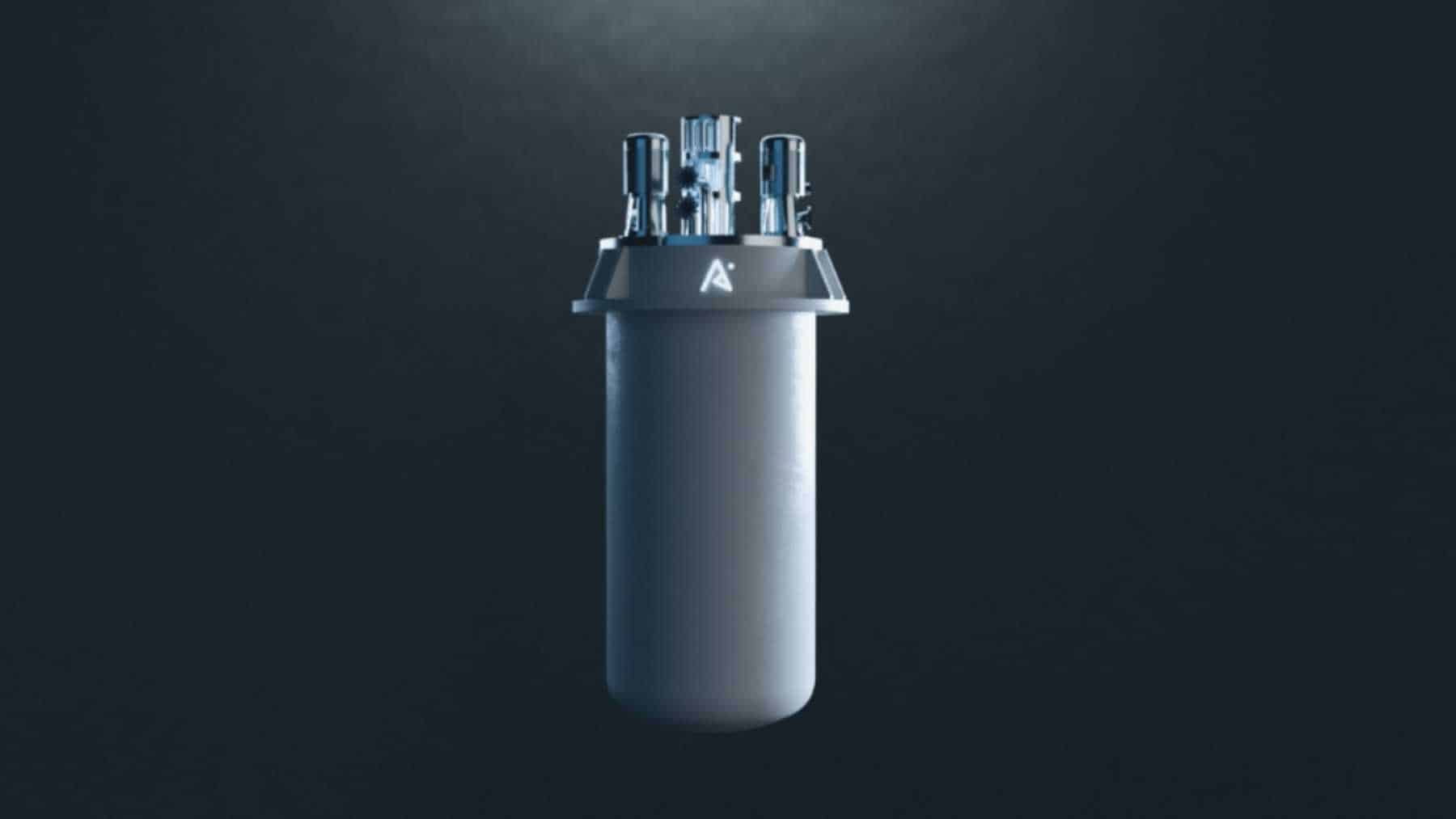
Aalo Atomics is selling the other arrangement. The Austin company’s product is called the Aalo Pod, and its published spec sheet describes it as “five 10 MWe reactors sharing multiple turbines,” which comes to 50 megawatts of electricity spread across five cores. Aalo says phased maintenance keeps the plant from ever going fully offline. Take one reactor down, four keep running.
On July 30 the company found somebody to buy the arrangement. Crusoe, the Denver outfit that builds and runs AI data centers, signed a partnership to put a modular data center next to an Aalo reactor at Idaho National Laboratory in 2027, then take Pods at its own sites by the end of 2029. Aalo announced it the same day it had a commemorative event scheduled in Idaho Falls for the reactor it took critical 26 days earlier.
Neither Pod exists. Aalo’s own roadmap starts construction on the first one in 2028.
Five cores, one turbine hall, and nothing held under pressure
The reactor inside the Pod is the Aalo-1, which Aalo classifies as a sodium thermal reactor. Liquid sodium carries the heat out. Graphite slows the neutrons down. The fuel is ceramic uranium dioxide enriched to 8 percent, the grade the industry calls LEU+.
Sodium is the choice that redesigns the building around it.
Water in a commercial pressurized-water reactor sits near 2,250 psi, because water that hot wants to flash to steam and the vessel has to stop it. Sodium does not. It boils at 1,621 degrees Fahrenheit (882.9 Celsius), so Aalo can list the Pod at near-atmospheric pressure, and air at sea level is 14.7 psi. The core runs between 320 and 797 degrees Fahrenheit (160 to 425 Celsius). Aalo’s own figure puts sodium at 100 times the thermal conductivity of water, molten salt or gas, which shrinks the vessel by a factor of two to five and gets it onto a truck.
Half the sector is selling low pressure as the product right now. A French company is heating homes with a reactor that holds its water at 87 psi, the pressure in a road bike tire, and puts that number on its own website.
Aalo lists automatic passive shutdown and more than 72 hours of decay heat removal with nobody touching anything.
Aalo picked the fuel that already exists
Most advanced reactor startups carry a fuel problem bolted to the design. They want HALEU, enriched above 5 percent and as high as 20, usually shaped into TRISO particles, and the American supply chain for it barely exists.
Aalo’s spec page puts the gap in numbers. Some 440 reactors worldwide run on low-enriched uranium today against zero on HALEU, annual LEU production runs about 62.5 million kilograms (138 million pounds) against roughly 900 kilograms of HALEU, and LEU costs $3,500 a kilogram against $30,000 for HALEU. Aalo calls the design rule “no unobtanium,” buys enrichment from Urenco and gets its fuel rods fabricated by GE Vernova’s Global Nuclear Fuel.
Ceramic UO₂ at 8 percent still sits above the sub-5 percent grade the existing fleet burns, so LEU+ is not quite off the shelf either. Aalo is a lot closer to the shelf than the TRISO crowd.
What went critical on the Fourth of July was a zero-power core
Aalo was one of four companies to reach criticality under the Department of Energy’s Reactor Pilot Program by the July 4 deadline in Executive Order 14301, alongside Antares, Valar Atomics and Deployable Energy. Its reactor crossed at 12:20 a.m. Mountain Time on Independence Day.
That machine was the Critical Test Reactor, a zero-power physics unit. It carries the same full-scale core components as the commercial reactor and it makes no usable electricity whatsoever. Aalo built it to prove neutronics, control rod behavior, instrumentation and fuel loading before anything runs hot, and the company says it will keep testing in the thing for years.
Electricity comes from the two machines behind it. Aalo-0 is the non-nuclear half of the plant, a full-scale sodium loop with electric heaters standing in for a core, circulating 60,000 pounds (30 tons) of sodium to shake out heat transport and the turbine side. Aalo-X is the one that generates, rated at 30 megawatts thermal for 10 megawatts electric, with a Baker Hughes steam turbine ordered for the power island. Aalo has a second reactor going up next to the Critical Test Reactor under the name Project Ascension, built to put 10 megawatts into a data center on the same site. The company says it has also brought Microsoft and Nvidia into a separate effort on automated co-piloting software for reactor fleets. Every one of those is unfinished.
CEO Matt Loszak drew the line for POWER. The project works, he said, when Aalo can “produce the full 10 MW of power from Aalo-X,” and then run it against a live compute load.
Nobody has done that part yet.
The customer already has about 5 gigawatts under contract
Crusoe operates at a size that makes one Pod look like a rounding error. The company said in June that its contracted AI infrastructure capacity was approaching 5 gigawatts, and its 2026 announcements include a 900-megawatt campus in Abilene, Texas for Microsoft and a 1-gigawatt site in Childress with Lancium. One Aalo Pod would cover 50 megawatts of that.
The 2027 demonstration is smaller again. Crusoe will park a Spark unit, its prefabricated modular data center built at a 352,000-square-foot factory in Brighton, Colorado, beside Aalo-X in Idaho and run Crusoe Cloud off the reactor. Cully Cavness, Crusoe co-founder, president and chief strategy officer, described what AI infrastructure needs as “power that is reliable, abundant, clean and at scale.”
Aalo and Crusoe both call the result the first AI data center powered by a small modular reactor. That claim belongs to them, and it rides on a reactor that has not produced a watt.
Aalo still has no license from the NRC
The Nuclear Regulatory Commission has authorized none of this. Everything at Idaho runs under Department of Energy authorization, which covers research and demonstration reactors on federal ground and does not let a company sell power to customers. Loszak tied Pod deployment to NRC authorization in Aalo’s own criticality announcement.
Aalo also markets a delivery promise that runs ahead of the evidence. POWER reports the company expects to deliver Pod power solutions within 12 months of an order, with repeat units faster, and lists the conditions attached: Aalo-X has to work, the factory has to scale, regulators have to agree, fuel has to arrive and every site has to cooperate.
Reading Aalo’s product materials, POWER puts the Pod footprint at 100 megawatts on less than five acres. Last Energy, another Austin company, has locked up 200 acres in Haskell County, Texas for 30 pressurized-water reactors that would total 600 megawatts.
Aalo’s roadmap loads sodium into Aalo-0 this fall, brings Aalo-X to full power in the first quarter of 2027 and starts the first commercial Pod in 2028, with the long-term price target set at 3 cents a kilowatt-hour. Baker Hughes owes Aalo a 10-megawatt steam turbine by the end of 2026. Until that turbine turns on sodium heat, the five-pack is a spec sheet with a customer attached.