
A recent study (because there is always a study on this over and over again) found that people don’t want robotaxis. And I am not shocked. I talked about this a while ago, but I feel like there are a lot of useless studies out there that, hopefully, weren’t funded or anything. Imagine paying to find out that water is wet or that Americans don’t want to overpay for EVs.
Well, the Electric Vehicle Intelligence Report recently polled 2,081 U.S. consumers in March 2026 and found that 53% would never ride a robotaxi, while 26% said they’re not currently considering it. It didn’t even help when the Electric Vehicle Intelligence Report added a twist: assume the robotaxi technology is 100% safe. Now, 42% of consumers say they still wouldn’t consider it, and 22% say they’re not currently considering it. If they had to choose between a “100% safe” robotaxi and a human-driven taxi, only 12% chose the robotaxi.
For some reason, the Electric Vehicle Intelligence Report kept trying. Sorta feels like my ex. This time, the “100% safe” robotaxi also has a $5 discount. Now, a whopping 19% of Americans would choose the robotaxi over a human-driven taxi. One in three consumers said no amount of money would make them take a robotaxi. And this is coming from the country that is barely able to afford $25,000 cars.
It’s safe to say they really just hate robotaxis. According to The Verge, this poll is just one of many polls showing Americans are violently opposed to robotaxis. And what’s even more interesting is that support has only continued to decrease despite improved technology.
As robotaxi numbers grow, acceptance declines
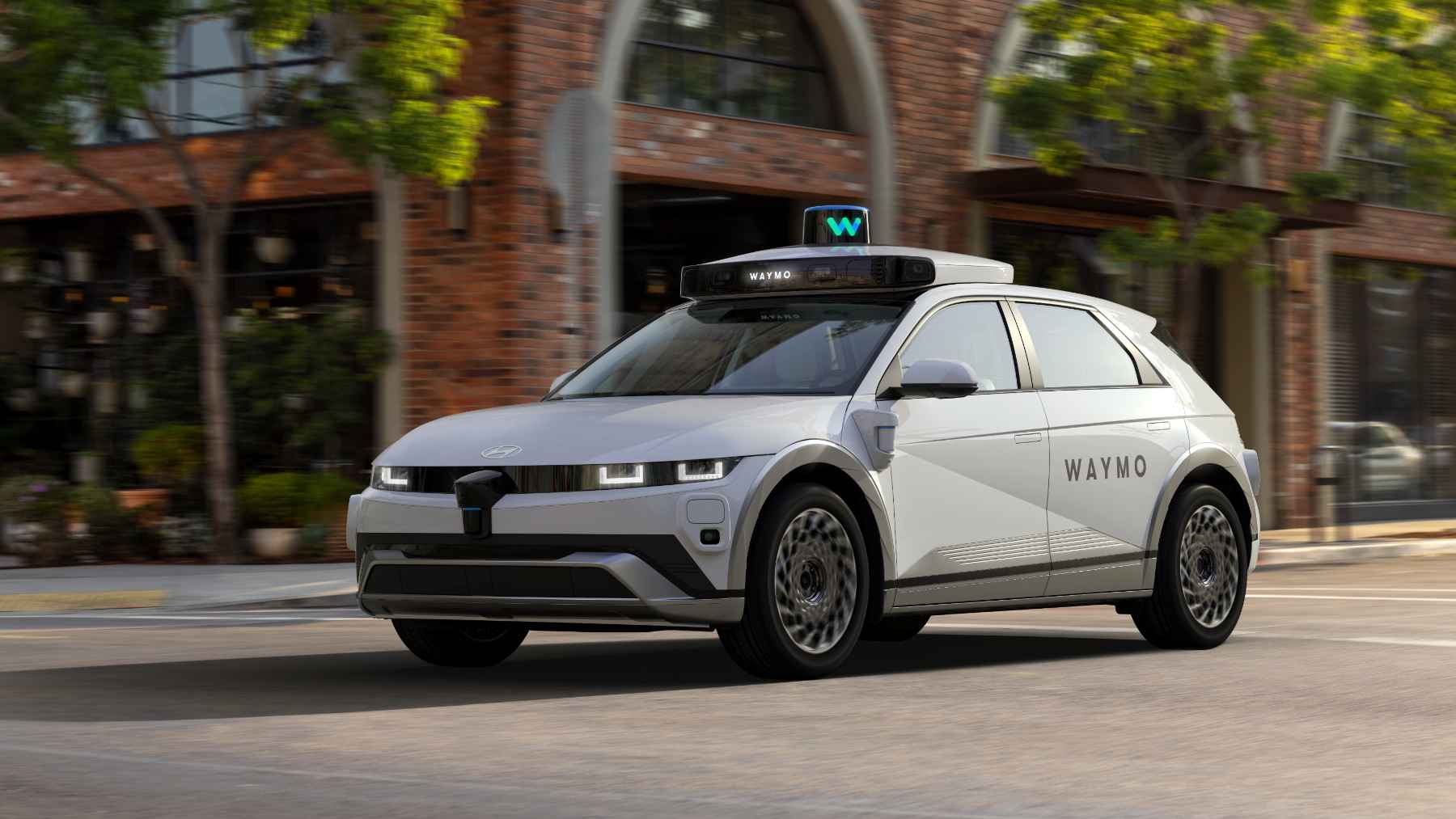
I get it. I do. People hate change. We cling to what we know, what’s familiar. But I’ve been inside Waymo a few times, and it’s awesome. The seats are comfortable, the cabin is peaceful, the ride is smooth, and there is no weirdo in the front seat trying to talk to me the entire ride. I’m sold. I don’t even need $5 off.
But I get why support continues to decline rather than increase. I recently wrote about Lucid aiming to have 100,000 robotaxis across the U.S. by 2027, starting with San Francisco. But loud San Francisco residents and lawmakers have already expressed hatred toward Waymo, calling the company shady and pointing out the automaker’s many little errors.
Despite Waymo getting better and better, residents dislike Waymo more and more because there are more of them. It feels invasive to those who already hate robotaxis. They are parked in neighborhoods, stopping in traffic, whatever else. However, I found that many residents also loved Waymo during my research. Guess they weren’t part of the polls.
Waymo is only part of the problem, however. As I said, Lucid is looking to rain robotaxis down on the United States. Then we have Rivian looking to turn its upcoming R2 off-roader into a robotaxi for some reason. It just feels like we are getting bombarded with robotaxis. And if you don’t like them, this probably feels like a dystopian nightmare.
We haven’t even mentioned Tesla yet. The OG EV automaker has been claiming (boasting, even) that it will have Cybercabs all over the country this year. If you’re scared of robotaxis, I don’t think Tesla’s service will help you at all. Despite promising the Cybercab for years, Tesla has just a few Model Y’s with human safety monitors inside (or driving behind) in Austin. Tesla’s robotaxis rely on Full Self-Driving mode, which is nowhere near ready for the road without a human driver. Only Tesla fanboys are excited to drive with these vehicles on the road. Despite FSD being consistently investigated for not working as intended, Elon Musk is about to let Cybercabs without pedals or steering wheels loose in six cities. A literal death trap.
In the Electric Vehicle Intelligence Report, the consumers were told of Tesla’s robotaxi crash record when compared to Waymo. Waymo reported one crash every 98,600 miles and Tesla robotaxis reported one crash every 62,500 miles (despite having human supervisors on board). After learning that, 87% of consumers said they were concerned, 72% were less confident in Tesla altogether, and 69% said they are even less likely to consider riding in a Tesla robotaxi.
You’re all robophobes, plain and simple
I personally would never take a ride in a Tesla Cybercab. However, I think we should treat each of these robotaxi companies as separate entities. I’d never say that I’m unwilling to drive in a robotaxi in general. Just Tesla. I think true robotaxis, like Waymo, have a bad rap they don’t deserve. Waymo actually has a lower crash rate than humans, with data showing a 92% reduction in crashes involving serious injuries. Waymo’s injury-causing crash rate is 85% lower than human drivers. And many of the accidents involving Waymo were caused by humans, not the Waymo.
To me, it feels like robophobia. People are clearly influenced by pop culture, which consistently shows robots as evil and something to distrust. But there is really no concrete proof that Waymo is more dangerous than a human driver. Waymo was chasized when it ran over a cat hiding underneath its wheels. But how many humans hit cats and race off? I’m sure the number can’t even be counted it’s so high. Waymo faces a lot more criticism and scrutiny than human drivers, and these incidents make international news. I can’t even imagine an article going viral about a person in a small rural town hitting a cat.
“People often also just chill in their cars on their phones or whatever, plenty of time for a cat to walk under. It’s sad, but I think the takeaway is to keep cats indoors if you want to keep them safe,” noted one Reddit user on a thread about a shrine to KitKat after it was killed by a Waymo.
Aside from the “I just don’t trust it” statement, I have never really heard another argument against Waymo that makes sense. Even the “I don’t trust them” reason is pretty invalid, since Waymo is safer than a human driver. Some issues I’ve heard from skeptics include Waymo not dropping people off right next to certain stops and Waymo seeming not to notice certain construction zones and blocking traffic. I’m not saying this is awesome or anything, but it’s not extremely common. And humans probably do it more anyway. The thing is, it’s not logical. It’s emotional.
“Waymo is, at its essence, a foreign creature to them. And they react with primal fear like a prey animal encountering a potential predator,” one Reddit user stated. “These are not people who can be objectively persuaded. They’re like a child who’s afraid of seeing a cat for the first time. You can’t give a PowerPoint presentation to a child about cat safety. The child begins to trust a cat when their mother or father pets it, showing the child that there’s nothing to be afraid of.”
We just have to give Waymo a bit more time. And maybe Lucid and Rivian, too, if they are similarly trustworthy to Waymo. People will grow used to them, just as they grew used to the internet, cell phones, and every other technology boomers claimed was no good. It will eventually become a normal part of city life. I already wave to Waymo and those little delivery robots. I love being in such a diverse city that embraces robots and feels so futuristic and fun. Robotaxis are not perfect, but they’re more perfect than humans. And they won’t talk to you while you’re taking a ride.
 @homer10 DRIVER6 months ago