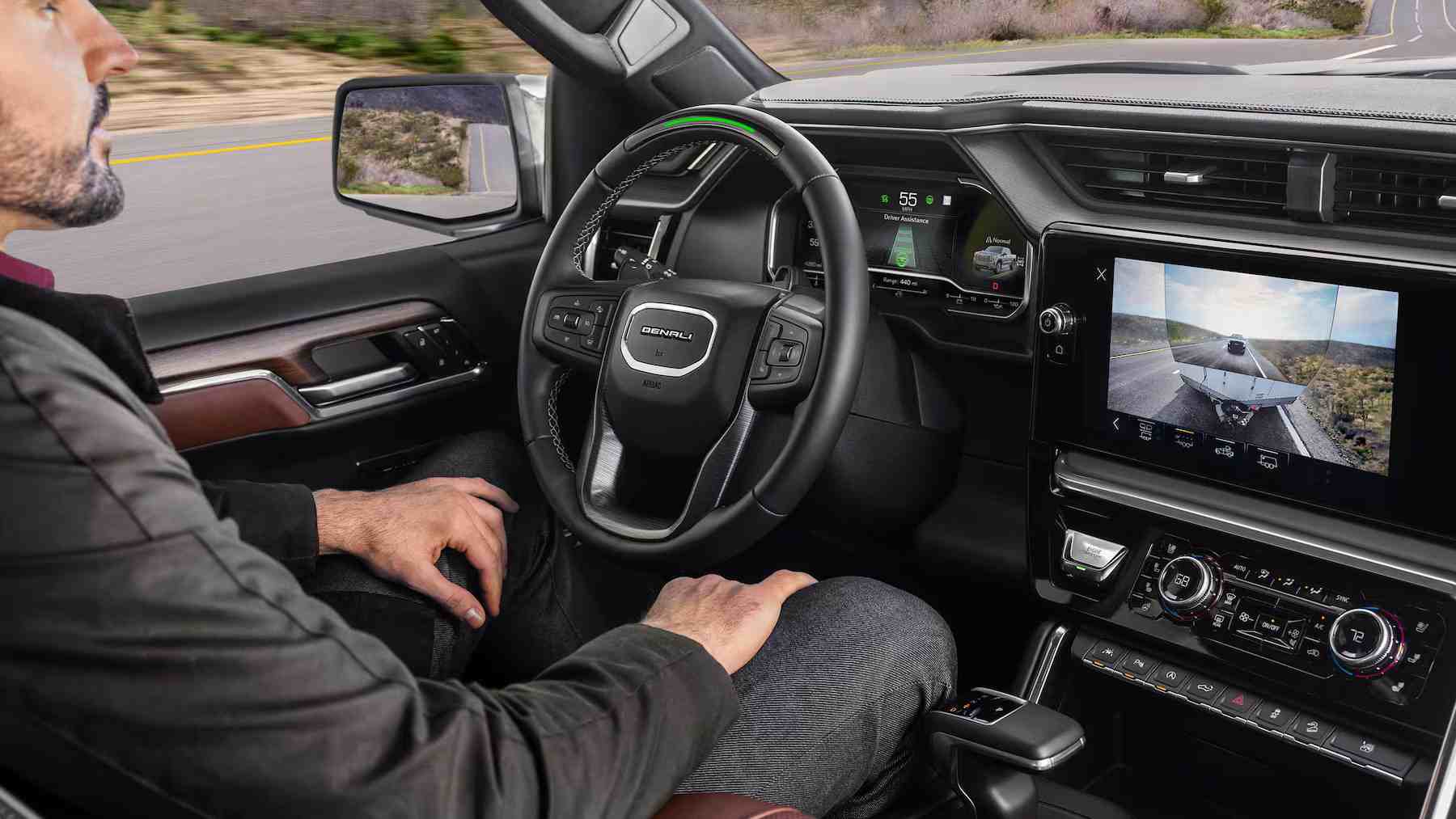

While some companies are promising Level-3 self driving tech by the end of the decade, it’s plainly still not here yet (aside from in certain Mercedes in extremely limited circumstances). As far as Level 2 systems go, GMs Super Cruise is king.
This isn’t the first time I’ve praised Super Cruise, in fact I do it every time I review one of GM’s cars, trucks, or SUVs. I think it handles highway driving better than anything else, and I’m constantly shocked at the number of backroads it works on. Which is all well and good as the software is a major part of GM’s business model, apparently.
But recently, I got a chance to really challenge Super Cruise. I had a two-hour drive home, a Cadillac Vistiq to review, and an opportunity to see just how good GM’s self-driving system really is. To pass, the Cadillac had to get from the New Jersey border to the city I inhabit two hours away in Upstate New York with no further input from me.
What did Super Cruise self driving do exactly?
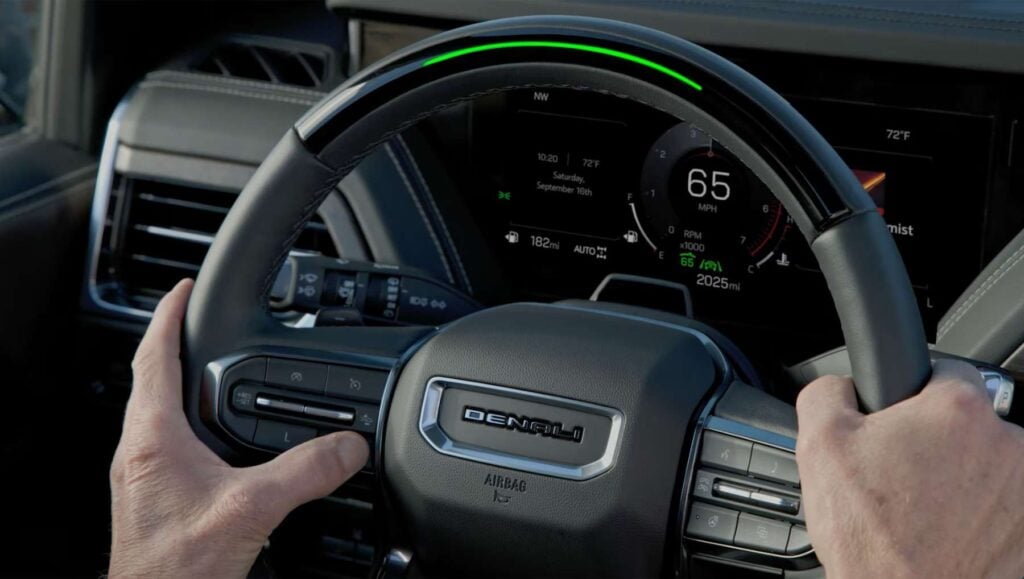
There’s that little bit of North Jersey where Route 17 joins I-87, it’s just south of the New York border and around two hours from the exit I need to take for Schenectady. That’s where I engaged Super Cruise, my feet left the pedals, and my hands left the wheel.
Now here’s where you may be thinking “a long stretch of interstate isn’t that bad, this isn’t that much of a challenge.” But that bit of Interstate has a lot to contend with. There’s chaotic traffic just outside of NYC, various toll scanners, road works around Catskill, a multitude of hazards, and a little bit where 87 heads up towards Canada, and you need to stay left to merge onto I-90.
My challenge, for the afternoon, was not to touch the controls. No hands on the wheel, no foot on the brake, even tapping one of the indicator stalks would count as a failure. Annoyingly, this means I only had the coffee I set off with, no food, and the next bathroom I encountered would be my own. But it was only two hours, and I’m happy suffering so you lovely people can read things like this. Obviously.
Super Cruise didn’t just pass this test; it went above and beyond. The automatic lane changes were basically in sync with what I would have done. There were one or two points where I just started thinking, “I’d move across here,” only to see the directional start to flash and the Cadillac I was testing move over. It stayed left when I needed to branch onto 90. I’m not sure if it communicates with the map system, but it also moved me to the right lane when my exit to Schenectady was approaching, and it seemed to gesture as if it was going to take the exit for me.
My hands hit the wheel, and I took the exit myself. The challenge was complete as far as I was concerned, and I wasn’t rolling the dice on Super Cruise doing something pretty complex for a Level 2 system. I don’t want to drive through Rotterdam.
I had my hands hovering over the wheel during the roadworks sections, but that’s only because I’ve seen other self-driving systems struggle with the narrow lanes, concrete barriers, and temporary road markings. I didn’t need to intervene; Super Cruise did just fine.
It’s worth noting that, as far as I’m aware, Super Cruise will not move over if someone has broken down on the shoulder or a cop has pulled someone over there. This isn’t something I would’ve risked if I had encountered this situation, and remember it’s Level 2, so I am required to pay attention to situations like this. But luckily, no breakdowns or speeding tickets ruined the test.
I did notice the vehicle move over when it spotted another vehicle trying to merge from the on-ramp, which is a great touch. This is again something pretty much all of GM’s competitors don’t do, and a wonderful piece of driving courtesy. Speaking of Super Cruise’s competitors, let’s take a closer look at just how far behind they are.
How does GM’s self-driving system stand out against competitors?
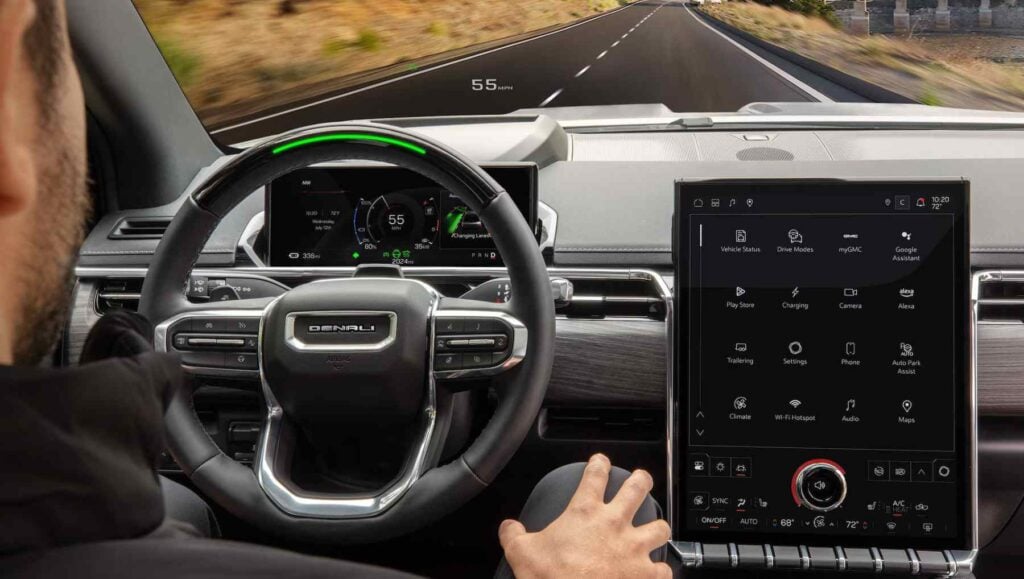
You may be sitting there and thinking, “Well, Level 2 self-driving isn’t unique these days.” And that’s sort of true, most manufacturers offer some form of Level 2 self-driving on many of their vehicles. But Level 2 has become a bit of a broad church.
Level 3, the logical next step, doesn’t directly involve the driver most of the time. A person needs to be seated in the driver’s seat and ready to step in if the system asks them to intervene, but does not really need to pay attention if no alarm is blaring. So you can read a book, mess around on your phone, watch YouTube on the vehicle’s infotainment system, whatever. Level 2 requires a driver to be paying attention at all times and to be able to step in independently if it seems the system is about to mess up.
The difference is in liability, to an extent. With Level 3, if the self-driving system causes a crash and doesn’t try to alert you beforehand, then a lot of the blame lies with the manufacturer. With a Level 2 system, it’s on you.
This has led to a tremendous gap in quality within the “Level 2” band of self-driving. Many of GM’s competitors force you to keep your hands on the wheel, don’t offer automatic lane changes, or otherwise require more input on your end. The number of road systems that can be deployed also varies.
Its closest competitor is Tesla, though GM’s software has been involved in fewer high-profile incidents. After Tesla, there’s a big drop off.
Ford also offers hands-free self-driving and automatic lane changes, but only on major highways. It will also ask you to take the wheel a lot more, like when you’re going through roadworks or those sections of toll road where a camera will scan your transponder. BMW again has hands free and automatic lane changes on certain packages, but you need to accept the lane change. You can’t just relax while the car does it all for you.
In short, I don’t think there’s another self-driving system, certainly not one you can find in an ICE vehicle, that could have gotten me from the New York border to Schenectady without any input on my end. It’s genuinely impressive, and if GM would fix its CarPlay-averse infotainment system, I’d be recommending its vehicles to everyone.













Tesla is the ONLY manufacturer in the World where every one of it's new cars comes equipped with all the Hardware and software to provide a true FSD Autonomous, supervised driving solution that with a touch of a button will autonomously drive you under supervision from Parking spot to Parking spot, on ANY roads without any driver intervention required, other than to keep your eyes on the road.
Tesla's even have Grok Voice assistant built in so you can even navigate and Tesla FSD will drive you to your chosen destination from just a voice command with your personal Grok assistant doing all the work.
No other vehicle Manufacturer comes remotely close to offering a complete FSD driving solution.. certainly not GM with Super Cruise, a glorified Highways only Lane Assist and active Cruise control system..compared to Tesla FSD.
Anyone doubting Tesla's massive advantage merely needs to go to a Tesla store and take a free Test Drive with Tesla FSD V14..you will be amazed at the systems capabilities, refinement and safety.. leagues beyond what ANY other manufacturer can offer.