
Tesla is still the best-selling EV manufacturer in America. Toyota, having recently pivoted hard into EVs, is hot on its heels. After you squeeze Hyundai’s bargain IONIQ 5 in at number 4, GM, Ford, and Rivian round off the top 10.
The problem is, I’ve driven the majority of EVs on this list, and plenty lower down. Sales really aren’t reflecting quality or price when it comes to EVs. Teslas aren’t even cheap any more, and their factories still can’t do something as basic as getting their vehicles’ body panels to match. Toyota (and Lexus by extension) is selling well as always, but its EVs aren’t particularly good at the moment. Rivians are wonderful… When they work.
So what should you look at instead? Well, there are two names a little lower down the list that should really be doing better.
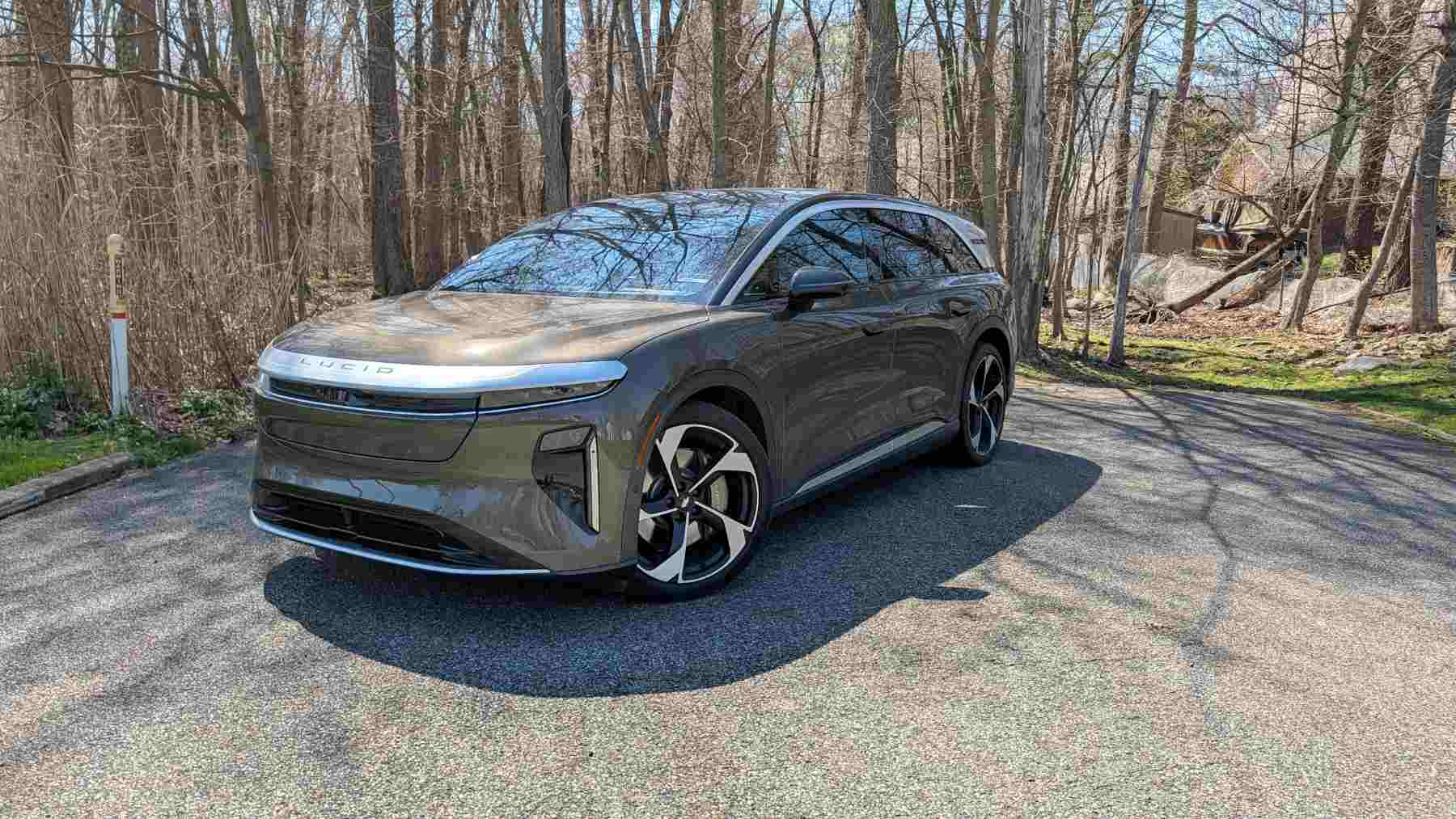
I’ve driven Lucid’s entire lineup. We actually have a full review of the Gravity coming shortly, so keep an eye out for that. Anyway, it’s my conclusion that Lucid makes the best EVs on the market. The styling is beautiful, the experience is futuristic, and each vehicle is a genuine engineering marvel.
The other year, I had to take an Air Pure to Eastern Pennsylvania and back from upstate New York. It was a couple of hundred miles each way. I did everything possible to kill that thing’s range. I turned brake regen to its lowest setting, upped the air con, wound down all of the windows, and drove like a moron. The Air Pure, despite being the cheapest model in the lineup, had more than enough range for the journey. The grip and handling were so good, I would’ve sworn it was an AWD vehicle if I wasn’t aware of the specs.
On the extreme end, there’s the Lucid Sapphire. At over a quarter of a million dollars, and with very limited numbers produced, this isn’t going to be something anyone really buys. But it does sum up Lucid’s capabilities pretty well. It has 1,234 horsepower and a sub 2-second 0-60 time. If you launch it, it has enough oomph to pin someone to the seat.
But again, it really stands out in terms of handling. I was whipping it around a few mountain roads, and it was like being on rails. It took an enormous amount of effort to get the mildest squeak from the tires. This is for the best, as you can genuinely tap the accelerator on the Sapphire and you’ll find yourself cruising along at 90 before you get a chance to glance down.
The top 25 electric cars Americans are actually buying
BMW’s sales performance is even more confusing
Lucid is a relatively “new” company, and hasn’t actually hit a profit yet. Recently, Lucid’s higher-ups outlined a path to profitability which should see the company in the black by 2030. But what about an institution that makes exceptional EVs and has been selling vehicles in the US for decades?
BMW also makes some of the best electric vehicles on the market. The i5 and i7 are both superb to drive, though I’d rather be sat in the back of the i7 with its widescreen TV and massage seats. An electric SUV, the iX, is also available, along with the sportier iX4.
As with Lucid, all of BMW’s offerings have amazing performance and very good battery life. The company built its EV architectures from the ground up, thoroughly researched them, and produced them all with German precision.
On top of everything else, you get the prestige that comes with a BMW badge and a BMW level of finish to it all, too. That means an exquisite, high-quality interior, sharp exterior, and all of the optional extras you can think of. Provided you have the budget for them.
So why isn’t BMW in the top 10? It can’t just be a luxury thing, Rivian, Lexus, and Cadillac are all in there. It may, however, be down to form factor.
Both Lucid and BMW have a plan
While BMW is apparently building over 20 vehicles in the next few years, and sticking to some non-EV staples, its electric focus is firmly on the Neue Klasse. This “new class” of vehicles is debuting in the US this summer as the iX3.
The iX3 looks as amazing on paper as it does in person. You get 400 miles of range, 463+ horsepower via dual-motor AWD, and can put around 175 miles of range back into its battery in just 10 minutes. Beyond that, BMW is known for a bit of upselling. But there’s an awful lot included on the basic iX3 from what I’ve been told, including premium seats and self-driving capability. All of this carries a $60,000 price tag, with a more expensive likely tri-motor M variant and a cheaper, entry-level single-motor model planned for later. So the lower-end of the iX3 could be competing with the upper end of the traditionally cheap IONIQ 5. Though some manufacturers are pricing things even lower going forward, as Americans struggle to afford contemporary vehicles.
Lucid has similar ideas in mind. The company unveiled its “midsized” vehicles in March and initial suggestions make the Cosmos look like a direct rival to the iX3. Lucid’s going in cheaper with a starting MSRP under $50,000, 300 miles of range on the entry level model, a 3.5 second 0-60 time, the ability to half charge the battery in just 14 minutes, and a staggering efficiency level of 4.5 miles per kWh.
Having driven neither, but seen both, I would say the American effort (Lucid) looks weirdly more European than BMWs. But there isn’t much difference in quality between them, and the prices get very similar on the upper trims. Lucid is offering mechanical door handles though, if you’re into that.
So if you’re considering a new EV in late 2026 or early 2027, don’t just buy a Tesla or cheap out on an Equinox. We have two amazing-looking contenders on the way, and if the EV landscape over the next 12 months is a head-to-head battle between these two, we’ll be better off for it. Test drive the Lucid Cosmos when you can, and test drive the BMW iX3. I’m not saying buy them; I’m saying see what you could have before you just go for the popular option.
And this time next year, when we’ve all hopefully driven both of them, feel free to call me out in the comments if I was wrong. But I’m not, both of these SUVs look bloody great.


















I have spotted several in Ca, and they are gorgeous.
Thanks