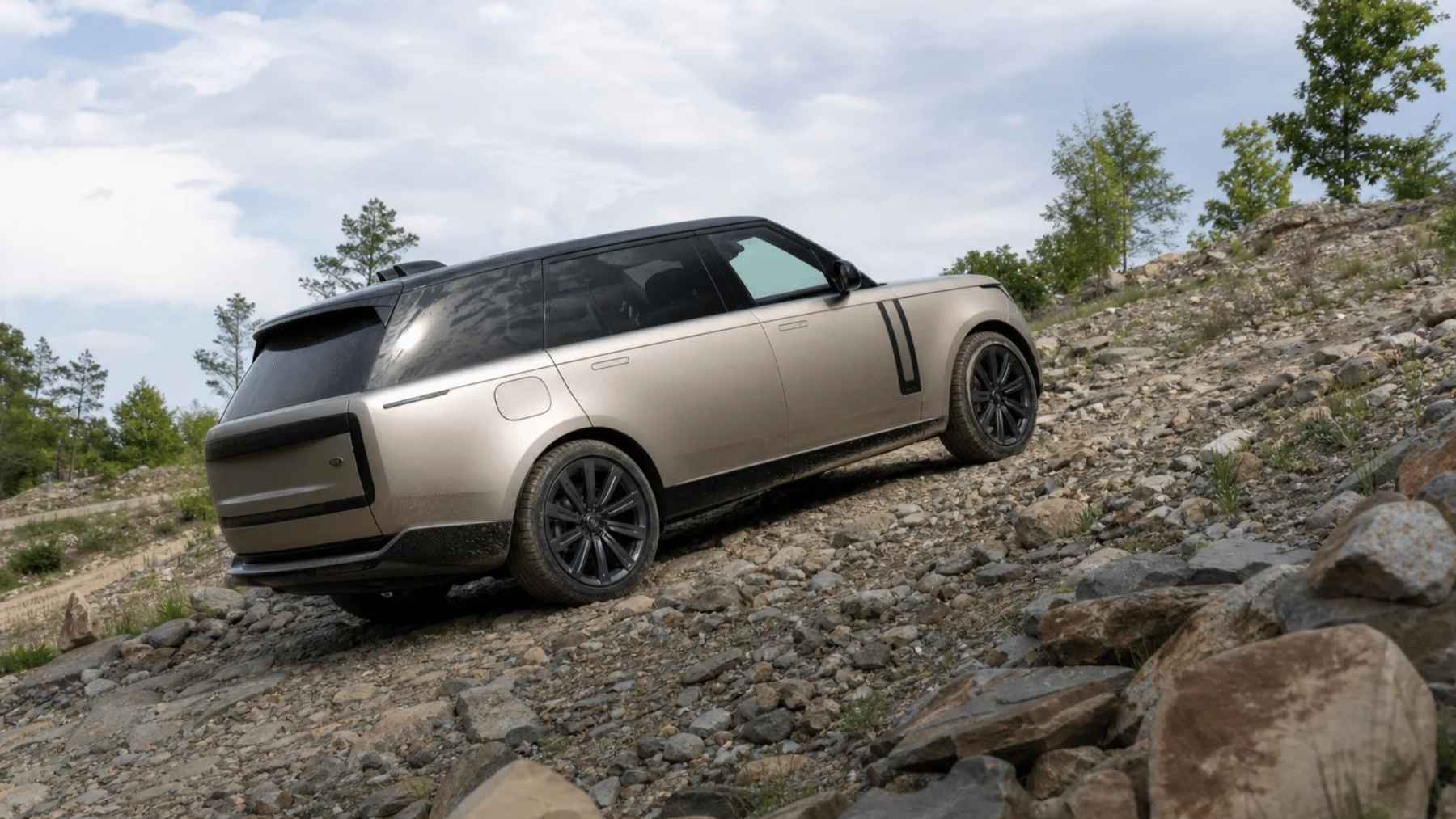

Every masterpiece has its cheap copy. I’m just kidding, we know the Range Rover Electric will be more expensive than the gas-powered version.
Yes, Land Rover has announced that an electric version of the Range Rover is coming in 2027, something the automaker has been talking about since 2022.
It’s finally happening. But should it be?
Why am I telling you to get an electric Range Rover?
I usually am not a fan of electric vehicles. It seems like every popular vehicle, especially SUVs, gets an electric version at some point or another. It feels sorta like when directors can’t think of anything original so they just adapt a popular book into a movie to make some fast money. It’s the same thing, sure, but missing the soul and physical connection.
But…
You’re gonna hate me for this…
I think you should get the Range Rover Electric. Well, if you were already gonna blow six figures on a Range Rover, that is.
Land Rover kept the Range Rover Electric as physically close to the gas-powered OG as possible. There’s not too much to talk about in that department. Even the interior is quite similar. The only real differences are the grille, wheels, and some underbody changes to accommodate the battery.
So, why get the electric version, you ask? Well, it’s the Range Rover but stronger, as the meme goes. It has more horsepower, it’s quicker, and it may even be better at off-roading. While the first two things are sort of a given for most EVs these days (snoozeville), when combined with the off-roading aspect, I think it sounds like the Range Rover Electric has the gas version beat.
The electric Range Rover has two electric motors and all-wheel drive, producing 542 horsepower and 627 lb-ft of torque. This allows it to hit 60 mph in 4.3 seconds. It’s not the quickest 0-60 out there, but the Range Rover gets up to 6,250 pounds (probably around there for the electric version), so… That’s moving.
That’s not really necessary for off-roading on its own, but the Range Rover Electric also has air-sprung suspension with adjustable height for a very smooth drive. It also has an electric traction-management system that reacts to wheel spin in as little as 50 milliseconds, which is 100 times faster than the gas-powered one. This allows it to do more challenging off-roading, which is definitely something new for electric SUVs. Past electric offerings were tested on very easy obstacle courses and, admittedly, couldn’t handle much more due to the exposed battery.
The Range Rover Electric can even drive through 35 inches of water. And this isn’t a Cybertruck “trust me bro” claim. This is an actual capable electric vehicle, even with water in its path.
Back on the road, the Range Rover Electric has a 333-mile driving range when its 119-kWh battery is fully charged. Land Rover claims it can charge from 10% to 80% in 22 minutes. That’s nice, but the gas-powered Range Rover doesn’t have to do all that, which is awesome. So, just go back to the off-roading stuff.
Honestly, it’s not like the Range Rover Electric is doing anything extraordinary for a vehicle. You’re not gonna catch up to a Jeep while climbing over a rocky path or anything. But for an electric vehicle, it’s pretty cool. At least in America. Let’s ignore all the hopping and three-wheel driving the Chinese EVs are doing.
But if you want an actually capable EV for a weekend trip, you’ll need to cough up a minimum of $140,550. It’s a lot. Even the First Edition colors aren’t enough to make anyone jump at the chance to buy one of these. But if you were already going to buy a Range Rover, you are looking at $155,750. And in my opinion, you might as well just take it a step further.
Don’t come at me. I still love my gas-powered cars. However, we can admit that electric SUVs are finally getting sorta cool and individual, although I’d probably prefer the Volkswagen ID.Buzz myself.