
Somewhere in your house there is a panel full of circuit breakers, and when one of them gives up, you drive to the hardware store and swap it for a new one that costs about fifteen bucks. The breakers that feed safety equipment inside an American nuclear plant do not live in that world.
Plenty of them are Westinghouse designs that have been sitting in plant switchgear for decades, rebuilt and recertified and babied along because the equipment around them is just as old. And on September 2, Westinghouse told the Nuclear Regulatory Commission that a batch of springs inside those breakers got painted with the wrong stuff.
The filing is what the industry calls a Part 21 report, and the rule behind it is basically federal law telling suppliers that if you sell parts for nuclear safety systems and later find a defect that could create a real hazard, you do not get to quietly fix it on your own. You tell the regulator. Westinghouse notified the NRC on September 2, the agency published the report in its public event log a day later as Event Number 58434, and the deviation itself dates to August 31.
The part in question is a motor cutoff switch, manufactured by Homewood Products Corp. and supplied by Westinghouse under part number 3D51113G02Y. The springs inside were supposed to be colored with dye, purely so people could tell them apart during manufacturing. Dye was the spec. Some springs got acrylic paint instead, and Westinghouse told the NRC they were colored “using acrylic paint which has the potential to generate foreign material” inside the switch.
Acrylic paint dries into a film, and a film can flake. If enough particles pile up between the switch’s moving and stationary contacts, the electrical resistance climbs until the contacts stop conducting, and at that point the switch cannot make electrical contact when asked. Westinghouse says the defect does not affect the breakers’ ability to open on demand. Closing is the problem.
So what does a motor cutoff switch actually do?
A power breaker the size of the ones in a plant’s switchgear does not snap shut with your thumb. It closes by releasing a big charged spring, and an electric motor is what winds that spring back up between operations. The motor cutoff switch is essentially the component that tells the charging motor when to run and when to quit, and Westinghouse’s own parts literature for DS breakers lists it right alongside the closing-spring charged-and-discharged indicator.
So if paint dust keeps that little switch from conducting, the chain of events that ends with a closed breaker loses a link near the start. The notice does not walk through the full circuit diagram, and I am not going to pretend it does. Westinghouse puts the outcome plainly, though: these breakers can still open on demand, and they may fail to close.
So why does a nuclear plant care whether a breaker closes?
Your house mostly wants breakers to open, because opening is what stops a fault from burning the place down. A plant wants that too, but a lot of its safety gear works the other way around: emergency pumps and fans sit de-energized behind breakers, and when an accident signal comes, those breakers have to close to put power on the equipment. A breaker that opens beautifully but cannot close means a pump that never gets power. Westinghouse flagged that possibility; no plant has reported one of these switches actually failing in service, and I could not find a report of one either.
Where the painted springs ended up
Homewood Products Corp. is a Pittsburgh outfit that started life as a manufacturing division of Westinghouse Electric Corporation and has spent more than 80 years making genuine Westinghouse parts for the gear the old company left scattered across American industry.
The suspect switch is what the trade calls a commercially dedicated part: it gets built as an ordinary industrial component, then put through extra checks so it is allowed to serve inside safety-related systems. The dye on the springs belonged to exactly that discipline. Somebody used paint. Pretty grim, as irony goes.
Westinghouse says the springs went out through four channels: new and refurbished DS breakers, refurbished DHP breakers, DS breaker refurbishment kits sold under part number 4A48813G11Y, and spare switch assemblies sold as 4A48863G01Y. If that reads like a parts catalog, that is because a fair chunk of the American nuclear fleet essentially runs on one, a whole economy of rebuild kits, spares and recertification that keeps decades-old switchgear in service.
Thirteen plants now have homework
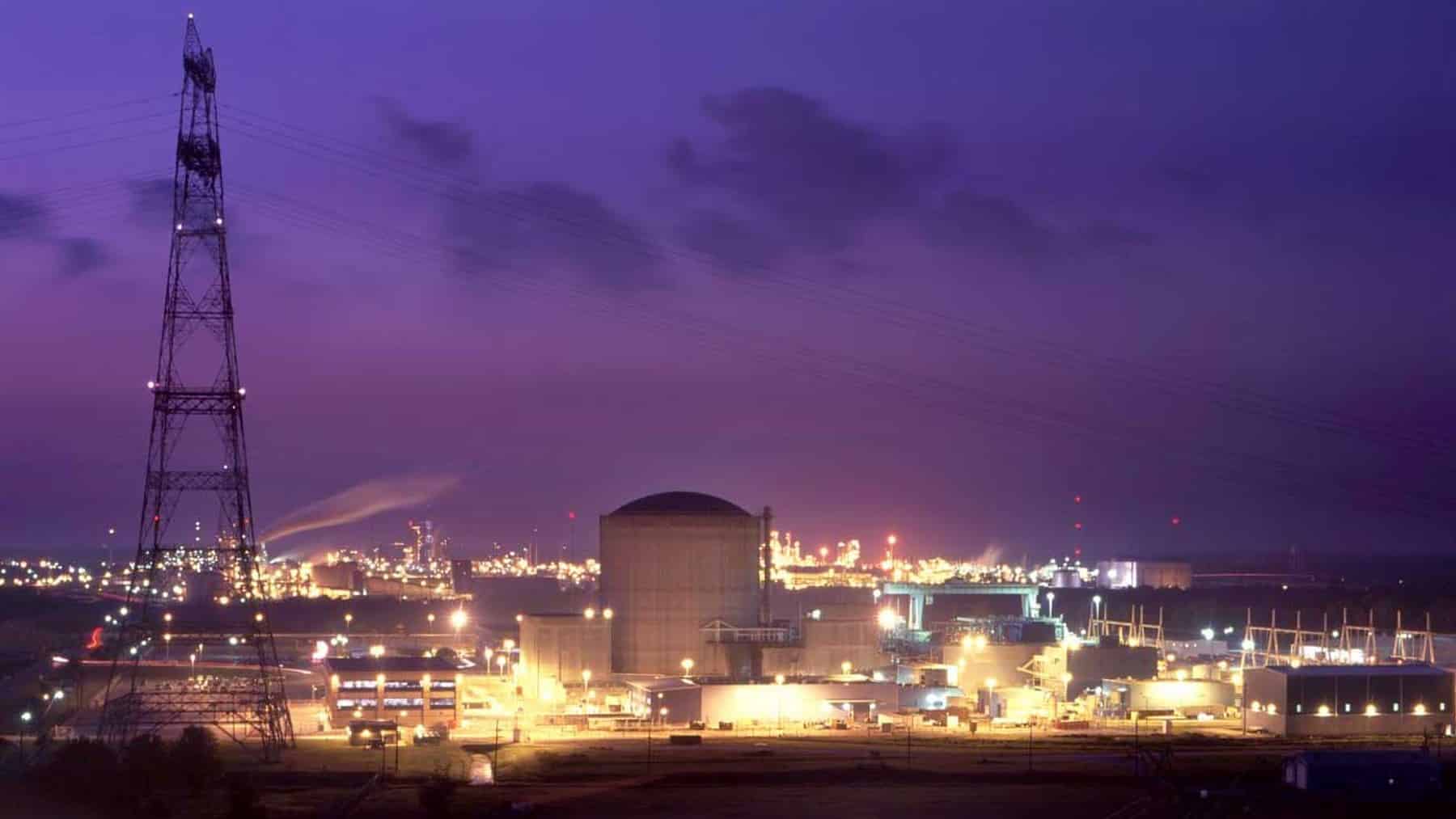
The list of potentially affected plants runs coast to coast: Braidwood, Byron and Clinton in Illinois, Callaway in Missouri, Catawba in South Carolina, Columbia in Washington state, Comanche Peak and South Texas in Texas, Palo Verde in Arizona, Seabrook in New Hampshire, Sequoyah in Tennessee, Wolf Creek in Kansas, and Vogtle in Georgia, the largest nuclear plant in the country. The NRC’s log spells Sequoyah as Sequoya, and I will let Tennessee take that one up with the regulator.
Westinghouse recommends replacing any of these switches that carries a safety function as soon as plant scheduling allows, and where a breaker’s safety job is only to open, the company wants the closing-circuit resistance verified anyway.
Westinghouse logged the deviation in its corrective action program with a resolution due date in the first quarter of 2027, and says it will rework the dedication process behind the part and go back to its suppliers over the dye-versus-paint mix-up.
You may be thinking that a spring inside a switch inside a breaker is a pretty small thing to trigger a federal filing across 13 plants. It is, and that is frankly the pattern this summer. Three weeks before this notice, St. Lucie Unit 1 in Florida tripped from 100 percent power because three control rods dropped into the core, and the hardware holding each of those rods up was, functionally, a magnet. A nuclear plant is a very big machine with some very small failure points, and the NRC’s public log is where you get to watch that trade-off in something close to real time.
Westinghouse’s event date, August 31, was also the day a crane on the Lake Michigan shore put the eighth fuel bundle back into the Palisades reactor America is trying to restart. The NRC published Event Number 58434 on September 3, 2026, and Westinghouse’s deadline to close out the fix runs to the first quarter of 2027.